How to Restore a Sagging Bust Naturally with Midlife Breast Surgery

As people get older and begin to notice changes in their appearance and body, many middle-aged women have concerns about sagging breasts. As a result, midlife breast surgery has seen steadily increasing demand, unlike in the past, and it is drawing a lot of attention as surgical methods continue to develop in a more natural and safer direction.
When you reach middle age, natural changes also occur in the breasts. Due to childbirth, breastfeeding, and the passage of time, breast elasticity and volume gradually decrease, and the skin may sag. Sudden weight loss can also change the shape or make asymmetry more pronounced.
These changes are not just a matter of appearance; they are also linked to restoring body balance and confidence. So today, we will look at breast ptosis surgery, one of the procedures in midlife breast surgery.
Why do breasts sag?
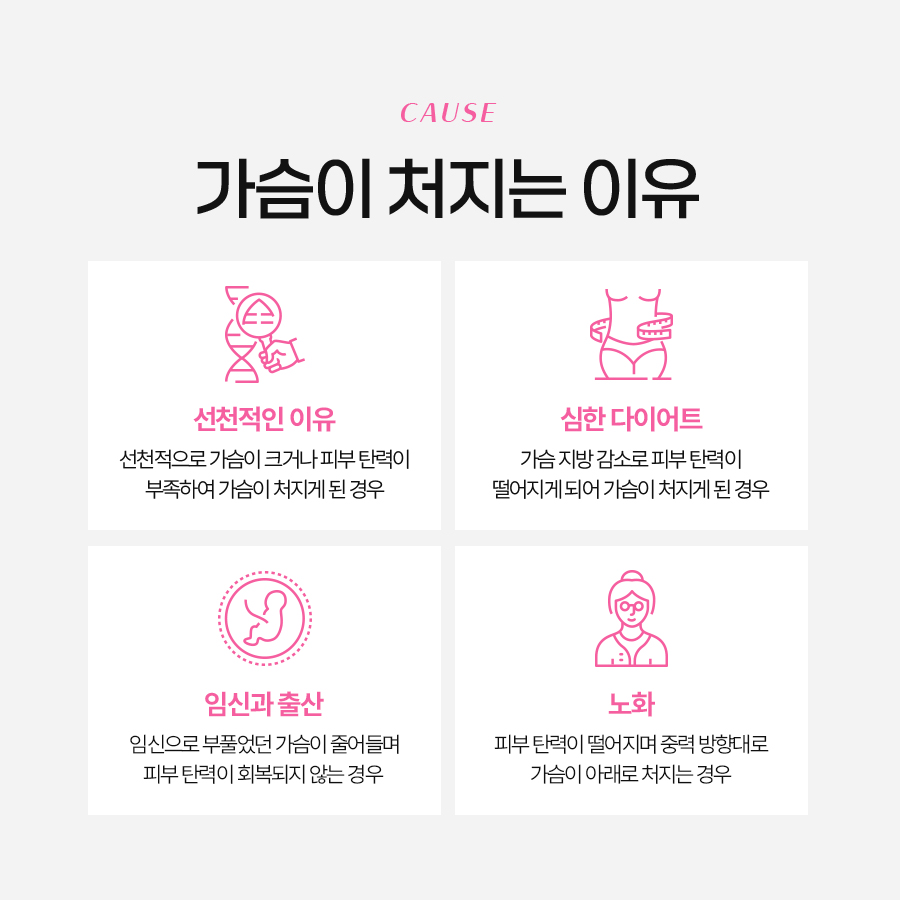
Breast sagging is a natural physical change that can happen to anyone, but understanding the reasons behind it can help with better prevention and management. First, the biggest reason for breast sagging is aging of the skin and breast tissue. As we age, collagen and elastin in the skin decrease, and the tissue loses elasticity, leading to sagging.
In addition, repeated rapid changes due to childbirth and breastfeeding can loosen the skin and, as a result, lead to the breast tissue sagging and stretching. Other causes include sudden weight changes and genetic factors. Because of these various causes, more people are considering midlife breast surgery.
How severe is breast ptosis?
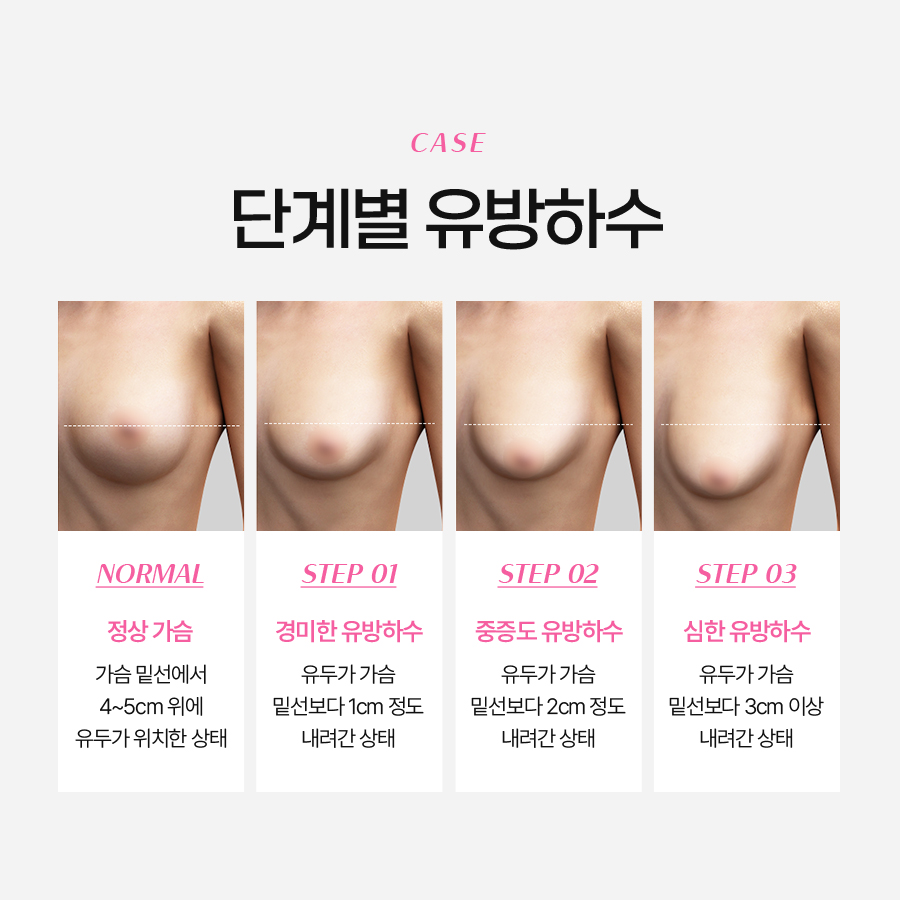
Many people feel that their breast shape has changed with age or after childbirth and breastfeeding. However, rather than simply thinking, "It has sagged," it is important to understand how severe the condition is. In mild breast ptosis, the nipples are at or slightly below the inframammary fold. In moderate breast ptosis, they are located 1 to 3 cm below the inframammary fold.
In severe breast ptosis, the nipples are more than 3 cm below the inframammary fold, and the nipples are completely pointing downward. Since the stage of breast ptosis is difficult to judge accurately by appearance alone, it is safest and most effective to receive a specialist's diagnosis and create a management plan or midlife breast surgery plan suited to your body.
Can sagging breasts regain firmness again?
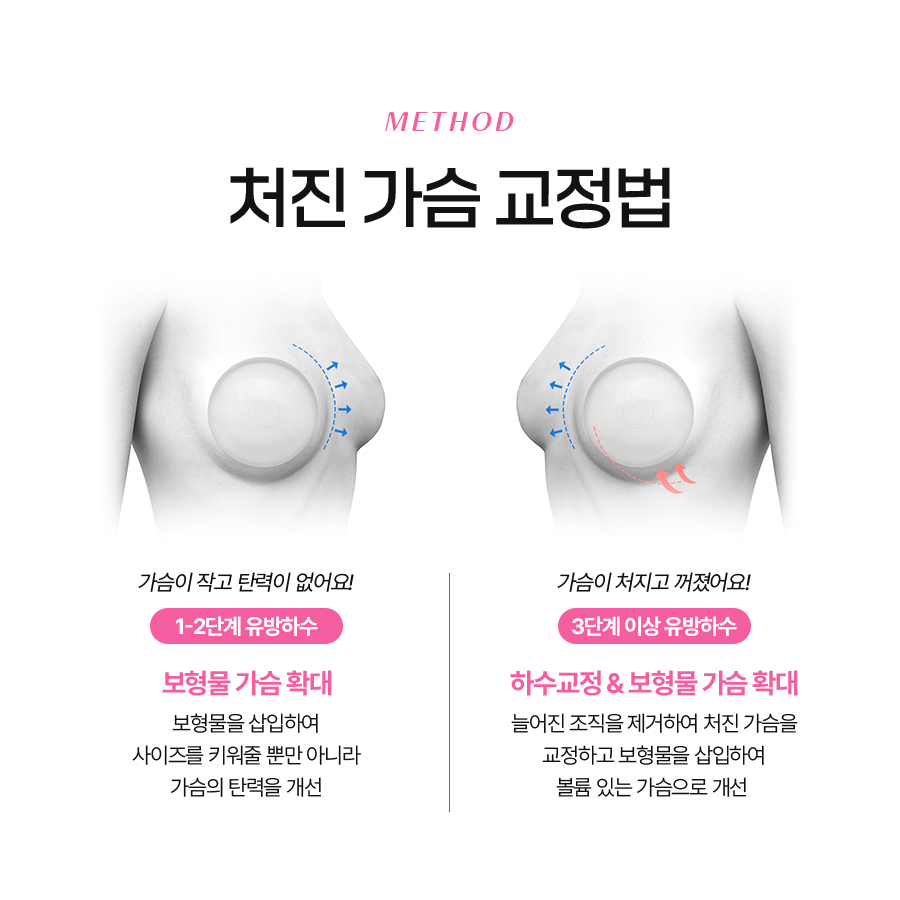
There are two methods for correcting sagging breasts in midlife breast surgery. For breasts that are small and lack elasticity with stage 1 or 2 ptosis, implant breast augmentation is performed. As the name suggests, this not only increases the size by inserting implants but can also improve breast firmness.
For stage 3 or higher ptosis, where the breasts are sagging and deflated, ptosis correction and implant breast augmentation are performed together. This surgical method removes stretched tissue to correct the sagging breasts and inserts implants to improve them into fuller breasts.
How is sagging breast surgery performed?
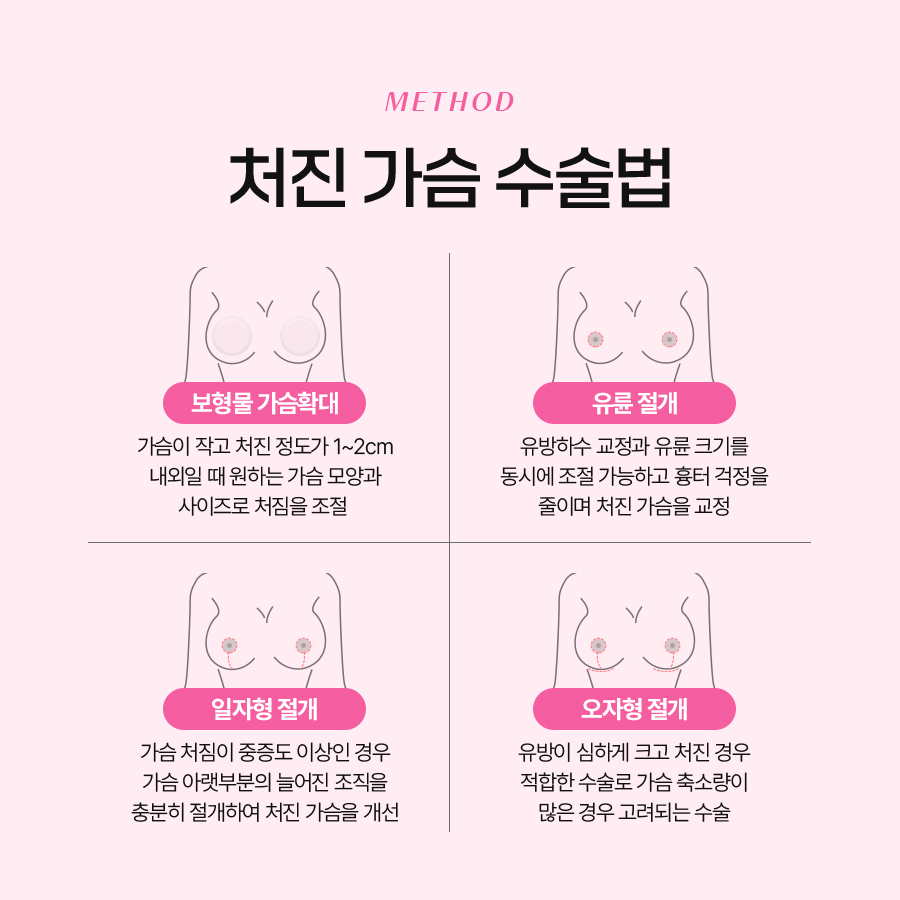
The representative procedure in midlife breast surgery is implant breast augmentation, but in breast lift surgery or lift-plus-augmentation surgery, an incision is necessary because the nipple position must be raised and sagging skin must be removed. There are three incision methods.
A periareolar incision leaves less scarring and is used for mild sagging. A straight-line incision is used for moderate or greater sagging and allows natural repositioning of the nipple. Lastly, a keyhole-shaped incision is essential when correcting severe sagging, as it allows the greatest amount of skin to be removed and can clearly improve sagging.
Changes in the breasts after middle age are a natural physiological phenomenon, but many people experience outward discomfort or a decline in self-esteem because of them. Recently, with advances in technology and the introduction of various surgical methods, middle-aged patients can also receive natural and stable breast surgery tailored to their condition.
Most importantly, the key is to determine the method that suits your condition through an accurate diagnosis and consultation with medical staff who have extensive experience, and it is safer to choose a hospital that provides a systematic approach to recovery and scar management after midlife breast surgery.