
Everything You Need to Know About Areola Reduction Surgery

When people think of breast surgery, they usually first think of breast augmentation or reduction, but in reality, the size and shape of the nipples and areolas also play an important role in determining the overall appearance of the breasts. In particular, when the areolas are excessively large or asymmetrical, the balance of the breasts may look off, so many people are interested in areola reduction surgery.
So today, for those who are concerned about the size or asymmetry of their areolas, we will take a detailed look at what areola reduction surgery is, when it is needed, and the surgical method and recovery process. Since this is a surgery that can improve not only appearance but also confidence and psychological satisfaction, I hope it will be practically helpful for those who are interested.

What is the areola, and why undergo reduction surgery?
The areola is the dark, circular area of skin surrounding the nipple. Its color, size, and shape vary slightly from person to person, and because it is generally wider and more noticeable than the nipple, it is one of the elements that greatly affects the appearance of the breasts.
Due to genetic factors, pregnancy and breastfeeding, hormonal changes, weight gain, and other reasons, the areola may become large or asymmetrically enlarged. This can cause appearance-related discomfort or affect daily life, such as feeling discomfort around the nipple area when wearing underwear. In such cases, areola reduction surgery is an option.
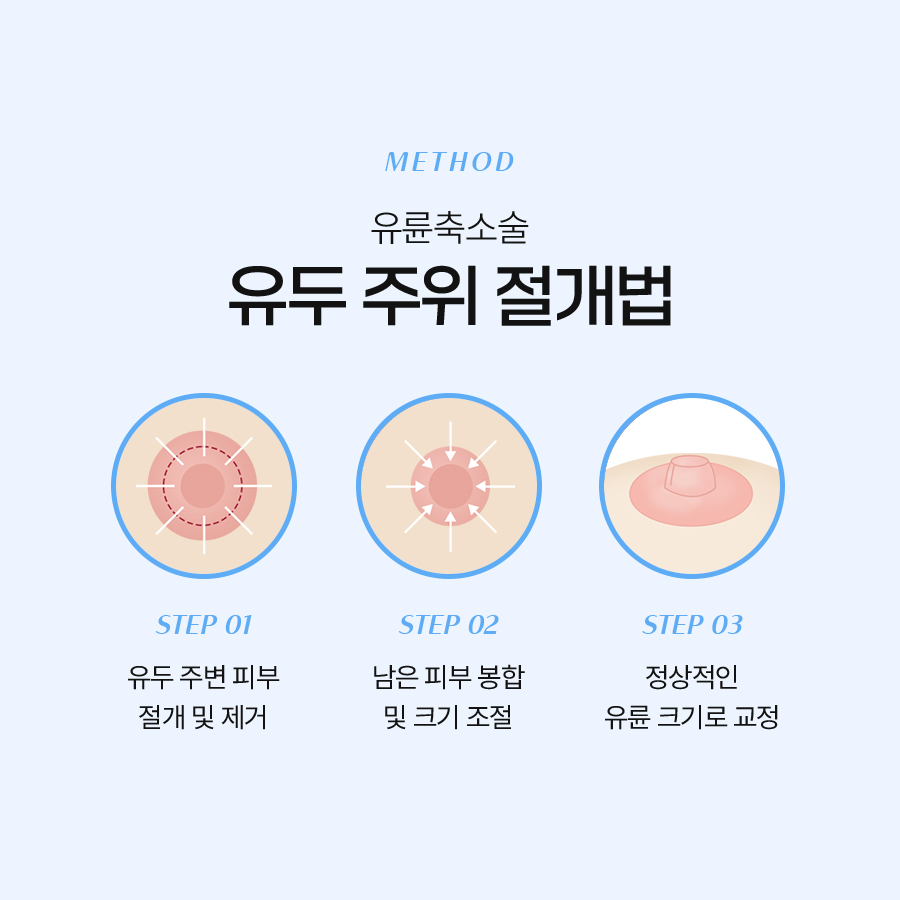
How is the periareolar incision method performed?
Areola reduction surgery is one of the cosmetic procedures often considered by people whose areolas look too wide or spread out, causing a lack of proportional balance or appearance-related stress. Among the various methods, one of the most widely used is the periareolar incision method.
The periareolar incision method, as the name suggests, makes two circular incisions around the nipple, on the inner and outer sides of the areola. This method is preferred by many because it can naturally and effectively reduce the size of the areola while improving it without noticeable scars.
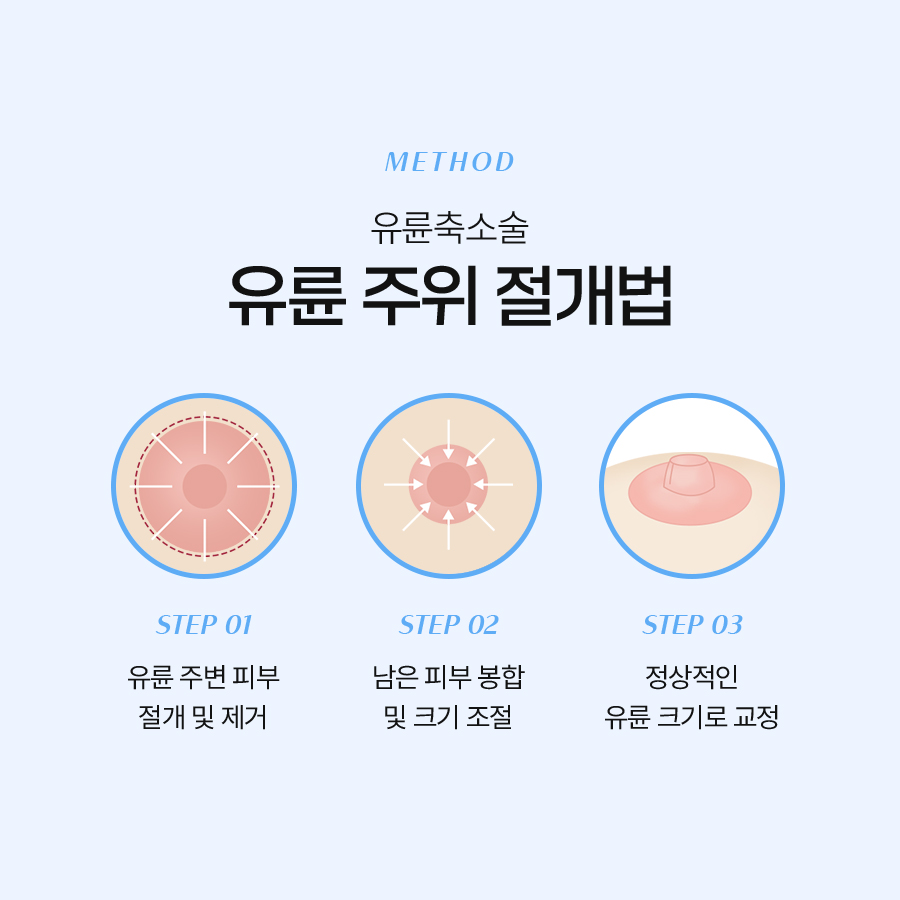
What is the periareolar incision method?
In areola reduction surgery, the periareolar incision method involves making an incision along the outer edge of the areola, removing the stretched areolar skin in a circular shape, and then suturing it closed. Because the incision is made along the boundary of the areola, that is, the line where the skin color changes, the scar is not very noticeable and a natural result can be expected.
If you want to resolve appearance-related concerns and change to a more confident look, the periareolar incision method can be a good choice. Therefore, since this surgery requires delicate technique from design to incision and suturing, sufficient consultation and a design plan with an experienced medical team are important.

Who needs areola reduction surgery?
Areola reduction surgery can help people who feel discomfort about the size or shape of their areolas for various reasons. In general, if the areola diameter is large at 4 cm or more, or if the sizes of the areolas on both sides are noticeably asymmetrical, it can cause aesthetic imbalance and lead people to consider surgery. It is especially suitable for those who are satisfied with the overall size and shape of the breasts but feel burdened because only the areola looks unusually large or spread out.
It can also effectively improve cases where the areola has become wider or stretched after pregnancy and breastfeeding as the mammary glands develop, or where excessive areola size remains after surgery for gynecomastia in men. This surgery can be performed solely on the areola, and if needed, it can also be combined with breast augmentation, reduction, or lifting procedures to help create a more harmonious overall breast shape.

Because the size and shape of the areola vary from person to person and change naturally over time, there are large individual differences. However, if your areola is excessively large or asymmetrical and causes aesthetic dissatisfaction or stress, areola reduction surgery is a sufficiently worthwhile and effective option to consider.
Rather than excessively reducing the size or shape of the areola or making it unnatural, delicate design and surgery tailored to your body type and breast shape are needed. So before deciding on surgery, it is important to find the most suitable method for you through sufficient consultation with an experienced specialist.