
When Is Breast Capsular Contracture Surgery Needed, and How Is It Performed?

Breast augmentation is one of the representative procedures for improving appearance and boosting confidence, but as time passes, many people also end up worrying about unexpected problems. Among them, one of the most common side effects is capsular contracture.
After the initial surgery, the shape and feel that were once satisfying may gradually become firmer over time, the breasts may become unnaturally deformed, and pain may even occur. When these symptoms appear, most people consider revision surgery, and the procedure performed at that time is breast capsular contracture surgery.
Many people initially feel anxious, wondering, “Did I do something wrong?” However, in reality, it is a problem caused by a combination of factors such as one’s constitution, surgical method, type of implant, and postoperative care. So today, let’s look at what situations call for treatment of capsular contracture and how the surgery is performed.

What is capsular contracture?
Capsular contracture is a phenomenon that occurs when the capsule that the body naturally forms around an implant contracts excessively, causing the implant to gradually harden, shift in position, or become uneven in shape, and in severe cases, it may even cause pain.
It can occur anywhere from several months to several years after surgery, and because it creates noticeable changes in appearance as well, it often causes significant aesthetic and psychological stress. In fact, capsular contracture is a physiological response that can happen to anyone, and it is a problem that can be sufficiently prevented or improved depending on the technique used in breast capsular contracture surgery and postoperative care.
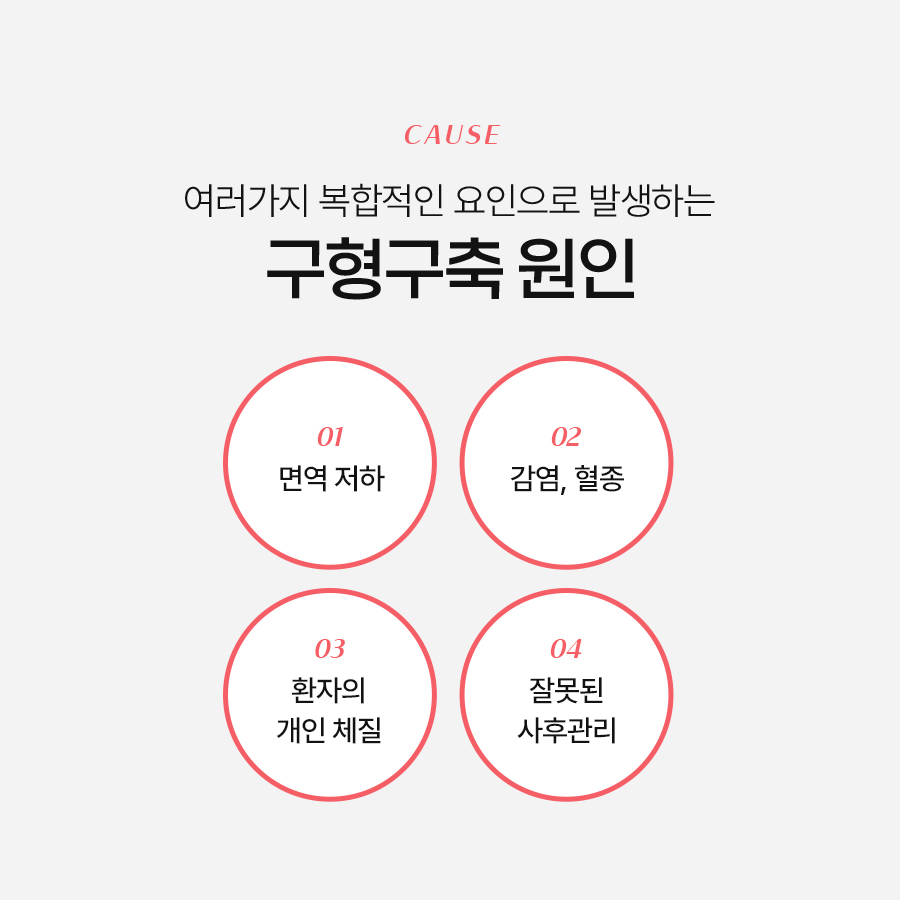
Various causes of capsular contracture
Capsular contracture can occur for a variety of reasons, and understanding the exact cause is very important when considering breast capsular contracture surgery. First, depending on an individual’s constitution, there may be hypersensitivity to a foreign object, which can lead to the capsule becoming excessively thick or contracting.
In addition, minor inflammatory responses such as asymptomatic infection or bacterial biofilm formation can irritate the capsule and become a cause of capsular contracture. The risk also increases when there is not enough space for the implant during surgery or when blood accumulates in the tissue due to excessive bleeding. When these factors combine to form an abnormal capsule around the implant, symptoms such as the breast becoming firmer and its shape changing may appear over time.
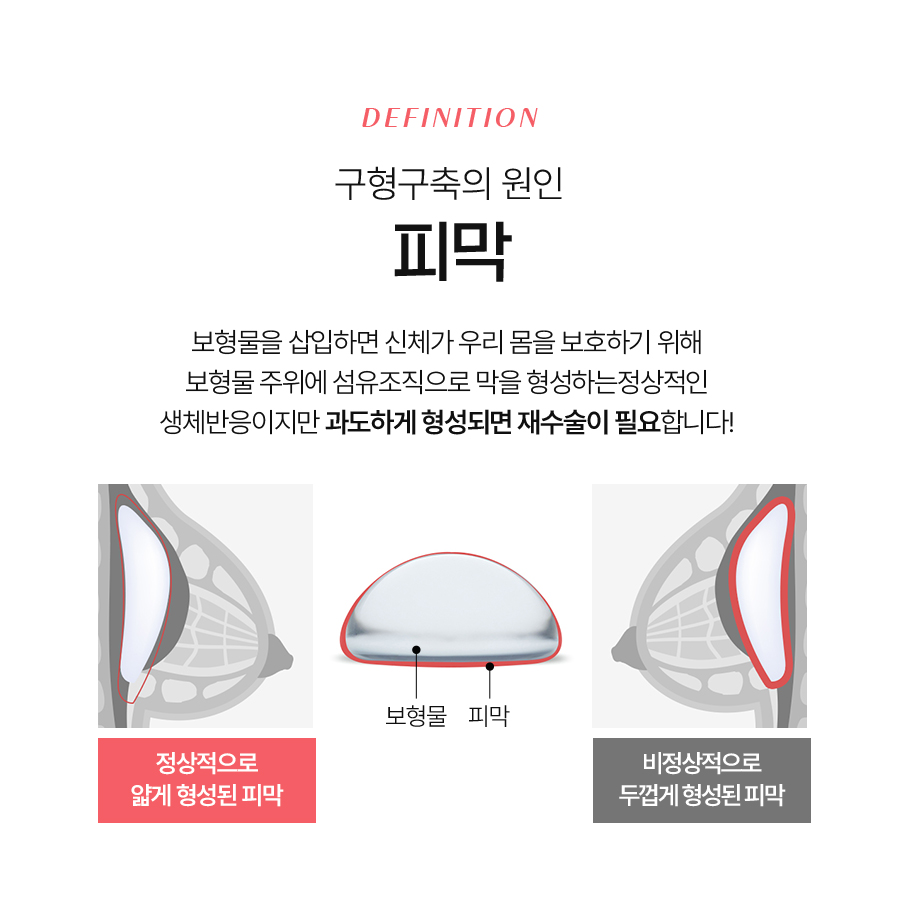
The relationship between capsular contracture and the capsule: why is it important?
One of the key causes of capsular contracture is the capsule that forms around the implant. The capsule is a tissue membrane that the body naturally creates to surround a foreign object such as an implant, but if it becomes too thick or contracts, it compresses the implant, causing the breasts to gradually harden and change shape.
Because excessive capsule reaction can be triggered by inflammatory responses, infection, bleeding, or constitutional hypersensitivity, pain may also develop over time. To resolve this problem, it is necessary not only to replace the implant but also to excise or remove the thickened capsule, which is why specialized breast capsular contracture surgery is required.

Why axillary incision is important in breast revision surgery
When considering breast revision surgery, many people worry about the incision site. An axillary incision has major advantages because the scar is not noticeable and it does not affect the mammary tissue, so there is less concern about reduced sensation or breastfeeding.
If the original surgery used an axillary incision, reusing the same incision site avoids creating a new scar, which improves aesthetic satisfaction. In addition, endoscopic revision surgery has recently become possible, improving safety as well.
Especially in cases that require delicate correction, such as breast capsular contracture surgery, an experienced medical team can still perform precise implant replacement and capsule removal through an axillary incision, making it an important consideration for those who are especially concerned about scarring.

Breast capsular contracture surgery is not simply a procedure for external beauty; it requires a medical approach to relieve pain, discomfort, and psychological stress. The success of the surgery is influenced more by how accurately the diagnosis is made and how well the plan is tailored to the individual before surgery than by which hospital is chosen.
In particular, revision surgery requires much more careful judgment than the first surgery, so rather than deciding based only on reviews, it is most important to have a thorough consultation with an experienced specialist and carefully plan everything from implant selection to the incision site and surgical method based on your body type and condition.