Everything You Must Check Before Breast Capsular Contracture Revision Surgery

Breast augmentation is one of the 대표적인 cosmetic surgeries that many women choose to boost their confidence in their appearance. However, as time passes after surgery, one unavoidable side effect that can occur is capsular contracture.
In particular, when capsular contracture becomes severe, the shape of the breasts can become unnaturally distorted and pain may occur, along with considerable psychological stress caused by the visible changes. To address these problems, breast capsular contracture revision surgery may be necessary. So today, let’s take a detailed look at the information you must know about this revision surgery.
What Is Breast Capsular Contracture? Understanding the Causes and Symptoms
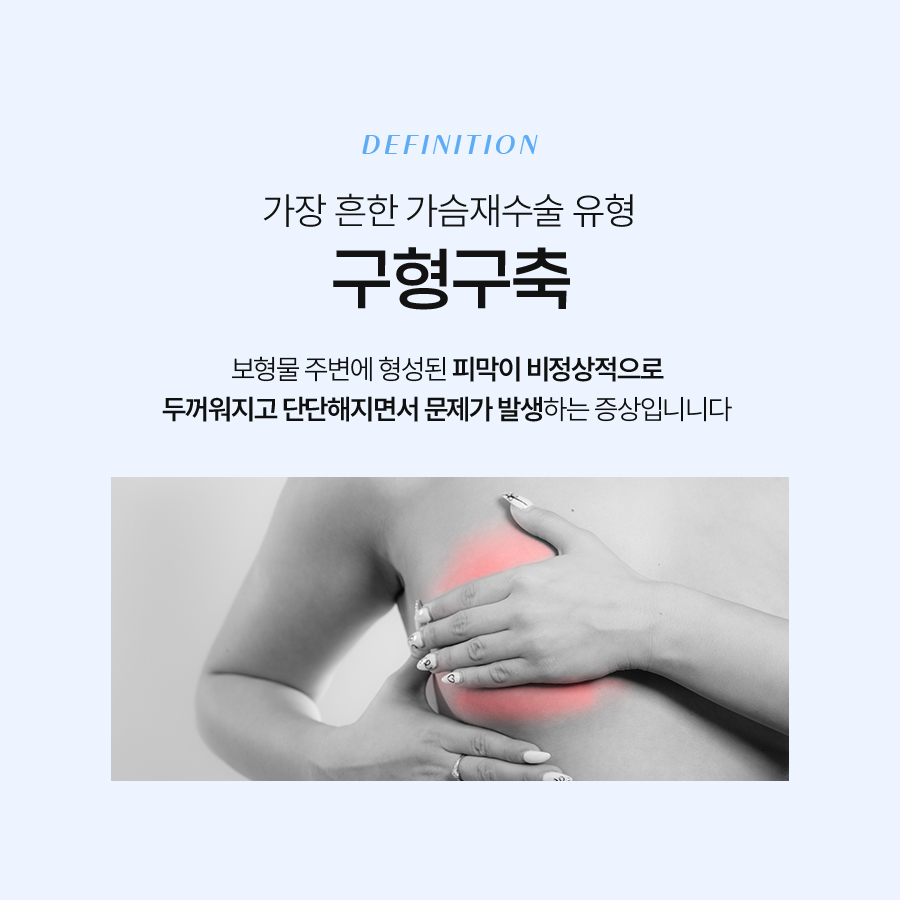
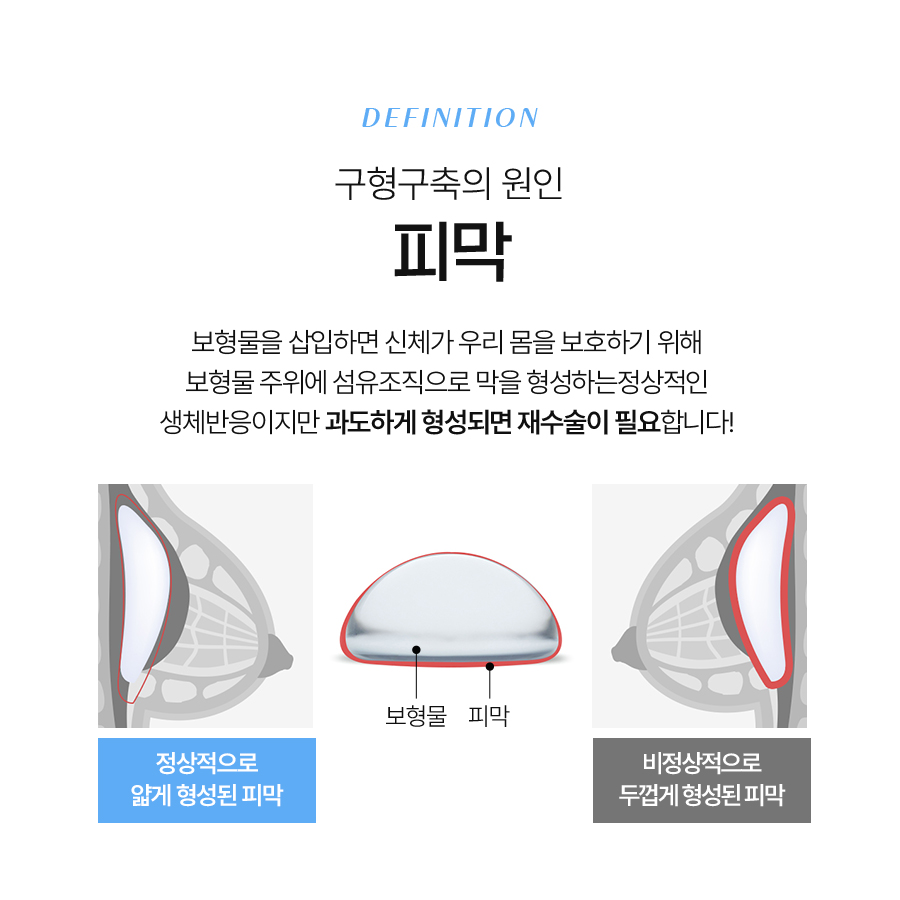
Capsular contracture refers to the abnormal thickening and tightening of the tissue, or capsule, that surrounds an implant inserted during breast augmentation. When an implant is introduced, the body recognizes it as a foreign object and naturally forms a thin, elastic membrane around it, which helps stabilize the implant.
However, if for some reason the capsule becomes excessively hard and tight, it can compress the implant, making the breast feel firm and causing the shape to become distorted. As a result, the breast may feel hard, the shape may become uneven or asymmetrical, and pain or discomfort may sometimes accompany it.
Capsular contracture can progress gradually over several months to years after surgery, so in many cases it is not detected early. Especially when these symptoms are severe, simple care may not be enough, and breast capsular contracture revision surgery to remove the implant and reconstruct the capsule may be necessary.
Main Causes and Risk Factors of Capsular Contracture
Capsular contracture develops due to a combination of several factors, and one of the main causes is a microscopic bacterial infection. Even a tiny infection that cannot be seen can irritate the capsule and cause it to thicken and harden. In addition, if there is significant bleeding during surgery or a hematoma forms, the inflammatory response becomes stronger and the risk of capsular contracture increases.
The characteristics of the implant are also important. Research results suggest that older or ruptured implants, as well as implants with smooth surfaces, have a higher rate of contracture. In addition, some people may have a constitution or genetic factors that cause fibrous tissue to react more sensitively. When these various factors act together, capsular contracture can occur. If severe capsular contracture develops, breast capsular contracture revision surgery is necessary for effective treatment, so if symptoms appear, it is important to be examined.
Symptoms of Breast Capsular Contracture and When to Treat It
Capsular contracture is mainly characterized by the breast becoming abnormally hard and the implant being compressed by the surrounding tissue, causing the breast to bunch up or shift upward. Along with this, pain or a feeling of tightness may occur, the size or shape of the breasts may become asymmetrical, and the texture may also feel hard and unnatural.
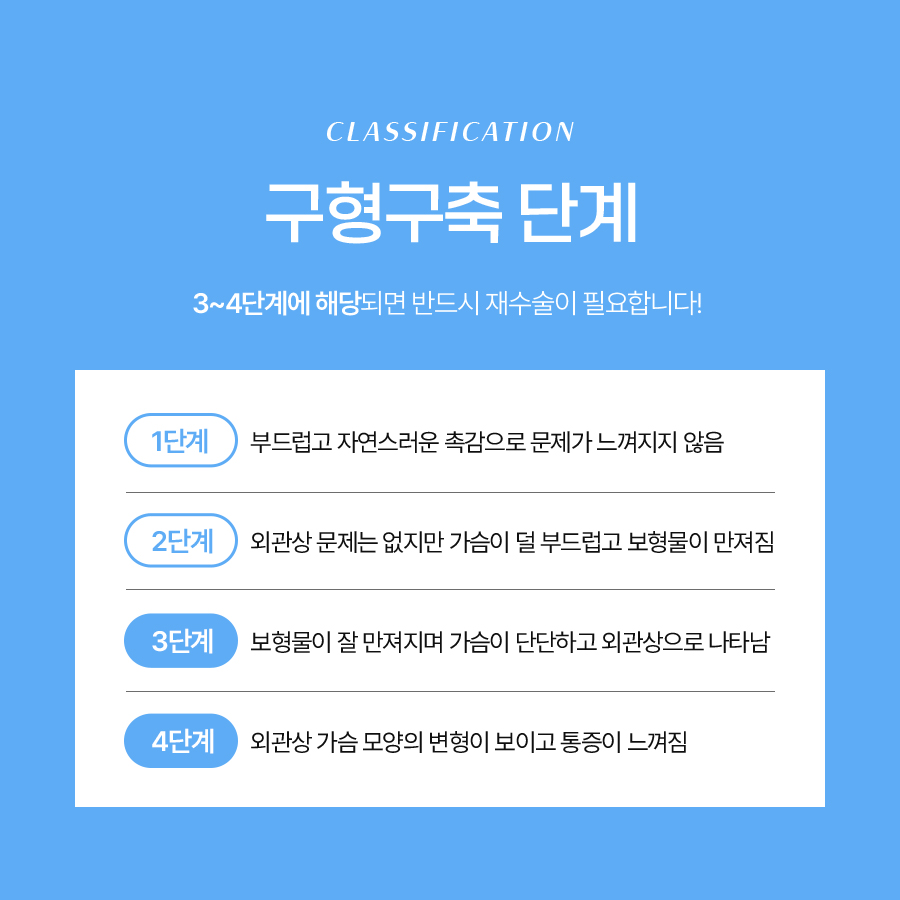
The severity of capsular contracture is classified into stages 1 through 4 according to the “Baker classification.” In cases corresponding to stages 3 and 4, natural healing is difficult, so breast capsular contracture revision surgery is absolutely necessary. Through this procedure, pain relief and restoration of a natural breast shape can be expected.

Situations in Which Breast Capsular Contracture Revision Surgery Is Necessary
When capsular contracture worsens, it can affect daily life beyond being a simple cosmetic issue, so revision surgery often becomes necessary. A representative example is when the breast shape is noticeably distorted or the implant bunches up, causing one breast to shift upward.
Also, if pain or a persistent feeling of tightness occurs when touched, or if the breasts feel hard and unnatural, the problem may be serious. In particular, if the touch or movement does not feel natural and the breasts do not spread out when lying down, the capsular contracture may already be significantly advanced.
If the symptoms are severe enough to interfere with daily life, simply replacing the implant is not enough. In such cases, breast capsular contracture revision surgery is needed to remove the contracted capsule and safely insert a new implant. Through this process, the shape and feel of the breasts can be restored more naturally, and the chance of recurrence can also be reduced.

Capsular contracture is a complication that can occur in anyone who has undergone breast augmentation, but if it is detected early and treated appropriately, it can be improved. If the symptoms become severe, breast capsular contracture revision surgery can remove the hardened, contracted capsule and insert a new implant, helping restore a natural breast shape and feel.
Breast augmentation is a delicate process that must consider not only cosmetic improvement but also body structure, safety, and psychological satisfaction. Therefore, if you are struggling with capsular contracture, it is advisable not to judge on your own, but to make a decision only after 충분히 consulting with a specialist.