Are There Different Methods for Areola Reduction Surgery? Which One Is Right for Me?

When people think of breast surgery, they usually first imagine breast augmentation or lifting, but there are also many people who worry about the size or shape of their areolas. The areola surrounding the nipple varies in size and color from person to person, and if it is larger than average or asymmetrical, it can cause psychological discomfort or physical unease.
In particular, as cases of enlarged areolas after pregnancy, childbirth, weight changes, or breast surgery have become more common, interest in areola size correction has also been steadily increasing. In this post, we will take a detailed look at what areola reduction surgery is, when it may be worth considering, and the surgical methods and recovery process, focusing on practical information.
Why is areola reduction surgery needed?
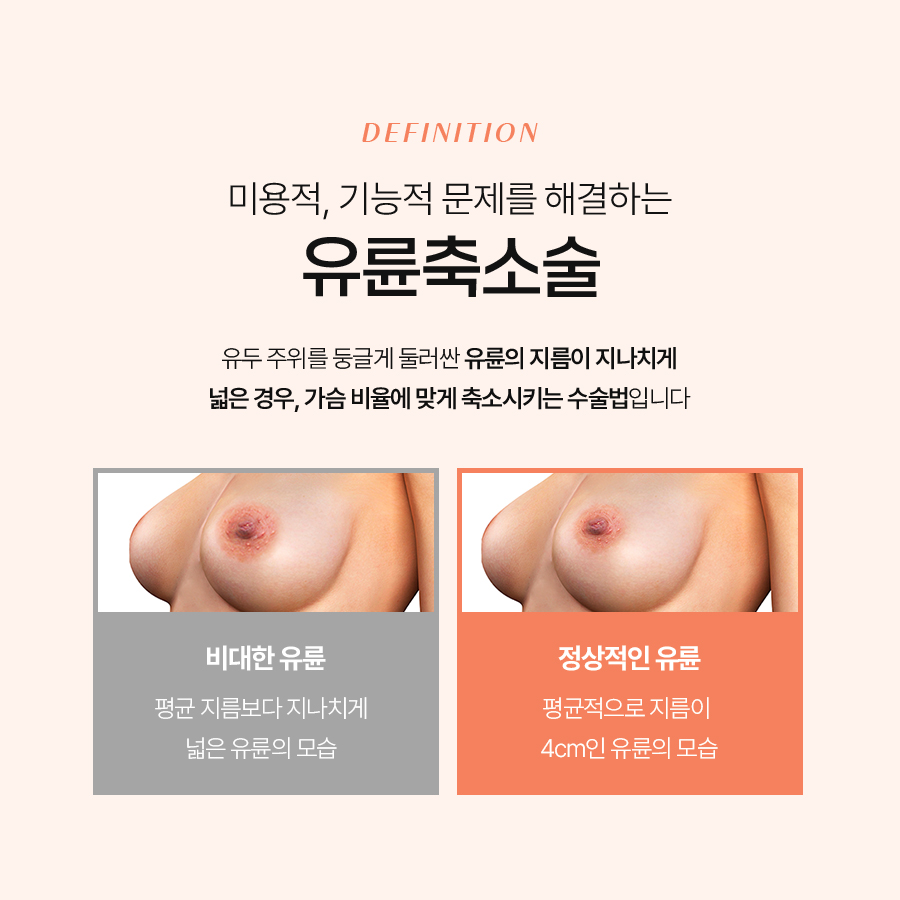
The size and color of the areola vary from person to person and are determined by a range of factors, including genetics, body type, and skin tone. However, some people are born with areolas around the nipple that are wider than average, making them appear more prominent even in adulthood.
In particular, for people with lighter skin tones, the border of the areola tends to stand out more clearly, making it visually more noticeable and causing appearance-related stress for many. In addition, after pregnancy and childbirth, not only the size and shape of the breasts but also the areola often gradually expands or loses elasticity and changes shape due to hormonal influences and breastfeeding.
The problem is that these changes often do not naturally recover over time, which can eventually make the areola size feel excessive. For this reason, more and more people are considering areola size correction surgery to restore aesthetic balance and regain confidence.
Areola changes after weight changes and breast surgery
Changes in areola size can become noticeably different not only due to genetic factors but also according to body changes or a history of procedures. When weight increases or decreases sharply and the volume of the breasts changes, the breast tissue and areola skin may also stretch or sag. During this process, the areola often becomes wider or asymmetrically deformed, which can cause a sense of visual imbalance.
Also, if someone has previously undergone breast augmentation, the breasts may appear larger due to implants, making the areola look relatively larger than before, or the surrounding skin may actually stretch and cause the areola itself to widen.
In such cases, some people undergo areola size correction surgery together with breast augmentation for better aesthetic results, while others choose areola reduction later as a standalone procedure. It may seem like a simple issue of the areola looking larger, but it is an area that requires careful correction to create harmony with the overall breast silhouette.
How is areola reduction surgery performed?
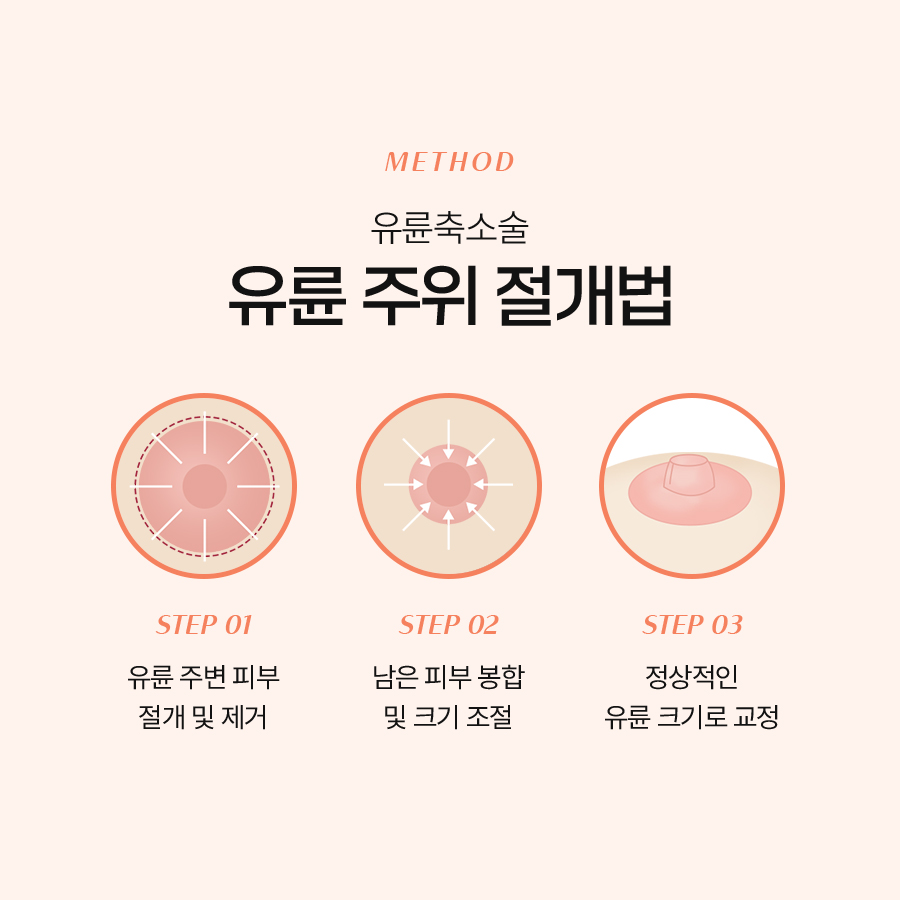
Areola reduction surgery can be performed on its own, but it is also often combined with mastopexy or breast augmentation. Although the procedure itself is classified as relatively simple, it requires both design sense and advanced surgical skill because the balance between the nipple and areola must be adjusted precisely.
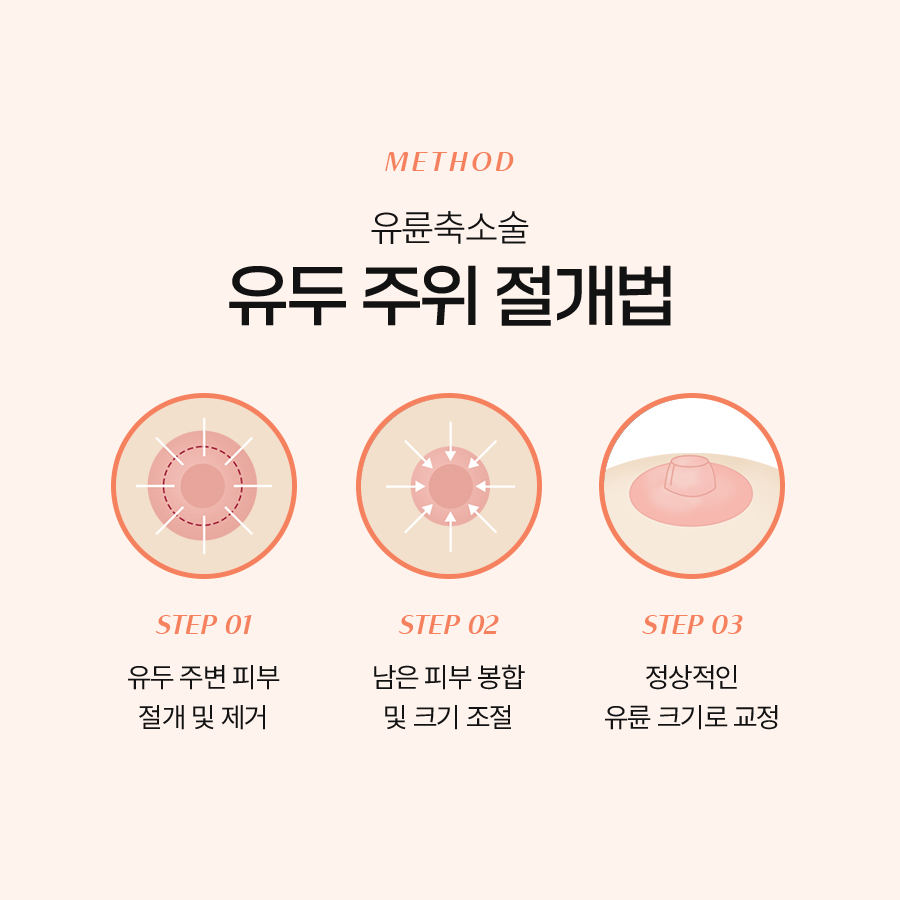
A representative method is the circular incision technique. In this method, an incision is made in a donut shape along the outer edge of the areola, excess skin is removed from the inside, and the area is then sutured again. The advantage is that the scar remains along the areola border, making it less noticeable.
In general, the ideal areola diameter is known to be about 3.5 to 4.5 cm, and before surgery, a customized plan is made by comprehensively considering the person's body type, nipple size, and breast shape. Because areola size correction surgery is not simply about reduction but about balancing the overall harmony of the breasts, a delicate approach is necessary.

Recovery process and care tips after areola reduction
After areola reduction surgery, temporary bruising, swelling, and a feeling of tightness may occur, and the recovery period generally takes about 7 days. Right after surgery, the area around the areola may look red or the skin may feel firm, but over time it gradually returns to a natural and soft state. During this period, it is especially important to keep the surgical area clean and dry.
You should also avoid movements that could strain the surgical site, so lifting your arms above your head or engaging in activities that excessively move the upper body should be avoided for at least 2 to 3 weeks. It is recommended to wear looser clothing than usual, and instead of tightly compressive wired bras, a light and roomy sports bra is preferred.
To help minimize scarring and support recovery, you should also refrain from smoking and drinking for 2 weeks after areola size correction surgery. Depending on how carefully you manage this period, the speed of recovery and the outcome may differ. A cautious but thorough recovery process can lead to a more natural and satisfying result.
Areola reduction surgery can have a positive effect not only on appearance but also on restoring psychological confidence. If the size of the areola has changed due to various causes such as congenital factors, childbirth, weight changes, or after breast surgery, it is important not to simply hide it, but to accurately understand your condition and find an appropriate solution through consultation with a specialist.
In particular, areola size correction surgery is not just a simple reduction procedure but one that takes the overall breast proportions and harmony into account, so choosing a clinic with sufficient experience and know-how greatly affects satisfaction with the results. It may seem like an inconspicuous area, but since it may have been a long-standing concern for you, I recommend approaching it with extra care.