Why Capsular Contracture Revision Surgery Is Not Just About Replacing the Implant

Over time after breast augmentation, various changes can occur depending on the individual, and one of the most common problems is capsular contracture. This is a condition in which the capsule formed around the implant gradually thickens and contracts, causing the breast shape to become firm and distorted or leading to pain. It is one of the representative side effects that many people experience.
However, with advances in medical technology, much more precise and effective capsular contracture revision surgery methods have recently been developed, making it possible to expect not only functional recovery but also more natural cosmetic results. In this article, we will take a detailed look at the specific information you need to know before and after surgery, as well as capsular contracture revision surgery methods.
Why does capsular contracture occur, and why is revision surgery necessary?
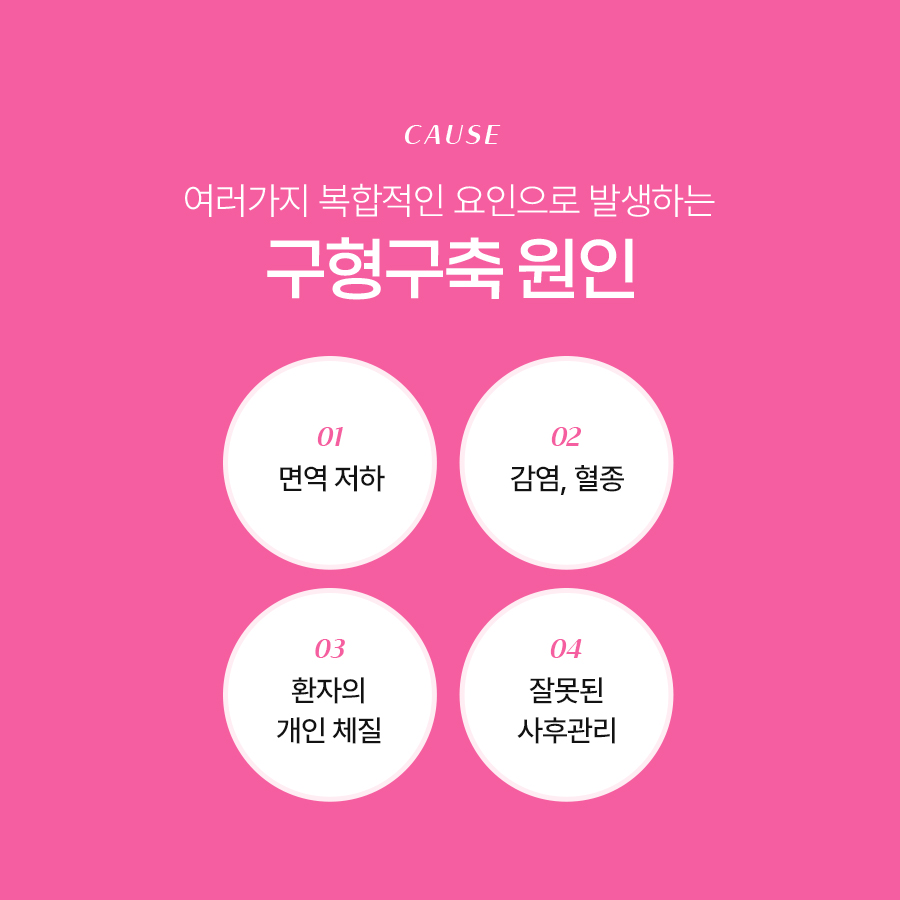
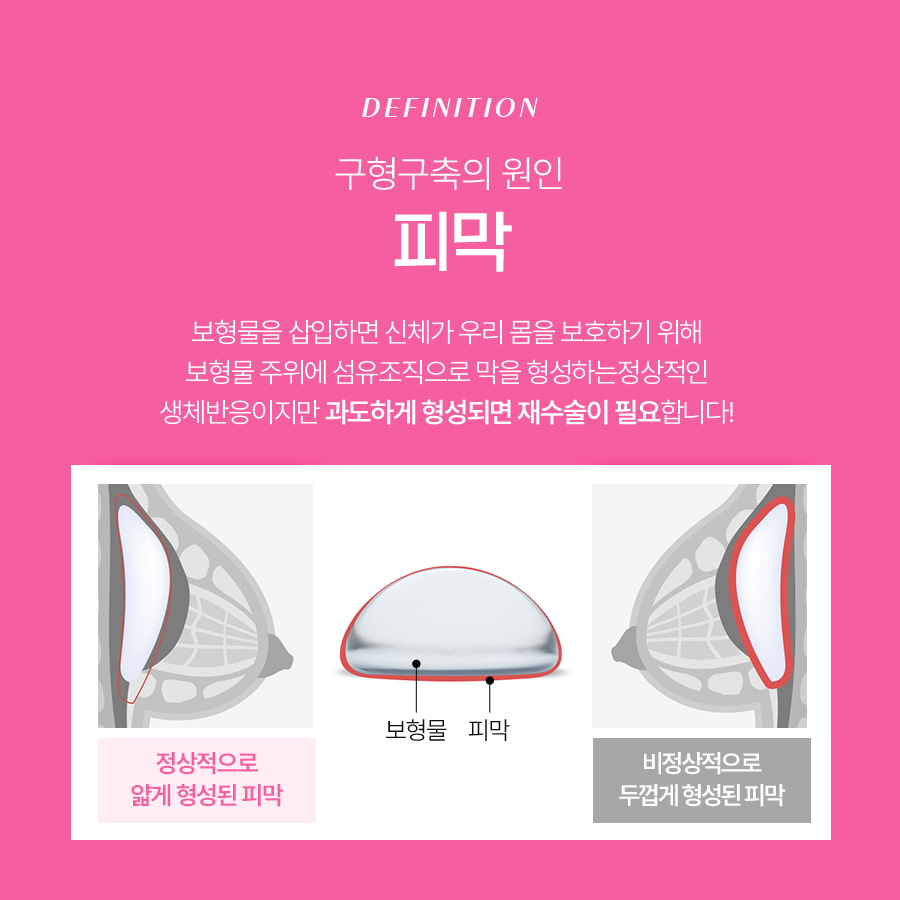
Capsular contracture refers to the abnormal thickening and contraction of the tissue capsule surrounding the implant over time after breast augmentation. It can be triggered by various factors, such as infection, a mild inflammatory response, an excessive defense reaction in which the body’s immune system recognizes the implant as a foreign body, the surgical method or the characteristics of the implant surface, or insufficient postoperative care.
In mild stages, there may be no major discomfort, but as capsular contracture progresses, the breast can gradually become firm, lose its shape, and even cause pain, making it difficult to resolve with simple massage or medication alone. In such cases, it is necessary to fundamentally address the problem through capsular contracture revision surgery, which removes the thickened capsule and safely replaces it with a new implant.
The importance of capsule removal and implant repositioning
The most important part of capsular contracture revision surgery is not simply replacing the implant, but completely removing the capsule that caused the contracture. This is called total capsulectomy, and by removing all of the thick tissue surrounding the implant, it creates new space and plays a crucial role in reducing the chance of contracture recurring in the future.
Also, during revision surgery, the implant is not placed in the same position as before. Instead, taking the adhered tissue into account, the implant position is newly adjusted or repositioned under the muscle or using a dual-plane technique to achieve a more stable result. In this way, capsular contracture revision surgery goes beyond simply changing the implant and is classified as a highly complex procedure that requires more precise technique than the initial breast augmentation. A delicate understanding of anatomy and the surgical judgment of an experienced medical team are very important factors.

Positive changes you can expect after capsular contracture revision surgery
When capsular contracture progresses, the breasts not only become firm and take on an unnatural shape, but asymmetry and pain can also occur, causing physical discomfort as well as significant psychological stress for the patient. However, when capsular contracture revision surgery is performed based on an accurate diagnosis and a professional surgical plan, many patients experience satisfying changes.
Through revision surgery, a hard, artificial feel can be restored to a soft, supple texture, and breast shape that had been pushed upward or become asymmetrical can also be corrected to look natural and balanced. In addition, once the capsule compressing the implant is removed, pain is greatly reduced, and in some cases, return of sensation can also be expected as self-sensation recovers. In this way, capsular contracture revision surgery serves as an important treatment process that goes beyond simple cosmetic improvement and enhances the patient’s quality of life.

How can capsular contracture be prevented?
Recently, to minimize recurrence of contracture and improve satisfaction with the results, various supplemental techniques have been applied together with capsular contracture revision surgery. One notable approach is combining the procedure with autologous fat grafting, which transplants the patient’s own fat around the implant to protect the tissue and provide cushioning, creating a more natural volume and feel.
In addition, reinforcement with artificial dermis is a method that applies a biomaterial that is safe for the human body around the implant to help suppress capsule formation and keep the breast shape stable, and it is especially effective in cases where the skin tissue is thin or there is a risk of adhesion.
On top of that, surgical techniques using endoscopy are becoming more common. This technique minimizes the incision, reducing scarring and making it easier to secure a clear view, which allows for more precise surgery. As such, the latest trends show that capsular contracture revision surgery methods are evolving beyond simple replacement surgery into a form that integrates multiple techniques.
Capsular contracture is a problem that can happen to anyone, but with the development of medical technology, it has become an area that can be sufficiently overcome. The important thing is to accurately identify the cause of the symptoms and choose a customized capsular contracture revision surgery method with skilled medical professionals who have experience with a wide range of cases.
Rather than simply replacing the implant as in the past, you can expect results that are even more satisfying than the initial surgery by taking a systematic approach that includes capsule removal, implant repositioning, and preventive techniques. We hope you can regain a healthy, natural breast line through professional diagnosis and thorough consultation so that capsular contracture becomes not a source of fear, but an opportunity for improvement.