Why Early Detection of Capsular Contracture Symptoms Matters

Breast augmentation surgery has established itself as an important medical procedure that enhances not only outward appearance but also psychological confidence. In particular, as there is a growing trend toward natural volume and texture without being excessive, the range of surgical techniques and implant options is also becoming more diverse.
However, to achieve satisfying results, careful observation is also needed during the recovery process after surgery, and it is important to understand accurately the capsular contracture symptoms that may sometimes develop over time. In this article, we have neatly organized only the essential information you need to know, focusing on the signs of capsular contracture, one of the major changes that can appear after surgery.

Why does capsular contracture happen?
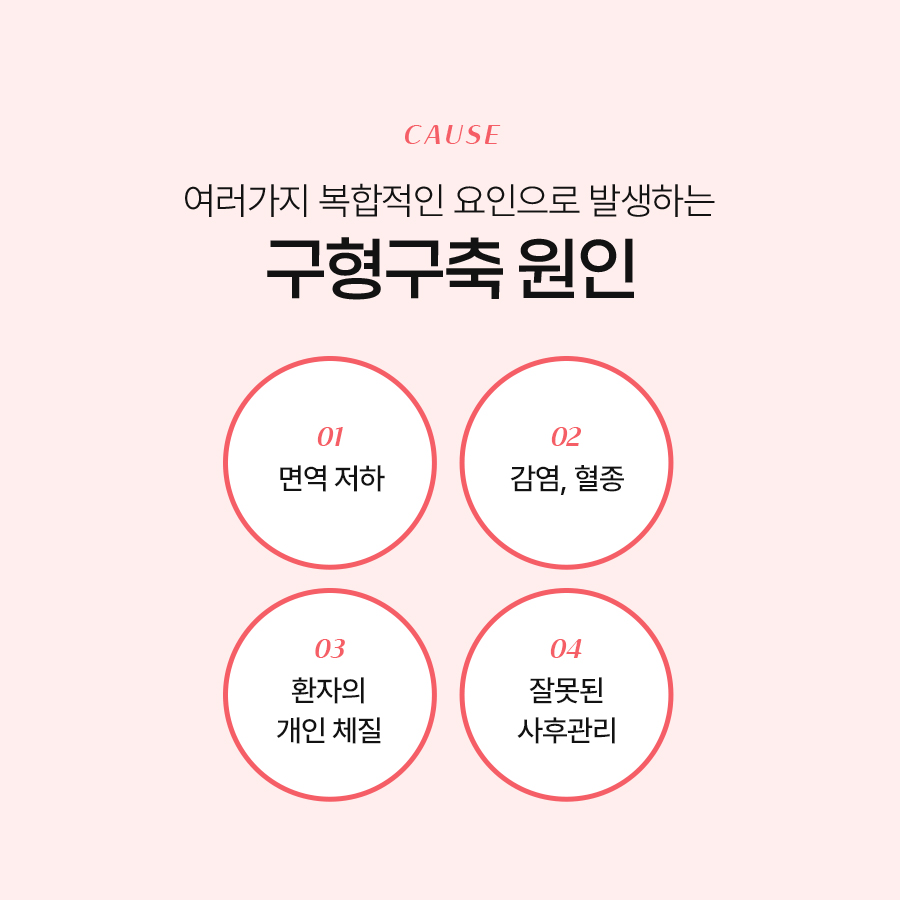
After breast augmentation, when an implant is placed inside the body, our body recognizes it and naturally forms a thin fibrous tissue membrane to wrap around the implant. This is called capsule formation, and in most cases it causes no problems; rather, it helps keep the implant securely in place. However, if this capsule becomes too thick or tight over time and contracts more than necessary, it can compress the implant and cause changes in the breast shape or feel.
This phenomenon, in which the tissue around the implant reacts abnormally and hardens, is called capsular contracture. It can occur due to various factors such as a particular body type, implant type, surgical placement, or irritation during the recovery process. Capsular contracture often develops gradually rather than suddenly, so it is very important to recognize the early subtle symptoms of capsular contracture and respond promptly.

What capsular contracture symptoms look like
Capsular contracture often appears gradually after some time has passed rather than immediately after surgery, and it can be identified through signals from the body. In the early stages, it starts with a subtle hardening of the breast’s feel without obvious discomfort, and extra caution is needed especially if only one side feels noticeably firmer than the other.
As time passes, the implant may become compressed and begin to shift from its original position, leading to slight asymmetry in breast shape, height, or placement. For example, if one side feels lifted when wearing a bra, or if the breast line looks noticeably different in the mirror, this may also be part of capsular contracture symptoms. Such changes are sometimes mistaken for a natural recovery process, but if the symptoms become more pronounced, it is best to seek a specialist’s evaluation quickly.
You can tell from pain and implant position changes
If capsular contracture progresses beyond a certain level, it may appear as physical discomfort or pain. Typical symptoms include a pulling sensation in the breast when raising the arms or moving sideways, or a heavy pressure felt when pressing on the area; many people also describe a dull soreness similar to bruising. If these capsular contracture symptoms are repeatedly felt during everyday movements, it may be a sign that the implant is being compressed by a hard capsule.
Another sign is an abnormal implant position, where the implant rises upward from its original location or shifts to one side, making the breast height or shape appear asymmetrical. If the shape looks awkward when lying down, or if the movement feels unnatural when pressed by hand, you may suspect progression of capsular contracture. Of course, not all pain or shape changes are necessarily caused by capsular contracture, so if you notice anything unusual, the safest approach is to get an accurate diagnosis at a hospital.
Capsular contracture symptoms: how to check yourself
Because capsular contracture can be managed more simply when found early, it is important to make a habit of observing small changes in your body. If two or more of the following items apply, you may want to suspect capsular contracture symptoms. For example, if one side of the breasts feels especially firm or the breast shape has changed noticeably, caution is needed.
Also, if you feel pulling or pressure in the breasts when moving, or if the implant feels as though it has shifted to one side when lying down, more careful observation is necessary. In particular, pain that appears only in certain positions can be easy to dismiss as simple muscle soreness, but it is better to keep in mind that it may be an early sign of capsular contracture and check it carefully. However, self-diagnosis is only for reference; a more accurate assessment must be made through examination by a medical professional.
Capsular contracture that can occur after breast augmentation is a bodily response that may happen more often than expected, but fortunately, thanks to improvements in implant quality and advances in surgical techniques, both the incidence and severity of symptoms are gradually decreasing. Above all, when capsular contracture symptoms are suspected, the most important thing is to recognize the changes promptly and consult a medical professional. This is because in most cases, if an accurate diagnosis and appropriate treatment are provided early, the breast’s natural shape can be maintained or improved.
Therefore, to maintain a healthy breast line for a long time, careful observation that does not miss even small differences in daily life and consistent self-care are essential. Please refer to the information about capsular contracture symptoms shared today and develop a smarter, more systematic self-check habit.