When Is Inverted Nipple Correction Surgery Needed?

The nipple is an area of the female body that has not only a functional role, but also psychological and aesthetic significance closely tied to self-esteem. However, an inverted nipple, where the nipple is pulled inward, can bring not only cosmetic concerns but also various inconveniences such as difficulty with hygiene, breastfeeding problems, and repeated skin irritation.
In particular, if daily discomfort continues or if you are planning pregnancy and breastfeeding, it may be worth considering medical correction. One method that can help in such cases is inverted nipple correction surgery, a medical solution that improves both the function and appearance of the nipple. Today, we will take a detailed look at what you need to know, from the causes of inverted nipples to the surgical process and the changes you can expect.

Why does the nipple disappear inward? What is an inverted nipple?
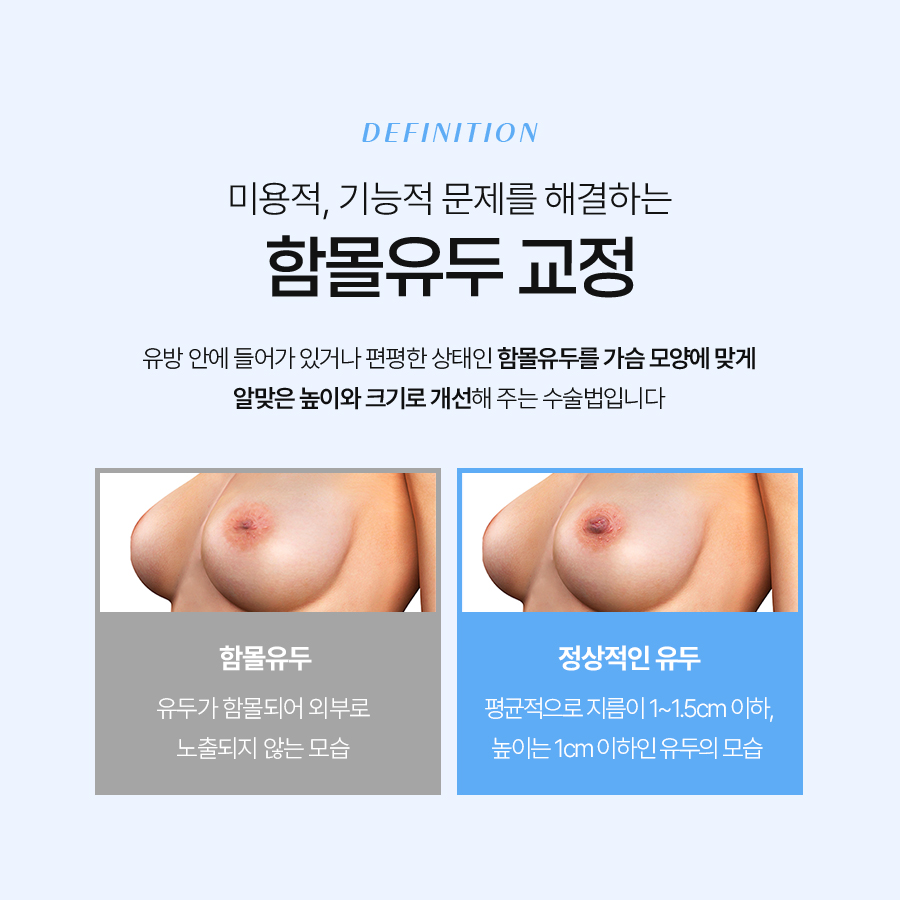
An inverted nipple refers to a shape in which the nipple does not protrude normally and instead is drawn inward toward the areola. Depending on the person, it may not be visible most of the time but temporarily protrude in response to temperature changes or stimulation, or conversely, it may remain hidden at all times because even with stimulation it never comes out.
In general, it is classified from grade 1 to grade 3 according to how responsive and persistent the nipple protrusion is. Grade 1 is a mild condition in which the nipple temporarily protrudes with touch or warmth, grade 2 is a middle stage in which it protrudes but easily retracts again, and grade 3 is a severe inversion in which it remains completely hidden with no response to any stimulation. This condition is often congenital, but it can also develop due to acquired factors such as damage to the milk ducts during breastfeeding after childbirth, mastitis, trauma, or infection.
When the nipple remains inverted for a long time, hygiene becomes difficult, inflammation or unpleasant odor may occur, and it can directly affect breastfeeding, so early correction is helpful. In particular, when symptoms are severe or cosmetic concern is significant, inverted nipple correction surgery is recommended as an effective solution that can improve both function and appearance at the same time.
The real reason surgery is needed
An inverted nipple is more than just a visual issue; it is a condition that can cause various inconveniences in terms of hygiene, function, and psychology. Because the nipple is pulled inward, sweat and secretions can easily accumulate and ventilation is poor, creating an environment where bacteria can grow easily. This can lead to repeated inflammation or mastitis and, over time, may also cause chronic skin problems.
In addition, for women planning pregnancy and childbirth, if the nipple does not protrude sufficiently, it may be difficult for the baby to latch properly, directly affecting breastfeeding. Especially when the inversion is severe, breastfeeding itself can be difficult, so correcting the nipple in advance to restore its function can be helpful.
There are also many cases in which external factors such as discomfort when wearing underwear, a sense of self-consciousness about body image, or psychological 부담 during intimate relationships lead to lowered self-esteem. Inverted nipple correction surgery, performed to improve these various factors comprehensively, is considered a practical solution that can improve not only appearance but also function, hygiene, and quality of life.
What changes happen after surgery?
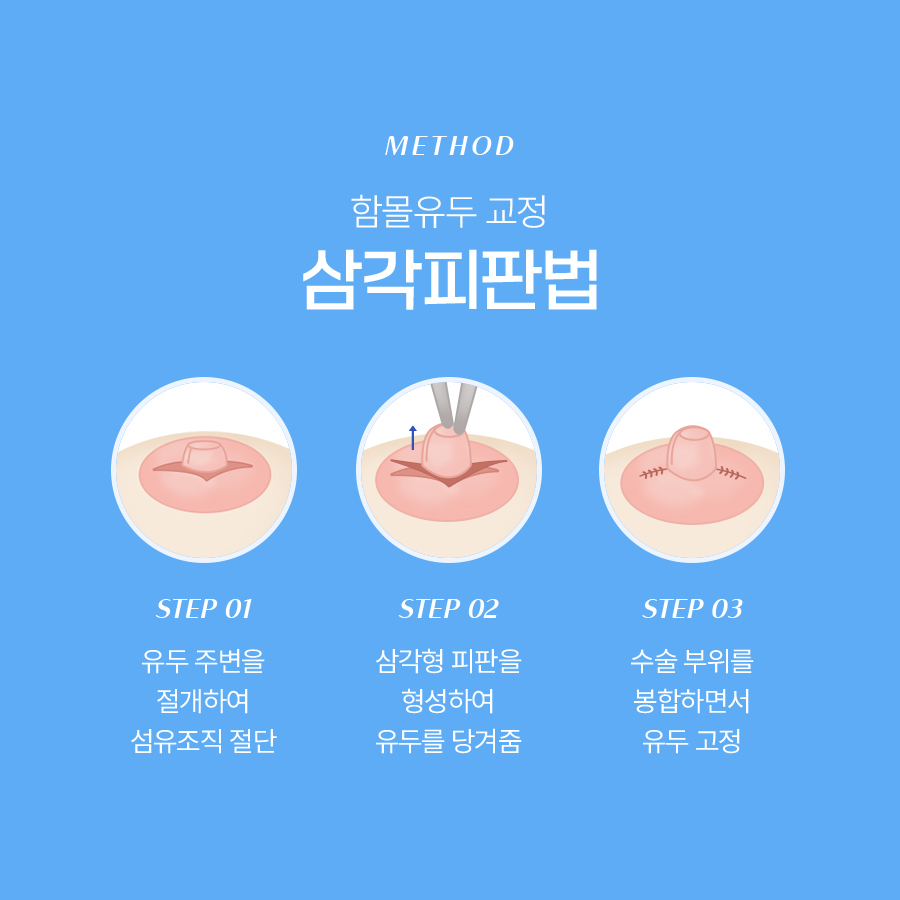
The changes that many people commonly feel after inverted nipple correction surgery go beyond simply a change in appearance. After surgery, as the nipple becomes stably protruded, not only the appearance but also satisfaction in daily life often improves noticeably. The imbalance felt when wearing underwear and the way clothes fit, which used to be a concern, naturally improve, and as a more positive perception of overall body image forms, confidence is also restored.
In particular, as mentioned earlier, for women planning pregnancy or childbirth, nipple protrusion can reduce the burden related to breastfeeding and provide greater psychological comfort in preparation. Meaningful changes also appear in terms of hygiene. A protruding nipple allows air circulation to work more smoothly, helping the skin stay cleaner, and previous issues with frequent inflammation or secretions are also naturally reduced. In this way, inverted nipple correction surgery is regarded as a procedure that satisfies both practical effects and psychological satisfaction, beyond simple appearance correction.
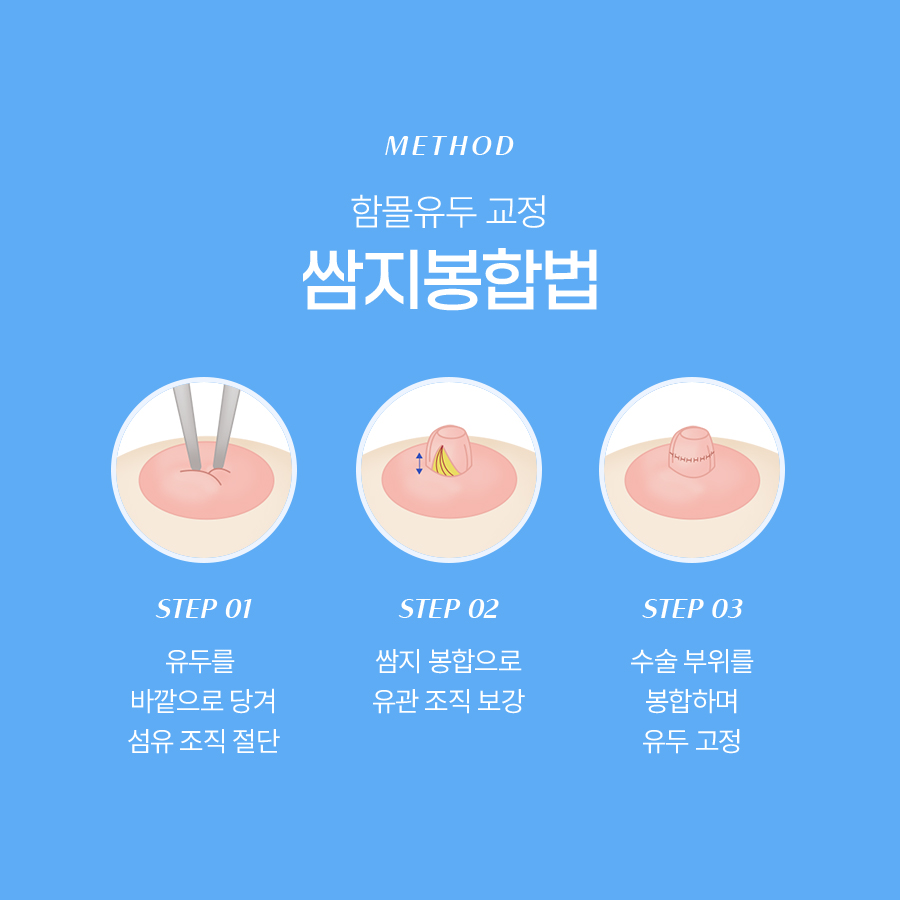
If this sounds like you, consider correction surgery
If your nipple frequently turns inward or remains hidden at all times even without any particular stimulation, you are likely to experience inconvenience in daily hygiene management and appearance. Also, for women preparing for breastfeeding before childbirth, whether the nipple protrudes can affect the baby’s ability to latch, so it may be helpful to consider correction in advance.
If you are struggling with repeated inflammation or skin problems around the nipple, an approach aimed at addressing the underlying cause may be necessary. If the shape of the nipple appears asymmetrical or feels compressed when wearing a bra or tight clothing, you may come to feel the need for aesthetic improvement. Above all, for those who want to regain confidence in their body image, inverted nipple correction surgery can be an option that brings a more positive change.
Although many people experience inward-drawn nipples, the condition is often dismissed as merely a cosmetic issue or left untreated for a long time. However, because it can actually affect everything from hygiene problems to breastfeeding function and psychological confidence, active improvement may be needed to reduce daily inconvenience and improve quality of life.
Fortunately, inverted nipple correction surgery is a relatively simple procedure that can produce natural-looking results after a short recovery period, and many patients say their quality of life changed after surgery. However, because nipple conditions vary widely from person to person, if you are considering surgery, it is important not to choose based only on cost or speed. Instead, through consultation with a medical professional who has sufficient clinical experience in nipple surgery, you should find the method most suitable for you.