The Process of Restoring a Natural Line After Revision Surgery for Breast Capsular Contracture

Over time after breast augmentation, the softness and contours that were first felt may gradually change. One of the most common changes is capsular contracture, where the breast becomes firmer or its shape changes, reducing its natural appearance. In situations like this, it is important not to dismiss it as a simple change, but to accurately identify the cause and condition and provide appropriate improvement.
Recently, revision surgery for breast capsular contracture, which takes tissue recovery and shape restoration into account at the same time, has been performed more professionally, making it possible to expect more natural and stable results. Today, let’s take a closer look at how capsular contracture develops and how it can be improved through revision surgery.
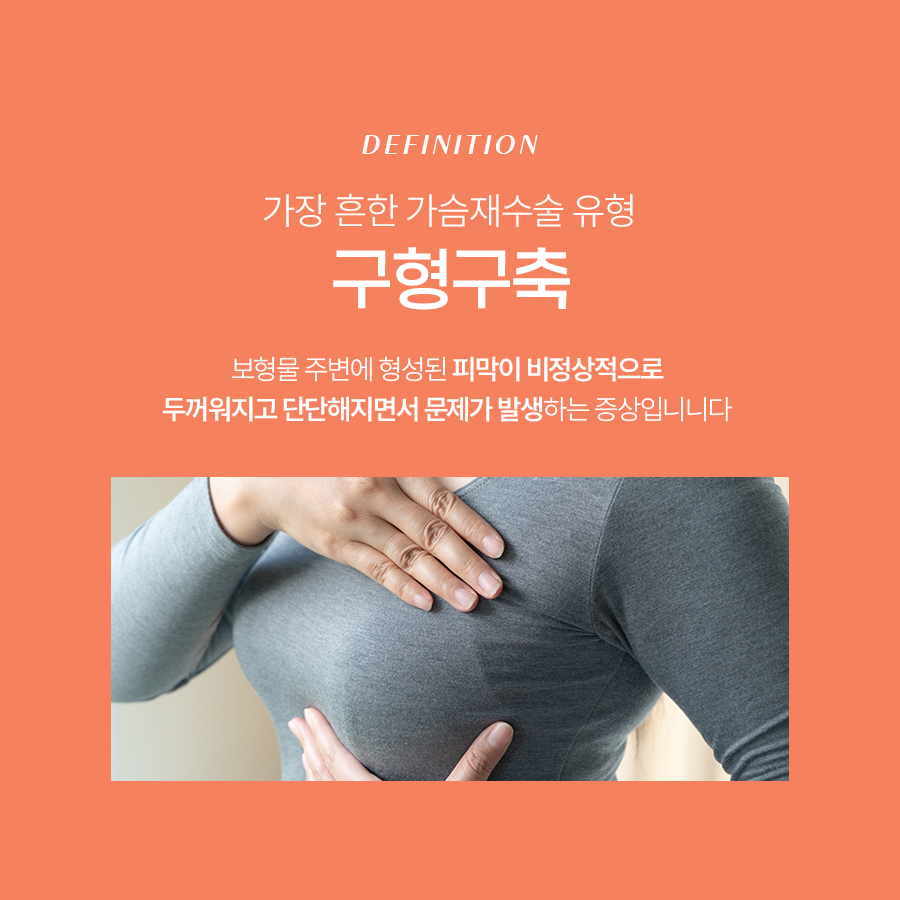
The concept and characteristics of capsular contracture
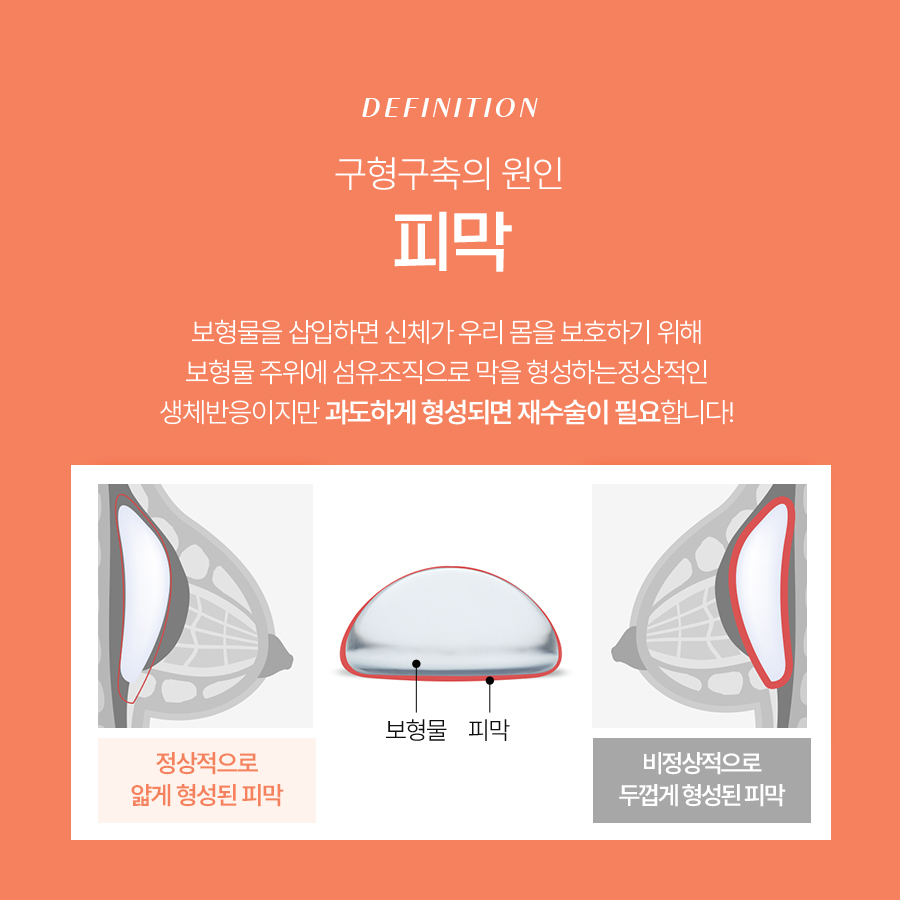
After breast augmentation, the body naturally forms a thin membrane, called a capsule, to protect the implanted implant. Normally, this capsule softly and flexibly surrounds the implant and helps maintain a stable shape, but over time, if it thickens or hardens for some reason, it can compress the implant, changing its shape or making it feel hard.
This phenomenon is called capsular contracture, and it can lead to changes such as the implant riding higher or the left and right sides appearing different. In such cases, rather than seeing it only as a cosmetic issue, it can be helpful to correct it through revision surgery for breast capsular contracture to restore tissue condition and recover a natural volume.

Various causes of capsular contracture
Capsular contracture often occurs not for a single reason, but because several factors act together. After surgery, tissue can become hard when the capsule becomes excessively thick or when minor bleeding and inflammatory reactions continue. In addition, the surface condition of the implant, friction with surrounding tissue, the extent to which space was created during surgery, and an individual’s fibrotic response can also have an effect.
Because these causes differ from person to person, results can vary even with the same surgery. Therefore, it is important to identify the exact cause and make careful corrections. If changes have already progressed, revision surgery for breast capsular contracture tailored to the condition can help soften the tissue and restore a natural shape.
Is revision surgery always necessary when capsular contracture occurs?
Not all cases of capsular contracture lead directly to revision surgery, but if the breast shape changes or feels firm, it is a good idea to get a professional diagnosis. If the hardened capsule condition continues for a long time, the implant may be compressed, tissue flexibility may decrease, and natural recovery over time may become difficult.
In such cases, after accurately assessing the condition, it can be helpful to clean up the capsule and correct the implant so that it can settle stably, through revision surgery for breast capsular contracture if needed. Rather than simply waiting for time to solve it, consulting a specialist early to check the current condition can make a big difference in future results.
Specific changes that can be expected through revision surgery
If you undergo revision surgery for breast capsular contracture, you can expect not only to resolve the problem, but also to see clearer and longer-term changes. First, the breast, which may have felt hard, can regain a soft and natural feel through capsule management and implant repositioning, while left-right asymmetry or differences in volume can also be carefully corrected to achieve a stable shape.
In addition, areas that had appeared lifted or compressed can improve, and as skin elasticity and the breast’s natural movement are restored, visual and tactile satisfaction increase. If the existing capsule is properly managed during revision surgery and a new implant or position is adjusted, the likelihood of recurrence of capsular contracture can also be lowered, helping maintain a natural line for longer than before. In other words, revision surgery is not merely a correction, but an important process that improves both the shape and feel of the breasts while securing long-term stability.
Revision surgery for breast capsular contracture is not simply a process of replacing the implant. Rather, it is a delicate reconstructive process that carefully redesigns the already formed tissue environment and helps the body adapt stably to the new implant. When an accurate diagnosis, a systematic surgical plan, and the skill of an experienced medical team come together, revision surgery can lead not just to relief from concerns, but to results that are more satisfying than expected.
Through this, the breasts can once again regain a soft and natural feel, and their shape and volume can also improve, allowing a return to a more confident appearance than before. This is why it is important to prepare carefully and consult thoroughly with a specialist when considering revision surgery.