Is the Triple-Plane Method the Right Breast Augmentation Technique for Me?

When planning breast augmentation, it is important to consider not only size or shape, but also a style that suits your body type, a natural-looking line, and the recovery process. Recently, the triple-plane method has been drawing attention as a surgical technique that can carefully reflect these factors.
This method is a customized breast augmentation technique that helps implants settle more stably by precisely analyzing the anatomical structures of breast tissue, muscle, and the skin layer. Today, we will take a closer look at the principles of the triple-plane method, who it is suitable for, and how the surgery is performed, focusing on why this method is regarded as a new option that can achieve both natural appearance and stability.
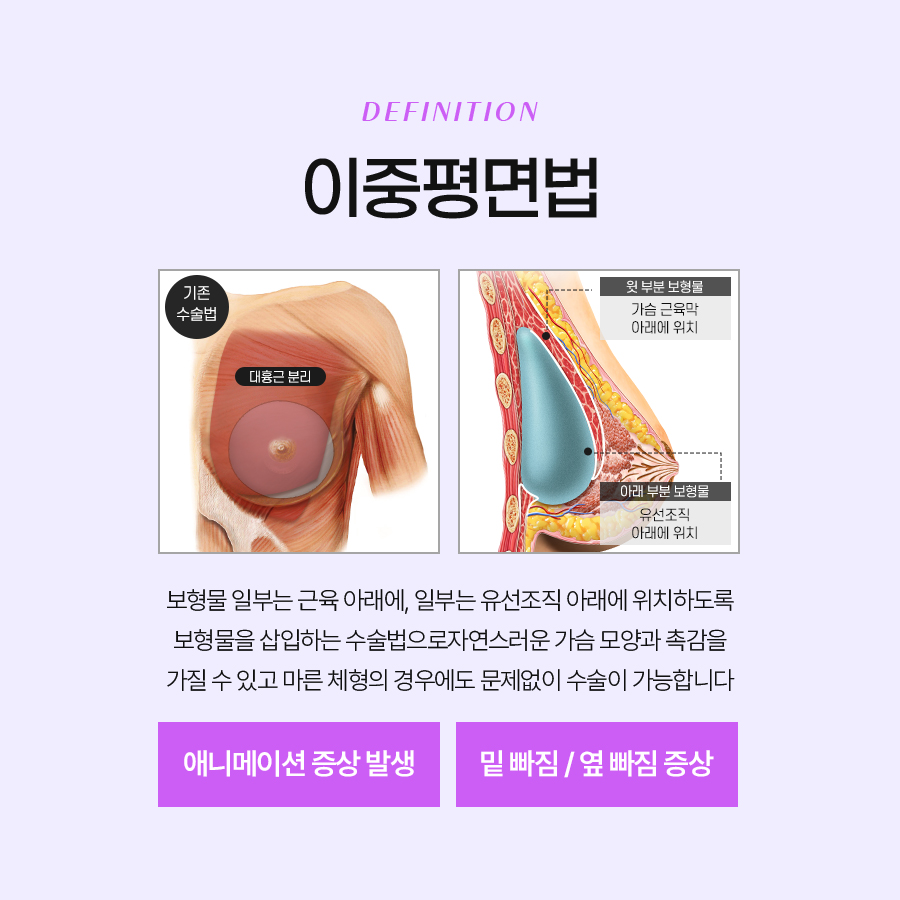
The Development of Breast Augmentation: What Is the 'Triple-Plane Method'?
Breast augmentation is not simply a surgery that inserts implants to increase size. It is a precise procedure that creates a harmonious shape by carefully analyzing factors such as the thickness of an individual's breast tissue, the position of the muscles, skin elasticity, and the curve of the chest wall. Recently, the triple-plane method, which can consider these anatomical factors in a three-dimensional way, has been gaining attention. The triple-plane method is designed so that the implant does not come into direct contact with the skin, while settling naturally by using the three layers above the glandular tissue, under the fascia, and under the pectoralis major muscle at different depths.
Through this approach, even when upper volume is lacking or the skin is thin, it is possible to create a soft and stable breast line. It is also receiving strong interest from both medical professionals and patients because it allows for customized surgery tailored to body type and tissue condition.
The Structure and Principle of the Triple-Plane Method
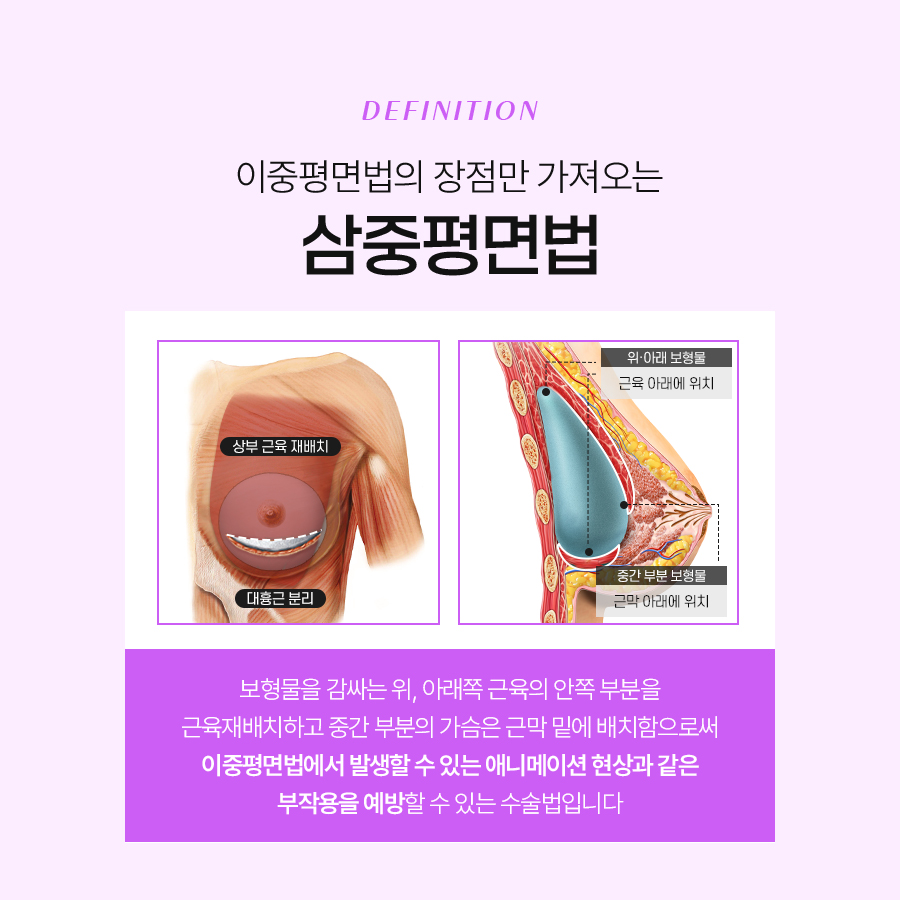
The triple-plane method is not simply a way of placing implants in three separate areas. It is a sophisticated surgical technique designed to use the anatomical structure of the skin, glandular tissue, and muscle layers in a three-dimensional way so that the implant can settle in the most ideal position. First, in the first plane, the layer beneath the fascia is used so that the outer contour of the implant is softly covered. In the second plane, the area beneath the glandular tissue is delicately adjusted to form upper volume and a natural curve.
Finally, in the third plane, beneath the pectoralis major muscle, the muscle covers the implant more stably, minimizing shape changes caused by movement and helping the result maintain its form over time. As these three layers work together, even in cases of thin skin or sagging glandular tissue, the implant is protected more securely and the overall breast line is helped to appear smooth and natural.
In What Cases Is the Triple-Plane Method Suitable?
The appropriate breast augmentation method varies depending on a person's body type and tissue condition, but the triple-plane method is especially effective under certain conditions. In cases where the breasts are sagging or ptosis has progressed, simple implant insertion alone may make the upper volume appear insufficient. The triple-plane method helps improve the contour of sagging breasts because it lifts the glandular tissue and naturally fills in the upper volume.
In addition, for body types with thin skin or subcutaneous tissue, the edge of the implant may become visible or movement may look unnatural. This method allows multiple layers of tissue to softly cover the implant, helping maintain a natural feel and shape.
Lastly, when a person wants both fullness in the upper area and overall softness, the triple-plane method allows the muscle layer to stably cover the implant, enhancing volume while preserving the soft texture beneath the glandular tissue. Thanks to this three-dimensional design that uses anatomical structure, harmonious and natural results can be expected across a wide range of body types.

Key Advantages of the Triple-Plane Method
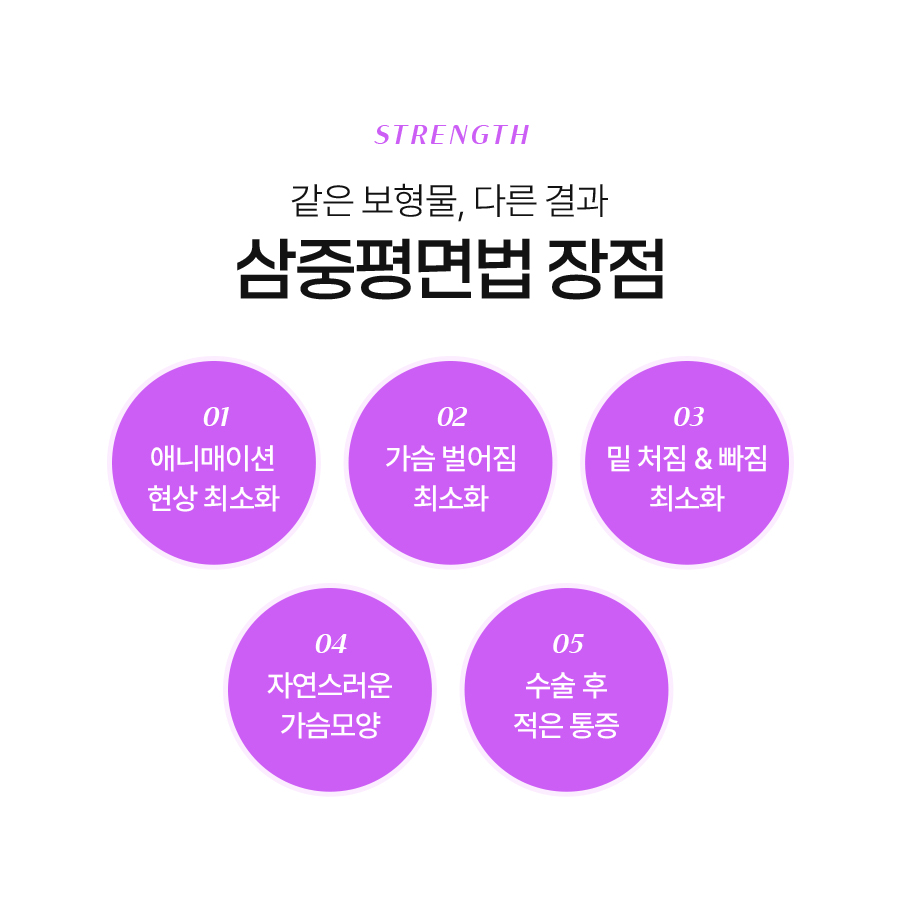
Because the triple-plane method uses multiple layers of tissue to stably cover the implant, a natural appearance can be expected even in thin or slender body types, with implant contours or rippling being less noticeable. At the same time, even when upper breast volume is lacking, the glandular lifting effect helps create a soft and feminine line. It also minimizes deformation or animation phenomena that can occur during muscle contraction, helping the breast shape remain stable during exercise or arm movement.
In addition, because the implant position and shape remain relatively consistent over the long term, it may help prevent glandular sagging or descent. It is also regarded as a surgical method that combines flexibility and stability because it can be customized to a variety of body types and conditions, such as skin thickness, degree of glandular development, and whether breast sagging is present.
The trend in breast augmentation is moving beyond simply increasing volume and toward pursuing natural shape and long-term stability at the same time. In particular, the triple-plane method is evaluated as a customized surgical technique that provides natural curves and texture by carefully considering the structure of the breast tissue, muscle, and skin layers so that the implant can settle stably according to the body type.
However, it is not necessarily a method needed for every patient. The key is for a specialist to precisely diagnose several factors, such as the individual's body type, the degree of glandular development, and skin thickness, and then tailor the surgical plan accordingly. Through this process, the triple-plane method has established itself as a noteworthy option in modern breast augmentation because it can help maintain a harmonious and natural breast line over time, beyond simple volume enlargement.