Why Understanding the Structure Matters in Nipple Inversion Correction Methods

Nipple inversion may not appear as a major change from the outside, but in reality, many people experience discomfort in hygiene care or clothing, and the concern can continue for a long time. For this reason, more and more people have recently been looking into correction not just for cosmetic purposes, but as an option for comfortably managing their own body.
In particular, because it is necessary to understand the structural reasons nipple inversion occurs and the different forms it takes from person to person, it is common to look for related information first in order to identify the appropriate nipple inversion correction method. So in this article, we will take a closer look at the process by which nipple inversion forms, the basic principles of correction, and the recovery process.
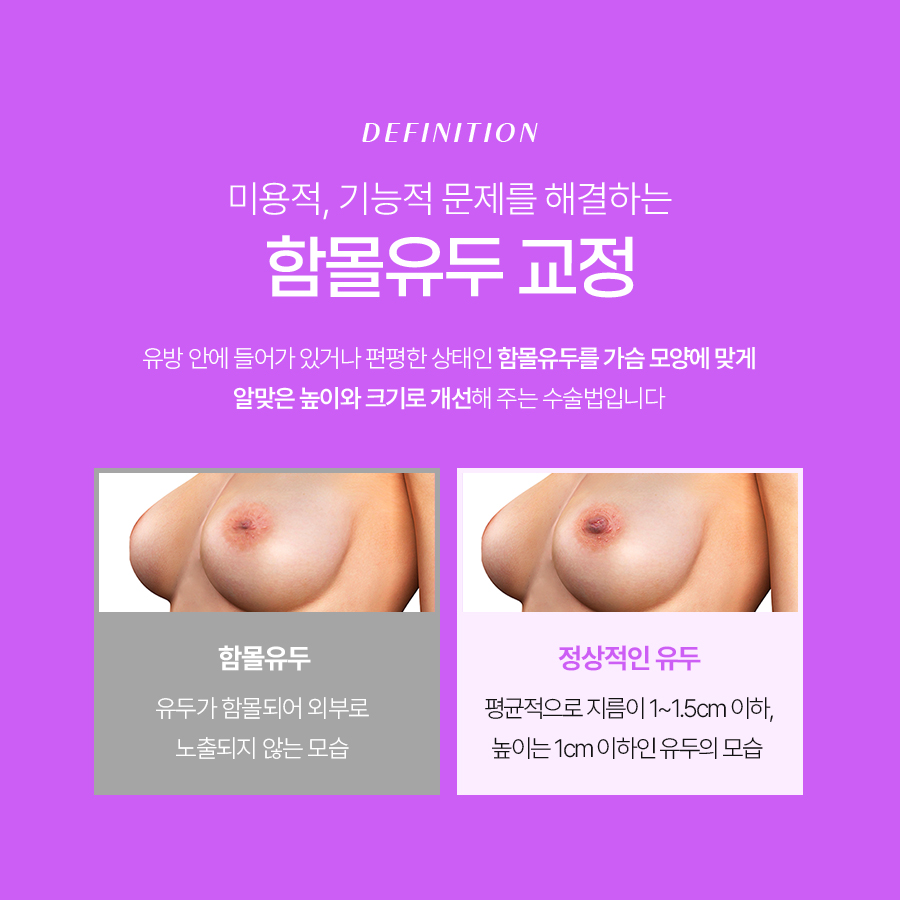
What kind of structure causes nipple inversion?
The nipple is not simply a protruding shape on the outside; inside it, ducts, connective tissue, fine muscle fibers, and skin layers are intricately arranged to form its unique structure. However, if some of these tissues act in a direction that pulls inward rather than pushing the nipple outward, the nipple may take on an inverted shape.
For example, this may happen when the ducts are relatively short, when the fibrous tissue beneath the nipple is tightly bound, or when the base is congenitally tilted inward. If factors that reduce the elasticity of the skin or surrounding tissue are added, the nipple may not protrude outward easily. Because these structural differences appear to varying degrees, they become an important 기준 when determining the nipple inversion correction method that fits each person.

Guidance on the core principles of nipple inversion correction
Nipple inversion correction can be seen as a process of reducing the structural factors that pull the nipple inward and creating an environment where it can naturally remain outward. Even when different methods are used depending on the individual’s condition, the basic principle remains largely the same.
The process begins by relieving the tension in the short ducts or fibrous tissue that pull the nipple inward, then forming stable support at the base so the nipple does not retract inward again, and finally adjusting the shape so the nipple’s natural texture and volume can be revealed more naturally. This process serves as an important 기준 when choosing the nipple inversion correction method suited to each person, with a focus on helping the nipple shape and protrusion settle more naturally.
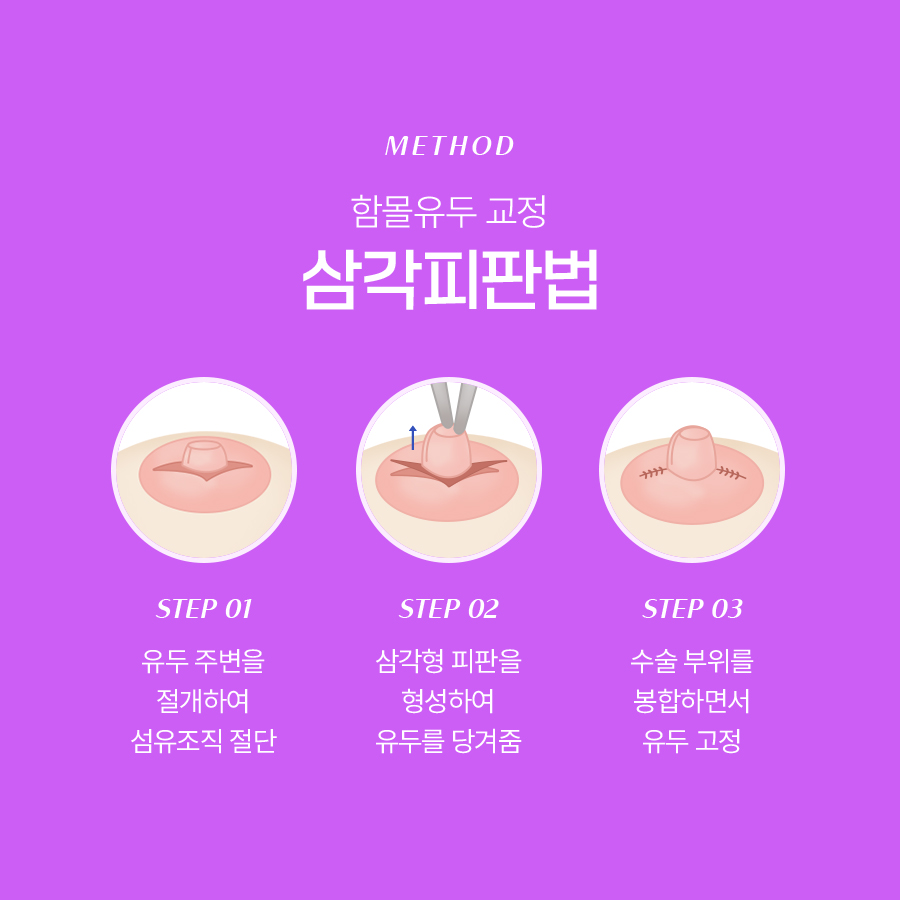
Correction criteria that vary depending on individual structure
The biggest feature of nipple inversion correction is that one method is not applied to everyone; rather, it requires a tailored approach based on a detailed understanding of each person’s structural characteristics. It is necessary to consider whether there has been breastfeeding experience, how much of the ducts should be preserved, the firmness of the tissue at the nipple base, whether there is left-right asymmetry, and even the depth of the inversion.
When these factors are combined, even in a non-incisional approach that may seem the same, the detailed adjustments can differ, and the incisional method may also proceed in completely different directions depending on the individual’s conditions. That is why, when determining the nipple inversion correction method that is right for you, it is important to comprehensively examine these individual factors, and based on that, you can expect a more natural and stable result.
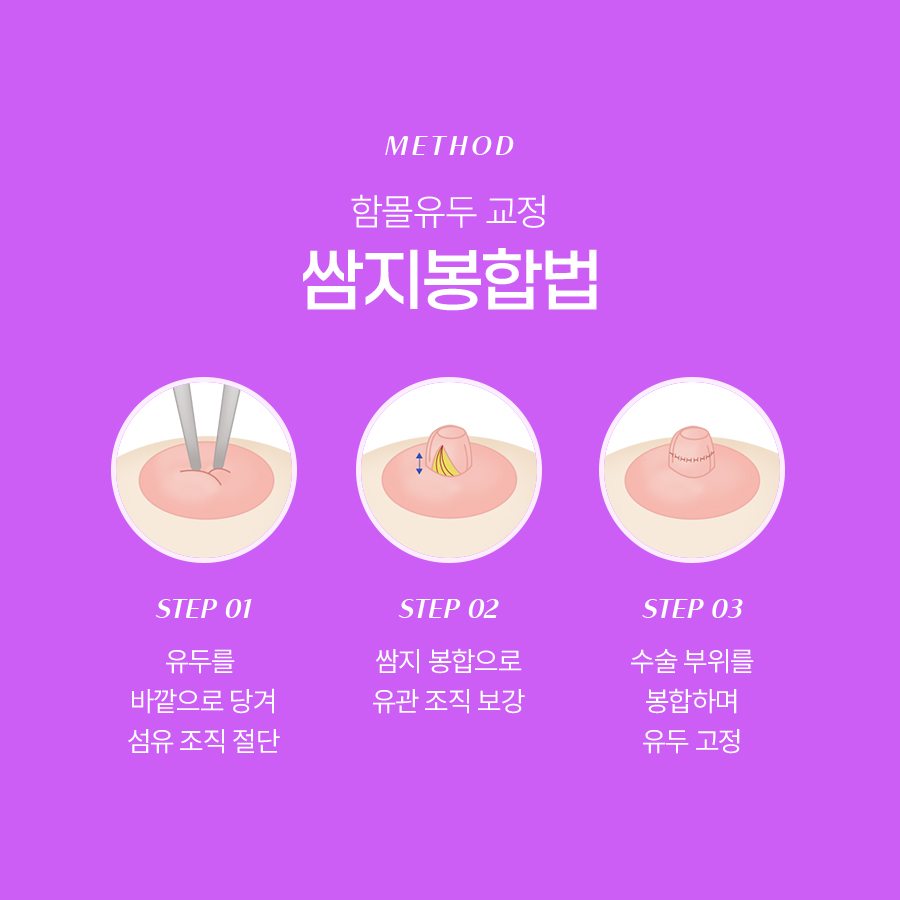
Parts of the change you can expect after correction
After nipple inversion correction, although there are differences depending on the individual’s structure, the nipple’s original shape often becomes clearer and more stable. Some people also say that the area that used to subtly bother them when it came into contact with clothing or certain materials has become much more comfortable.
In addition, because the protrusion is maintained, cleaning and caring for the surrounding area is often much easier, and some people feel relieved psychologically because a concern they had carried for a long time has been resolved. These changes appear more naturally when the nipple inversion correction method suited to the individual is applied, and in many cases satisfaction increases as the small comforts felt in daily life accumulate.
Nipple inversion correction is not simply about changing appearance; it can be seen as a process that more closely helps restore the structural balance the nipple originally had. Above all, because the cause of nipple inversion comes from each person’s tissue structure and lifestyle habits, choosing the nipple inversion correction method that suits you becomes an important 기준 for expecting natural results.
If this is something you have worried about for a long time, the first step is to accurately understand your nipple structure and lifestyle pattern. When approached on that basis, you can experience a more comfortable and stable change.