How to Create a Natural Line in Implant Breast Augmentation

For those preparing for breast augmentation, the first concern is whether the implant should be placed above or below the muscle. In the past, this plane selection was considered a key factor that determined the surgical result, but recently, even in implant breast augmentation, demand has been growing for delicate lines and body-type-specific designs that are difficult to express with a single plane alone, drawing attention to new methods.
A representative technique among them is the triple-plane method, which combines multiple layers of tissue as needed to design the upper, middle, and lower lines more precisely. Today, we will take a step-by-step look at how this triple-plane method is performed, how it differs from the conventional dual-plane method, and why it has become a preferred technique among specialists.
Structure of the triple-plane method
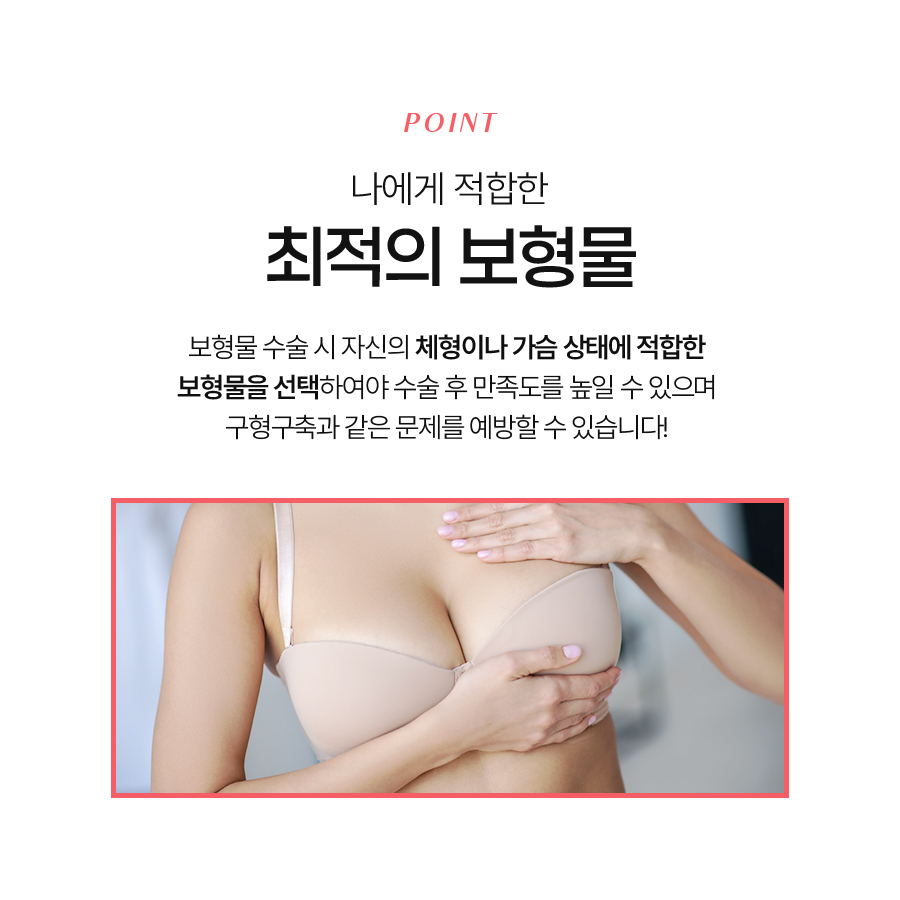
The triple-plane method is, as the name suggests, a three-dimensional surgical technique that organically combines the area beneath the pectoralis major muscle, the space behind the glandular tissue, and the fascia layer to design the upper, middle, and lower portions of the breast in different ways. Unlike conventional methods that place the implant in a single plane, its distinguishing feature is that it finely adjusts the proportion of each layer while taking into account the thickness of the individual’s tissue and the flow of the line, even in implant breast augmentation.
It is easy to understand as a method in which the upper portion is stably supported under the muscle, the middle area uses the firm structure of the fascia to balance movement, and the lower portion is designed using the space behind the glandular tissue so that natural spreading and volume development are possible, resulting in a more natural and three-dimensional overall line.

Understanding the structure of the triple-plane method
The triple-plane method is not a system in which the implant is placed in a single plane as in the past. Rather, it is a method of designing the upper, middle, and lower parts of the breast in different layers so that they are balanced, and it is used in implant breast augmentation by those who want a more three-dimensional result.
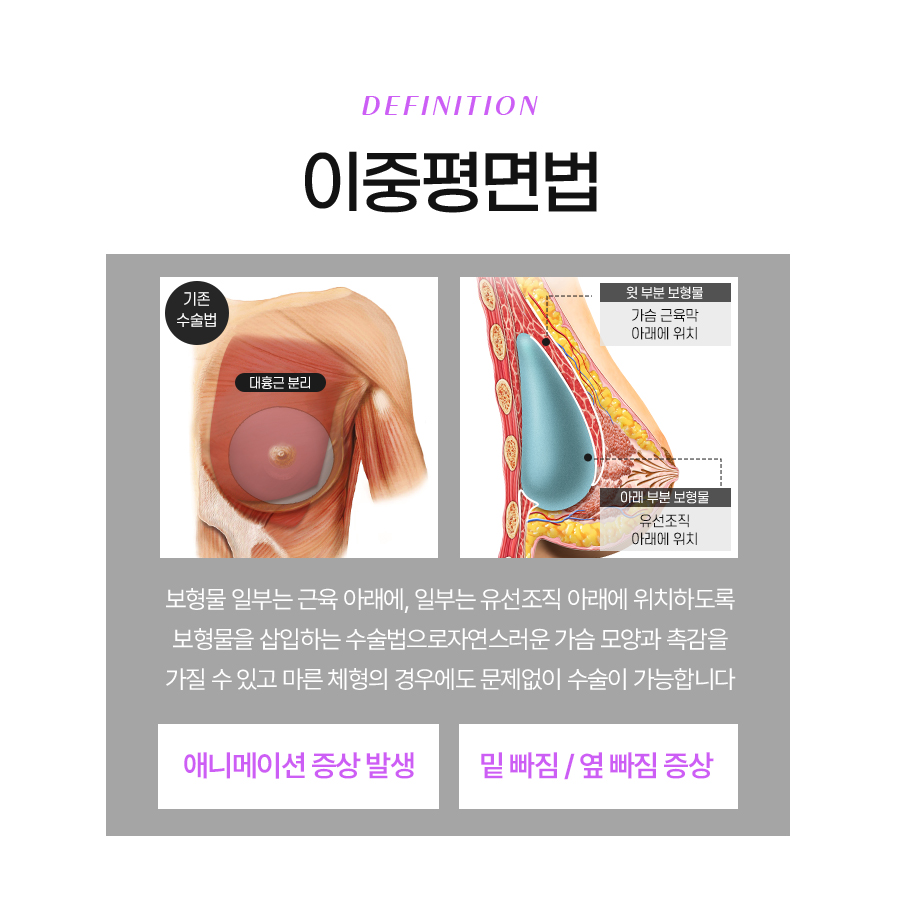
The upper portion leaves enough space beneath the muscle so that the implant is naturally covered even in thin tissue. The middle section uses the elasticity and support of the fascia layer to prevent the implant from moving or spreading excessively. The lower portion uses the space above the muscle to allow the inframammary fold to descend smoothly, completing a natural drape.
Because the ratio and boundaries of these three layers are finely adjusted according to the individual’s body type, tissue thickness, and inframammary fold position, the triple-plane method can be understood not as a simple choice of plane, but as a customized structure that “designs each area differently.”
Why the triple-plane method is drawing attention
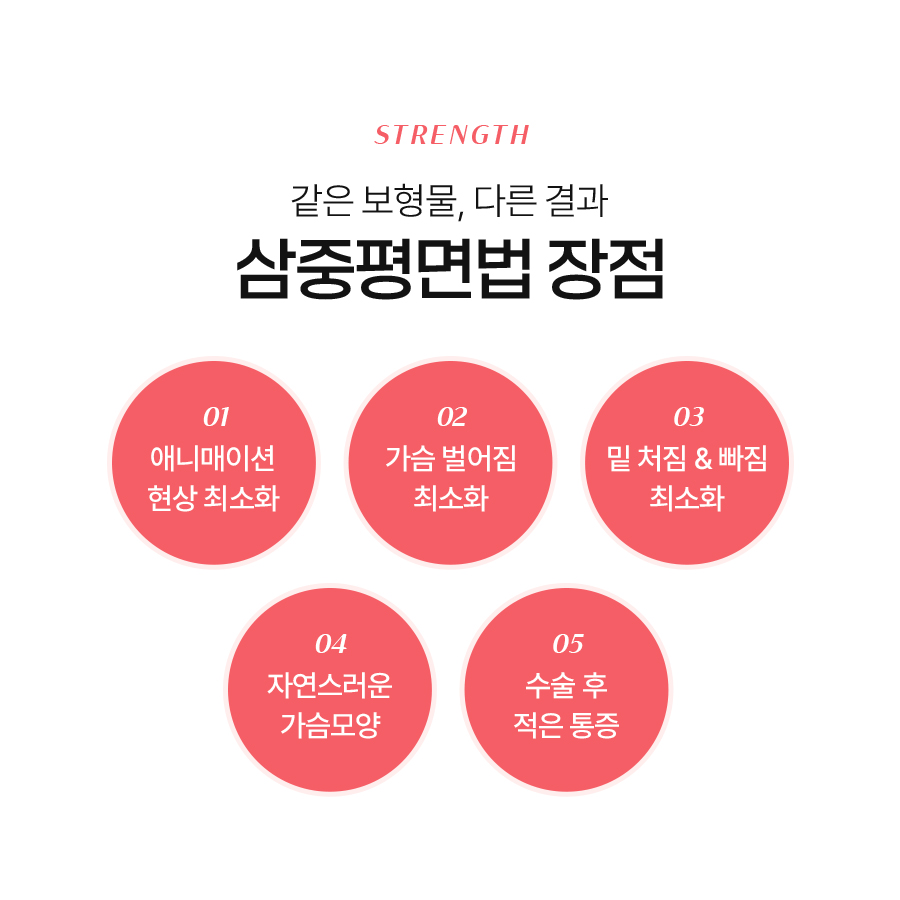
The reason the triple-plane method is drawing attention in the breast augmentation field these days is that it is not merely a way to increase volume, but allows for customized design by adjusting the ratio of the three layers according to the individual’s body shape and tissue characteristics. This aligns well with the trend in implant breast augmentation toward more detailed sculpting. When the upper tissue is thin, a wider area beneath the muscle can be used to secure natural coverage. For a body type with a high inframammary fold, the space above the muscle can be expanded to bring the lower line down naturally. When the ribcage is wide, the fascia layer can be used to control spreading. In this way, different combinations can be used depending on the situation.
Because the line is designed by layer, the feel also becomes a balance of softness in the upper portion and natural spreading in the lower portion, while the support of the fascia layer reduces unnecessary movement of the implant. In addition, the triple-plane method is highly regarded because it makes it easier to see a natural silhouette early on, with less emphasis on excessive upper volume or a clumped appearance in the lower line immediately after surgery.
Comparison between the dual-plane method and the triple-plane method
To briefly summarize the difference between the dual-plane method and the triple-plane method, both have their advantages, but there is a major distinction in how they are designed, and the selection criteria in implant breast augmentation also vary depending on the desired line. The dual-plane method uses the two layers beneath the muscle and behind the glandular tissue and has the strength of achieving basic naturalness. It is a method designed within an already defined framework.
In contrast, the triple-plane method combines a total of three layers—the area beneath the muscle, behind the glandular tissue, and the fascia layer—so that the upper, middle, and lower lines can each be designed differently. It is specialized for customized sculpting. As a result, there is a wider range for three-dimensional contour and detail adjustment, and the movement of the implant can also be controlled more precisely by using the fascia layer, making it easier to improve stability.
Ultimately, if the dual-plane method is a broadly applicable approach for various body types, the biggest difference is that the triple-plane method has a wider scope of application, including cases with large tissue differences or more detailed line requirements.
The triple-plane method is meaningful not simply because it introduces a new technique, but because it is an approach that suits an era in which breast augmentation is designed in fine detail according to each individual’s body shape and tissue characteristics. It can simultaneously create a structure that stably covers the upper portion, balances movement in the middle portion, and allows the lower portion to spread naturally, which is why it has recently received a great deal of attention even in implant breast augmentation.
Ultimately, when planning breast augmentation, the key is not simply choosing one plane, but how to combine the structure that is right for you. In that sense, the triple-plane method is a surgical option worth considering because it allows this kind of customized design to be applied across the broadest range.