How Is Inverted Nipple Correction Surgery Performed?

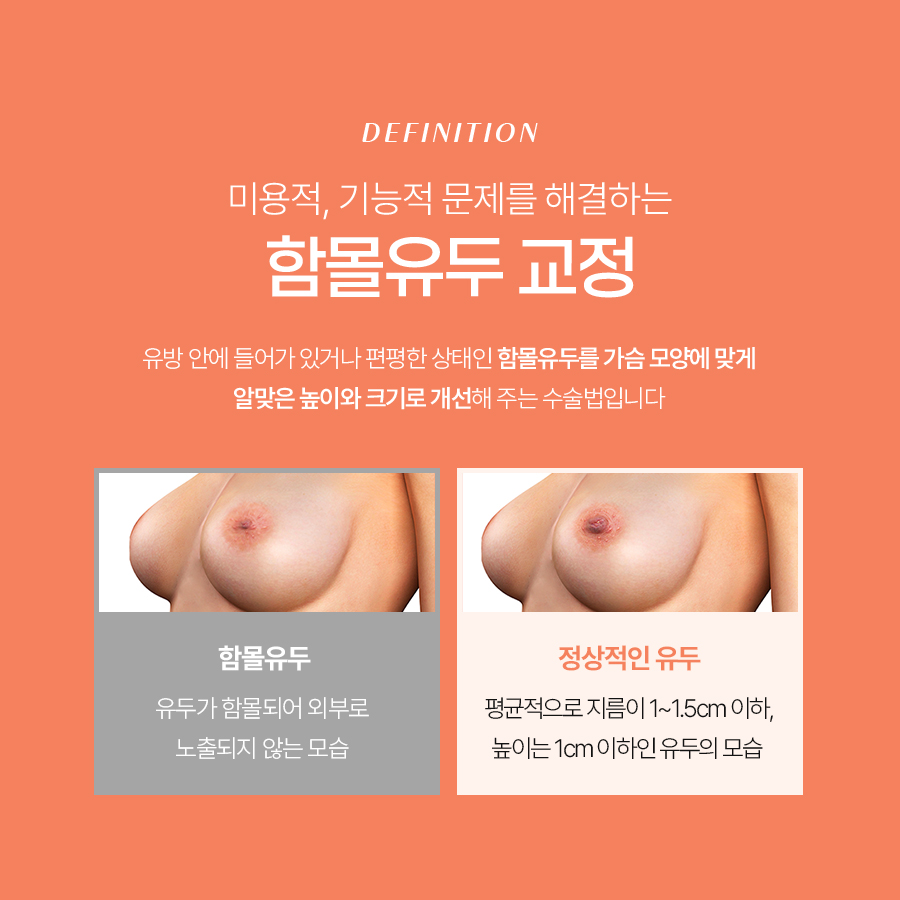
An inverted nipple refers to a condition in which the nipple does not protrude sufficiently outward and remains pulled inward. It often appears due to a congenital nipple structure, but its shape can also change after developmental changes or experiences such as pregnancy, childbirth, and breastfeeding. In the past, it was recognized mainly as a functional inconvenience, but recently, more people have become interested in inverted nipple correction surgery for aesthetic balance and cosmetic reasons.
This surgery aims to organize the tissue that has been pulling the nipple downward so that the nipple can remain naturally outward. Among various correction methods, the triangular flap method and the purse-string suture method are known as relatively widely used techniques in clinical practice. In this article, we will look at the principles behind these two surgical methods and how each procedure is carried out, focusing on informational content.
The structural principles behind inverted nipple correction
An inverted nipple is often related less to the nipple itself and more to the tissue structure beneath it. If the fibrous tissue surrounding the ducts is short or lacks elasticity, it can continuously pull the nipple downward, leaving it unable to protrude outward. Inverted nipple correction surgery, which takes this structural characteristic into account, does not simply pull the nipple outward. Instead, it focuses on relieving the tension of the fibrous tissue that has been pulling the nipple and creating enough space and support underneath the nipple.
In addition, a process of rearranging the position and alignment of the tissue is carried out so that the corrected nipple shape can be maintained naturally rather than only temporarily. The triangular flap method and the purse-string suture method can be understood as surgical techniques that supplement the subnipple structure in different ways based on this shared goal.
Surgical approach of the triangular flap method
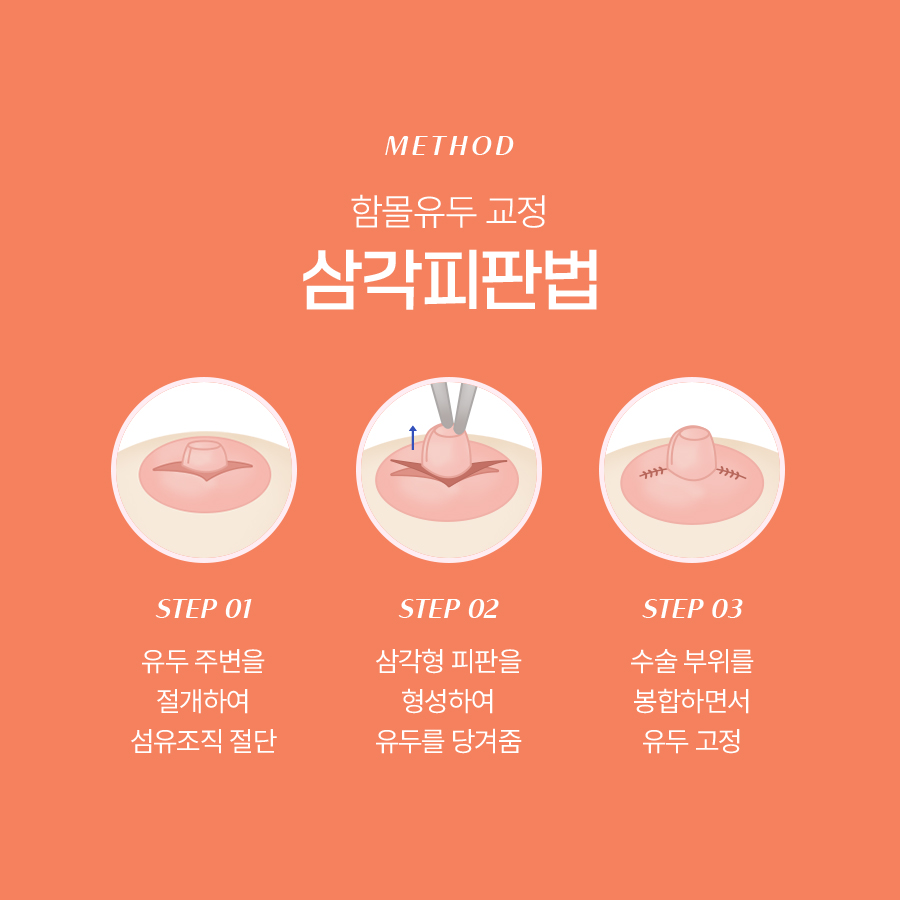
The triangular flap method is a surgical technique that uses the skin and subcutaneous tissue around the nipple to create a supporting structure beneath it, with the goal of naturally supporting the inverted nipple rather than forcing it outward. In cases where the nipple is pulled inward, there is often not enough space beneath it. With this method, the tissue around the nipple is carefully designed in a triangular shape and then rotated downward into position so that it can stably support the nipple.
This structure helps secure space so that the nipple does not curl back inward, while also helping refine the shape with consideration for harmony with the surrounding tissue. Among inverted nipple correction surgeries, the triangular flap method can be more easily understood as a concept that forms a supporting column for the nipple by utilizing the natural characteristics of the skin and tissue.
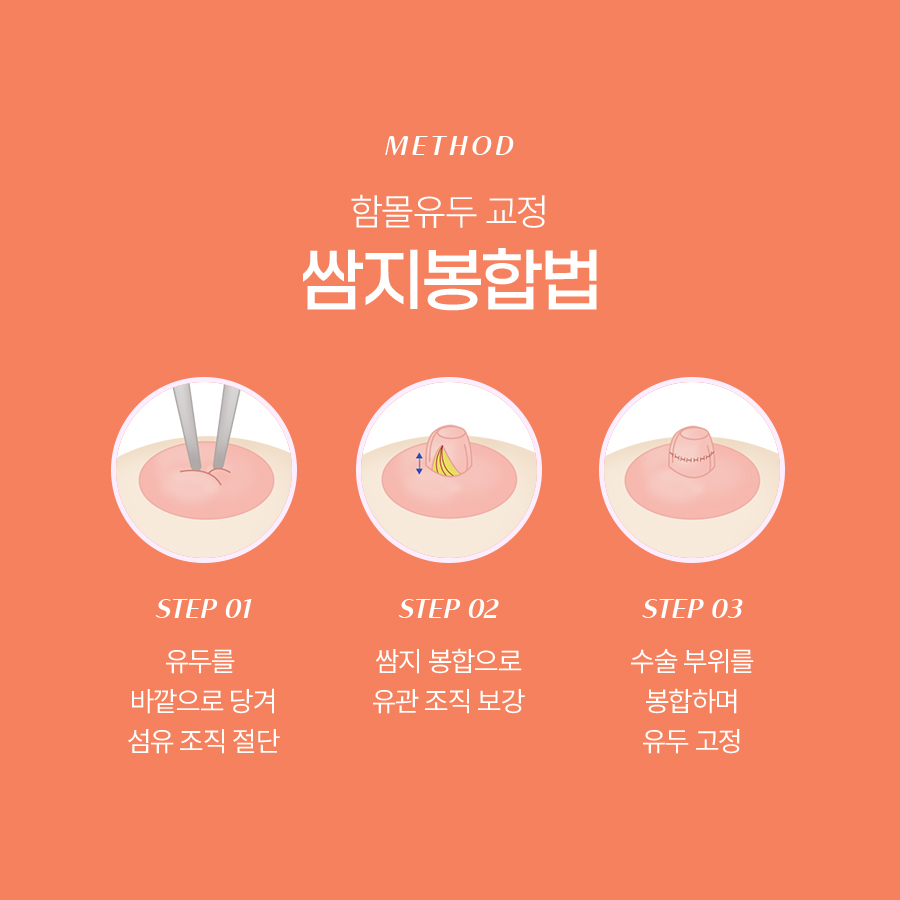
Correction principle centered on suturing in the purse-string suture method
The purse-string suture method is characterized by correction within a relatively limited incision range, helping the nipple remain outward through a suture structure created in the tissue around it. When a circular or semicircular suture line is applied to the skin and subcutaneous tissue around the nipple and then tightened, the tissue gathers toward the center of the nipple, much like cinching the opening of a pouch, and this process creates a structure that naturally supports the lower part of the nipple.
This suturing method supports the nipple from below, encouraging the protruding shape to settle stably, while carefully adjusting the position and tension of the sutures to consider both shape and height. Among inverted nipple correction surgeries, the purse-string suture method can be understood as an approach that uses the suture itself as the supporting structure instead of creating separate support tissue.

Design for maintaining shape after surgery
Although the triangular flap method and the purse-string suture method differ in approach, both are aimed at creating a stable support structure so that the nipple does not curl back inward. After inverted nipple correction surgery, the structure is designed so that the nipple settles outward without excessive tension and maintains a natural shape during everyday movement or external stimulation.
In this process, the quality of the surgery does not end with simply protruding the nipple outward. It is completed by carefully considering whether the nipple height is not excessive, whether the boundary with the surrounding skin is smooth, whether the left and right sides are well balanced, and whether the overall contour flows naturally. When these factors are harmoniously reflected, the corrected nipple shape can be maintained more stably.
Inverted nipple correction surgery can be seen not simply as a process of changing the visible shape, but as a delicate operation that understands the tissue forming the nipple and the surrounding structure and then reorganizes them. The triangular flap method and the purse-string suture method differ in application and approach, but both share the common goal of securing structural stability so that the position and shape of the nipple remain natural after correction.
Reviewing the causes of inverted nipples and the correction methods in advance can lead to a decision based on sufficient information rather than an uncertain choice, and this understanding can be a helpful starting point for those considering inverted nipple correction surgery.