What Are the Criteria for Creating the Ideal Areola Ratio in Areola Reduction Surgery?

The breasts are not simply an area that is evaluated by size alone; they create a more natural impression when overall proportion and balance come together. In addition to breast volume, elasticity, and shape, the harmony between the size of the nipples and areolas is also an important factor, and especially when the areola is relatively wide or its border appears blurred, the overall impression can look different.
Recently, interest has grown in refining the size and shape of the areola separately from breast augmentation or reduction, and consultations centered on improving proportions have continued steadily. Accordingly, information searches about areola reduction surgery methods are also increasing, and it is considered important to approach this not as a simple matter of making it smaller, but in a way that balances the overall figure while taking individual body shape and breast width into account. In this article, we will systematically organize the basic principles of areola reduction, the design process, the procedure, recovery care, and key points that are good to know for those considering surgery.
The concept and purpose of areola size correction
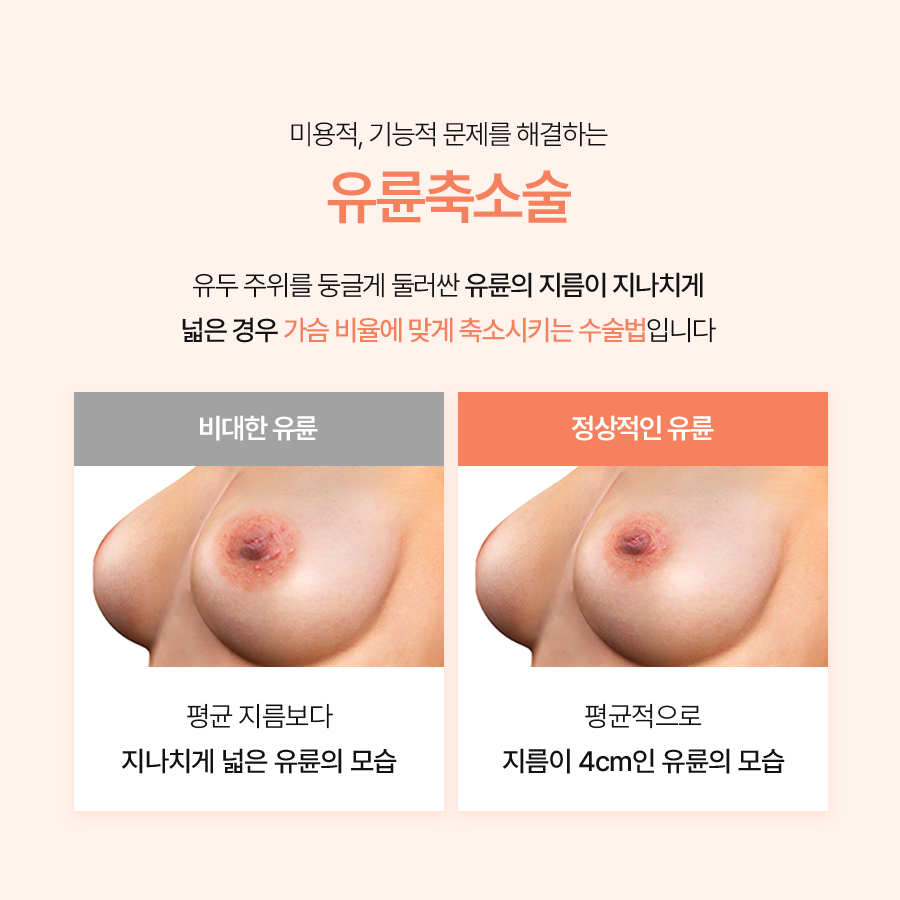
The areola is the pigmented area surrounding the nipple, and each person has a different color tone, border sharpness, and diameter. In general, it appears within a certain range of sizes, but due to growth, hormonal changes, pregnancy and breastfeeding, weight gain or loss, and other influences, the area may gradually widen or the shape may become oval. When these changes make the overall balance of the breasts look awkward, areola size correction surgery is considered.
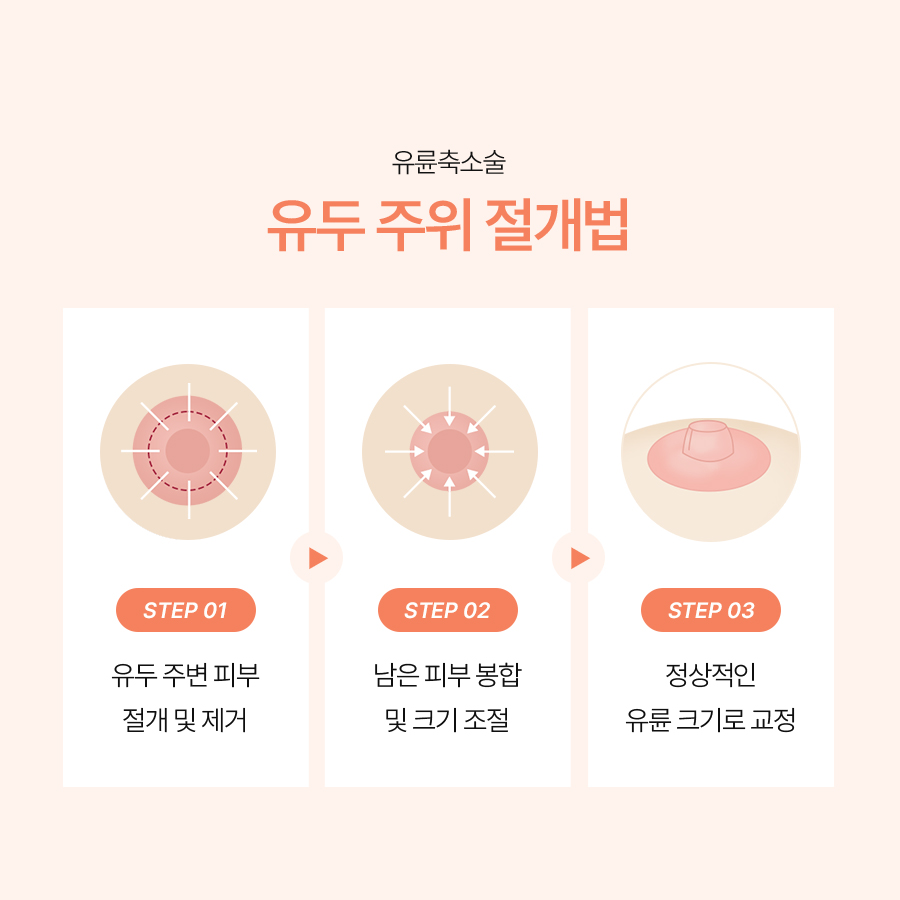
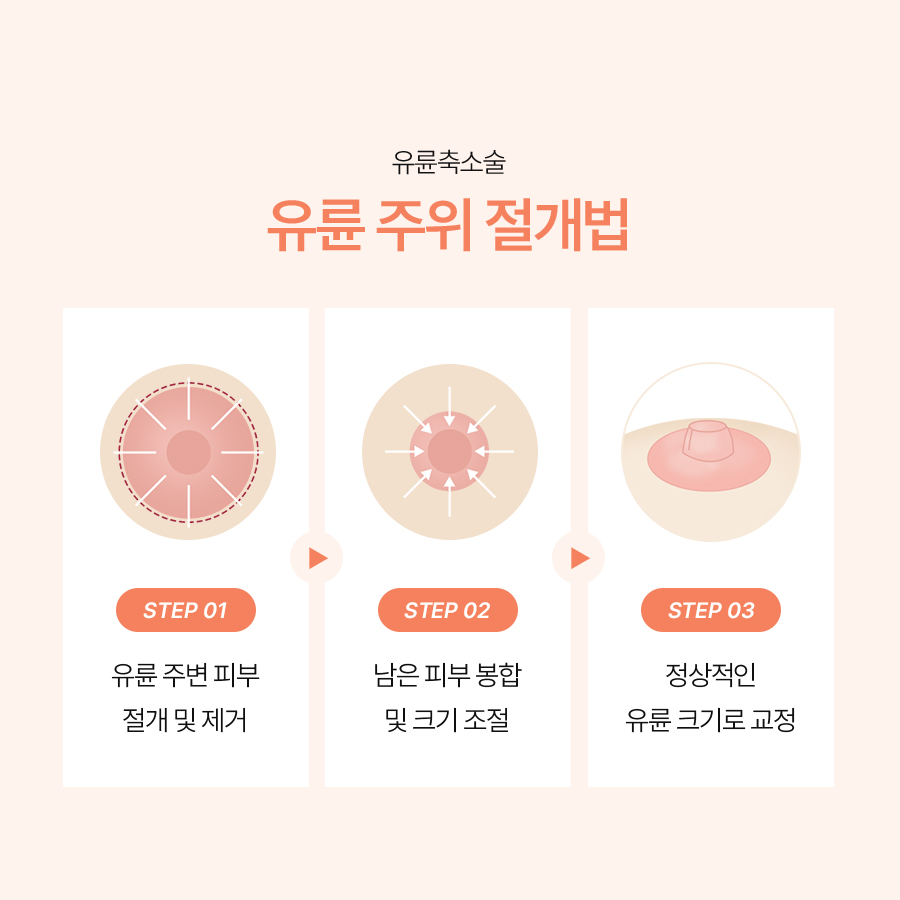
Areola reduction surgery methods are not aimed merely at reducing the area; they also include a process of analyzing the current breast width, volume, and nipple position together to refine the shape into a more natural circle. The incision is planned around the color border so that it is designed to be relatively inconspicuous after suturing, and it is characterized by its focus on refining the overall proportion.
Situations that lead people to consider areola ratio correction
Areola reduction is often not determined by a fixed numerical standard, but begins with the difference in balance that each person feels. For example, consultations may take place when the areola diameter is relatively wide and gives the impression of being larger than the actual breast size, or when the border appears spread out because the skin has stretched after pregnancy and breastfeeding.
Correction may also be considered when there is a noticeable difference between the left and right areola sizes, when someone wants to refine the overall proportion again after breast augmentation or reduction surgery, or when the alignment between the nipple center and the areola appears off. In these various cases, areola reduction surgery methods are approached not as a simple reduction, but in a way that analyzes breast width, projection, and body shape together to create harmony.
Even if the breasts are small, a wide areola can disrupt visual balance, and conversely, an areola that is too small compared with a fuller breast can feel unnatural. Therefore, the key is not the absolute size, but how well it matches the overall silhouette.
The preoperative design stage that determines natural-looking results
The key factor that determines the completeness of results in areola reduction surgery is not only the actual surgical procedure, but also the design stage before it. This is because the adjustment range must be set by comprehensively analyzing not only the current areola diameter and shape, but also left-right balance, the central position of the nipple, breast width and projection, and skin elasticity. In general, the diameter is planned within a certain range, but this is only an average guideline and may vary depending on individual body shape and chest wall structure.
When planning areola reduction surgery methods, aiming for an excessively small size can instead create an artificial look, so it is important to prioritize harmony with the overall silhouette. The process of designing the ideal proportion through sufficient consultation and detailed measurement is the starting point for achieving natural and stable results.

Why subtle changes determine the level of completion
Satisfaction with areola reduction depends not simply on the fact that the size has become smaller, but on whether the balance looks natural, as if it had always been that way before surgery. Whether the border line connects smoothly, whether the left and right shapes and diameters are in harmony, whether the alignment matches the nipple center exactly, and whether the color contrast with the surrounding skin is not overly prominent are all important factors.
In addition, designing the result so that elasticity is maintained over time, rather than only in the initial shape, helps produce a stable outcome. When planning areola reduction surgery methods, fully considering these detailed criteria can reduce an artificial appearance and allow the result to blend naturally with the overall breast silhouette. As the tissue settles after surgery and the swelling and tension gradually ease, the appearance becomes softer and more stable.

Breast areola reduction may seem like a simple procedure that only reduces an area at first glance, but in reality it is a delicate process that must reflect the breast width and volume, skin thickness and elasticity, and left-right balance in detail. More important than the size change itself is how naturally it blends into the overall silhouette, and for this, a design based on the individual body shape must come first.
Areola reduction surgery methods also should not follow a one-size-fits-all standard; rather, it is preferable to plan them according to each person’s conditions through consultation and diagnosis. If the target proportion is set through thorough consultation and careful design and a stable surgical process is followed, a more harmonious image can be expected. If you want to improve the completeness of the breasts, it is helpful to consider the size and shape of the areola as an important balancing element as well.