Areola Size Correction: The Importance of Preserving Ducts and Maintaining Sensation

A woman’s breasts are a key area that determines the balance of the overall silhouette and an aesthetic symbol that completes a confident sense of self. However, the area around the nipple, the areolar tissue, is also a point that can cause as much hidden stress as breast augmentation or a lift.
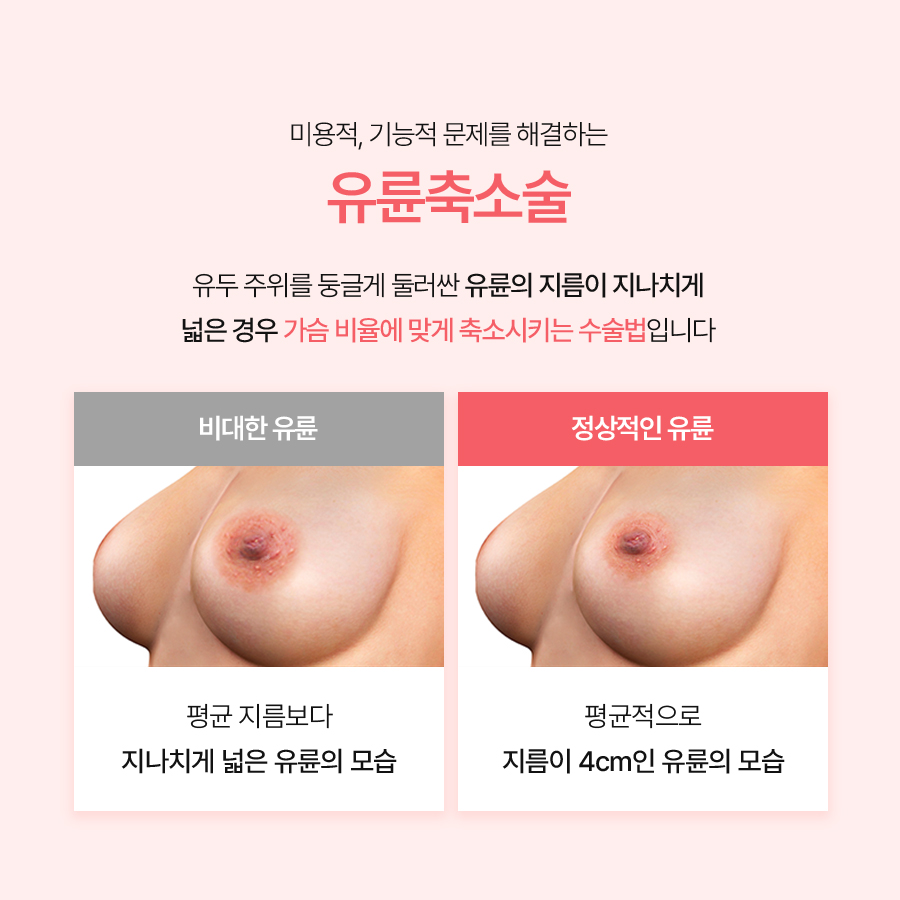
If the areola is excessively wide relative to the breast volume, it can create a visual illusion that makes the breasts appear more sagged or spread out than they actually are. In recent years, the trend has moved beyond simple reduction to areola size correction optimized for each individual body line, adjusting the nipple position and three-dimensional fullness of the breasts at the same time to maximize aesthetic completeness. Today, let’s take a closer look at areola reduction surgery.
A three-dimensional correction beyond simple excision
Rather than a one-dimensional method that simply removes widened skin tissue, areola reduction surgery is a highly advanced, customized redesign process that must precisely calculate the breast’s overall three-dimensional volume centered on the nipple, the width of the chest wall, and even the nipple projection angle.
The ideal areola diameter is often defined as between 3.5 cm and 4.5 cm, but this is not a universal answer that applies to every body type. Only when areola size correction is optimized for the patient’s individual body balance can a natural result be achieved without looking artificial.
For example, fuller breasts of C cup or larger need an areola of appropriate width to provide visual stability. On the other hand, smaller breasts require a delicately reduced areola so that the overall silhouette is harmoniously completed. For that reason, an organic design that takes into account the patient’s cup size and skin elasticity is more important than anything else.
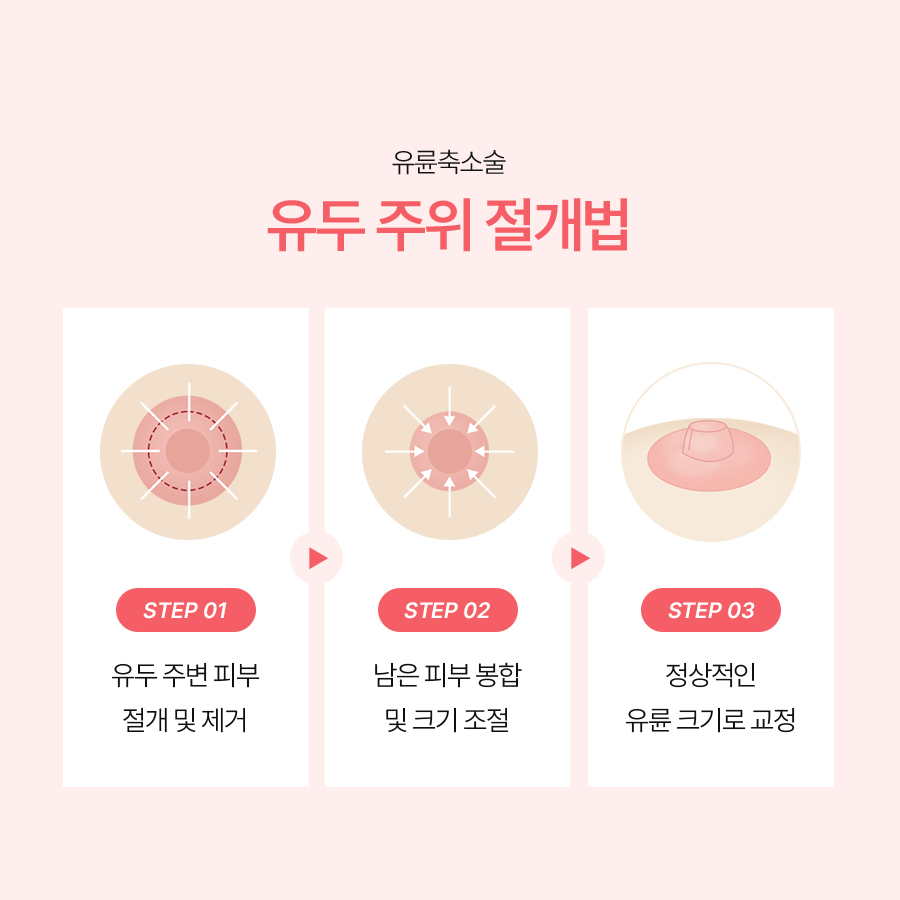
A meticulous procedure that considers areola size correction
Areola reduction surgery is not a simple excision procedure, but a process of reconstructing the size and borders of the areola while reflecting the individual’s breast shape and skin characteristics. During surgery, the excessively widened area is selectively reduced, while preserving the existing pigment line as much as possible when deciding the suture position. At this point, the key to areola size correction is creating borders that connect naturally without leaving an artificial trace.
In addition, the design is planned by considering not only left-right balance but also the distance from the nipple and the overall breast proportion. Only when the excision range and suture tension are finely adjusted can a highly refined result be expected. This process is not merely a technical procedure; it is an area that requires both anatomical understanding and aesthetic judgment, which is why a detailed approach from the preoperative planning stage is important.
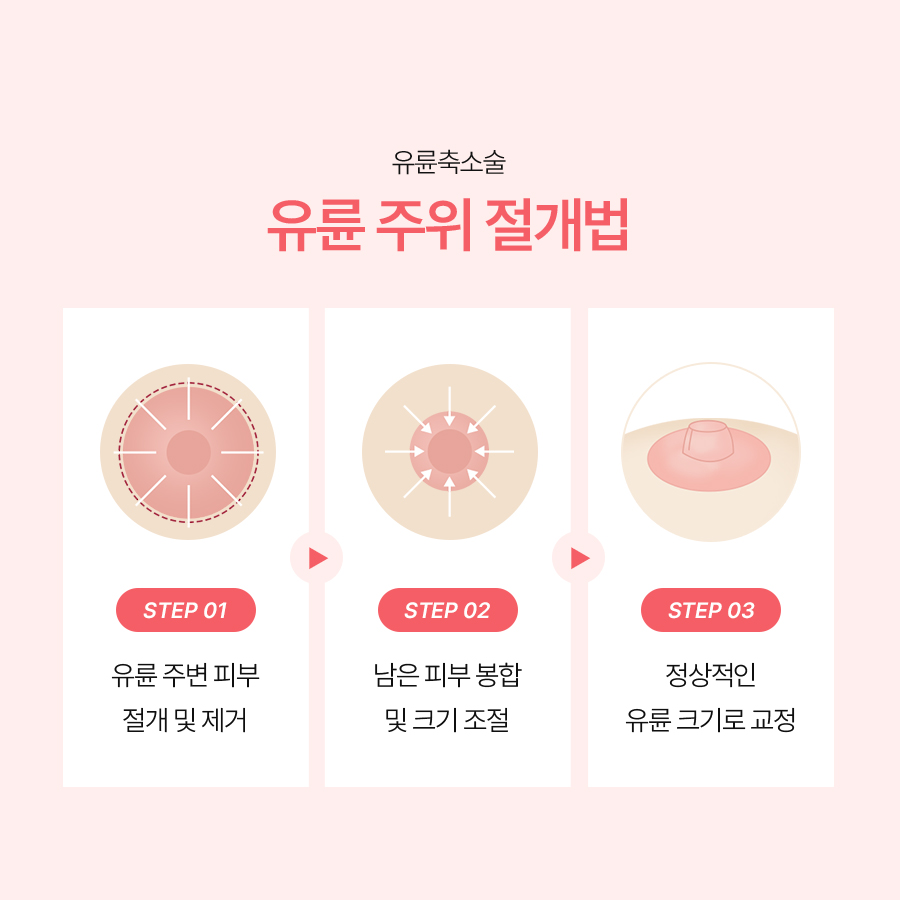
Factors to consider for a natural result
The key factor that determines the level of completion in areola reduction surgery is not simply reducing size, but creating a balance that blends naturally with the overall breast shape. To achieve this, a precise symmetrical design must first be established so that the size and shape of both areolas match without awkwardness. At the same time, an excision plan that considers the density and distribution of pigmentation is needed so that the border where the areola meets the surrounding skin transitions smoothly.
In addition, the ratio between the nipple and areola must be carefully adjusted so that the overall impression appears stable. This areola size correction process can be seen as work that creates visual harmony, not just a change in size. Ultimately, these factors require technical skill as well as a strong sense of aesthetics to lead to a natural result, which is why sufficient consultation and a detailed design process before surgery are so important.

Proper surgical timing based on the individual condition
Rather than there being a fixed timing for areola reduction surgery, it is important to decide based on the individual’s life plans and the possibility of physical changes. For example, if pregnancy or breastfeeding is expected, changes may occur in the breast tissue and areola size, so the timing should be adjusted more carefully. If areola size correction is planned in this context, more stable long-term results can be expected.
Also, if you are considering other procedures such as breast augmentation or a lift that involve changes in overall volume or position, matching the areola size and proportions at the same time can lead to a more refined result. On the other hand, even if performed as a standalone procedure, it can still be meaningful in improving the current concern, so choosing the right time according to your condition and goals is what matters most.
In conclusion, areola reduction surgery goes beyond simply narrowing a physical area. It has significant meaning as a kind of emotional restoration procedure that repositions the center point of the breasts, restores disrupted upper-body balance, and helps relieve psychological self-consciousness. Areola size correction, carried out through a precise analysis of each person’s unique body shape and skin characteristics, not only completes a visual golden ratio but also offers those who have hesitated because of hidden concerns a renewed sense of bodily freedom and a satisfying body silhouette.
Therefore, through careful consultation with experienced medical staff who have a deep understanding of anatomy, if you arrive at the design that best suits you, you can expect the best possible result that satisfies both function and aesthetics.