Breast Ptosis Correction Surgery: Addressing Sagging Concerns and Restoring Volume Placement

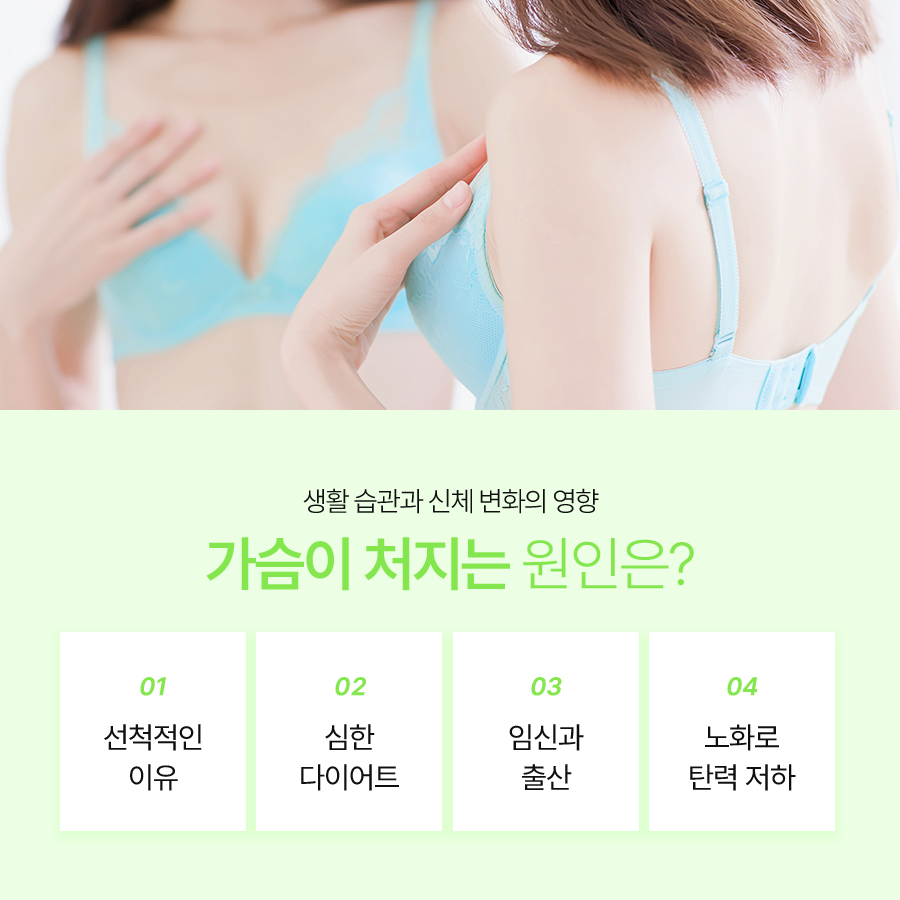
A woman’s body goes through dynamic changes over time, including pregnancy, childbirth, and sudden weight fluctuations. As these processes weaken the tissue that supports breast firmness, the nipples may gradually descend under the influence of gravity. This change is more than a simple alteration in appearance; it can also lead to psychological discouragement.
To fundamentally address these concerns, breast ptosis correction surgery is performed. Rather than simply removing loose skin, it is a precise procedure that repositions the glandular tissue inside the breast to an ideal upper position, three-dimensionally restoring the balance of a collapsed body line. Today, we will take an in-depth look at the core principles and step-by-step characteristics of this surgery from a perspective that differs from existing information.
A Meaning Beyond Simple Sagging
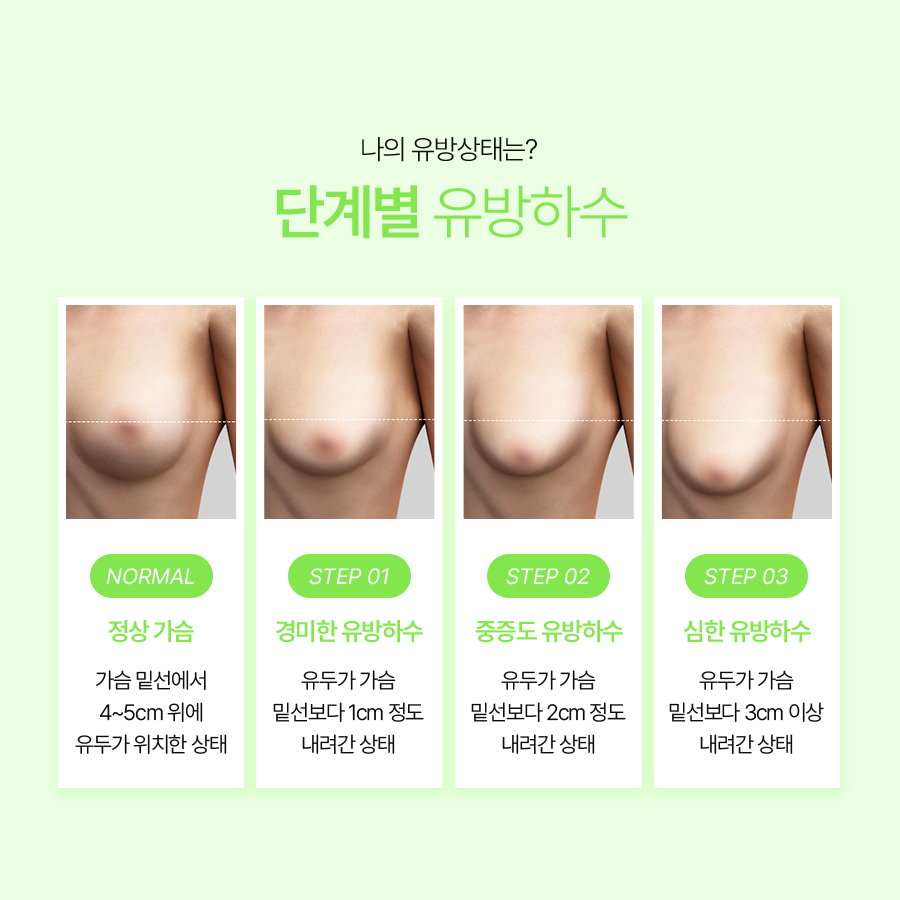
From a medical perspective, the 기준 for judging the degree of breast sagging is the vertical distance between the nipple and the inframammary fold. Classifying this precisely into three stages is the first step toward establishing a breast ptosis correction surgery plan optimized for each condition and achieving highly satisfying results.
From early first-degree ptosis, where the nipple has descended within 1 cm of the inframammary fold, to second-degree ptosis, where it has dropped 1 to 3 cm, and third-degree ptosis, where the nipple faces downward and hangs more than 3 cm below the inframammary fold, the incision range and internal fixation method must be carefully adjusted according to the degree of sagging.
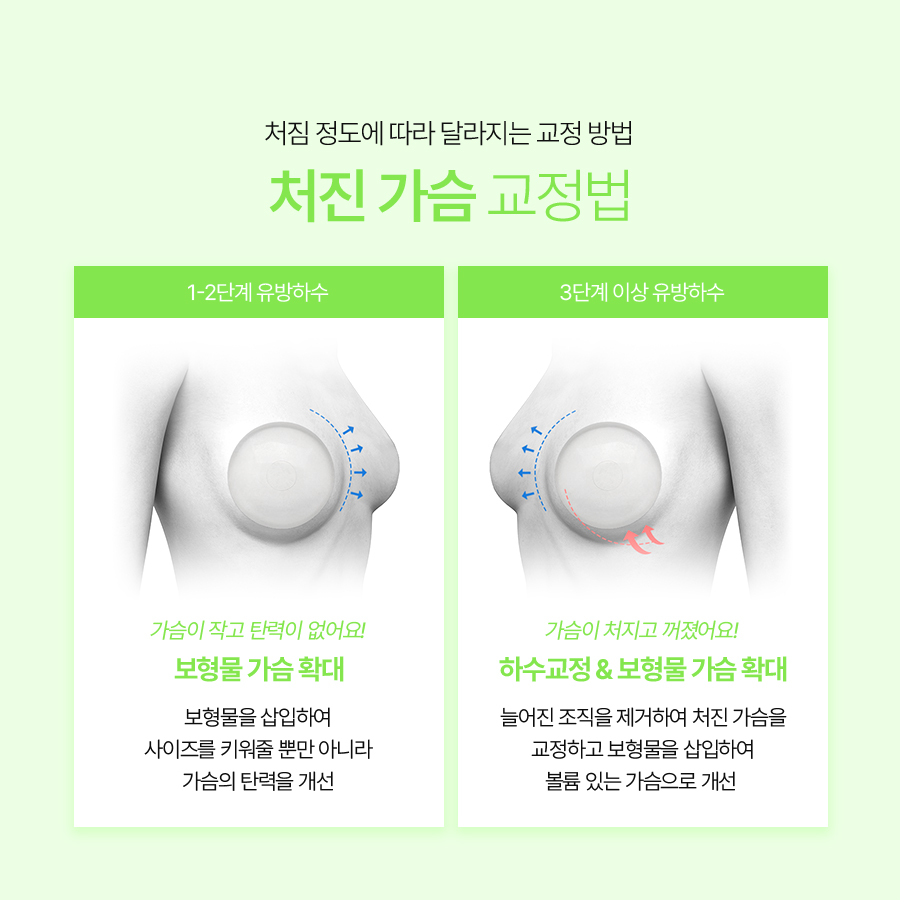
In particular, this process is not merely a one-dimensional correction that pulls the outer skin upward. To create a firm line that resists gravity, it must be accompanied by a sophisticated anatomical repositioning that shifts the center of mass of the downward-pulled glandular tissue upward and reconstructs upper breast volume in a three-dimensional way.
Positive Changes Brought by Breast Ptosis Correction
Going beyond simple cosmetic improvement, breast ptosis correction surgery helps restore daily vitality by securing the patient’s own tissue upward and firming it in place, breathing healthy fullness back into a flattened upper breast and creating a more three-dimensional silhouette.
When the breast point rises to an anatomically ideal position, the waistline can appear visually slimmer and longer, giving the entire body proportion a more streamlined and refined impression. This structural change also brings confidence to wear a variety of fashion choices, including thin clothing and swimwear, without being limited by functional support garments. It becomes a decisive turning point for overcoming body shape limitations and completing one’s natural, balanced golden ratio.
The Optimal Solution for Me
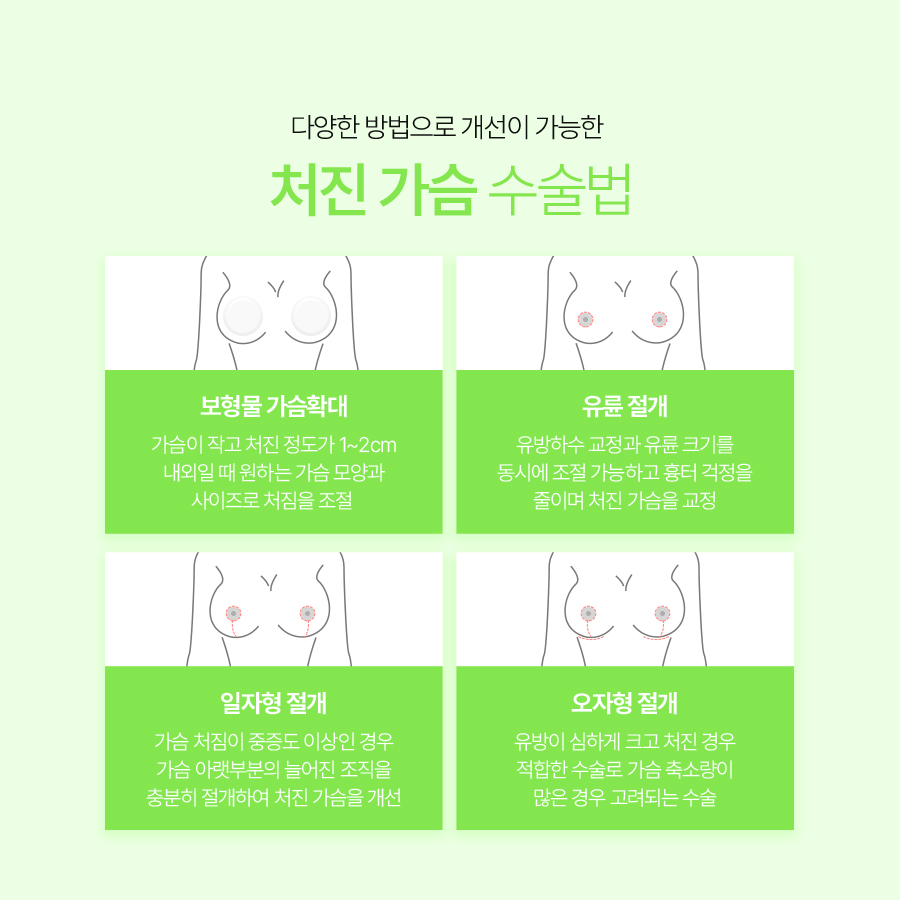
Customized incision design based on each individual’s skin elasticity and degree of descent is the most essential technique determining the completeness of breast ptosis correction surgery. In cases of mild sagging or when areolar reduction must be performed at the same time, the areolar incision method, which approaches delicately along the areolar border to reduce scar burden, becomes an efficient option.
On the other hand, when moderate to severe sagging is observed and more definite tissue movement and upper volume projection are needed, a vertical incision extending from the areola to the inframammary fold can correct the breast’s three-dimensional shape as if sculpting it. In extreme cases where the degree of sagging is very deep or a large amount of skin must be removed, applying an inverted-T incision makes it possible to maximize structural stability and lifting effect.
These advanced incision techniques aim to analyze the patient’s physical characteristics from multiple angles, minimizing visible traces while most elegantly reconstructing the breast’s natural beautiful curves.
When Is Breast Ptosis Correction Surgery Needed?
If the breast position gradually drops and the lines look different when wearing clothes, or if you notice in the mirror that the nipples are significantly lower than before, that may be the point when you become aware of the change. In particular, after childbirth and breastfeeding, the overall shape may change. Likewise, after weight loss, if both volume and firmness decrease at the same time and sagging becomes more pronounced, these concerns can deepen.
When body shape changes become clearly noticeable in daily life and you personally recognize the need for improvement, it is common to consider breast ptosis correction surgery as one option. Of course, these changes themselves are a natural process, but depending on personal satisfaction and practical discomfort in daily life, it is important to consider choosing the right timing.
Improving breast sagging can go beyond simply changing appearance and can lead to better overall body balance and greater satisfaction with oneself. In particular, because breast ptosis correction surgery differs in approach depending on each person’s breast condition, skin elasticity, and desired outcome, it is important to proceed with sufficient understanding and planning rather than relying on a uniform standard.
Through a consultation process that considers each person’s conditions and goals, setting a direction and aiming for a natural, harmonious result rather than an excessive change can be the key to a more satisfying outcome.