Could the timing of inverted nipple surgery costs also be important?

Inverted nipples are often caused not simply by an external appearance complex, but by complex structural defects in internal tissues such as the mammary glands and milk ducts. Because of this, it is most important to accurately identify the underlying cause and go through a process of repositioning the structure. Many people begin their concerns by first checking the cost of inverted nipple surgery or the specific technique involved, but rather than simply making the nipple protrude on the surface, it must be carefully corrected by considering each person’s different duct length and the pulling force of fibrous tissue in order to achieve both functional health and aesthetic satisfaction.
In this post, I will briefly cover the overall flow, from the core concept of corrective surgery to the systematic procedure and the recovery process that helps you return to daily life quickly, so that it can serve as the first step in resolving your concerns.
What is an inverted nipple?
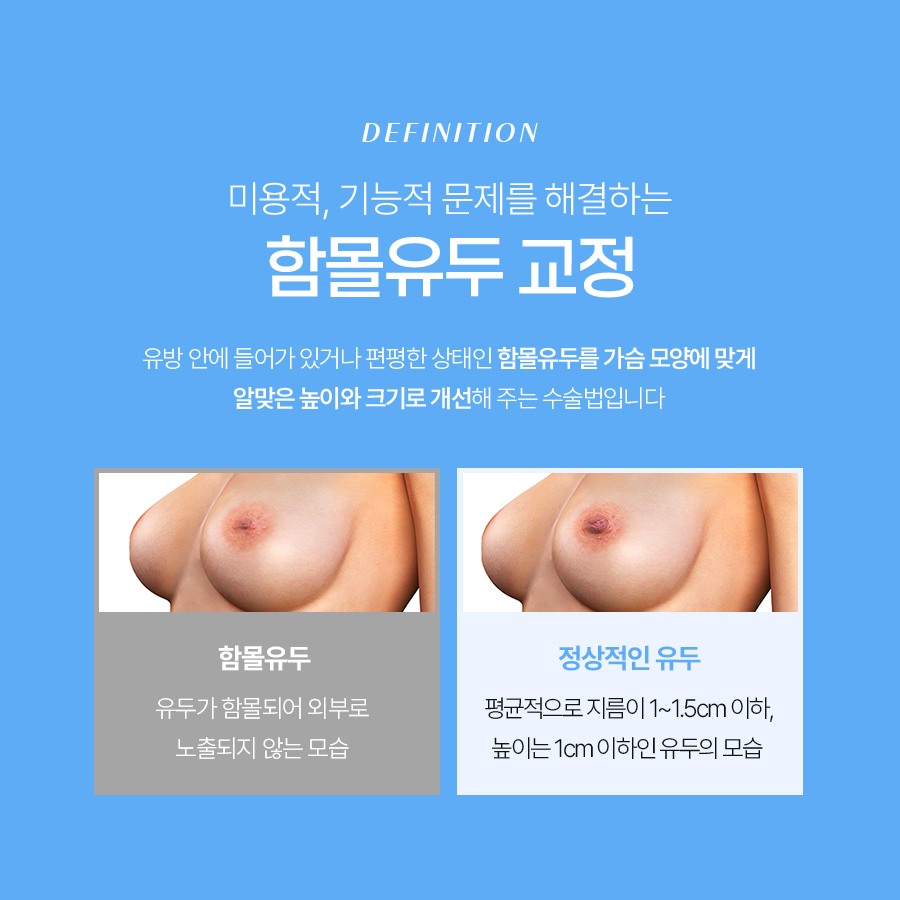
An inverted nipple refers to a condition in which the nipple is drawn inward into the areola because the supporting tissue is insufficient or the milk ducts are short. This is not a uniform condition, but one that can appear in very different forms depending on an individual’s tissue elasticity. The severity can vary widely, ranging from a mild case in which the nipple is usually inverted but temporarily responds to light stimulation, to a fixed state in which it does not protrude at all even when physical force is applied by hand, or quickly sinks back inward.
Because the depth of symptoms differs, the surgical technique used and the level of difficulty also differ. Naturally, the individual cost of inverted nipple surgery is determined according to the condition, so the first priority is to accurately check the range of movement in your own case and how it responds to stimulation. Therefore, the key to healthy recovery is to precisely distinguish how well the nipple maintains its shape in response to external stimulation and how strong the pulling force of the internal fibrous tissue is, then establish a customized correction strategy that matches it.
Why might correction be necessary?
An inverted nipple is less a simple cosmetic choice and more a functional issue that requires correcting internal structural imbalance, such as short ducts that strongly pull the nipple inward or hardened fibrous tissue. If you try to force the nipple outward without addressing the fundamental problem in these supporting tissues, it can become a cause of recurrence over time, with the nipple being drawn back inward again. For this reason, a three-dimensional approach that precisely controls tissue tension is essential.
In this process, the surgical method applied differs depending on each person’s degree of tissue adhesion and whether the milk ducts can be preserved. As a result, the cost of inverted nipple surgery is also reasonably determined in line with this customized planning process. In the end, successful correction is not merely about changing the shape; it is a precise repositioning process that restores harmony within the internal tissues and creates a self-sustaining support base so that the nipple can stably maintain its protruded form on its own.
The principle of structural reconstruction that completes stable protrusion
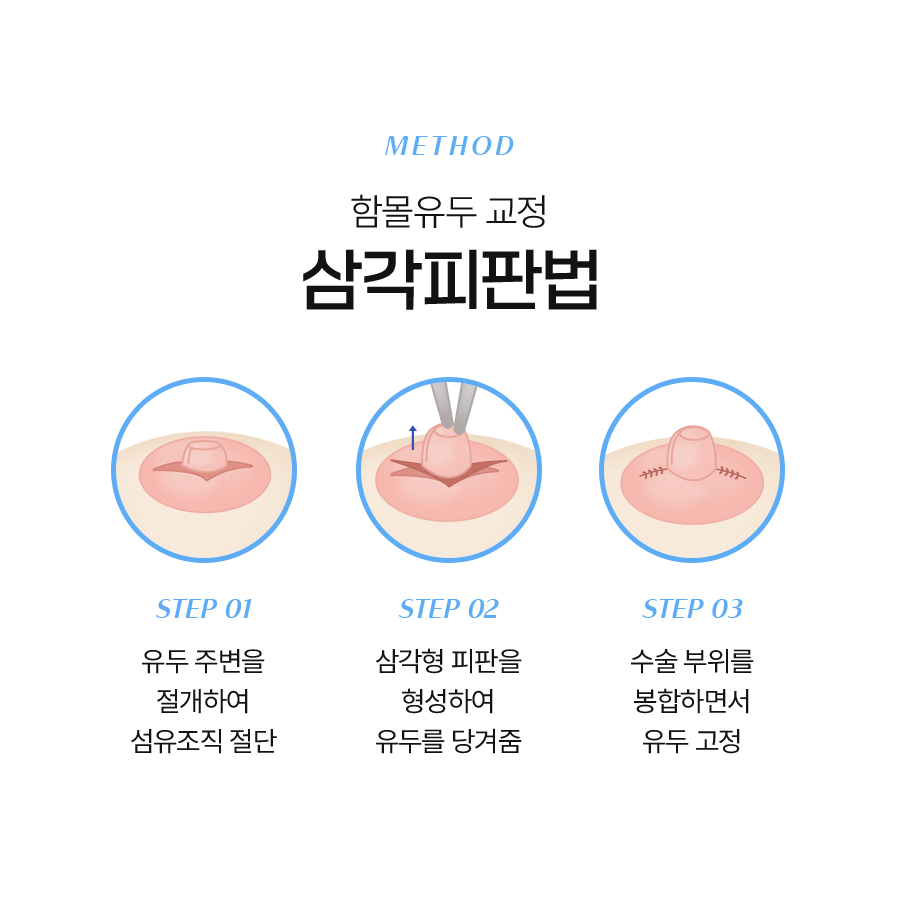
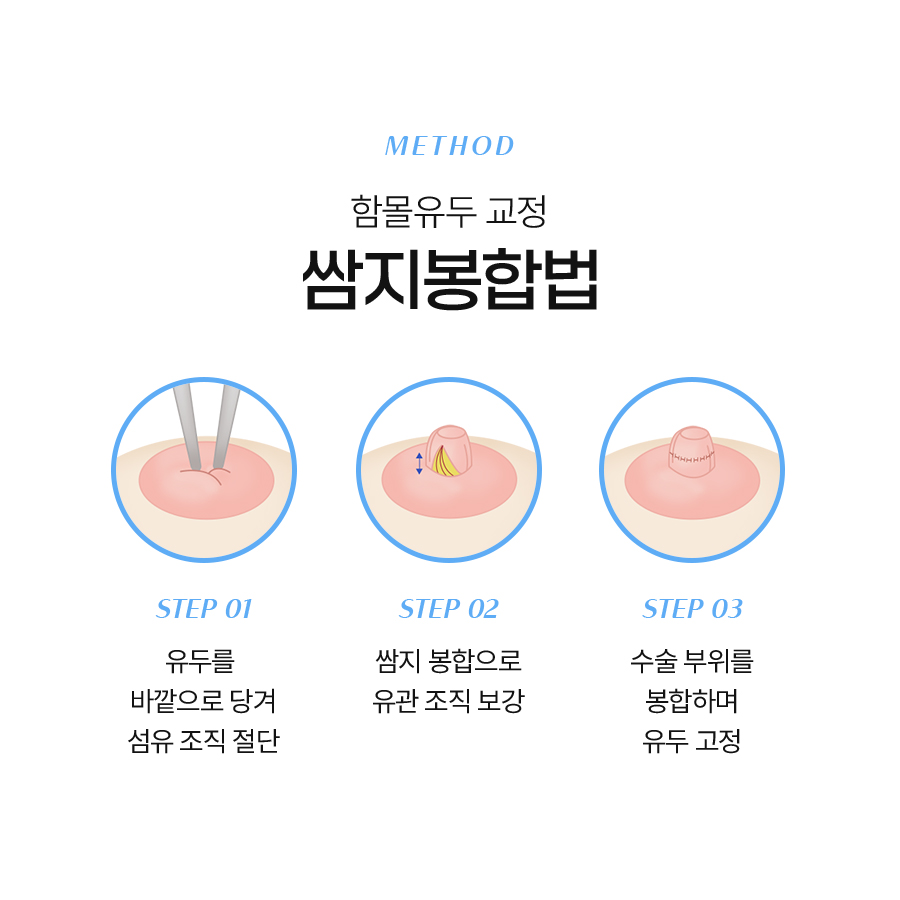
Inverted nipple correction surgery does not simply pull the nipple outward; it begins by delicately releasing the fibrous tissue pulling the nipple inward from the inside. If necessary, space is secured internally to create room so that the nipple does not sink back inward again, and the next step is to form a supporting structure that allows the protruded state to remain stable.
The especially important point is not to correct with excessive force, but to create balance that allows the tissue to settle naturally while considering the tension of the tissue and the recovery process. Depending on these careful procedures and methods, the cost of inverted nipple surgery can also vary.

Individual conditions and planning to check before surgery
Inverted nipple correction may seem like a localized improvement on the surface, but in reality it is a precise process that requires multidirectional analysis of the elasticity of the skin around the nipple, the balance of left-right symmetry, and the underlying cause of the inversion. In particular, because the surgical approach changes depending on the condition of the individual tissue and whether there are future pregnancy and breastfeeding plans, determining the optimal timing for correction while fully reflecting one’s life stage and lifestyle is a key factor that determines long-term satisfaction.
In this way, the cost of inverted nipple surgery is also reasonably set according to the delicacy of the chosen technique during the process of creating a customized plan that comprehensively considers each person’s different anatomical characteristics and future functional use. In the end, only when surgery is performed based on a systematic guide that best fits one’s physical condition and future plans can one achieve a stable and healthy change without worrying about recurrence.
Inverted nipple correction may look like a small visible change from the outside, but in reality it is a delicate reconstruction process that requires close analysis and management of the complex anatomical structures inside the nipple. Therefore, rather than focusing only on low inverted nipple surgery costs or quick results, the right answer for satisfaction without recurrence is to form a stable protruding structure without overstraining the body through a technique optimized for your tissue condition.
In the end, the most successful correction is not a speed race based on someone else’s standards, but the result of close communication in which you rediscover the body’s natural healthy balance. Only when a careful approach that respects your physical characteristics is supported by professional diagnosis can you complete a true change that encompasses both functional comfort and aesthetic confidence.