Midlife Breast Surgery: Restoring the Upper Body Line by Improving Sagging Breasts

When people think about breast concerns, they often think only of augmentation. But the physical changes that come with time are not simply a matter of size; they tend to place greater focus on the “balance of the line” that has collapsed due to gravity and aging.
In particular, midlife breast surgery, considered during periods when bodily elasticity drops sharply, requires a precise aesthetic approach that is not limited to increasing volume. Through breast lift surgery, it is essential to redesign the position of the glandular tissue and restore harmony across the entire body shape. Today, moving beyond a typical informational article, I would like to share the key details in depth by combining medical mechanisms and an artistic perspective, explaining in a completely different way how sagging breast surgery can restore the confidence of a lost silhouette.
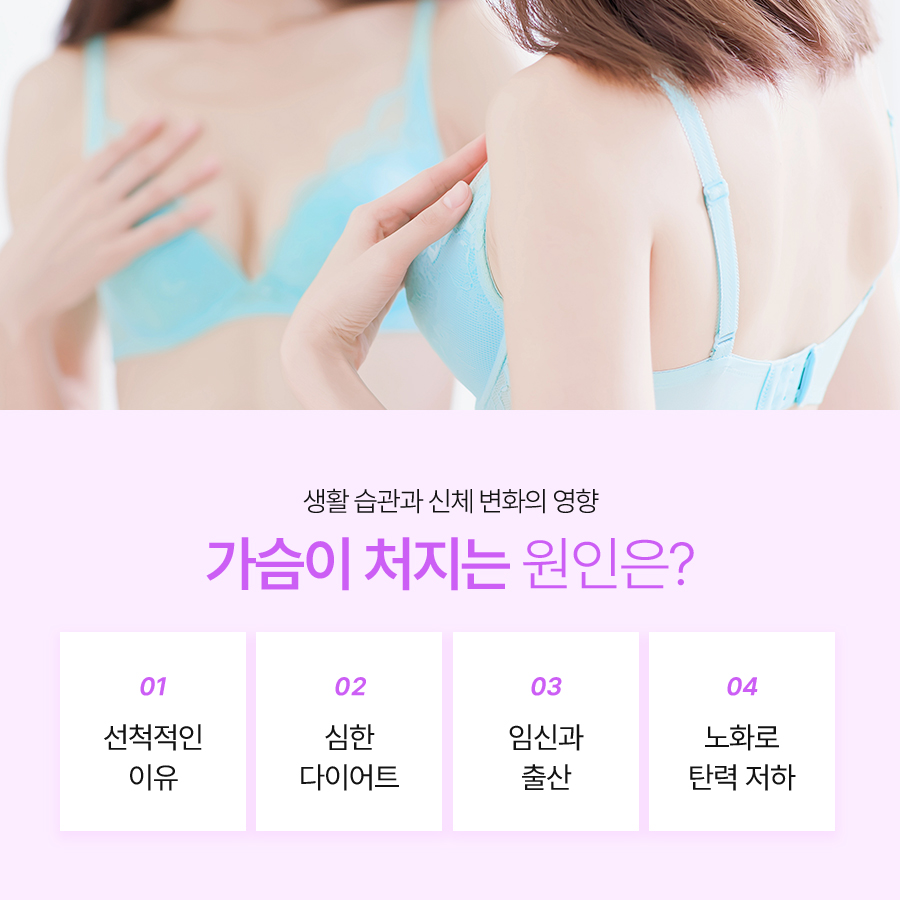
Why is sagging breast surgery different from simple 'augmentation'?
Many people think of implant insertion whenever they want to enhance breast shape, but if the soft tissue has moved downward due to gravity or physical changes, simply increasing volume cannot solve the fundamental problem.
In particular, midlife breast surgery performed when the skin’s support has weakened over time differs from artificial augmentation because its purpose is to lift the descended breast tissue upward through breast lift surgery and to precisely remove the unnecessarily stretched outer skin, thereby repositioning the breast’s center of mass at the optimal point.
This is more than flat volume enhancement; it is a high-level restoration process that firmly remodels the loosened internal structure of the breast. Like a facelift improves facial sagging, it is an aesthetic corrective procedure that fundamentally restores the breast’s natural three-dimensional shape and elastic silhouette.
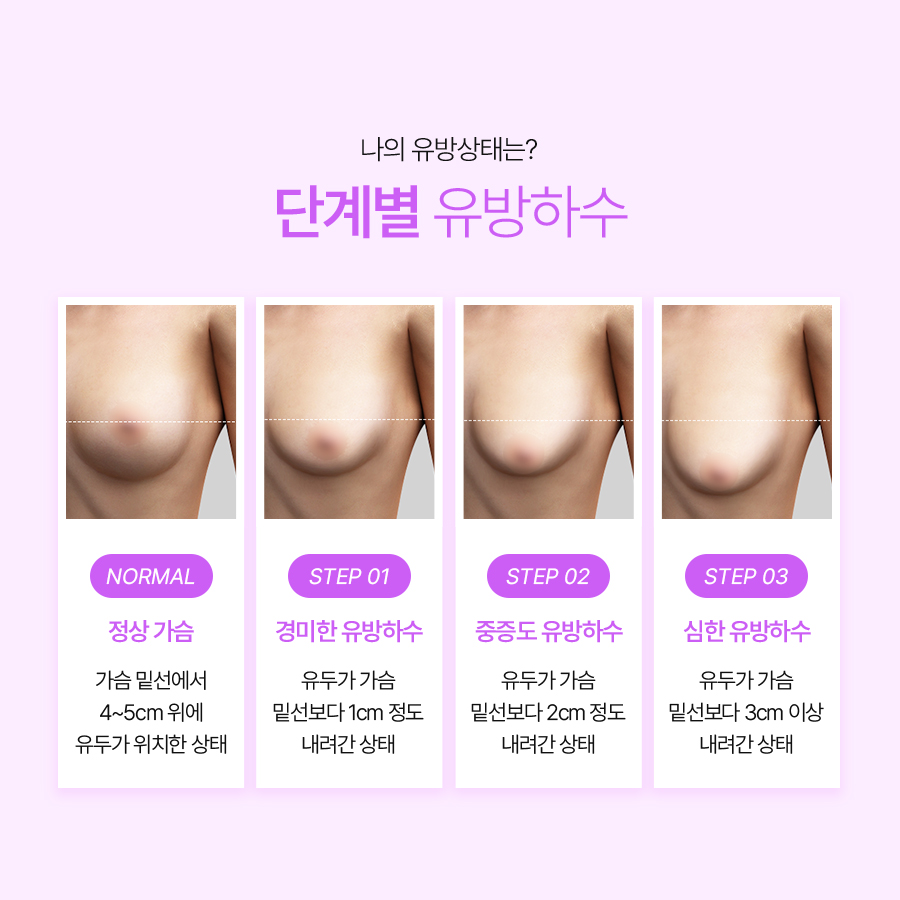
The aesthetics of glandular tissue repositioning and proportion
The success of breast lift surgery depends not merely on physically raising the breasts, but on how the overall balance of the upper body, including the nipples and areolas, is redesigned. An ideal breast is visually most stable when the nipple sits at a point slightly above the midpoint between the shoulder and elbow, or slightly above the inframammary fold. In midlife breast surgery, this central point is precisely moved to match the body’s golden ratio, restoring the lively breast line from before sagging began.
At the same time, if the autologous glandular tissue that had been pulled downward by gravity is densely lifted and filled in from above, natural-looking volume can be restored without the help of implants. By reducing the areola’s diameter, which may have enlarged due to ptosis, to match the overall breast size, visual firmness and harmony are maximized. This organic design goes beyond simply correcting the shape; it is the aesthetic core of restoring the breast’s natural dimensionality and completing a refined upper-body silhouette.
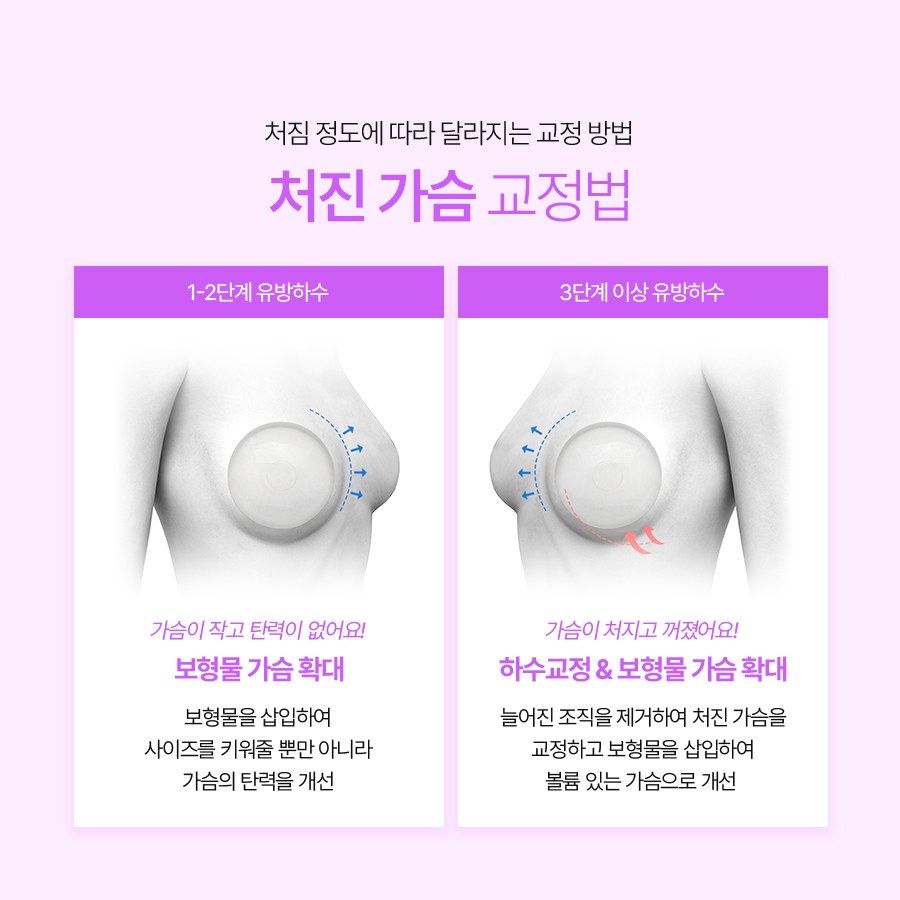
Finding the method that fits your condition
The degree of breast ptosis varies from person to person and is classified based on the relationship between the nipple and the inframammary fold. Accordingly, the surgical technique applied must also be highly individualized to achieve the best results. In the early stage, where sagging is relatively mild, a fine incision along the border of the areola is preferred to minimize scar visibility and delicately correct asymmetry. However, in midlife breast surgery, where aging has progressed more significantly, a vertical incision from the areola to the inframammary fold is mainly chosen to address moderate or greater sagging, sufficiently remove excess skin, and firmly rebuild the breast’s rounded three-dimensional structure.
If the tissue descent is very severe or a substantial reduction must be performed at the same time, making it a high-difficulty case, an additional incision along the inframammary fold is used in a T-shaped technique. Through extensive dissection and tissue repositioning, the breast’s center of gravity is dramatically lifted and the disrupted body line is clearly redefined. As such, applying a technique optimized for one’s own skin elasticity and glandular volume is the key to achieving both functional improvement and aesthetic satisfaction at the same time.

Restorative effects that improve quality of life
The changes achieved through breast lift surgery bring not only external correction but also a range of positive effects that restore daily vitality. When the breasts are lifted to an anatomically ideal position, the upper body’s center of gravity rises, making the waistline appear slimmer and the overall proportions look longer. This is one of the greatest aesthetic outcomes that midlife breast surgery can provide.
In particular, because the procedure creates upper volume by densely gathering the body’s own glandular tissue rather than using artificial implants, a natural feel without a foreign-body sensation can be maintained. It also fundamentally addresses hygiene-related issues such as skin irritation beneath the breasts and discomfort caused by sweating, which are commonly experienced due to sagging breasts. This physical restoration removes limitations when wearing clothes and completes a confident silhouette, becoming a dramatic turning point that greatly boosts psychological confidence that may have been diminished before surgery.
Breast changes may be a natural part of the passage of time, but if they cause one’s self-love to shrink, then the process of actively improving them can be a worthwhile choice. What we commonly call midlife breast surgery is more than a simple surgical procedure; it is also a psychological healing journey that carefully refines a disrupted body line while simultaneously restoring the healthy silhouette of one’s most radiant years and the self-esteem that was once lost.
If hesitation in front of the mirror is growing deeper, rather than worrying vaguely, we recommend getting an objective diagnosis of your current condition from a specialist who can precisely analyze your physical characteristics and help you map out the most suitable path for change.