Accessory Breast Fat Removal,
A Look at Accessory Breast Correction Considering Upper-Body Proportions

Even a small change in one area of the upper body can significantly alter its overall appearance. In particular, when the area around the armpit or the outer side of the breast appears prominent, many people may feel that their upper body looks broad regardless of their body type.
If a specific area does not appear to become more defined despite consistent exercise or weight management, it may be difficult to explain the concern solely as a weight issue. Recently, more people have been interested in accessory breast correction for this reason, and an approach that considers upper-body balance is increasingly regarded as important.

Why the Upper-Body Line Can Look Different as the Boundaries Become Less Defined
People’s eyes naturally follow the lines of the body more than they may realize. When the line extending from the shoulders to the armpit and then to the breast connects smoothly, the overall silhouette may appear more refined. On the other hand, if the area around the armpit protrudes or the boundary with the breast appears indistinct, the upper body may look broader or heavier than it actually is. This is also why a particular area may stand out when wearing clothes or why the line may feel less smooth.
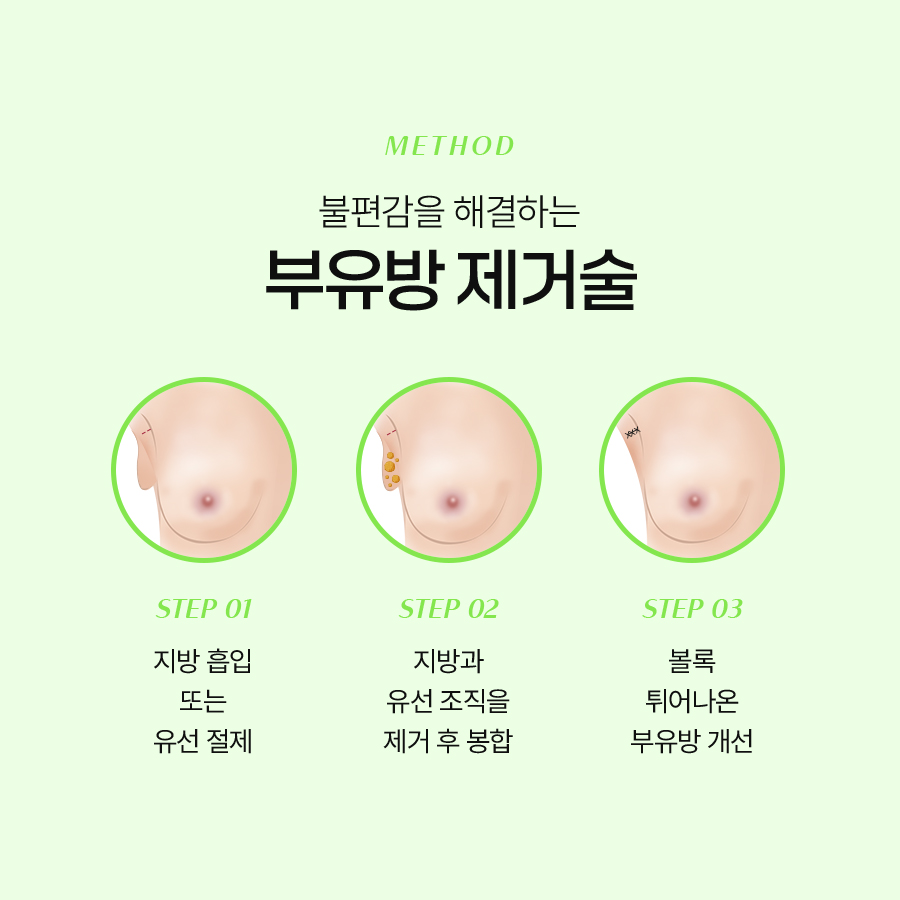
With these factors in mind, accessory breast correction focuses not only on reducing unnecessary tissue but also on creating a natural line connecting the armpit and breast. Depending on the case, the distribution and degree of protrusion of the fat may be assessed before planning accessory breast fat removal as well, which may help create a more balanced upper-body line.
An Area That Becomes More Noticeable When Wearing Clothes
Concerns about accessory breast tissue are often noticed first while getting dressed rather than when looking in the mirror. In particular, if the area around the armpit appears compressed or a specific area stands out when wearing sleeveless or form-fitting clothing, it can naturally draw attention. This is also why clothing may seem to fit differently when the upper-body line does not connect smoothly, even without a significant change in body weight. In addition, when wearing lightweight summer clothing or activewear, the lines beside the armpit and breast are more exposed, which can make the area more noticeable than usual.
Even the same clothing can create a different overall mood and impression depending on how the upper-body contours are formed, and some people may feel limited in their clothing choices in order to achieve their desired fit. For this reason, accessory breast correction does not focus solely on reducing volume in a particular area. It is often planned by considering the upper-body line connecting the armpit and breast naturally, the silhouette when wearing clothing, and balance between both sides. Accessory breast fat removal may also be performed alongside the correction depending on the distribution and degree of fat protrusion, with the goal of creating smoother and more natural upper-body contours.
Why Individual Differences in Shape Need to Be Considered
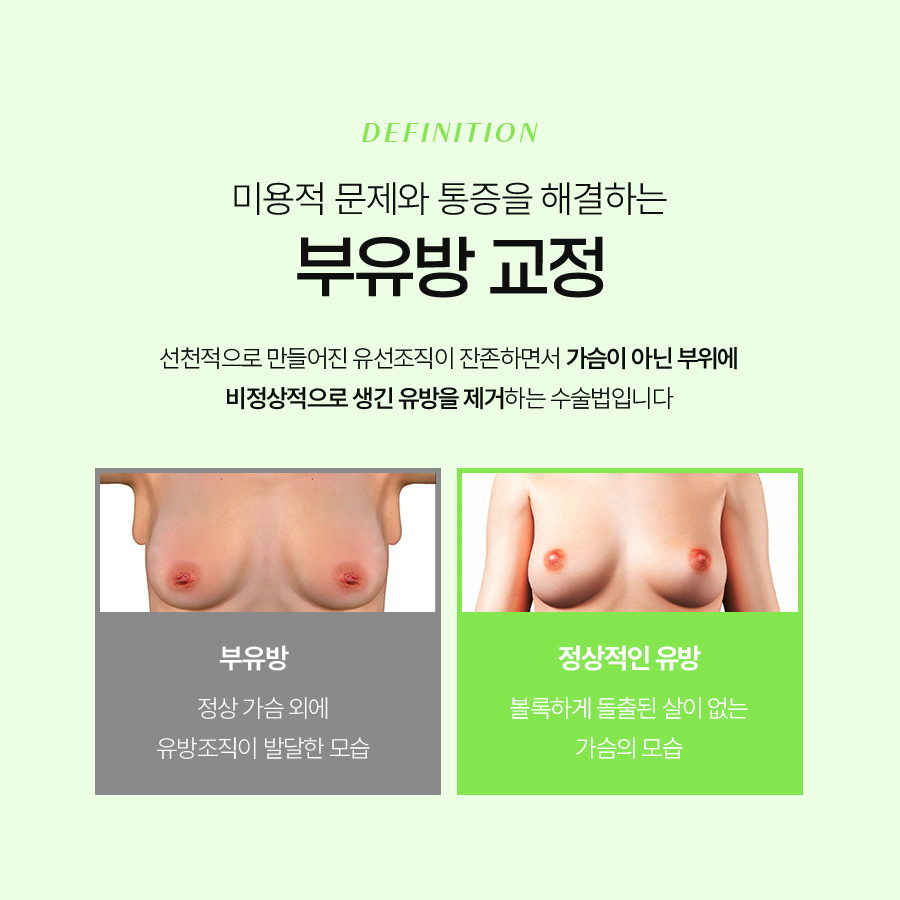
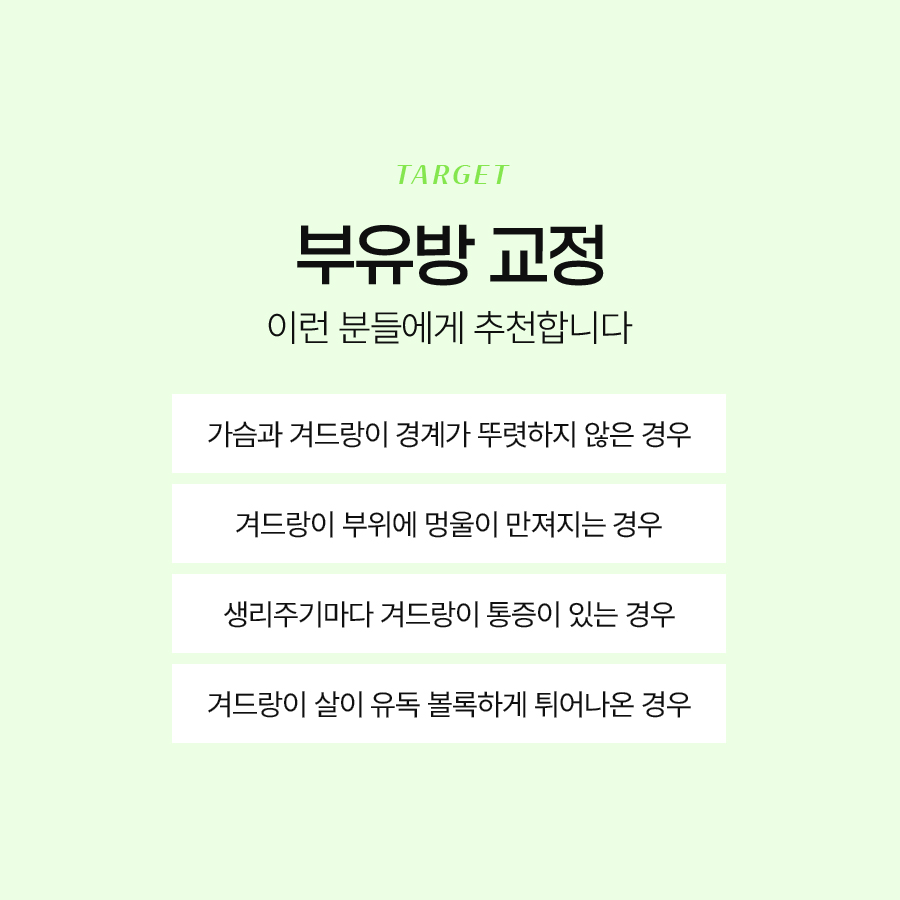
Accessory breast tissue does not appear in the same form in everyone. In some cases, it may appear limited to the front of the armpit, while in others it may extend to the outer breast and affect the overall upper-body line. The location and extent of the protrusion, as well as the distribution of the tissue, also vary from person to person, making it difficult to assess the condition based solely on its visible size.
Even with the same type of accessory breast tissue, the actual impression can differ depending on body type, breast size, and the proportions of the shoulders and armpits. Therefore, rather than applying uniform criteria, it is important to examine the current condition in detail and analyze which areas are affecting the upper-body line.
Accessory breast correction is planned by taking these individual characteristics into account. This is because a more natural and harmonious approach can be established by examining both the extent of the tissue distribution and the overall balance of the upper body. When considering accessory breast fat removal, it is also important to assess not only the amount to be removed but also the continuity of the lines, left-right balance, and the overall silhouette.
An Approach for a Natural Upper-Body Silhouette
The upper-body line is not created by one area alone. Because the shoulders, armpits, and breasts are interconnected, it is important to consider the overall flow rather than changing only a specific area. If one area is refined excessively, the difference from the surrounding areas may instead become more noticeable.
For this reason, accessory breast correction is planned with the harmony of the entire upper body in mind, and accessory breast fat removal is also performed with the goal of creating a balance suited to the individual’s body type. A natural sense of continuity is considered one of the important factors contributing to satisfaction.
Accessory breast tissue may seem like a relatively small area, but it can have a greater-than-expected effect on the upper-body line and overall impression. In particular, the contours where the armpit and breast meet can affect how clothing fits and the overall silhouette, so it is important to consider the proportions of the upper body and the flow of its lines rather than looking only at the protruding area. In addition, because the shape and tissue distribution of accessory breast tissue vary from person to person, the current condition should be accurately assessed before applying any standardized approach.
Accessory breast correction is planned by comprehensively considering these body-shape characteristics and the extent of the tissue, and various approaches, including accessory breast fat removal, may be considered. The important point is not simply to reduce a particular area but to consider the balance of the entire upper body and its natural continuity. By accurately understanding your condition through sufficient consultation and examination and establishing an appropriate approach, you may be able to expect a more natural and harmonious upper-body line.