Triple-Plane Breast Augmentation: What Is the Key to Higher Satisfaction?

Breast surgery is not a process that involves deciding only on the desired size. The elasticity of the skin, the degree of development of the mammary glands, the shape of the rib cage, and the position of the muscles must all be examined together before a surgical method can be selected. Even when the same implant is used, the result may vary depending on the characteristics of the surrounding tissue, so a thorough diagnosis should come first.
When planning breast augmentation, it is important to look beyond shape or size alone and consider an approach that also takes naturalness and stability into account. Triple-plane breast augmentation can be understood as a structured approach to breast surgery that considers the flow of volume, feel, and the formation of natural contours while planning for the implant to settle securely.

Why Is the Triple-Plane Approach Considered?
The dual-plane approach involves positioning the upper part of the implant beneath the pectoralis major muscle and the lower part beneath the mammary gland. It allows the upper breast boundary to appear more natural while also taking lower-volume formation into account, which is why it remains one of the commonly used surgical methods today.
Based on this dual-plane approach, the triple-plane approach is a surgical plan that more closely analyzes the characteristics of the muscle, mammary tissue, and surrounding soft tissue and adjusts the extent of dissection accordingly. Rather than simply inserting an implant, it considers the characteristics of each tissue type during the procedure, which may help reduce unnecessary tissue damage and create a space suited to the individual’s body shape.
In addition, because the triple-plane approach uses tissues in a more differentiated manner, it is not applied identically to everyone. It is important to determine whether it is appropriate after comprehensively evaluating skin thickness, the amount of breast tissue, the shape of the rib cage, and the desired volume. The fact that it sufficiently reflects each person’s anatomical characteristics and may allow for more natural contours and movement is one reason the triple-plane approach is considered.

What Is the Core Principle of the Triple-Plane Approach?
Triple-plane breast augmentation is a surgical method that plans in greater detail where the implant will be placed and how the surrounding tissues will be utilized. The key is not simply to determine the implant’s position, but to thoroughly analyze the way the mammary tissue, pectoralis major muscle, and surrounding soft tissue affect one another before proceeding with surgery while considering the balance among these tissues.
Because skin thickness, the amount and elasticity of breast tissue, and the shape of the rib cage differ from person to person, closely diagnosing each individual’s anatomical structure before surgery is important. Based on this analysis, the suitability of the triple-plane approach should be determined, and the implant position and extent of dissection should be planned according to the individual’s body shape in order to expect a more stable result.
The triple-plane approach may also be considered as one method for reducing animation deformity, in which the implant appears to move along with muscle movement. Of course, it cannot prevent or improve this issue in every case, but one of its characteristics is that this aspect can also be considered according to the individual’s anatomical features and surgical plan. In this way, planning surgery while comprehensively considering natural breast contours, feel, and implant stability can be described as the core of the triple-plane approach.
Various Benefits of the Triple-Plane Approach
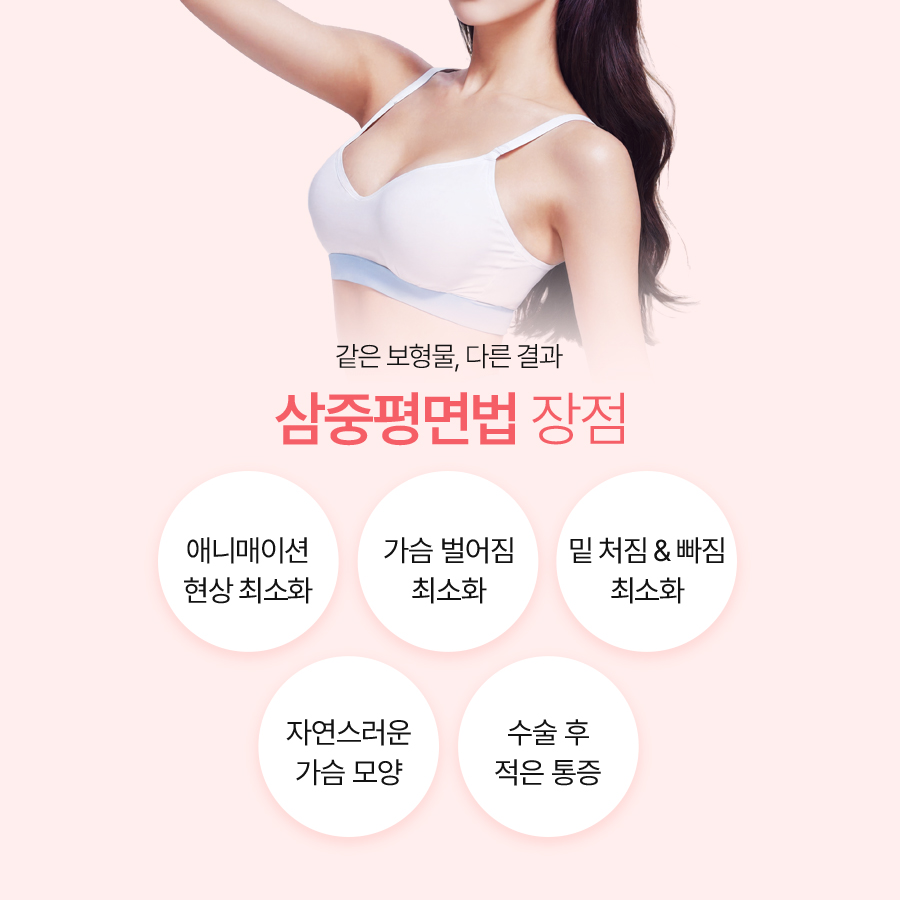
When choosing a surgical method, it is important to review the advantages of each option, but the priority should be confirming whether the method is appropriate for your body shape and tissue condition. The triple-plane approach carefully plans the implant’s position while considering the characteristics of the mammary tissue, muscle, and soft tissue, making it meaningful as a way to design surgery according to the individual’s anatomical structure.
Because skin elasticity, the amount of breast tissue, and the shape of the rib cage differ from person to person, the same surgical method is not suitable for everyone. Since the triple-plane approach determines the implant position and extent of dissection after thoroughly analyzing these individual differences, it allows for a surgical plan that considers more natural breast contours and movement.
The triple-plane approach is also characterized by taking into account not only a natural shape and feel but also implant stability during surgery. However, it is not a method that can be applied identically to every patient, so it is important to determine whether it is appropriate through sufficient consultation and an accurate diagnosis. Understanding the anatomical structure and reflecting each individual’s characteristics in a customized surgical plan can be an important factor in achieving a satisfactory result.
Breast Augmentation Incision Methods and Selection Criteria
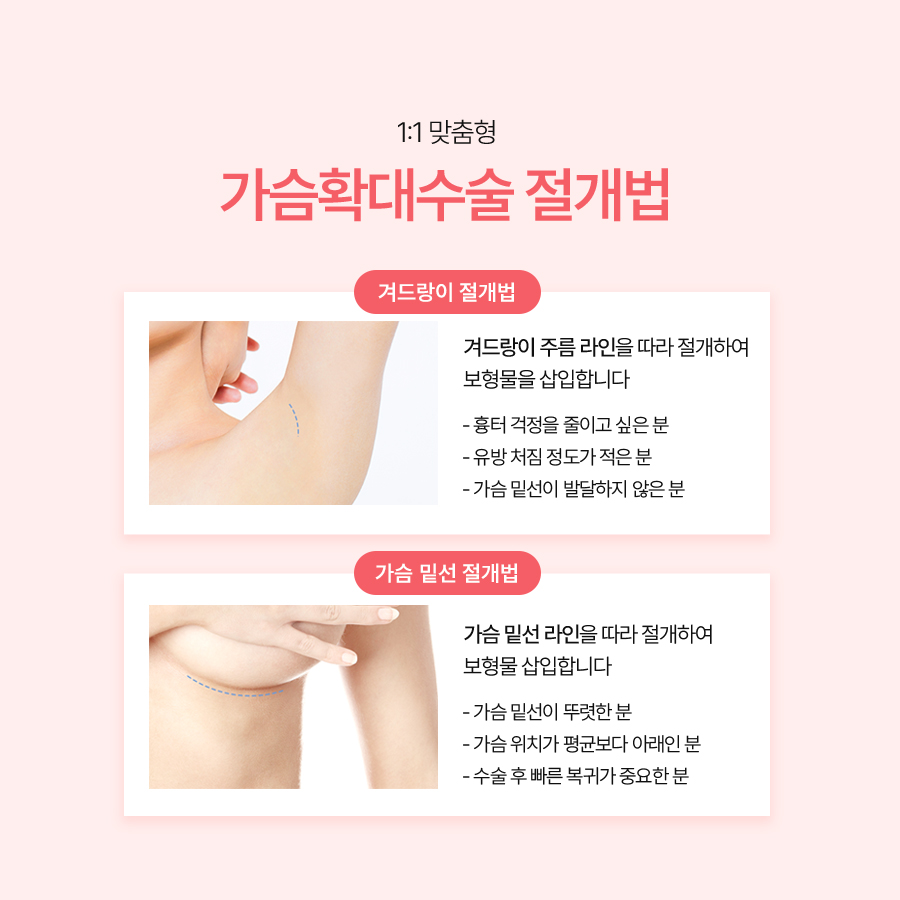
The surgical process and recovery may differ depending on the incision location used for breast augmentation. Common methods include an axillary incision and an inframammary-fold incision, each of which has different approaches and characteristics. Therefore, it is important to determine the most suitable incision method by comprehensively considering not only the type and size of the implant but also the skin condition, amount of breast tissue, and rib cage structure.
For those who have previously undergone breast surgery through a periareolar incision or feel uncomfortable having the same area incised again, an axillary incision may be considered as one option. Because the incision follows the natural crease of the armpit, one characteristic is that the scar is located in a relatively inconspicuous area. Another cited advantage is that the breast itself is not directly incised.
However, the incision method should not be determined based solely on the location of the scar; the individual’s anatomical structure and desired breast shape should also be considered. Before surgery, it is important to accurately assess the breast shape and tissue condition through a thorough diagnosis, then plan the implant size and position and the extent of dissection accordingly. This is an important step toward achieving a natural result and a stable procedure.
Breast surgery is not simply about creating the desired size. It is important to establish a surgical plan suited to you by sufficiently considering your body balance and the condition of your breast tissue. Before surgery, thorough consultation with the medical staff can help you comprehensively review your body shape, skin condition, and desired volume and understand the surgical method and recovery process, which may help you anticipate a satisfactory result.
The triple-plane approach is based on the concept of the existing dual-plane approach while planning surgery to reflect an individual’s anatomical structure and tissue characteristics in greater detail. It is not a method applied identically to every patient; it is important to determine whether it is appropriate based on the individual’s body shape and tissue condition.
Therefore, if you are considering the triple-plane approach, rather than simply comparing surgical methods, please confirm through a thorough diagnosis and consultation whether it is an appropriate surgical plan for you. A customized plan suited to your body shape and goals may be an important factor in expecting natural breast contours and a stable result.