Why Individually Tailored Planning Is Important for Revision Surgery for Breast Capsular Contracture

Some people notice changes in the shape or feel of their breasts over time after breast augmentation. Not all of these changes require revision surgery, but accurately identifying the cause is very important. This is because, in addition to examining the condition of the implant, it is necessary to assess changes in the capsule and the characteristics of the surrounding tissue in order to accurately determine the current condition and establish an appropriate treatment direction.
It is also necessary to comprehensively evaluate the timing of the initial surgery, the type of implant used, and the symptoms currently present in order to establish a more systematic surgical plan. Accurately identifying the cause of discomfort through a thorough diagnosis is the first priority. For revision surgery for breast capsular contracture, it is likewise important to carefully determine whether to proceed only after closely analyzing the individual's anatomical structure and tissue condition.
What Is Capsular Contracture?
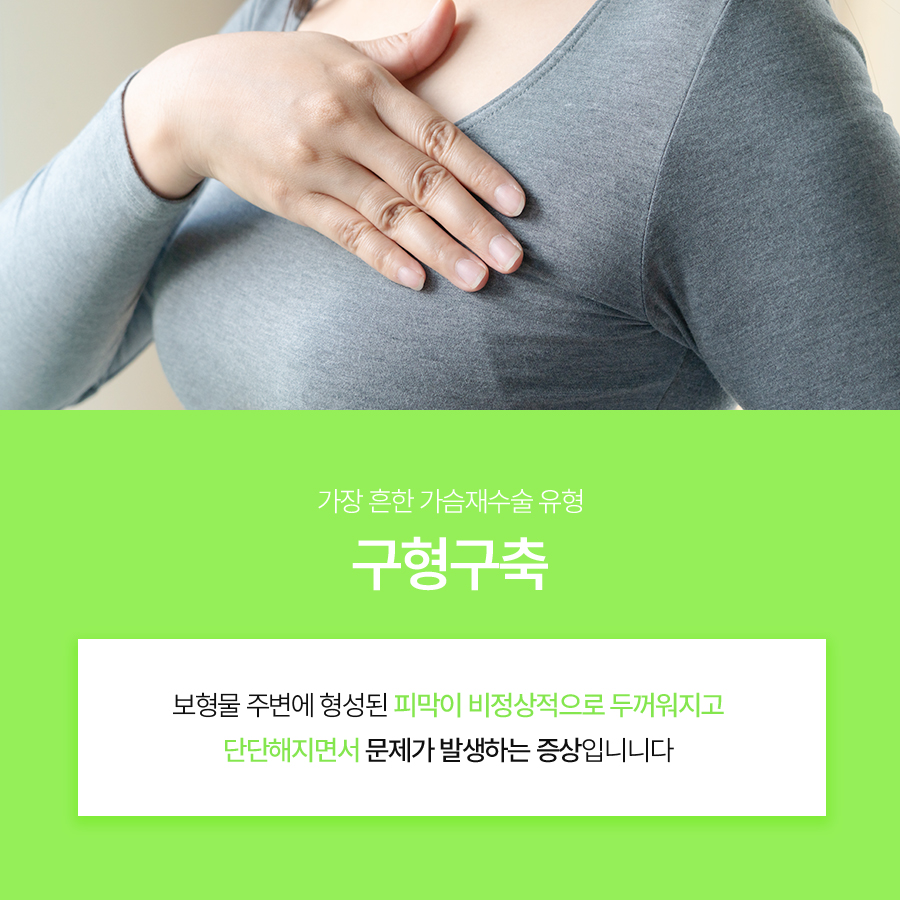
Capsular contracture is a condition that occurs when the capsule surrounding an implant becomes abnormally thick or contracts and hardens. It is a natural response for the body to recognize an implant as a foreign object and form a thin capsule around it. However, if the capsule contracts excessively for various reasons, the breasts may feel hard, their shape may change, and pain or discomfort may occur.
It is difficult to attribute its development to a single cause. Various factors may work together, including individual constitution and tissue response, the healing process, inflammation, bleeding or hematoma, and the possibility of infection. It may appear within several months after surgery, or changes may develop years later. Therefore, rather than assuming that everything is fine simply because time has passed, it is important to have the cause checked if the breasts feel different or their shape changes from usual.
Accurately diagnosing the current condition should take priority over automatically considering revision surgery. A medical examination can evaluate the severity of the capsular contracture, the condition of the implant, and changes in the surrounding tissue together, which helps determine a treatment direction appropriate for the individual. Revision surgery for breast capsular contracture is also carefully planned and performed only when necessary, based on this diagnosis.
Changes That May Occur with Capsular Contracture
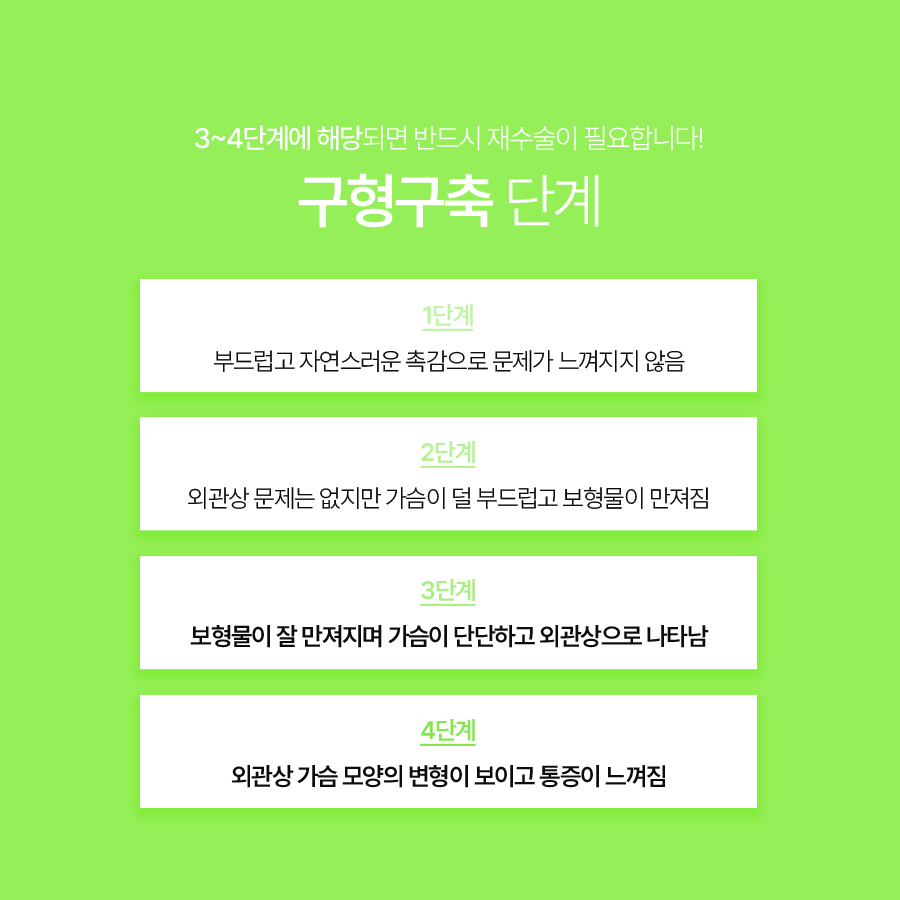
As capsular contracture progresses, the breasts may feel firmer than before or their shape may change. The balance between the two sides may become different, or the implants may appear to have shifted upward. Some people may also feel a foreign-body sensation or pressure when moving. When the condition has progressed, pain or discomfort may accompany these symptoms.
However, not all of these changes indicate capsular contracture. Similar symptoms may also occur for other reasons, such as a change in the implant's position or the characteristics of the tissue. Therefore, it is necessary to have the exact cause identified through an examination by a medical professional.
If symptoms persist or you notice changes that differ from before, it is advisable to receive a diagnosis rather than leave them unattended based on self-assessment. Revision surgery for breast capsular contracture is performed after comprehensively evaluating the cause of the symptoms, the severity of the capsular contracture, and the condition of the implant and surrounding tissue, followed by establishing a plan suited to the individual.
The Multiple Factors Behind Capsular Contracture
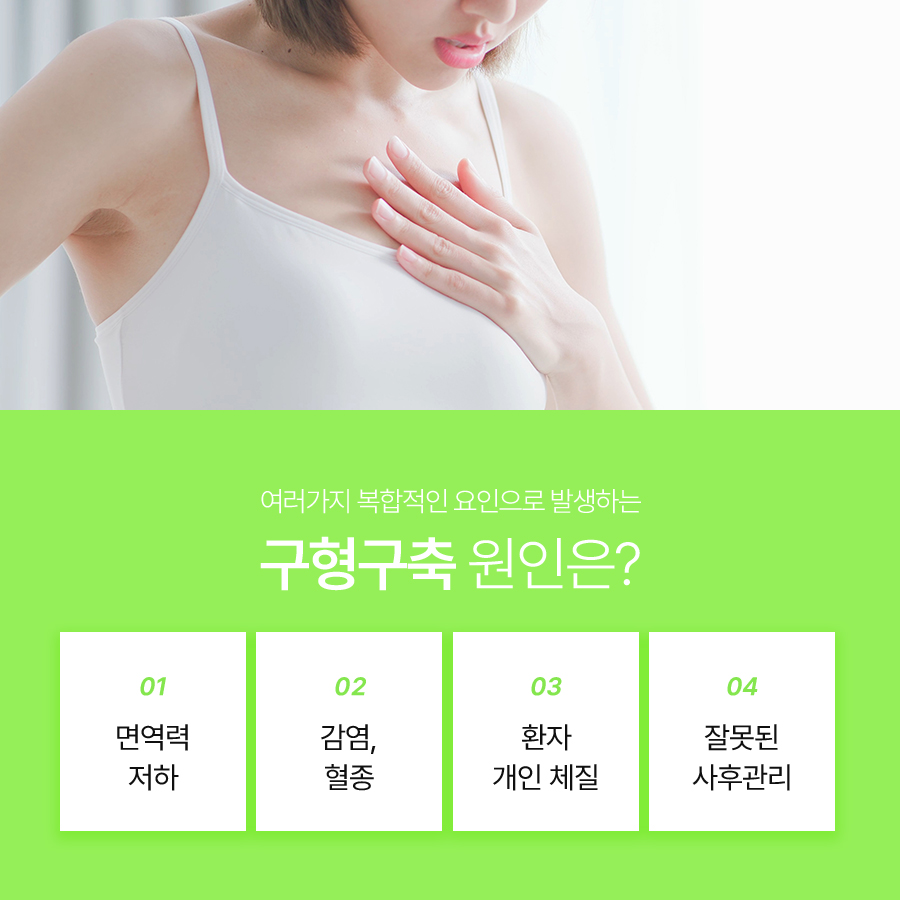
Capsular contracture often develops through the combined effects of multiple factors rather than from a single cause. One representative cause is a biofilm that forms on the surface of the implant. If a very small amount of bacteria—too small to be visible—adheres to the implant surface during surgery, a biofilm may form. This can trigger a chronic inflammatory response and contribute to the capsule gradually becoming thicker and contracting more firmly.
An individual's tissue response and healing process also play important roles. If there are changes in immune status, a tendency to develop pronounced scars, or a characteristic of excessive fibrous-tissue formation, the risk of capsular contracture may be relatively higher. However, capsular contracture does not develop because of any one of these factors alone; in most cases, various causes have a combined influence.
Therefore, if capsular contracture is suspected, it is important to examine not only a presumed single cause but also the current condition of the implant, changes in the capsule, and the surrounding tissue. Establishing a treatment plan suited to the individual's condition based on this evaluation can help support the expectation of a more satisfactory outcome.
Which Breast Revision Surgery Method Is Right for Me?
Unlike the initial surgery, revision surgery for breast capsular contracture involves working again with tissue in which an implant has already been placed, so the current tissue condition must be evaluated even more carefully. It is important to establish a surgical plan after comprehensively assessing the implant's position, the condition of the capsule, and the degree of adhesion in the surrounding tissue. Even with the same capsular contracture, the required surgical method may vary depending on the severity and the tissue condition.
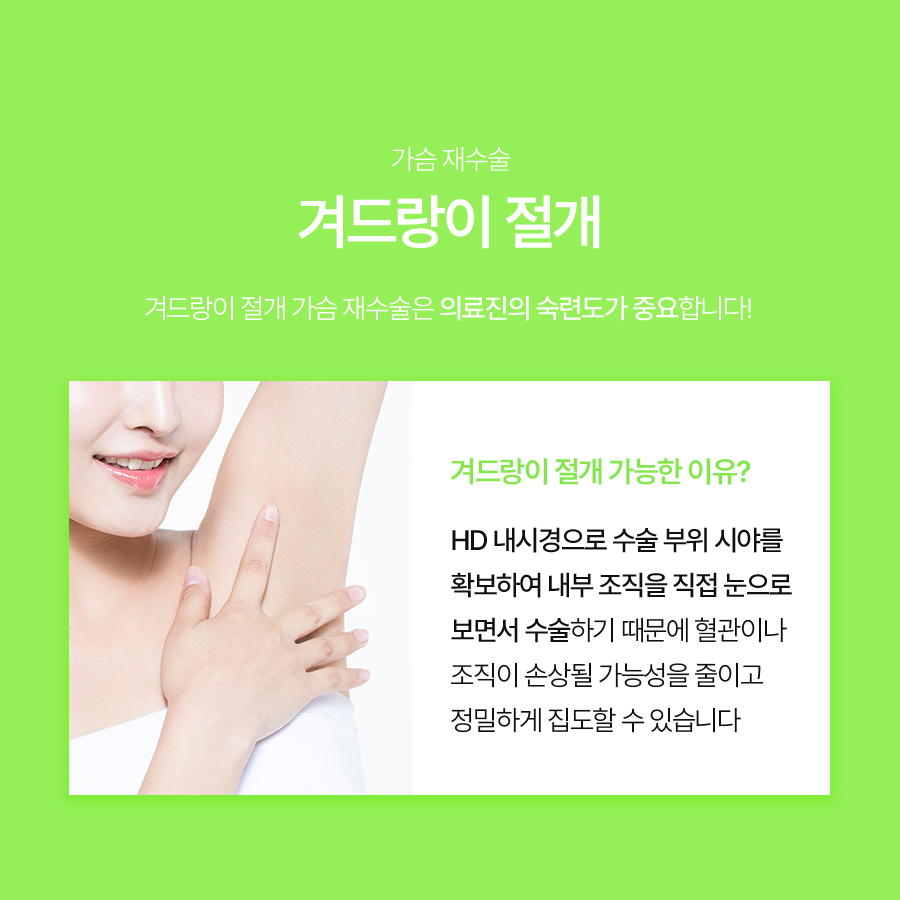
In some cases, the incision is made at the site of the previous surgery, but this does not apply identically to every patient. The most appropriate method is selected by considering the condition of the existing scar, whether adequate surgical visibility can be secured, and how easily the implant can be removed and the capsule treated. Therefore, the incision site is an important factor not only in relation to the scar but also for safe surgery and accurate correction.
Revision surgery for breast capsular contracture is not simply a process of replacing the implants. The key is to analyze the cause and establish a surgical plan suited to the current tissue condition.
At 우아성형외과, we provide detailed guidance on the incision method, surgical plan, and recovery process appropriate for each patient's condition, based on sufficient preoperative consultation and precise diagnosis.