Breast Revision Surgery Methods: Understanding the Features and Incision Techniques of the Triple-Plane Method

Over time after breast augmentation, some people consider revision surgery because the position of the implant has changed or its shape has become different from what they expected. Animation deformity, in which the implant moves along with muscle movement, bottoming out, in which it descends downward, or lateral displacement, in which it is pushed outward, may also occur.
To correct these issues, it is necessary to check which tissue layer the implant was placed in during the previous surgery and assess the condition of the surrounding tissues. Therefore, when considering breast revision surgery methods, it is advisable not to focus only on replacing the implant, but to identify the cause of the current issue and assess the condition of the breast tissue before determining the surgical approach.

How are the dual-plane and triple-plane methods different?
The dual-plane method, which is widely used in breast augmentation, places the upper part of the implant beneath the pectoralis major muscle and the lower part beneath the mammary gland tissue. By using muscle coverage, it may help create a relatively natural upper contour even in people with a slim build. On the other hand, animation deformity may occur as the implant moves with muscle movement, and in some cases the implant may shift downward or outward.
The triple-plane method takes these factors into account by subdividing and adjusting the position of the muscle more precisely and placing the implant in different tissue layers. When choosing a breast revision surgery method, it is important to understand the differences between the two techniques and determine which is appropriate for the current condition of the tissues.
What is the principle behind the triple-plane method?
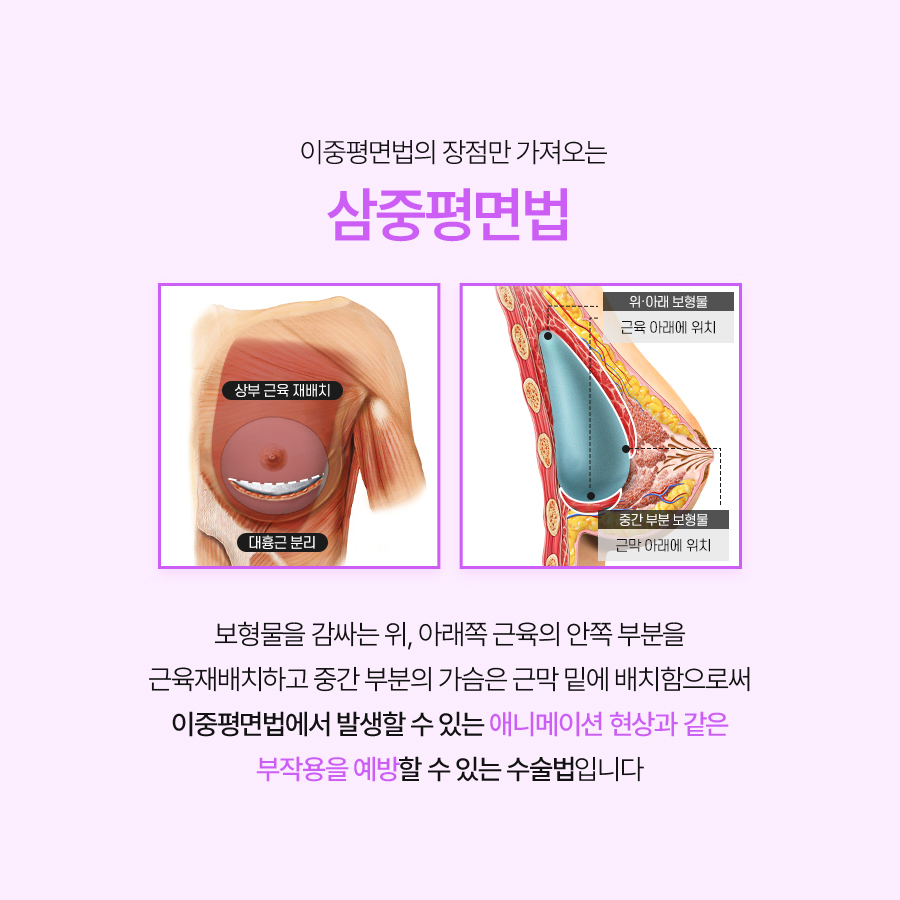
The triple-plane method maintains the advantages of muscle coverage and a natural shape used in the dual-plane method while adjusting the surrounding tissue structures more precisely. The inner portions of the upper and lower muscles surrounding the implant are repositioned within the necessary range, and the middle portion of the breast is planned to lie beneath the fascia so that the implant can settle more stably.
This approach can reduce the extent to which muscle movement is directly transmitted to the implant, while also taking the central and lower contours into consideration. When determining a breast revision surgery method, the condition of the tissues may vary depending on adhesions or scar tissue from the previous surgery and the implant's position, so these factors are checked before establishing the detailed surgical plan.
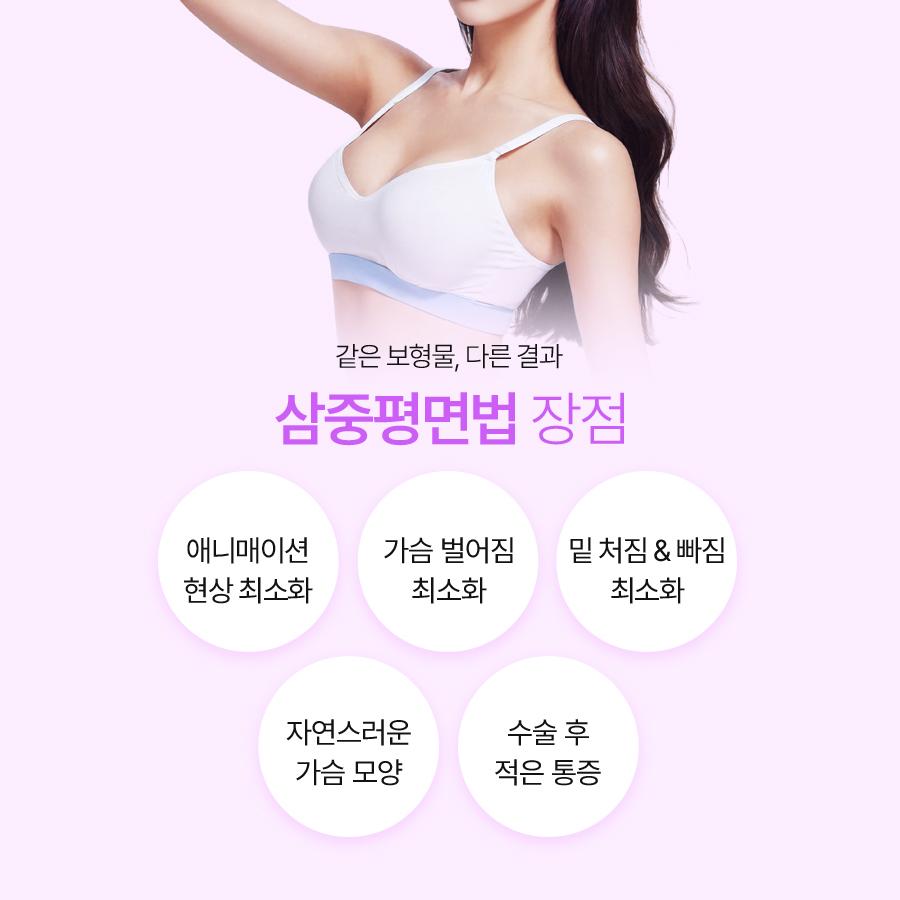
What can be expected from the triple-plane method?
Because the tissue layers in which the implant is placed are adjusted precisely, the triple-plane method focuses on creating natural movement and contours. It can be planned to reduce excessive changes in shape caused by muscle movement, as well as to prevent the implant from being pushed outward or descending downward.
When considering breast revision surgery methods, if the space between the breasts appears excessively wide, the existing tissues and implant position can be assessed together to create a more balanced central breast contour. Depending on the surgical scope and tissue condition, the necessary areas can also be adjusted with the aim of reducing the burden on the tissues and pain after surgery.
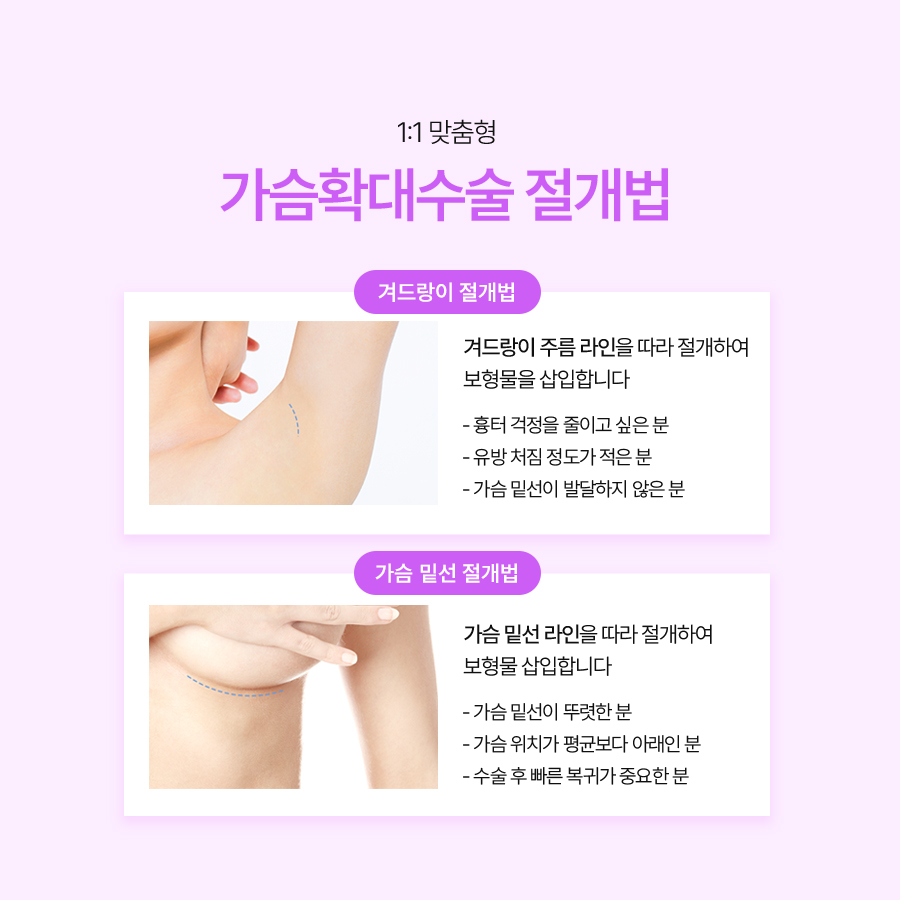
The incision location must also be considered in breast augmentation
When deciding how to insert the implant, it is also necessary to consider which area will be used for access. With the axillary incision method, the incision is made along the crease of the armpit. This may be considered when someone wishes to reduce the visibility of a directly located scar. It may also be used when there is little breast sagging and the inframammary fold is not clearly defined.
The inframammary incision method approaches through the crease of the inframammary fold. It may be selected when the fold is relatively distinct or located lower than average. It may also be considered when postoperative recovery and returning to daily activities are important factors. In breast revision surgery methods, the existing incision site and the condition of the scar tissue are also assessed before determining the access location.
Breast revision surgery differs from simply removing the existing implant and replacing it with a new one. If animation deformity, bottoming out, or lateral displacement has occurred, it is necessary to identify why these changes developed and reassess the tissue layer in which the implant is located and the condition of the surrounding tissues. Whether the triple-plane method is appropriate must also be determined based on the individual's body type, breast tissue, and the condition resulting from the previous surgery.
At 우아성형외과, we also focus on planning the surgical approach after assessing both the changes in the tissues caused by the previous surgery and the current breast shape. When deciding on a breast revision surgery method, it is advisable to sufficiently determine which approach is necessary for your individual condition rather than comparing only the names of the techniques.