
Ultrasound Lifting vs. Density Radiofrequency Lifting
How to Address Skin Concerns in Your 40s
As you enter your 40s, a decline in skin elasticity and the appearance of wrinkles begin to become more noticeable. Because of this, many people look for ways to restore skin elasticity and improve wrinkles. Among these options, ultrasound lifting and Density radiofrequency lifting are two of the most commonly considered procedures. Both lifting methods are effective for improving skin elasticity, but they work in different ways, and the most suitable choice may vary depending on your skin condition and desired results.
In this article, we will compare the differences between ultrasound lifting and Density radiofrequency lifting, and recommend the most effective lifting procedure for people in their 40s.
Ultrasound Lifting and Density Radiofrequency Lifting
Differences Between the Two Lifting Methods
Ultrasound lifting uses high-intensity focused ultrasound (HIFU) energy to deliver heat deep into the skin. The ultrasound concentrates energy in the dermis and the SMAS layer, helping pull the skin and improve elasticity. This method is effective for improving deep wrinkles, but because results appear only after several weeks to months following the procedure, immediate changes are difficult to expect.
On the other hand, Density radiofrequency lifting is a procedure that uses both monopolar and bipolar radiofrequency at the same time, delivering energy evenly from deep layers of the skin to the surface. Unlike ultrasound lifting, which concentrates energy on a specific layer of the skin, Density radiofrequency lifting distributes radiofrequency energy across the skin as a whole to provide a balanced lifting effect. Density also generates heat using moisture, so it can be performed comfortably even on dry skin.
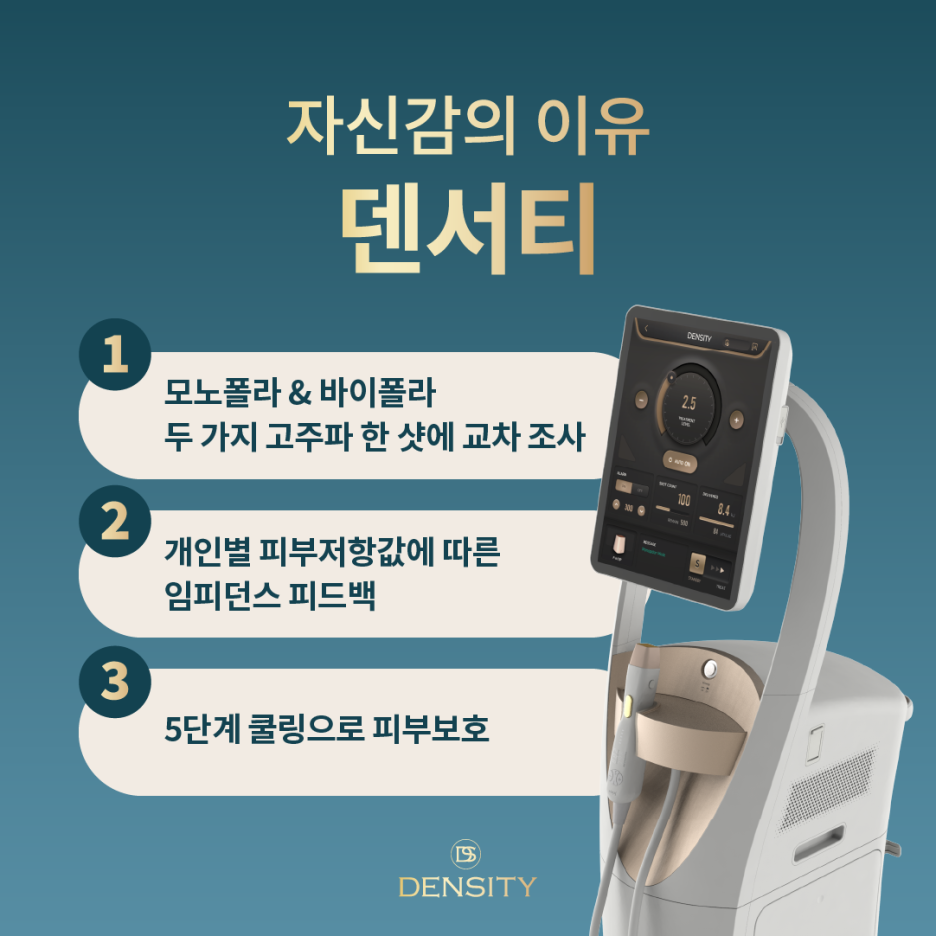
Ultrasound Lifting and Density Radiofrequency Lifting
Duration of Effects and Immediate Changes
In the case of ultrasound lifting, the main effects usually begin to appear about 2 to 3 months after the procedure. The effects last for 6 months to 1 year, but because they appear gradually, it is difficult to expect immediate changes. However, over time, skin elasticity and wrinkles improve gradually.
In contrast, Density radiofrequency lifting can show immediate improvement in skin elasticity right after the procedure. In addition, radiofrequency promotes the production of collagen and elastin, strengthening elasticity from within the skin, and the effects last for about 1 year. Density radiofrequency lifting can provide noticeable results even immediately after the procedure, making it a more suitable option for people in their 40s with busy schedules.
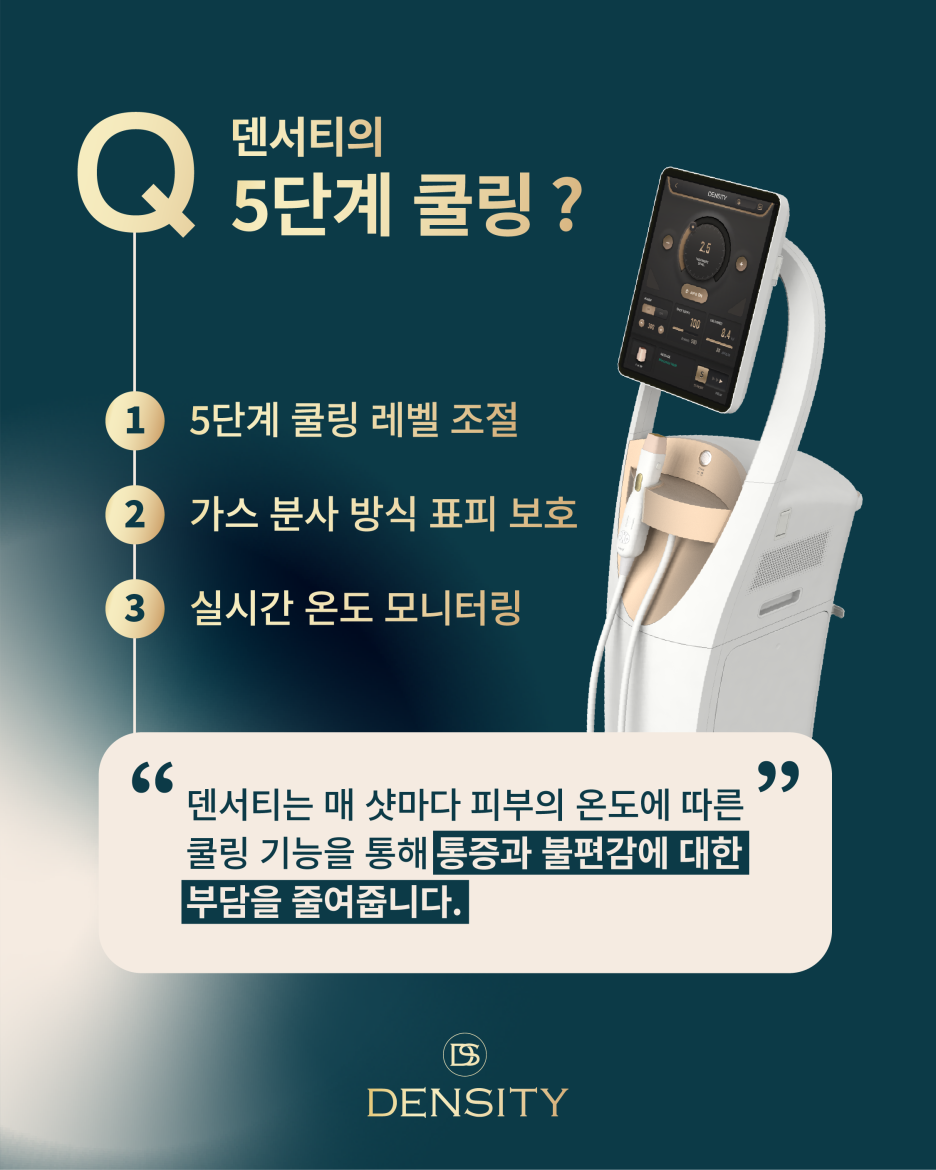
Comparison of Pain During the Procedure and Recovery Time
One of the important factors in lifting procedures is pain and recovery time. Ultrasound lifting can cause a strong sensation of heat because the ultrasound energy is concentrated in specific areas, so the pain level tends to be relatively high. People with sensitive skin may also feel discomfort during the procedure. In addition, redness or a tight feeling may appear after the procedure, which can make recovery time somewhat longer.
On the other hand, Density radiofrequency lifting delivers radiofrequency energy gently, and because it has a real-time skin temperature detection system and a cooling function, it causes less pain and has a shorter recovery time. After the procedure, there may be slight redness, but it usually subsides within a few hours, and you can return to daily life right away.
Recommended Lifting Procedure for People in Their 40s
Density Radiofrequency Lifting
In your 40s, skin elasticity has already begun to decline sharply, and deep wrinkles start to appear. At this stage, what is needed is not just prevention, but active restoration of skin elasticity. Density radiofrequency lifting uses both monopolar and bipolar radiofrequency to stimulate the skin from deep layers to the surface, making it effective for restoring elasticity. In addition, because it is non-invasive, it causes less pain, recovery is quick, and the effects appear immediately.
In contrast, ultrasound lifting is a method that improves wrinkles by stimulating deep layers with high-intensity focused ultrasound, but because the effects appear only after some time following the procedure, Density radiofrequency lifting may be more suitable for people in their 40s who want to address skin concerns quickly. Density radiofrequency lifting provides an immediate lifting effect, rapidly restores skin elasticity, and is a more effective method for improving wrinkles.
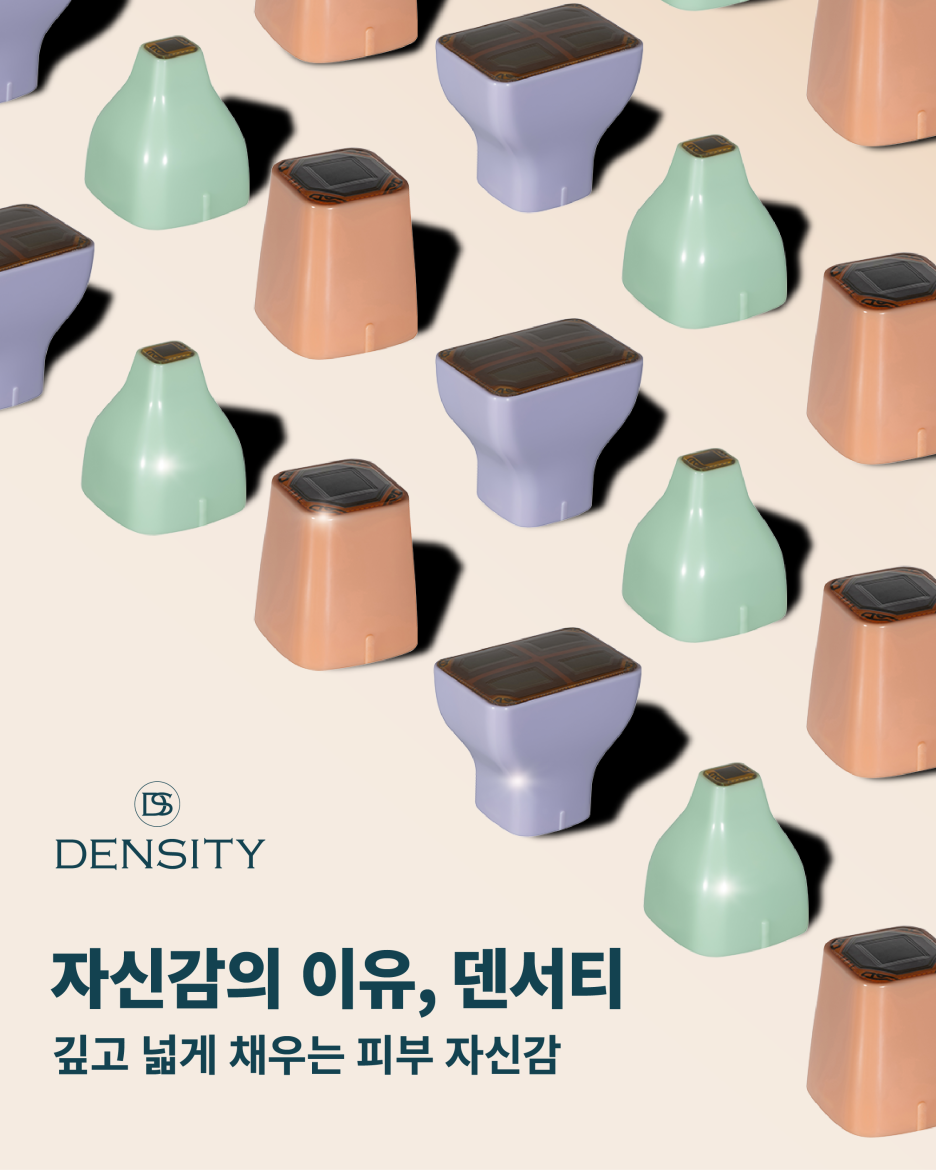
Skin concerns in your 40s,
Solving them with Density Radiofrequency Lifting
As you enter your 40s, changes in skin elasticity and wrinkles begin to become noticeably more apparent. At this time, it is important to restore skin elasticity and maintain youthful, healthy skin through an appropriate lifting procedure. Ultrasound lifting and Density radiofrequency lifting each have their own advantages and disadvantages, but for people in their 40s who want immediate results and long-lasting effects, Density radiofrequency lifting is more suitable.
Density radiofrequency lifting provides a balanced lifting effect across the skin as a whole, and because it causes less pain and has a shorter recovery time, it can be an ideal choice for people in their 40s with busy schedules.
If you want to solve your skin concerns and regain firmer skin, consider Density radiofrequency lifting. It will be a satisfying choice for restoring skin elasticity in your 40s.
#UltrasoundLifting #UltrasoundRadiofrequencyLifting #Density #RadiofrequencyLifting #Lifting #LiftingProcedure #FaceLifting #RadiofrequencyLiftingEffects #CheongdamLifting #DensityHi