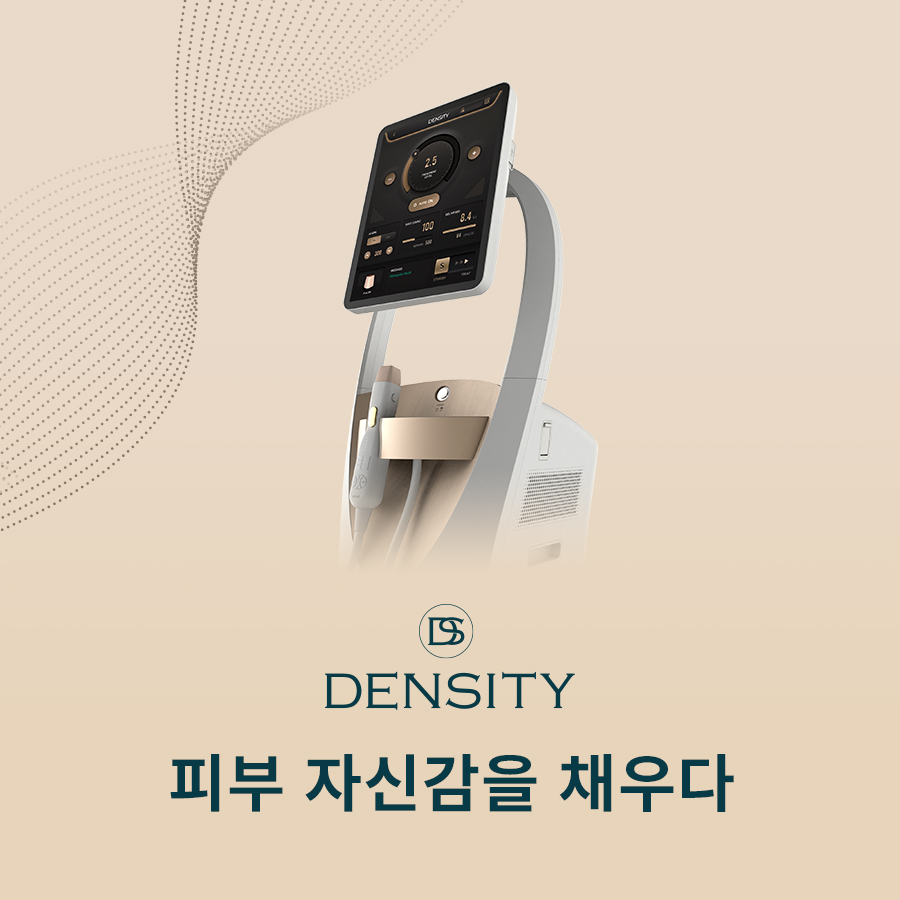
Lifting for your 40s,
Ultrasound lifting vs. Density radiofrequency lifting
Wrinkles and sagging caused by reduced skin elasticity become a bigger concern as you enter your 40s. This is because collagen and elastin in the skin decrease with age, and the skin gradually begins to sag. There are various lifting procedures designed to respond to these changes, and among them, ultrasound lifting and Density radiofrequency lifting are drawing a lot of attention.
Both procedures are effective for improving skin elasticity, but let’s look at how they differ and which one may be more suitable for skin in your 40s.
Ultrasound lifting: heat delivered to deeper layers
Ultrasound lifting works by using high-intensity focused ultrasound (HIFU) to deliver heat deep into the skin.
This energy mainly reaches the dermis and the SMAS layer, pulling the skin and stimulating collagen production. The biggest advantage of ultrasound lifting is that it can concentrate energy in deeper skin layers. Because of this, effective lifting can be expected. However, visible changes are not easy to see right away after the procedure, and the effects appear gradually starting about 2 to 3 months later, so it may be disappointing for those who want immediate results.
Because ultrasound lifting stimulates the dermis and SMAS layer, skin elasticity improves gradually over time. However, this can also mean some redness or pain may occur at first. People with sensitive skin may feel discomfort during the procedure.
Density radiofrequency lifting: balanced heat delivery
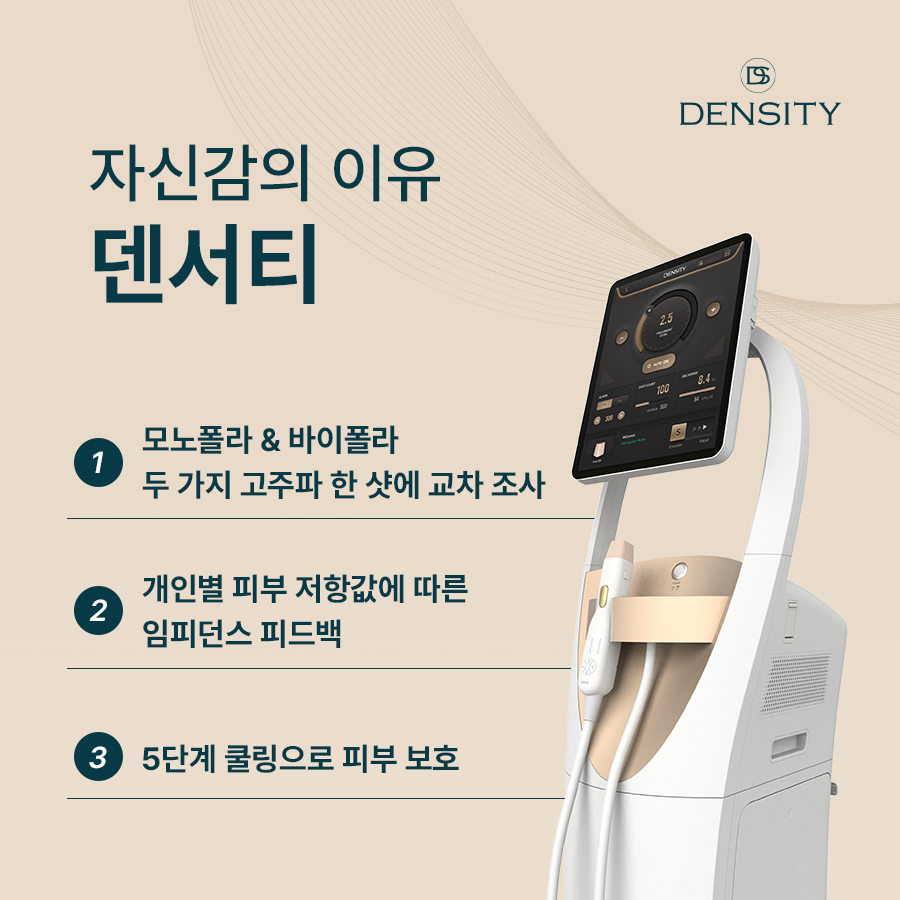
Density radiofrequency lifting is a procedure that uses both monopolar and bipolar radiofrequency at the same time, generating heat by using moisture within the skin. Radiofrequency delivers heat evenly from the skin surface to deeper layers, dispersing energy across the skin for a balanced lifting effect. Compared with ultrasound lifting, Density radiofrequency lifting places less burden on the skin and naturally uses the skin’s moisture to generate heat, making it suitable even for dry skin.
A major advantage of Density radiofrequency lifting is that visible changes appear immediately after the procedure. You can experience an immediate improvement in skin elasticity, and by further stimulating collagen and elastin production, long-term effects can also be expected. In addition, it is relatively less painful than ultrasound lifting and has a shorter recovery time. Mild redness may appear after the procedure, but it usually subsides within a few hours, allowing a quick return to daily life.
Duration of results
Ultrasound lifting vs. Density radiofrequency lifting
Ultrasound lifting shows results gradually and lasts from 6 months to 1 year. As skin elasticity improves little by little over time, it is suitable for people who prefer gradual results rather than immediate, noticeable changes. However, because it takes time for the effects to appear, it is a procedure suited to those who want steady improvement rather than dramatic change.
On the other hand, Density radiofrequency lifting produces immediate results right after the procedure, and improvement in skin elasticity progresses quickly. The effects of Density lifting last longer than ultrasound lifting, usually for about 1 year. Density radiofrequency lifting is very effective for slowing the rate at which the skin sags and for softening fine wrinkles. For those who value long-lasting results and immediate change, Density radiofrequency lifting may be the better choice.

Pain and recovery time
Advantages of Density radiofrequency lifting
Because ultrasound lifting delivers high-intensity focused ultrasound energy deep into the skin, it can create a strong feeling of heat. As a result, pain during the procedure may feel somewhat intense. In addition, sensitive skin after the procedure may experience redness or discomfort, so you should be prepared to tolerate some pain.
Density radiofrequency lifting delivers radiofrequency energy more gently, and it controls thermal stimulation through a system that detects skin temperature in real time and a five-step cooling system. Because of this, it is relatively less painful and has a faster recovery time after the procedure. Temporary redness may occur immediately after treatment, but it usually subsides within a few hours and does not interfere with daily life.
The best choice for solving skin concerns in your 40s
As you enter your 40s, problems such as reduced skin elasticity, fine wrinkles, and sagging become more noticeable. Both ultrasound lifting and Density radiofrequency lifting are effective for improving skin elasticity and reducing wrinkles, but it is important to choose the lifting procedure that is more suitable for your 40s.
Density radiofrequency lifting provides immediate results, slows the rate of skin sagging, and is more effective at softening fine wrinkles. It also involves less pain, recovers quickly, and offers long-term results, making it a more suitable choice for skin in your 40s. On the other hand, ultrasound lifting shows results gradually and provides a lifting effect deep within the skin, so it is suitable for those who want to improve skin elasticity over time.
In conclusion, if you are in your 40s and want to improve skin elasticity, soften fine wrinkles, and expect lasting results, it would be a good idea to consider Density radiofrequency lifting. It can be a great help in addressing skin concerns and maintaining healthy, youthful-looking skin.
#UltrasoundLifting #UltrasoundRadiofrequencyLifting #Density #RadiofrequencyLifting #Lifting #LiftingProcedure #FacialLifting #RadiofrequencyLiftingEffects #CheongdamLifting #DensityHi