If You Want to Remove Facial Dark Spots with Ripot Laser
When melanin is excessively produced due to ultraviolet rays, external irritation, hormonal changes, and other factors, dark pigmentation such as melasma, freckles, and dark spots can appear on the face. These issues can make skin tone look uneven and also contribute to a darker overall impression.
Many people try to improve this with cosmetics or whitening products, but pigment conditions that have settled deep in the skin are not easy to improve with surface-level care. That is why it is necessary to address the issue through laser treatment such as Ripot Laser.
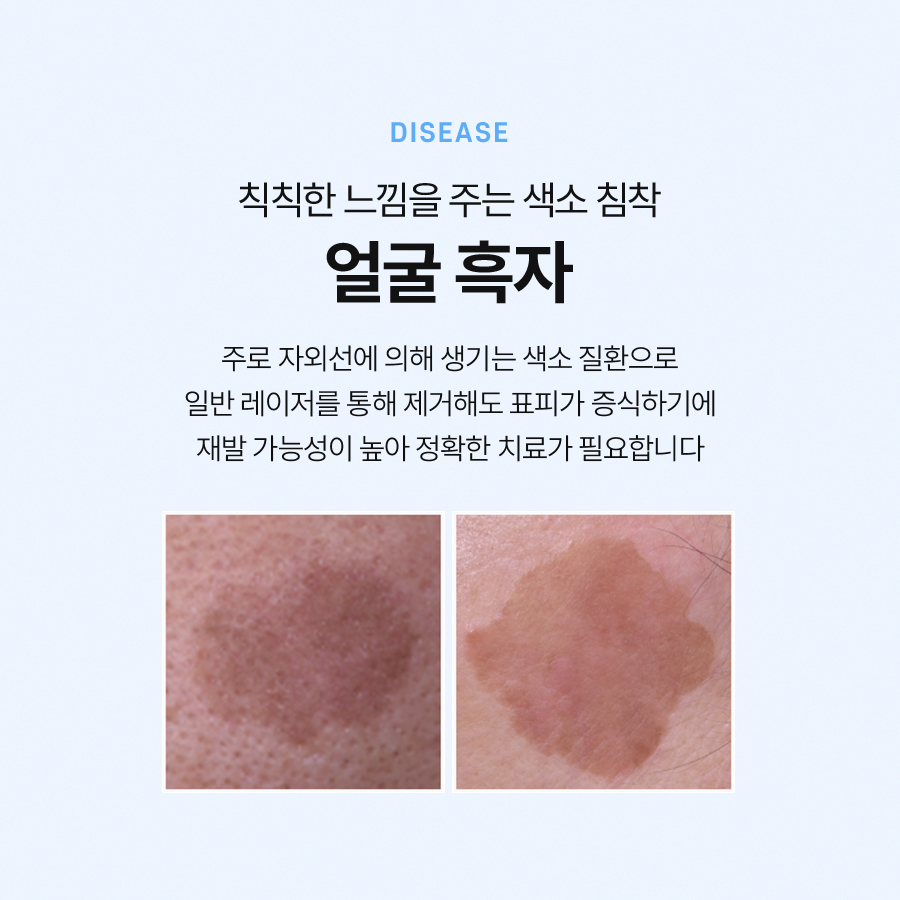
Why do pigmentation and dark spots occur?
As melanocytes become overactive, pigment can be produced excessively and then remain in the skin because it is not naturally eliminated smoothly. A representative form of this is dark spots. Ultraviolet rays stimulate melanin, making the skin tone darker, and repeated exposure makes this worse.
Hormonal changes and post-inflammatory pigmentation are also major causes. For example, brown marks left after acne subsides or pigmentation left after wounds fall into this category. These problems are difficult to improve with surface-level care, so it is necessary to receive Ripot Laser, which can reach pigment in deeper layers.
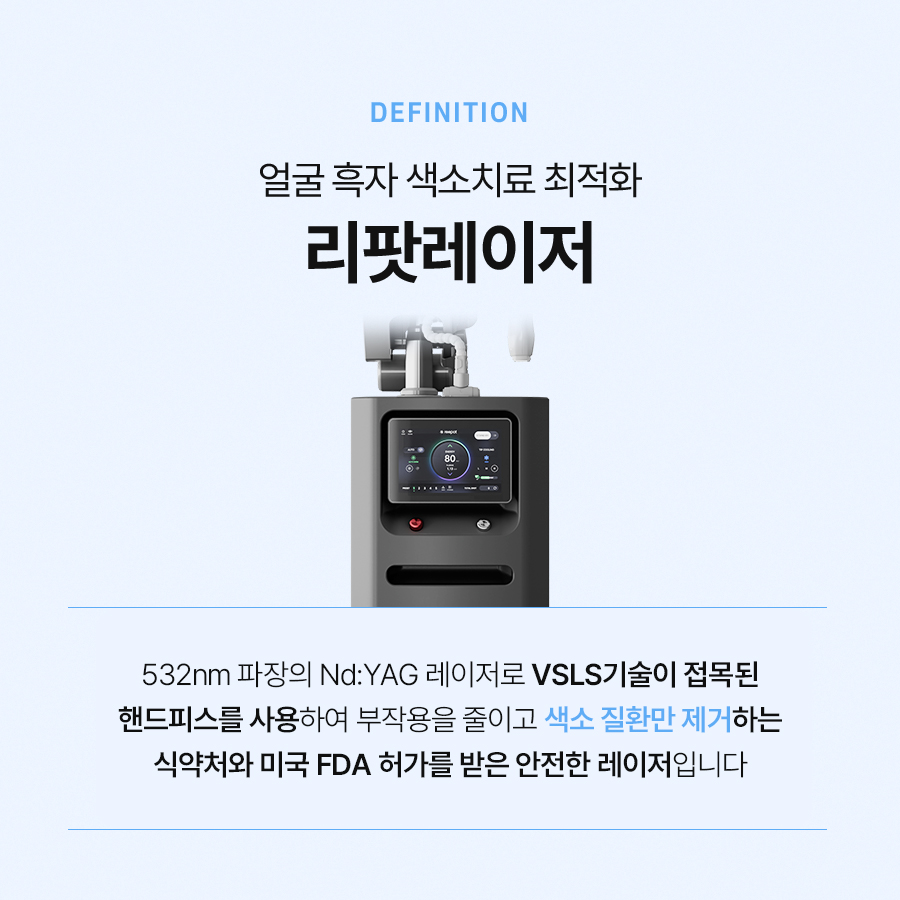
How Ripot Laser works
It works by irradiating light at a wavelength that responds only to melanin pigment, finely breaking down the particles. The heat generated at this time is concentrated only on the pigment, so it does not stimulate the surrounding normal cells. Afterward, it is gradually eliminated from the body through the skin’s natural metabolic process, and as a result the skin tone gradually becomes lighter and more refined.
The laser can also be adjusted according to depth, so it can effectively remove not only pigment on the epidermis but also pigment located in the dermis. This makes it broadly useful for various conditions, dark spots, freckles, blemishes, and more.

What are the features of Ripot Laser?
It uses a special wavelength laser aimed at pigment removal. The irradiated laser is absorbed by melanin and finely breaks down the particles, but it does not cause major damage to surrounding tissue. Thanks to this, pigment can be stably broken down while preserving the skin’s protective barrier.
It also causes minimal irritation, to the point that anesthesia is not necessary, and a super-cooling system is applied during the procedure to reduce discomfort. Therefore, it is possible to return to daily life immediately after the procedure. In addition, because Ripot Laser allows the intensity and number of pulses to be adjusted depending on the skin condition, it offers care tailored to the individual’s condition.

It has various advantages.
The advantage of Ripot Laser is that it selectively breaks down only pigment. Because it acts only on the pigment, improvement can be expected while the skin’s protective layer is maintained. In addition, the gradual change allows the skin tone to become naturally refined, and fine adjustments are possible depending on depth and distribution.
Also, redness or severe irritation after the procedure is rare, and recovery is quick. Above all, one of its advantages is that as the pigment fades, elasticity and skin texture also improve.
Because of these advantages, it is suitable for people worried about uneven skin tone caused by pigmentation. If your entire face looks dull due to melasma or freckles, if you are looking for a treatment that is not too irritating because you have sensitive skin, or if you need skin regeneration, it is recommended that you try Ripot Laser.
Ripot Laser selectively acts on melanin pigment, breaking it down finely and gradually evening out the skin through the natural metabolic process. Because it is structured to break down pigment while reducing epidermal damage, it can be maintained stably while showing gradual changes, resulting in a more natural outcome.
If your skin tone is uneven due to pigmentation or dark spots, Ripot Laser can be considered an effective option.