Hello, this is Dr. Park Seong-hyeok from Noonnopi Plastic Surgery.
I haven’t been posting often lately, partly because of the unsettled situation, and partly because it’s the busy season ^^;;
Today, I’d like to introduce under-eye surgery, which is considered an entry-level procedure in anti-aging surgery.
Features of the under-eye area as we age
As we age, the first place that shows it is the eye area.
In particular, the under-eye area is where signs of aging are most clearly visible.
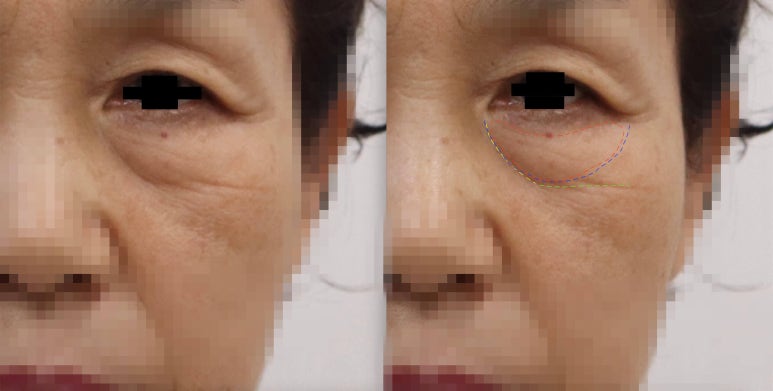
Characteristics of under-eye aging
● The under-eye fat protrudes
(under-eye bulging, red dotted line)
● The tear trough underneath it (tear trough deformity, yellow dotted line)
and the Indian band (green dotted line) become deeper
● The skin stretches
(skin laxity)
When this happens, the under-eye area starts to look longer and saggy.
If I compare my 20s and 40s, it becomes very clear that my under-eye area has become much longer and more sagging.
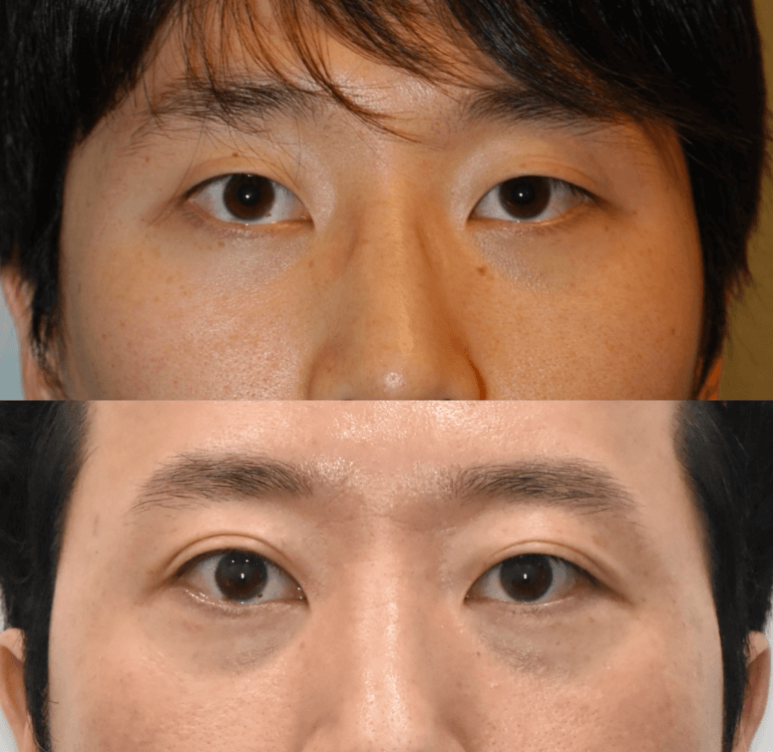
20s vs. 40s: Changes in the under-eye area
In the end, the key to under-eye surgery is
making the vertically long-looking under-eye area
appear shorter.
Two methods of under-eye surgery
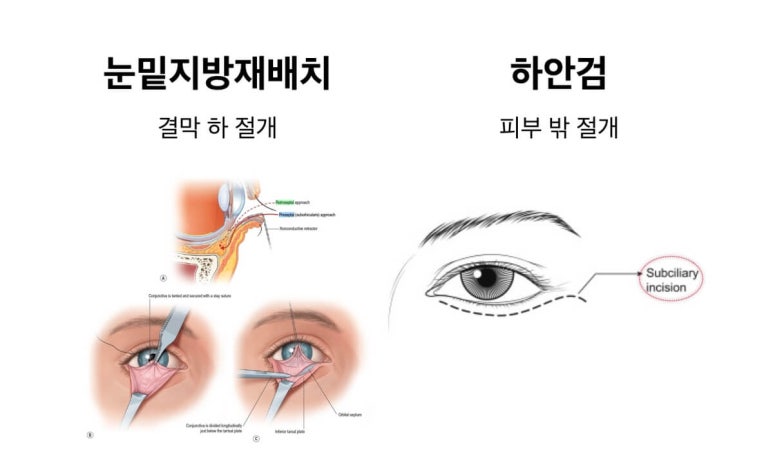
Fat repositioning vs. lower blepharoplasty
Under-eye surgery can largely be divided into two types.
Under-eye fat repositioning that does not involve an incision in the skin
(Transconjunctival Lower Blepharoplasty)
Under-eye fat repositioning
Lower blepharoplasty, which involves an incision in the skin
(Lower Blepharoplasty)
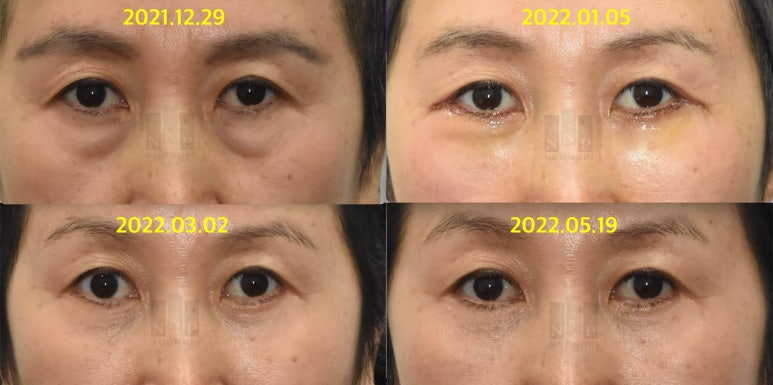
Lower blepharoplasty
Cases of under-eye fat repositioning
Under-eye fat repositioning moves the fat into the hollow tear trough area without making a skin incision,
by approaching from inside the conjunctiva.
It is mainly suitable for younger patients or those with good skin elasticity.
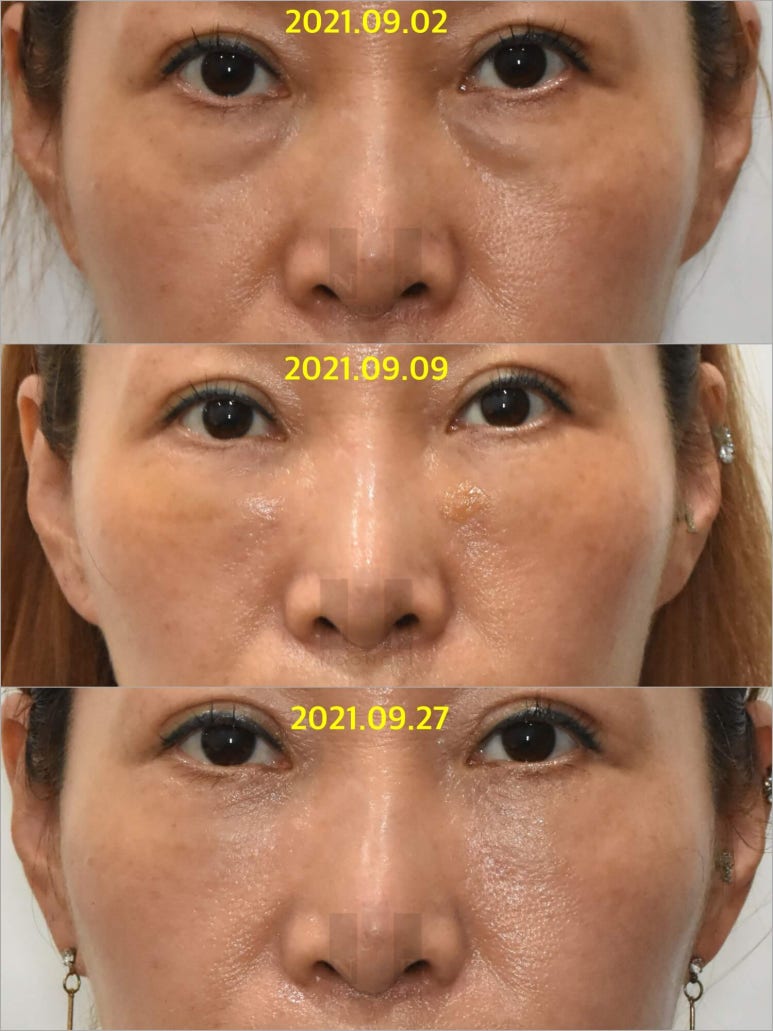
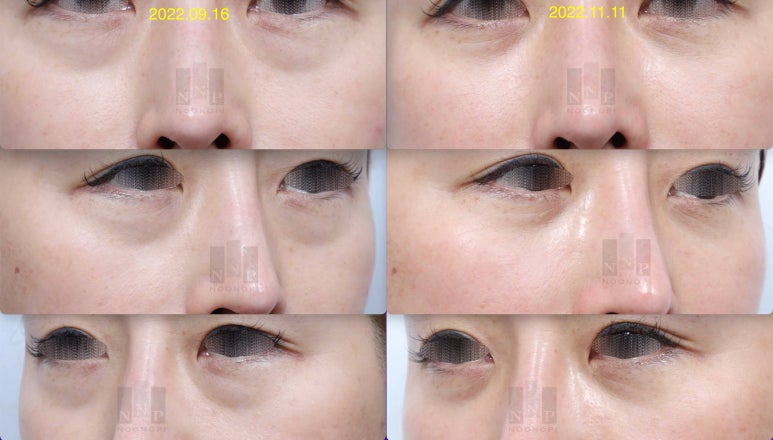
Under-eye fat repositioning review: 1 week and 1 month later
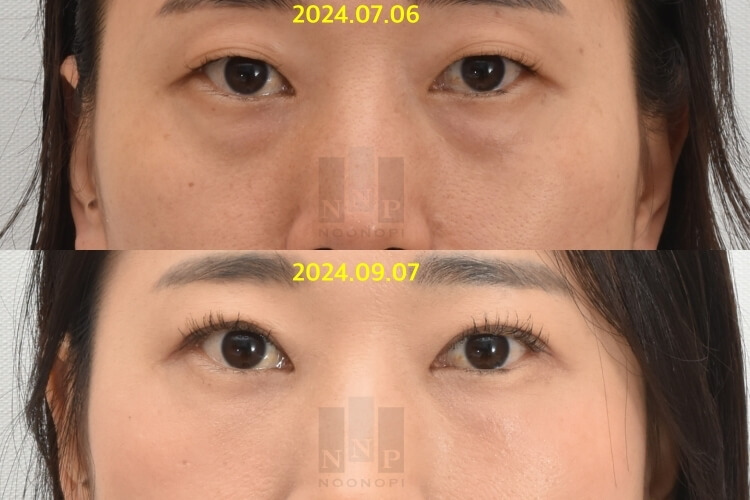
Double eyelids, before and after under-eye fat repositioning
Cases of lower blepharoplasty
Lower blepharoplasty is a method that corrects sagging skin and fat through a skin incision.
It is effective for people in their mid-to-late 40s or older who have significant under-eye sagging or deep wrinkles.
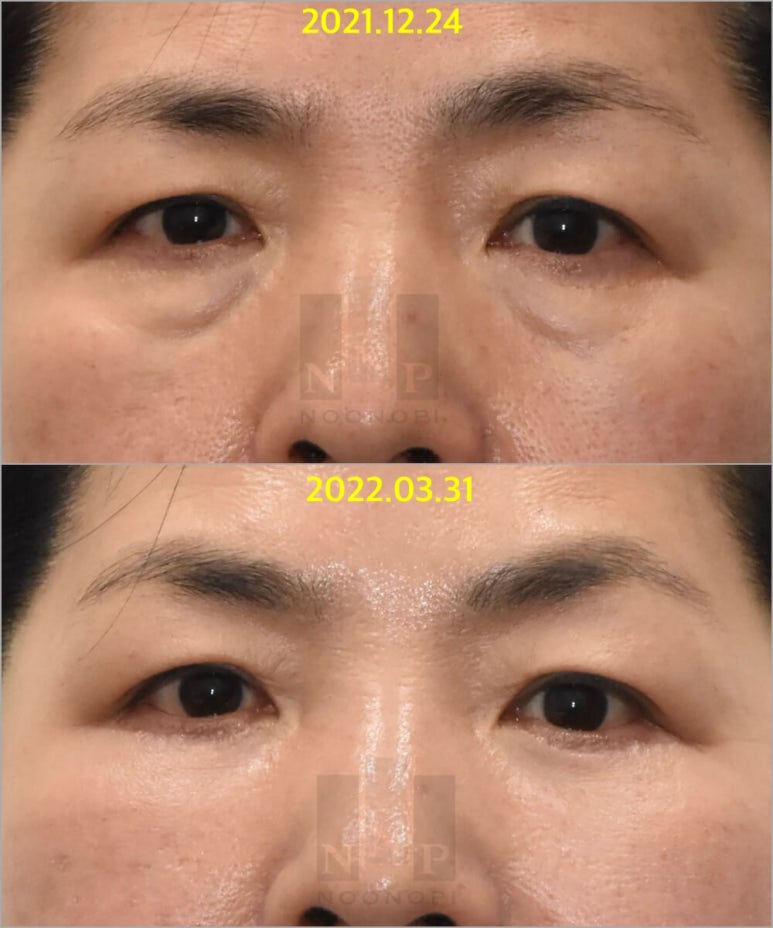
Before and after lower blepharoplasty
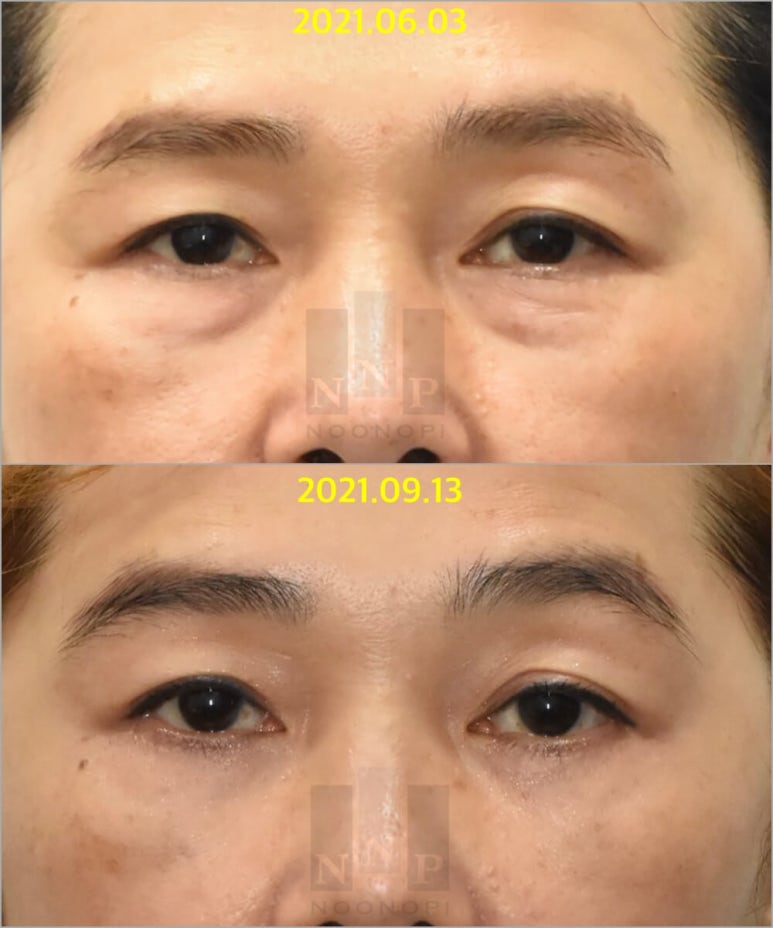
Before and after lower blepharoplasty
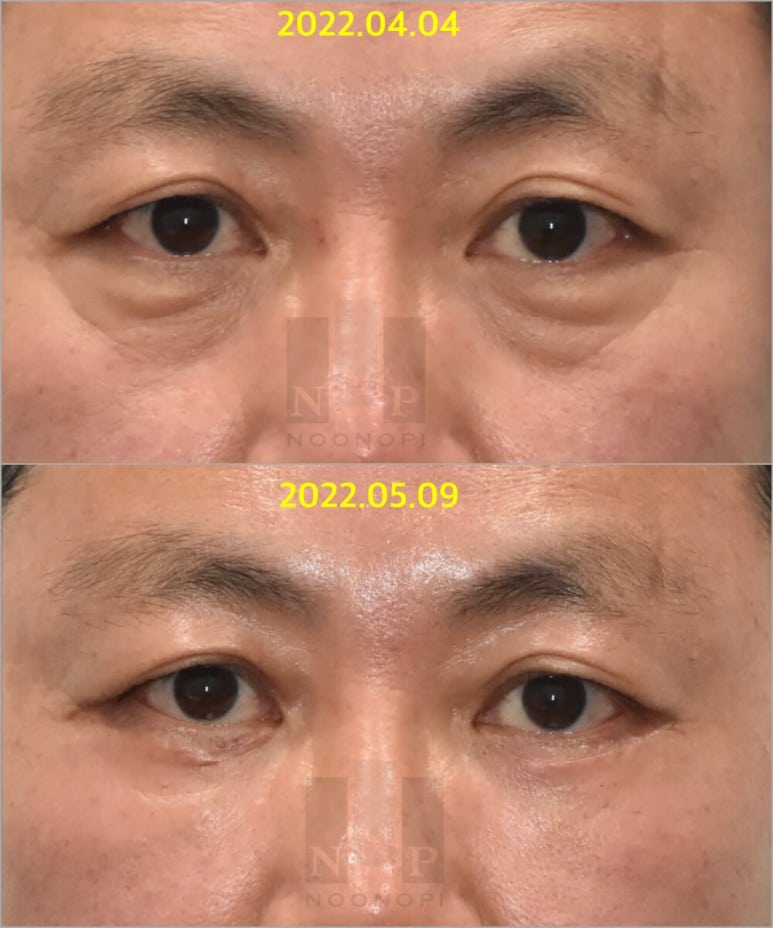
Review after lower blepharoplasty
As in the case above, at around one month,
lower blepharoplasty scars may be slightly visible,
but in most cases they naturally fade over time.
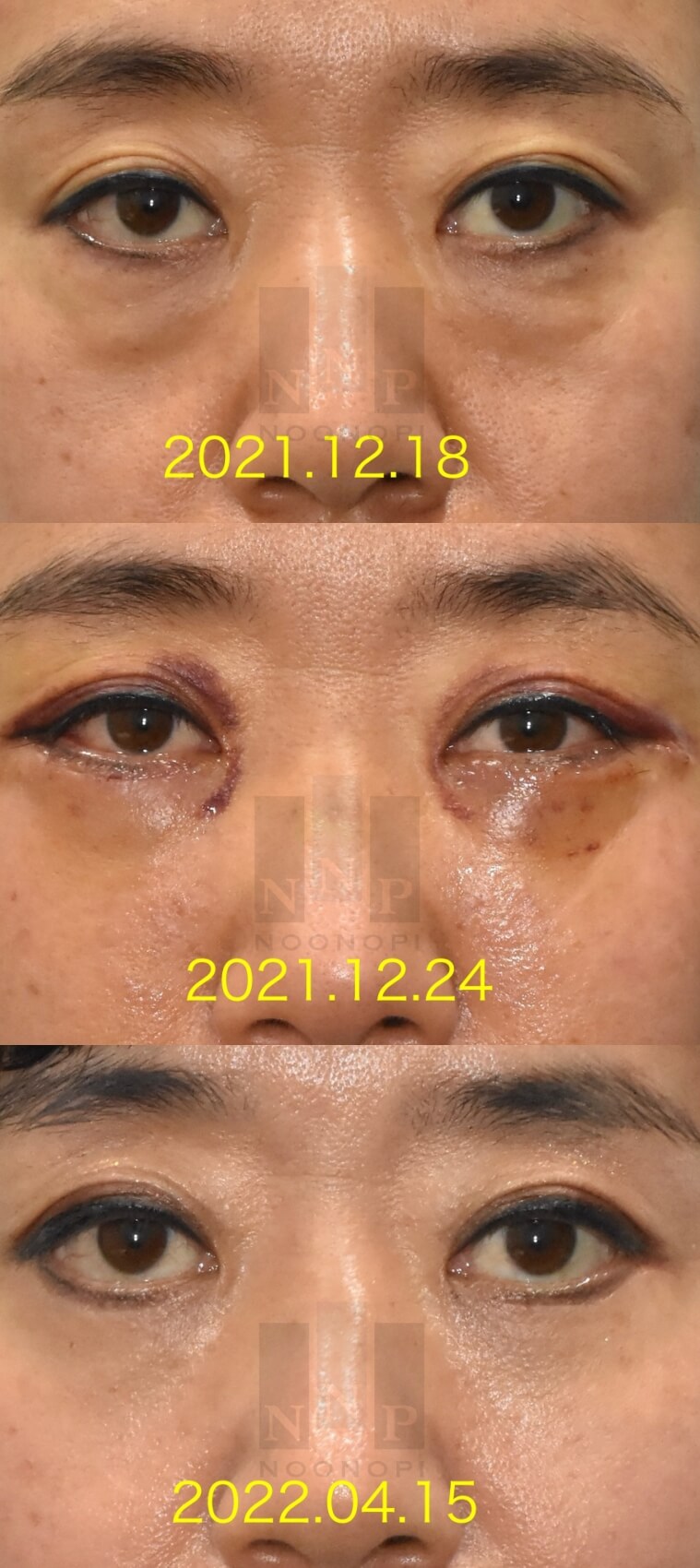
Bruising and swelling after lower blepharoplasty
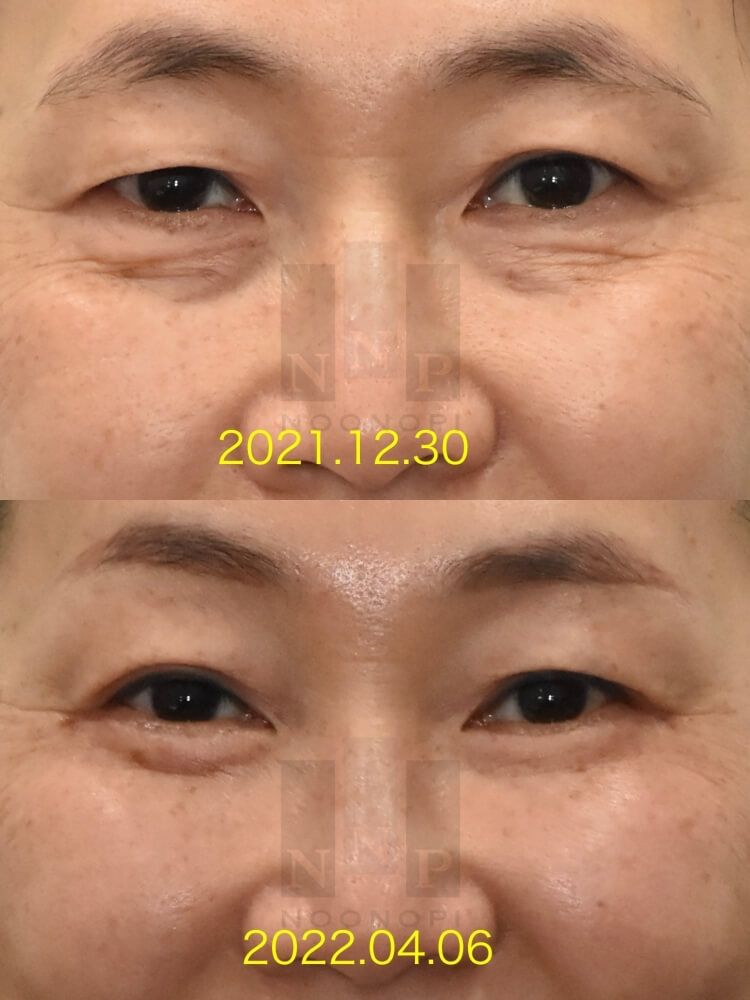
Even when smiling, the size of the aegyo-sal does not change
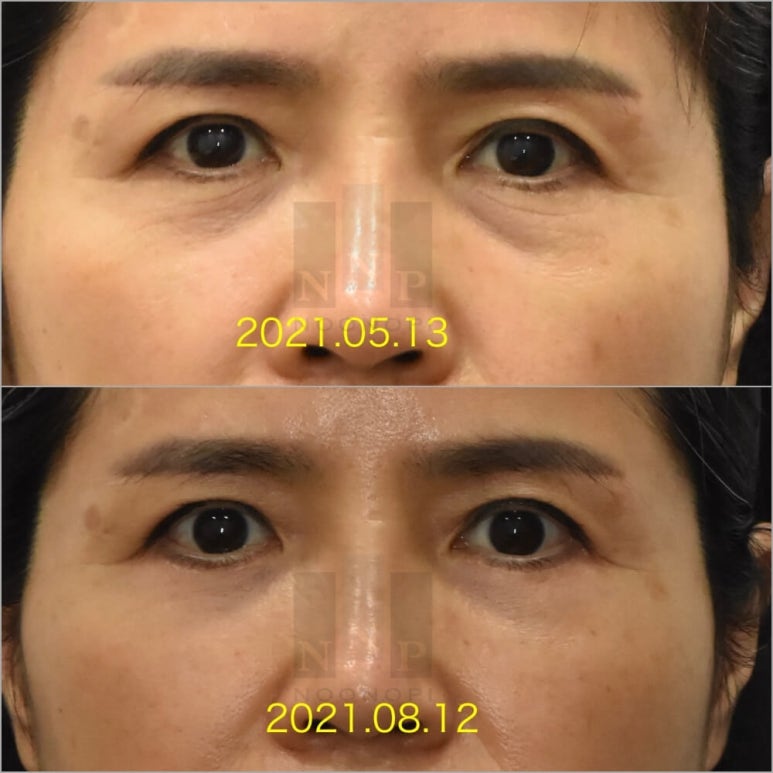
3 months after lower blepharoplasty
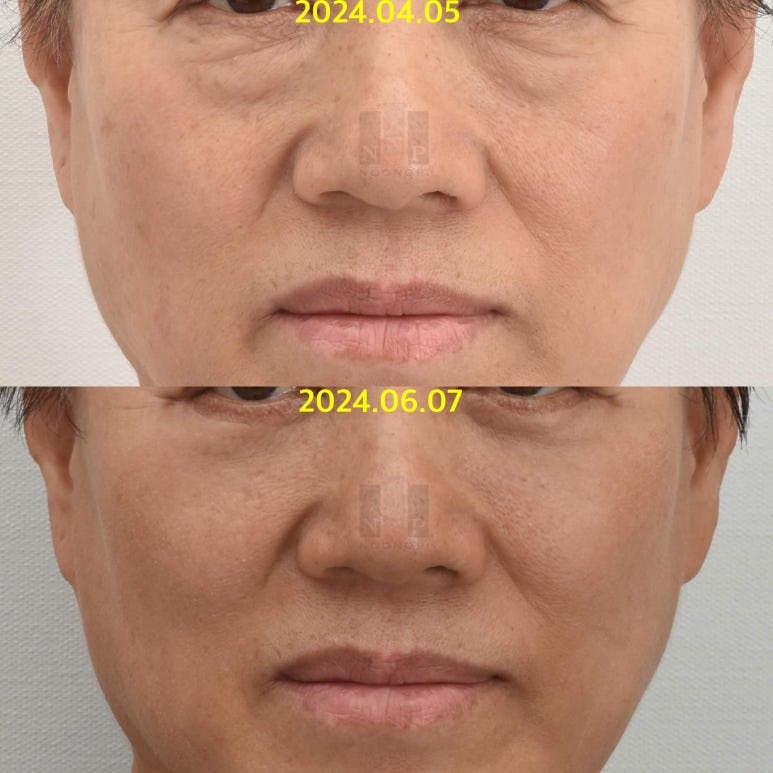
2 months after lower blepharoplasty
Under-eye fat repositioning vs. lower blepharoplasty
1) Similarities
Both surgeries involve fat repositioning, moving the bulging under-eye fat into the hollow tear trough area.
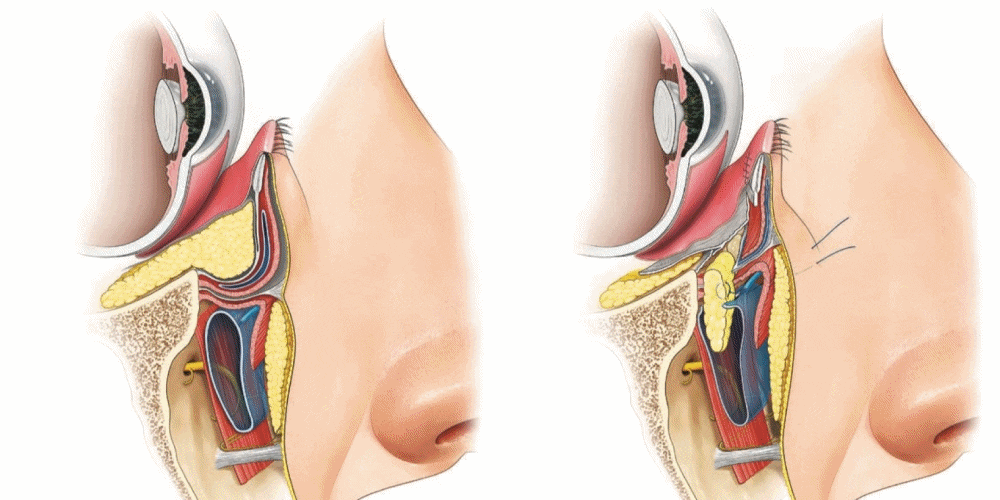
Before and after fat repositioning
This is medically called septal fat repositioning
or
septal fat reset.
One of the questions many clients ask is:
Does lower blepharoplasty also involve fat repositioning?
Yes! Lower blepharoplasty also includes a process of repositioning the fat
to fill hollow areas and create a smoother contour.
It works like the diagram below ^^.
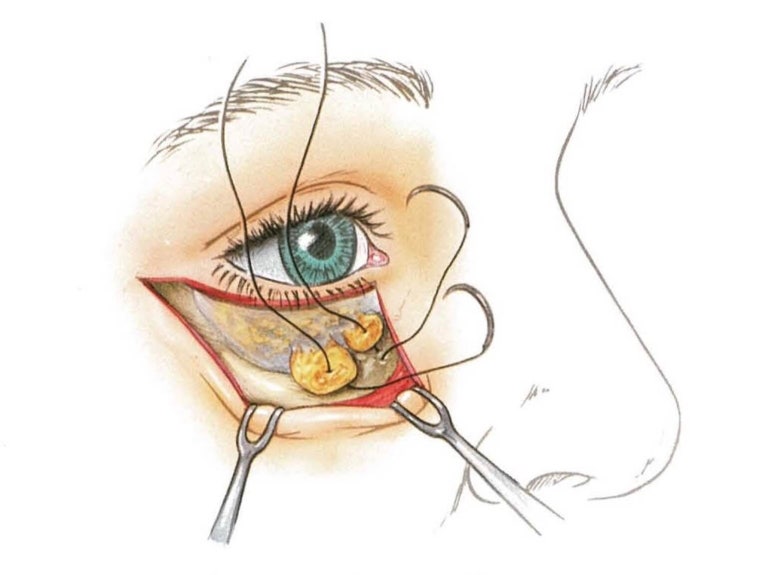
Fat repositioning in lower blepharoplasty
The place where the fat is repositioned is where the retaining ligament that forms the tear trough is located.
In other words, the point is to cut the retaining ligament
and insert the fat into that space.
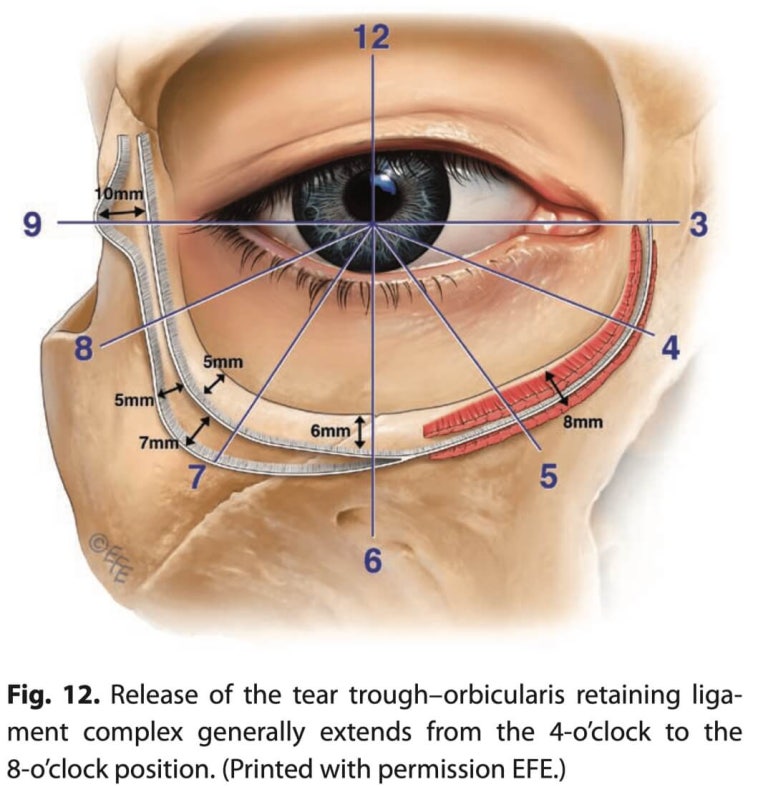
The retaining ligament under the eye
In fact, the illustration above includes some imagination,
and the actual retaining ligament is not visible to the eye
and can only barely be felt with surgical instruments.
That is why experience is so important in surgery.
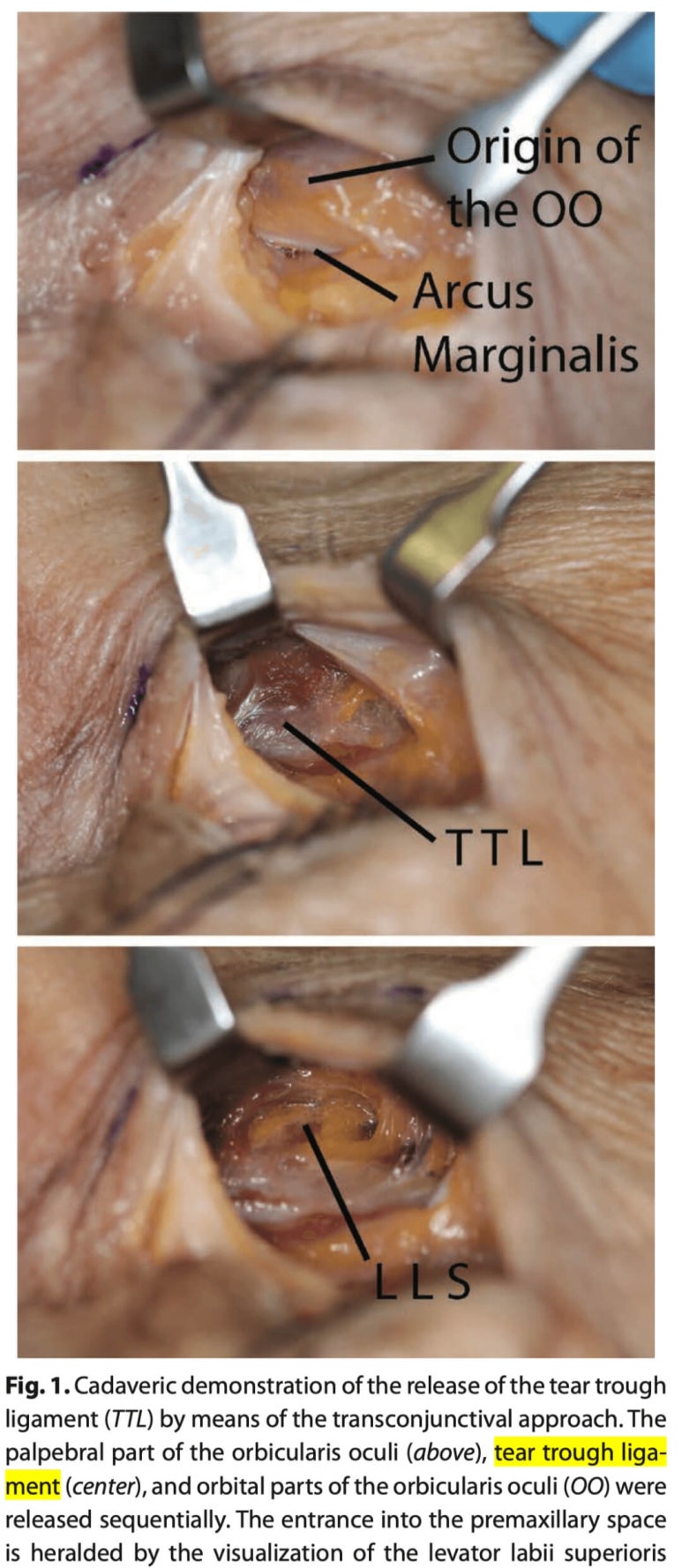
Tear trough ligament
2) Differences
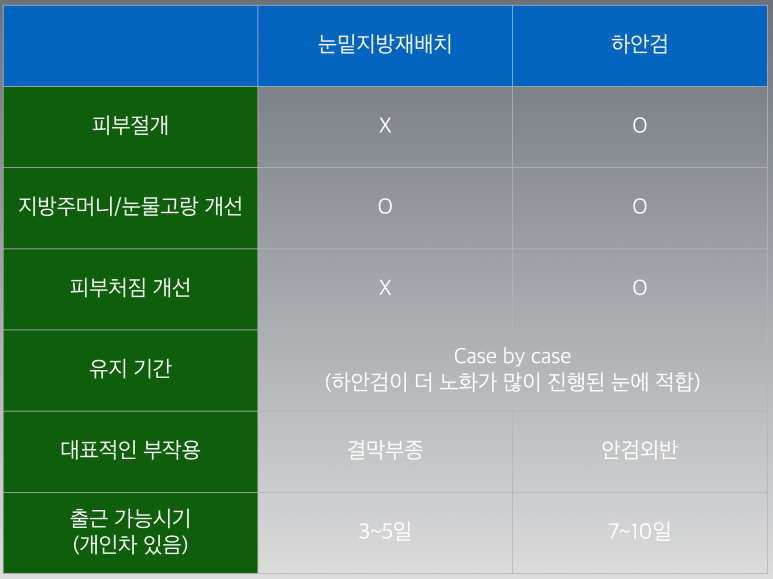
Differences between under-eye fat repositioning and lower blepharoplasty
In addition to the similarities between the two surgeries,
I also briefly summarized their differences in the table above.
In closing
Sagging or bulging under-eye areas can make you look more tired than your age.
Under-eye fat repositioning and lower blepharoplasty may look similar, but there are subtle differences.
Usually, for people in their late 40s and older,
lower blepharoplasty, which also corrects sagging skin,
is often recommended.
However, since each person ages differently
and the condition of the under-eye area varies,
the surgical method should be chosen in consultation with a specialist,
taking into account the issues you want to improve and your recovery period.
<Read more>

If you click Kakao consultation,
I will help you with a more detailed consultation.