Hello, this is Dr. Park Sung-hyuk from Noonhight Plastic Surgery.
A facelift is not simply an operation to smooth out nasolabial folds.
You have to consider not only scars, but also the shape of the ears,
for truly natural and satisfying results.

Surprisingly, many clinics take photos after a facelift while the patient is still wearing earrings....
Why do facelift scars occur?
Let’s divide the incision areas used in facelift surgery
into three places - the temple, in front of the ear, and behind the ear -
and analyze their pros and cons.
At Noonhight, during facelift consultations,
we explain the pros and cons of each option and let the patient choose,
but surprisingly, some people find it difficult,
so the method we mainly recommend at Noonhight
is marked with green parentheses (○) in this post.
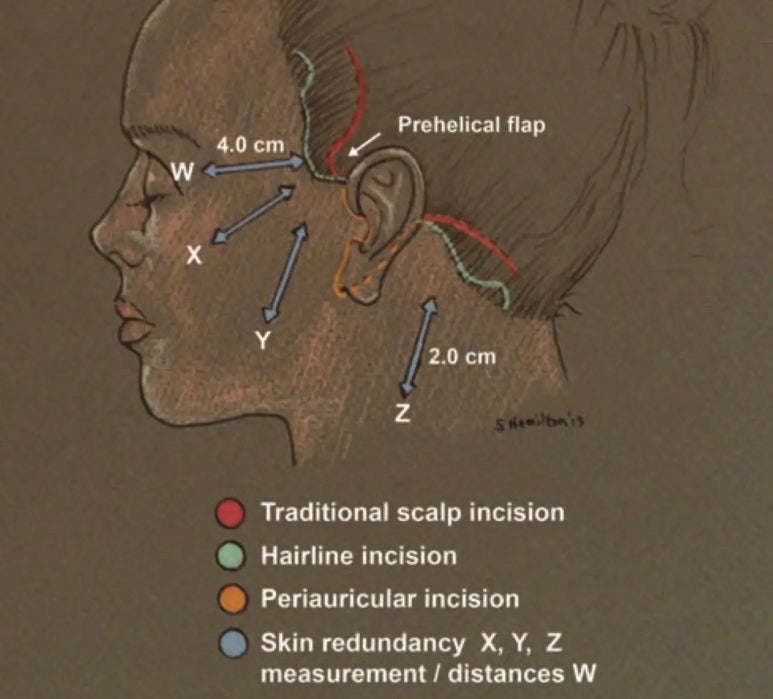
Example of incision areas by region
- Temple area: inside the hairline vs. outside the hairline
a) Incision inside the hairline
▪︎Advantages
・No need to worry about scars
・The surgery is easier
・The operation time is shortened
▪︎Disadvantages
・The more lifting is done, the more the sideburns are pushed backward or become shorter.
・If the temple area becomes wider, it can make you look older.
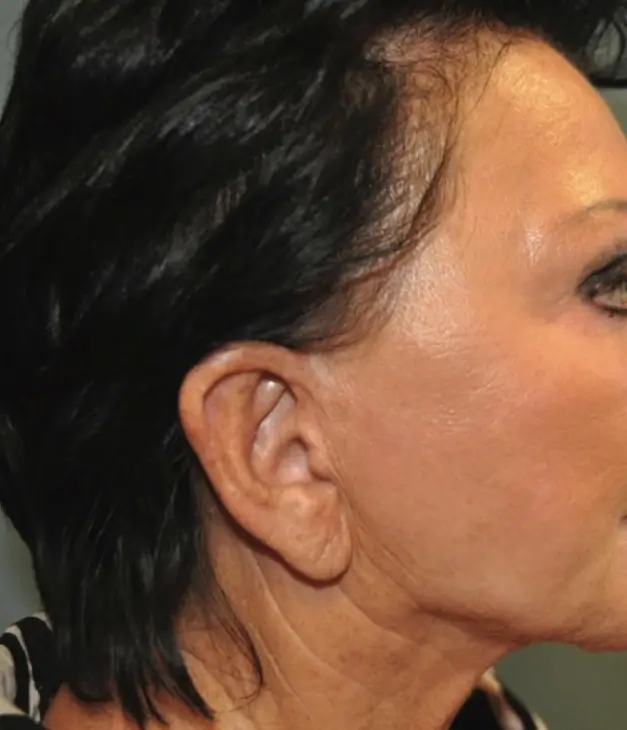
An awkward appearance somehow due to the lack of sideburns (source: textbook)
b) Incision along the hairline (○)
▪︎Advantages
・For people who need a lot of lifting, there is no need to worry about the sideburns being pushed back
▪︎Disadvantages
・Since scars may be visible, a surgeon’s skill is required
・The surgery is more difficult and takes longer (about 40 minutes)
・In some cases, laser hair removal may be needed later.
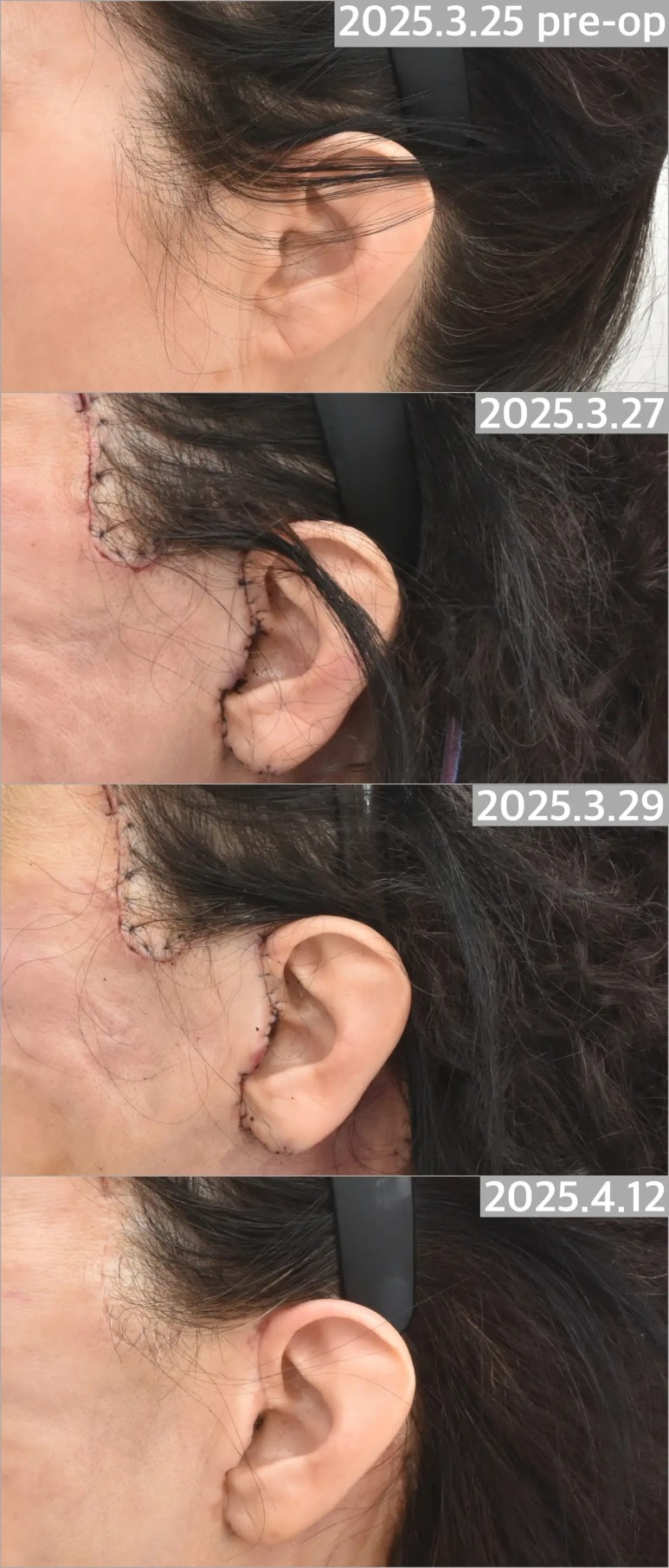
A Noonhight facelift case
- In front of the ear
The diamond-shaped cartilage in front of the ear is called the tragal cartilage,
and facelift incision lines can be divided into whether they are in front of or behind the tragal cartilage.
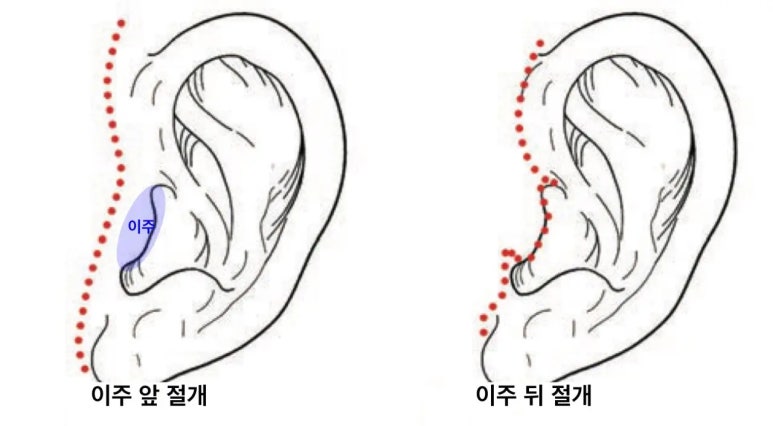
a) Incision in front of the ear cartilage
▪︎Advantages
・The surgery is easier
・The shape of the tragus can be maintained
▪︎Disadvantages
・The scar may be visible.
・Even if the scar is not visible, it can still stand out in people with large changes in skin-tone gradation
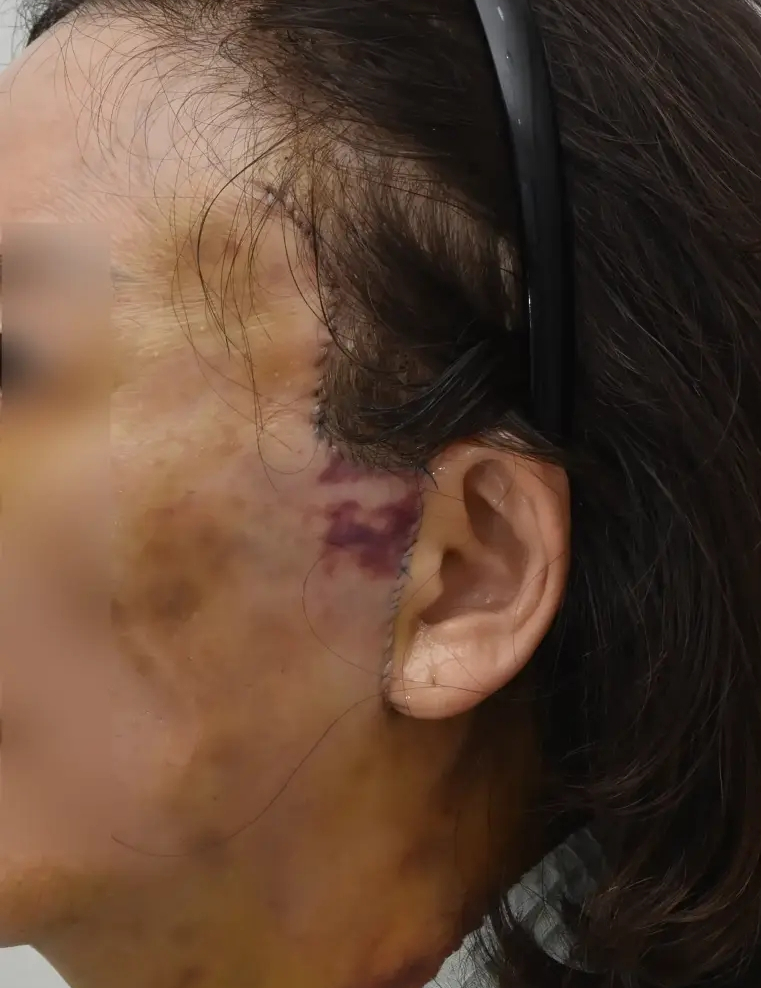
Appearance 5 days after a facelift with an incision in front of the tragus (surgeon unknown)
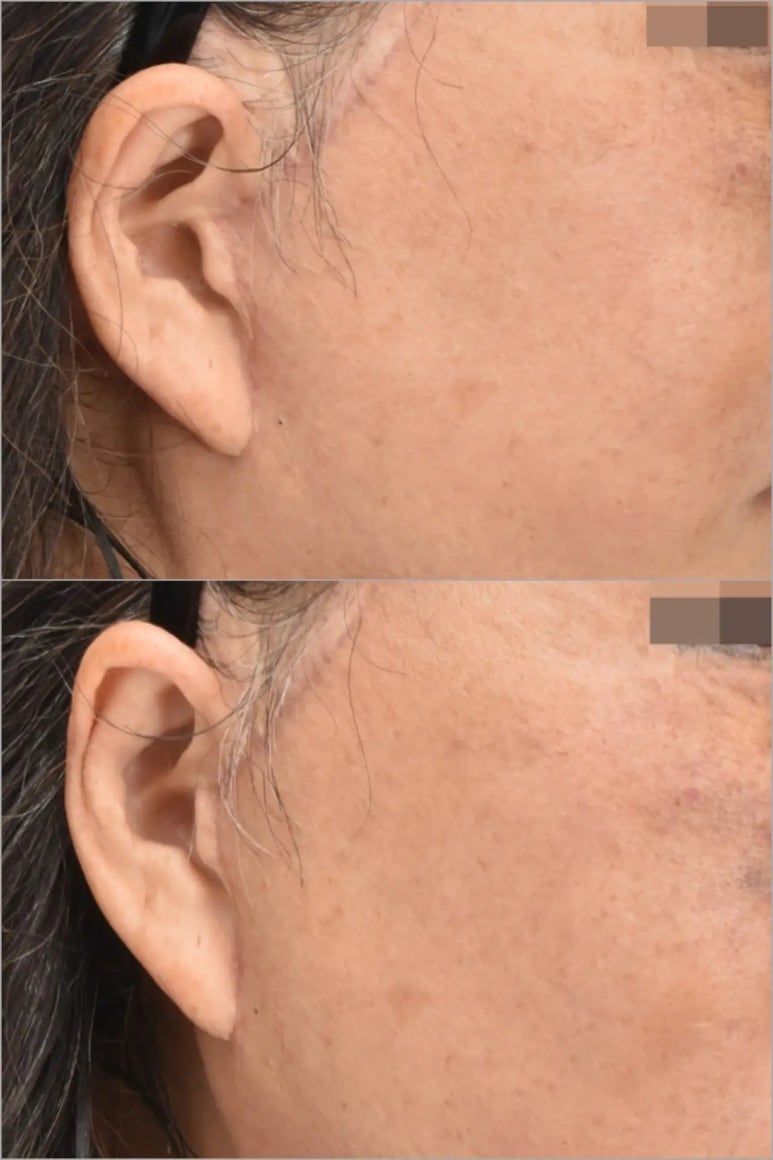
A case operated on in front of the ear cartilage 10 years ago (surgeon unknown)
b) Incision behind the ear cartilage (○)
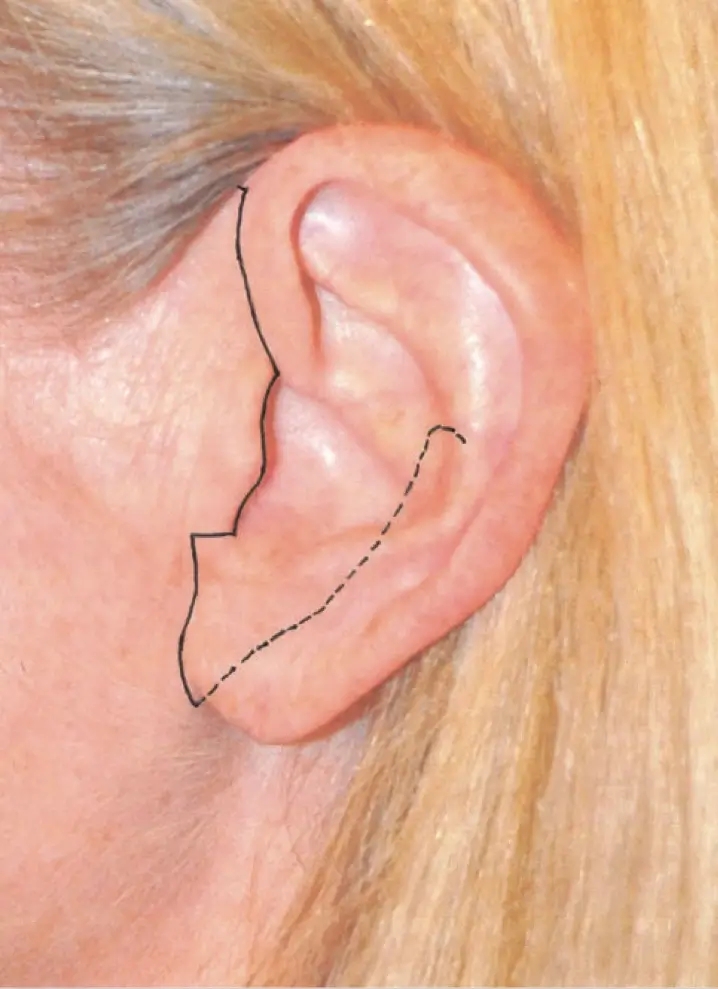
Example of an incision method behind the ear cartilage
▪︎Advantages
・Scars can be hidden well
▪︎Disadvantages
・High difficulty
・If performed by a surgeon who is not skilled: deformity of the tragus shape, and the natural depression in front of the tragus may be lost
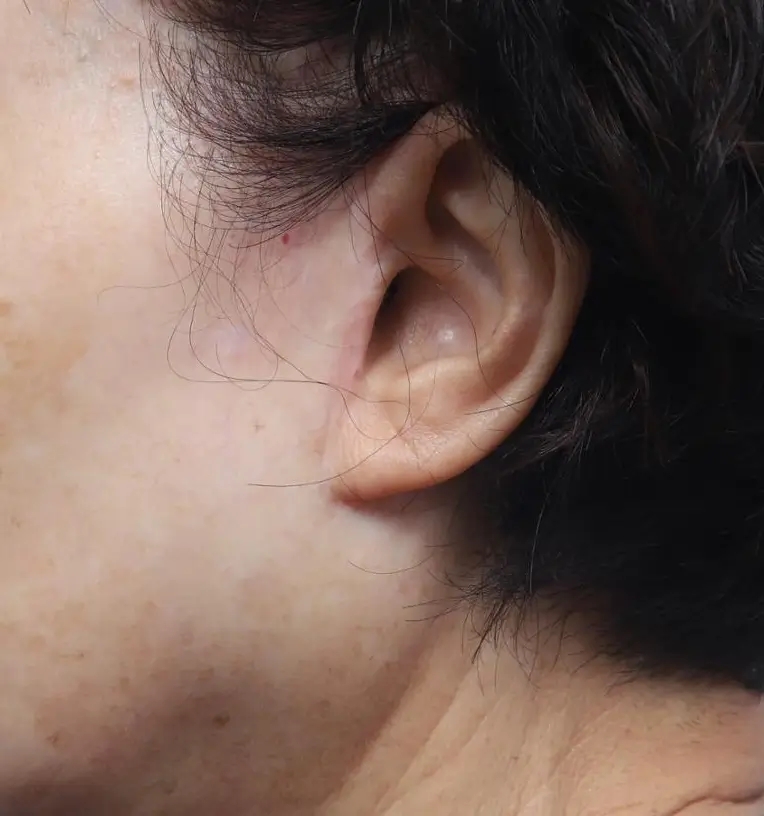
Example of tragus shape deformity (source: textbook)
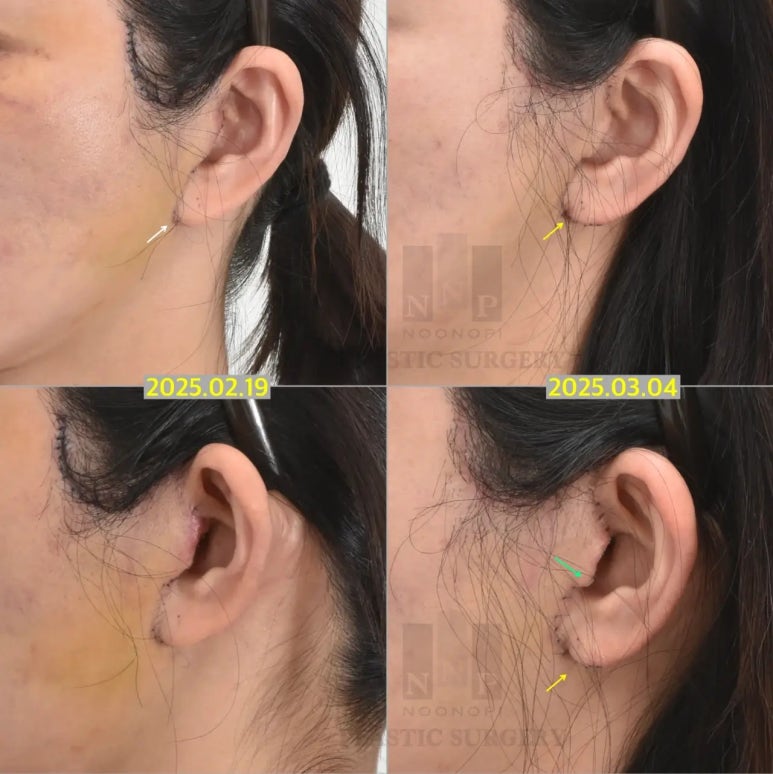
Deformity that occurred after a facelift at another hospital (left): a case in which the area around the tragus and the earlobe was corrected at Noonhight
- Behind the ear
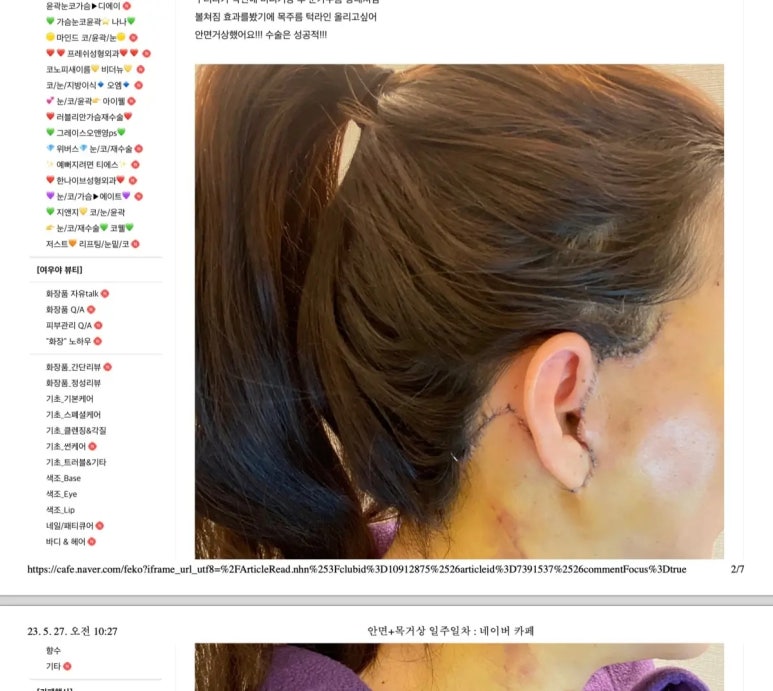
Review from a plastic surgery cafe (surgeon unknown)
a) Incision inside the hairline
▪︎Advantages
・Can hide the scar
・The surgery is easy and simple
▪︎Disadvantages
・It cannot lift sagging skin very much (because lifting too much would cause a deformity in the hairline)
b) Incision along the hairline (○)
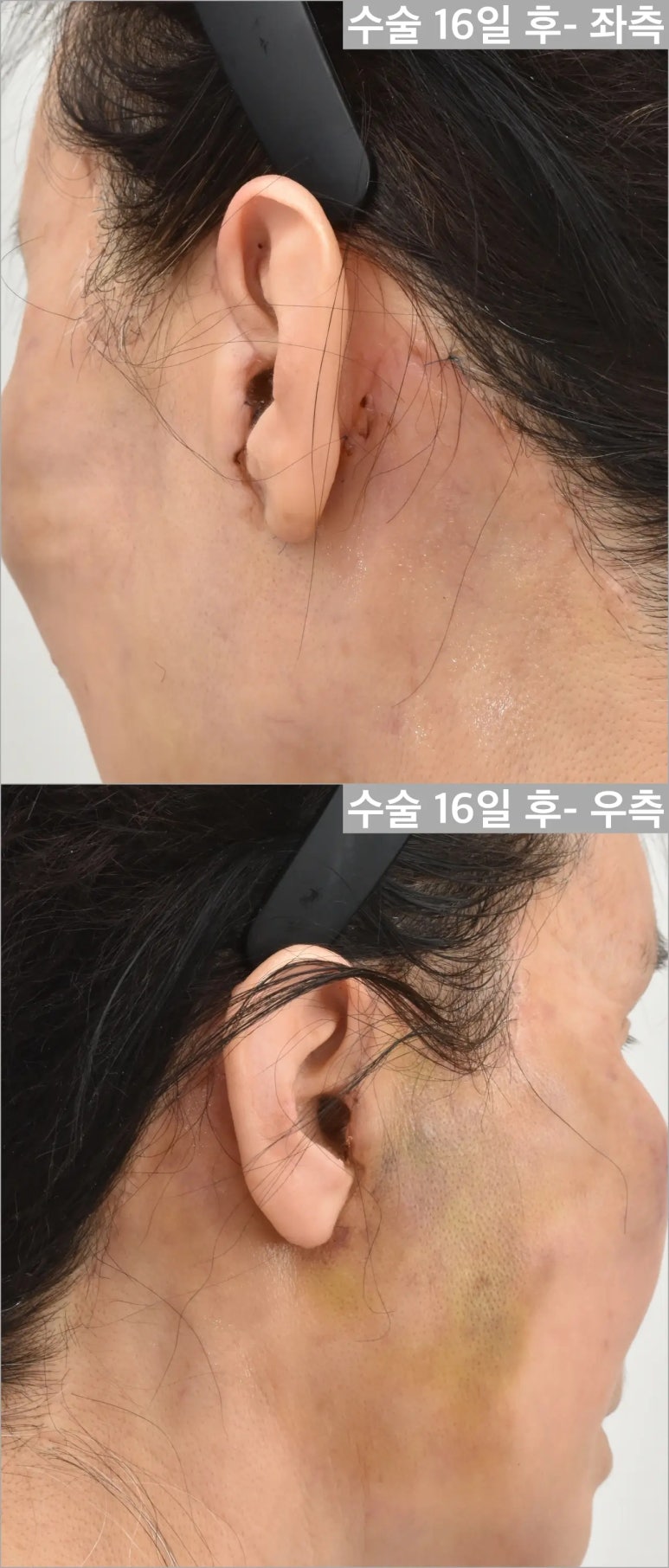
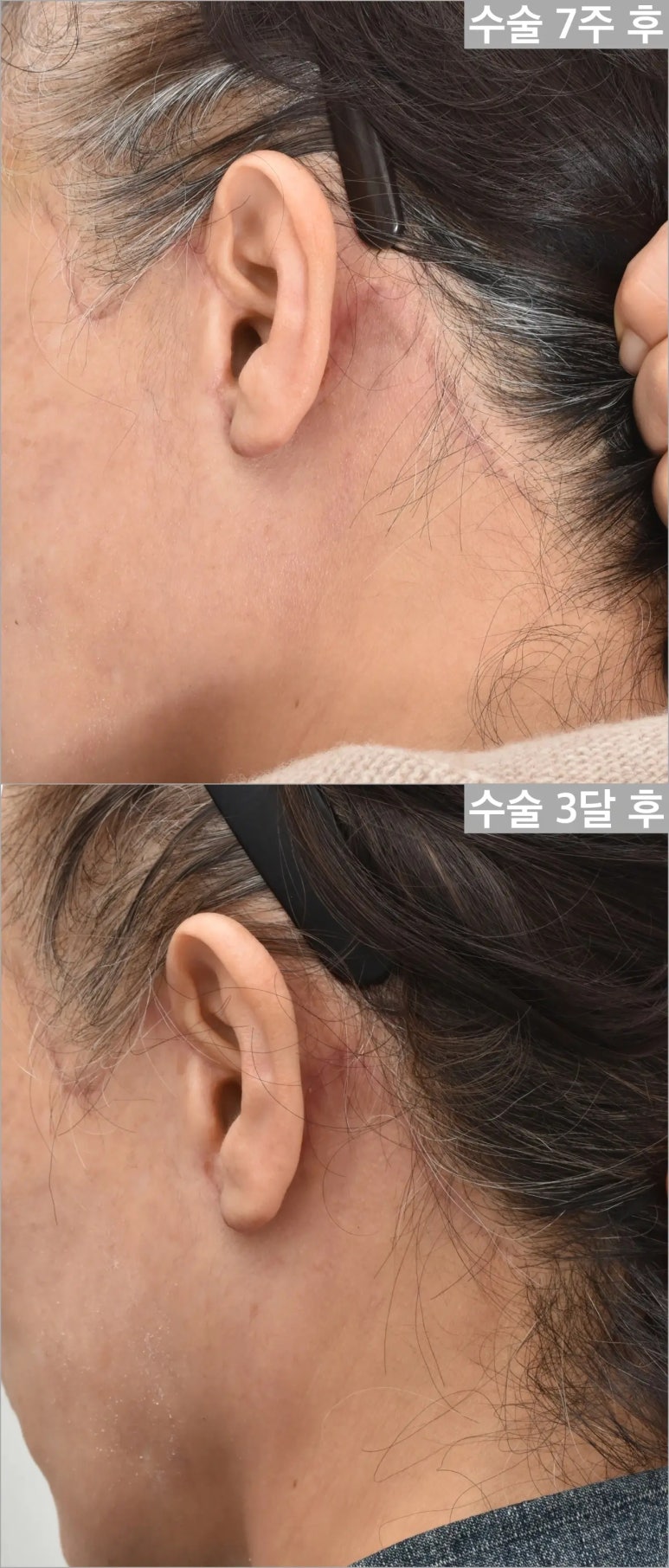
▪︎Advantages
・If the scar heals well, it is not noticeable even when the hair is tied up
▪︎Disadvantages
・The surgery takes longer
・Depending on the surgeon’s skill, the scar may be visible
Conclusion: Noonhight’s recommendation for hiding scars and the reasons
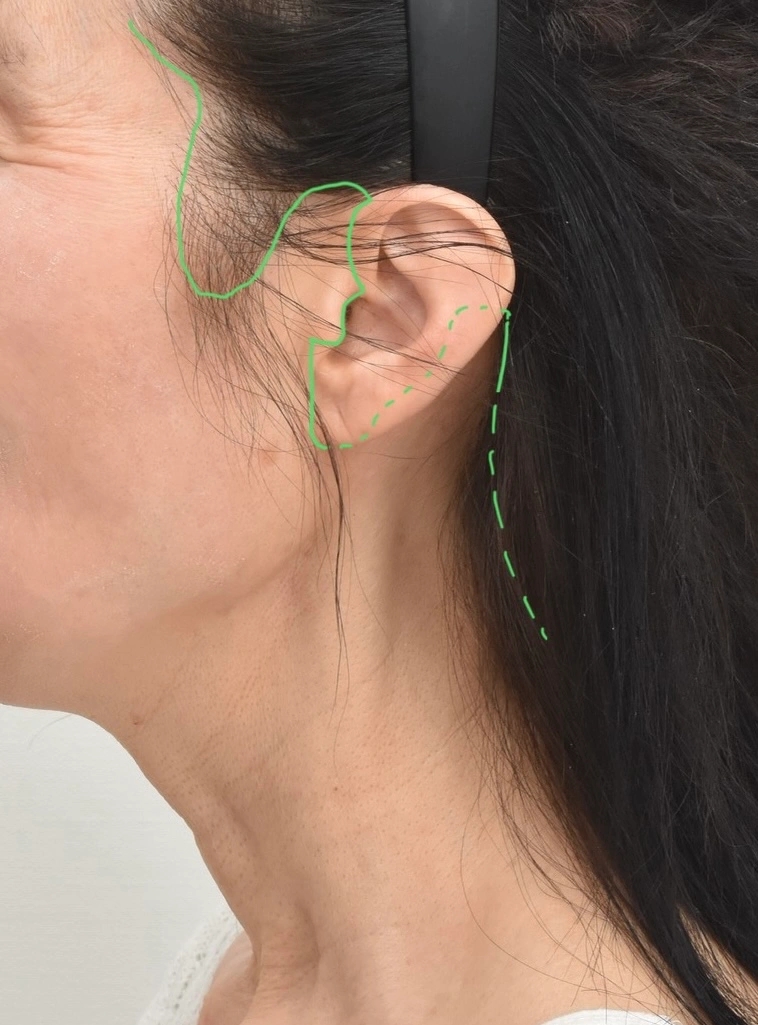
Recommended method by Noonhight Plastic Surgery
-
Temple: incision along the hairline ==> prevents the sideburns from becoming shorter
-
In front of the ear: incision behind the cartilage ==> hide the scar
-
Behind the ear: incision along the hairline ==> feel confident even with a ponytail!
Was this post helpful?
If you want to learn more about the four features of the facelift at Noonhight Plastic Surgery,
please click here.