While brushing your teeth and looking in the mirror,
have you discovered white pus
on your gums?
Or do you feel a heavy ache
each time you chew on a specific tooth?
It is not uncommon for people to brush it off,
thinking it will get better,
only to make an emergency visit
after sudden, severe pain.
In particular, inflammatory conditions that occur
at the tip of a tooth root progress inside the tooth faster
than the symptoms that can be seen on the surface,
so extra caution is needed.
They are easy to mistake for a simple gum problem,
but in reality, the cause may be
a tooth nerve infection.
Today, I will explain
apical inflammation.
What Is Apical Inflammation?
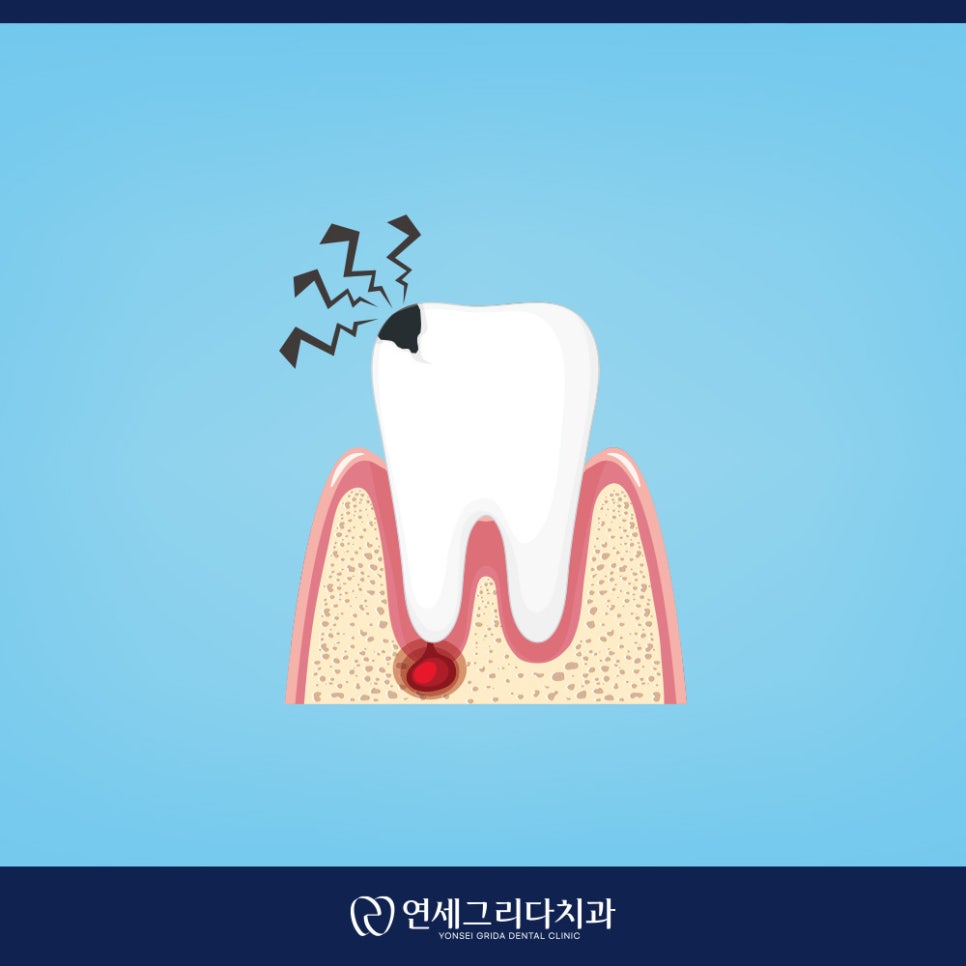
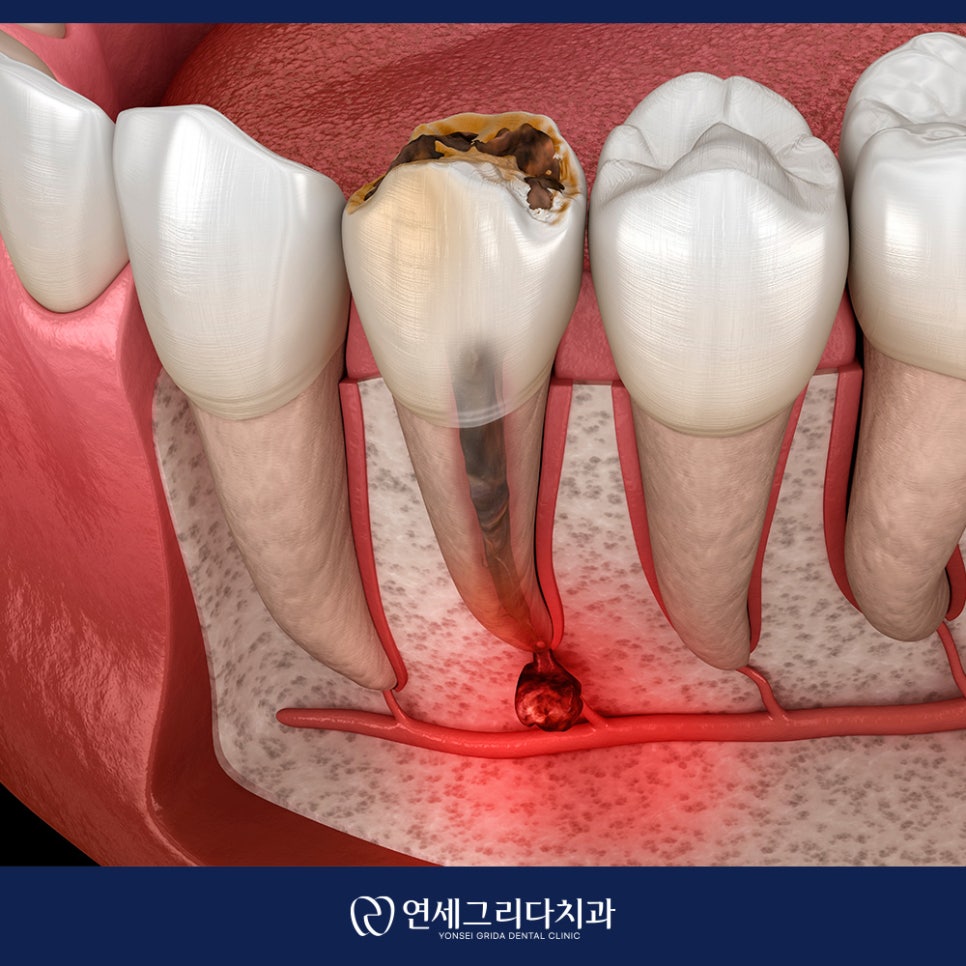
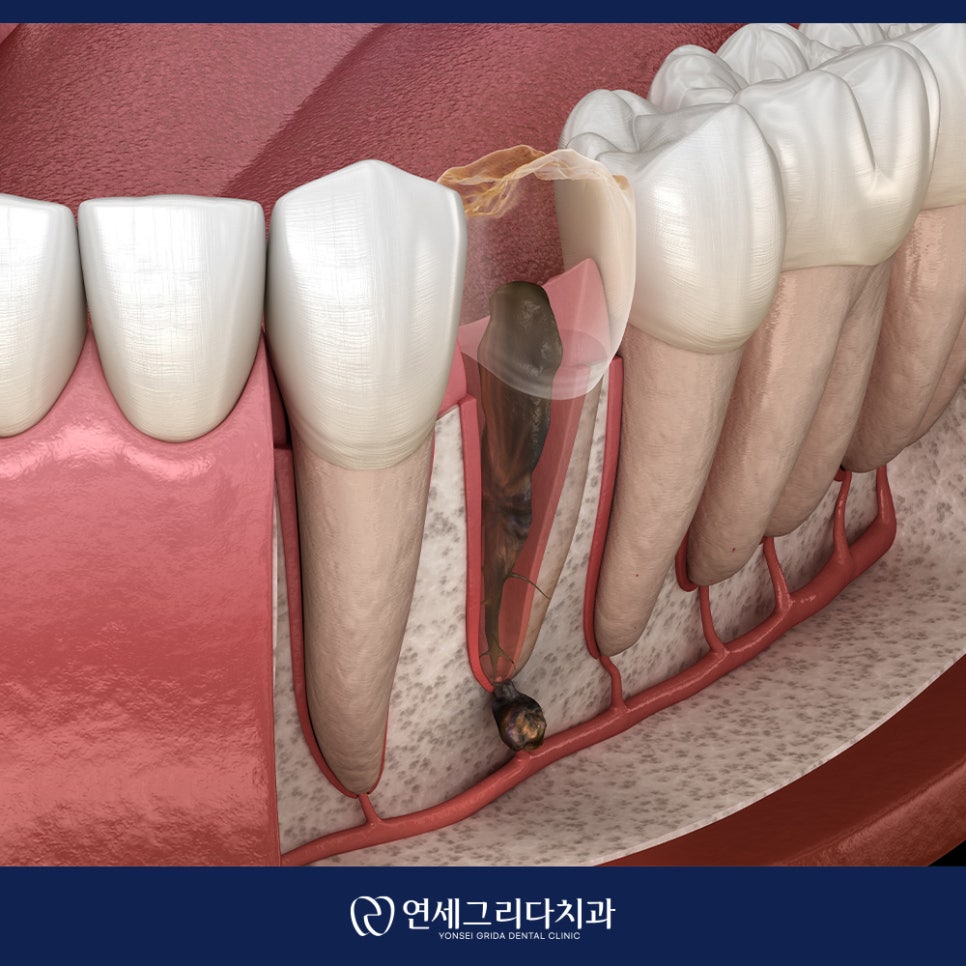
Apical inflammation is a condition in which
a lesion forms at the root tip
when the nerve tissue inside the tooth
becomes infected with bacteria.
When deep cavities, trauma,
or gaps in old restorations allow bacteria to enter,
the nerve tissue becomes necrotic,
and as a result, an inflammatory reaction
appears in the bone around the root.
In the early stages, there may be no noticeable symptoms.
But over time,
discomfort when chewing develops,
and a feeling that the tooth is elevated
or a dull pain may accompany it.
On an X-ray,
it is common to confirm a lesion
that appears dark around the root tip.
If precise diagnosis and treatment are performed
at this stage,
the tooth can often be saved.
Why Does Pus Form on the Gums?
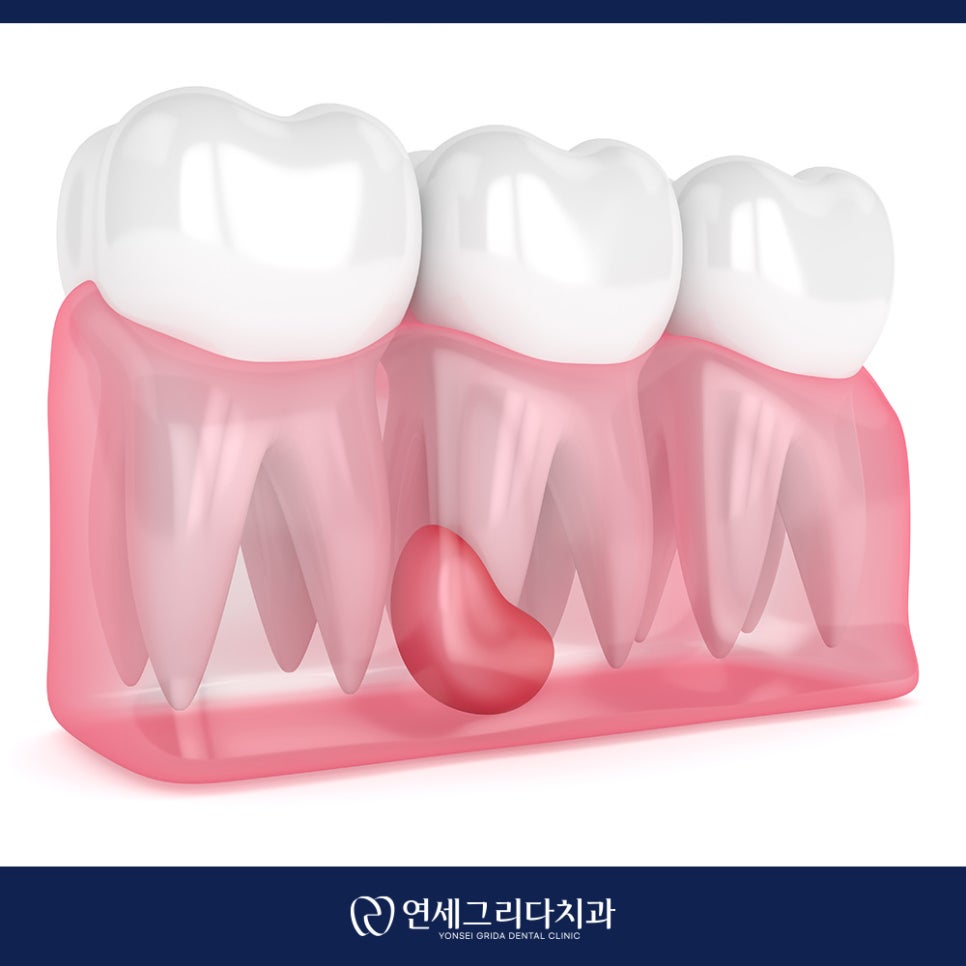
When pus collects in the gums,
it is a sign that the infection has progressed significantly.
As an abscess formed inside
overcomes the pressure barrier
and is discharged outward,
a pus pocket develops.
If it drains temporarily,
pain may lessen,
but that does not mean the problem has been resolved.
If pus repeatedly appears and disappears,
there is a high chance that it has already become chronic.
If this condition is left untreated,
the surrounding alveolar bone will gradually be resorbed,
and eventually the tooth’s supporting ability weakens,
which can lead to looseness.
In severe cases, it can even lead to facial swelling or fever,
so early treatment is essential.
Treatment Methods and Process
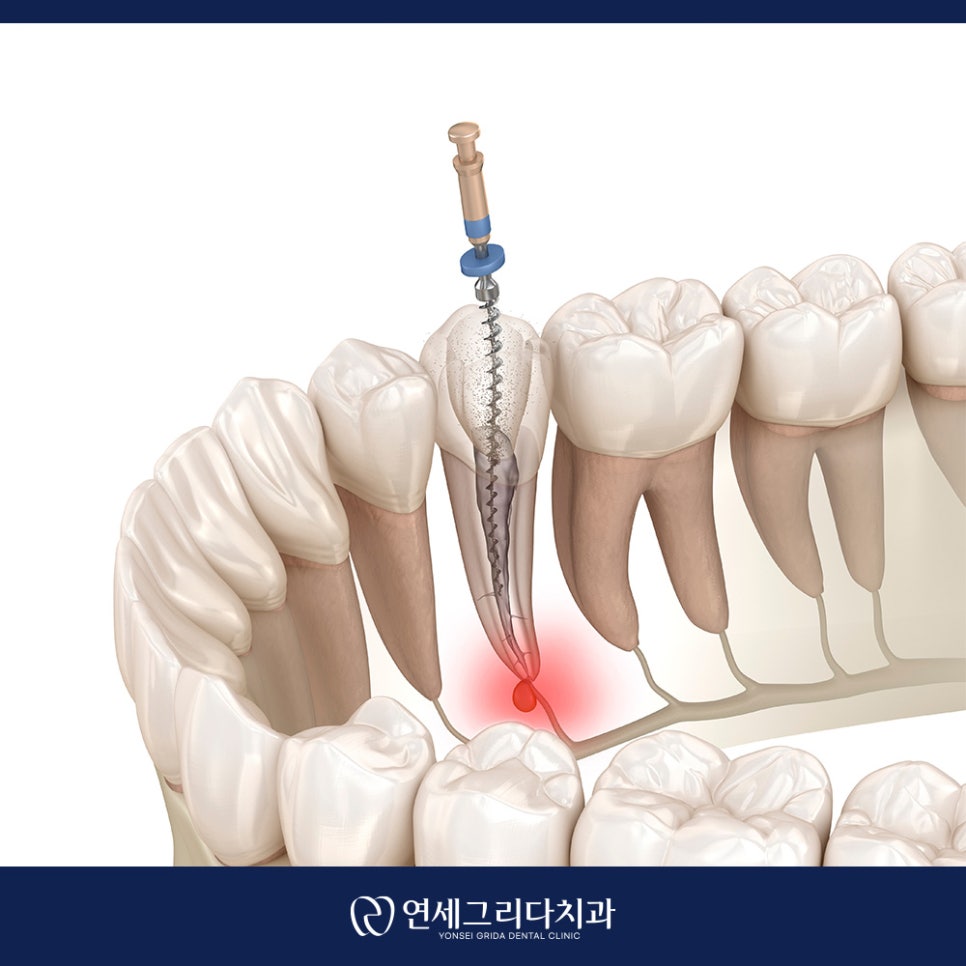
In most cases, root canal treatment is used
to remove the infected nerve tissue,
disinfect the inside,
and then seal it.
This process is not simply about
removing the nerve;
it is a precise treatment that thoroughly removes
even microscopic bacteria.
If the tooth has already been treated
and the problem recurs,
retreatment may be necessary,
and if the apical inflammation is severe,
surgical treatment may be performed as well.
Accurately identifying the extent of the lesion
through 3D CT imaging
has a major impact on the prognosis.
Above all, the most important thing
is not to miss the timing of treatment.
What Are the Risks If It Is Left Untreated?
If the infection continues for a long time,
surrounding bone damage may progress extensively.
In that case, the situation may even lead to a need for extraction,
and afterward implant or prosthetic treatment may be required,
which can increase the treatment period
and financial burden.
In addition, for people with weakened immunity
or underlying systemic disease,
there is also a risk that bacteria may spread
through the bloodstream.
You must remember that a simple oral problem
can be connected to overall health.
Pus on the gums is a clear warning sign
sent by our body.
If you put it off, thinking it is just a simple inflammation,
you may miss the chance to save your natural tooth.
If it is detected early
and treated properly,
full recovery is possible,
and both function and appearance
can be maintained.
If you have ongoing pain
or repeated swelling,
please get a detailed examination.
A small amount of attention is the most reliable way
to protect your precious teeth
for a long time.
A healthy smile begins
with making the right choice quickly.