염창동치과,
If You Are Just Putting Up with Wisdom Tooth Pain?

Wisdom tooth pain often starts
all of a sudden.
There are many cases where there is no major discomfort in everyday life,
but when you chew food, the gums throb,
or when you open your mouth, you feel stiffness,
and only then do you begin to notice it.
Especially in a busy daily routine,
many people let it slide, thinking,
“It will probably get better after a while,”
only to find that the pain repeats
or gradually becomes stronger.
These changes are more likely to be a sign of something
progressing inside the mouth rather than just a temporary symptom,
so it is important to understand the cause
and judge the right timing.
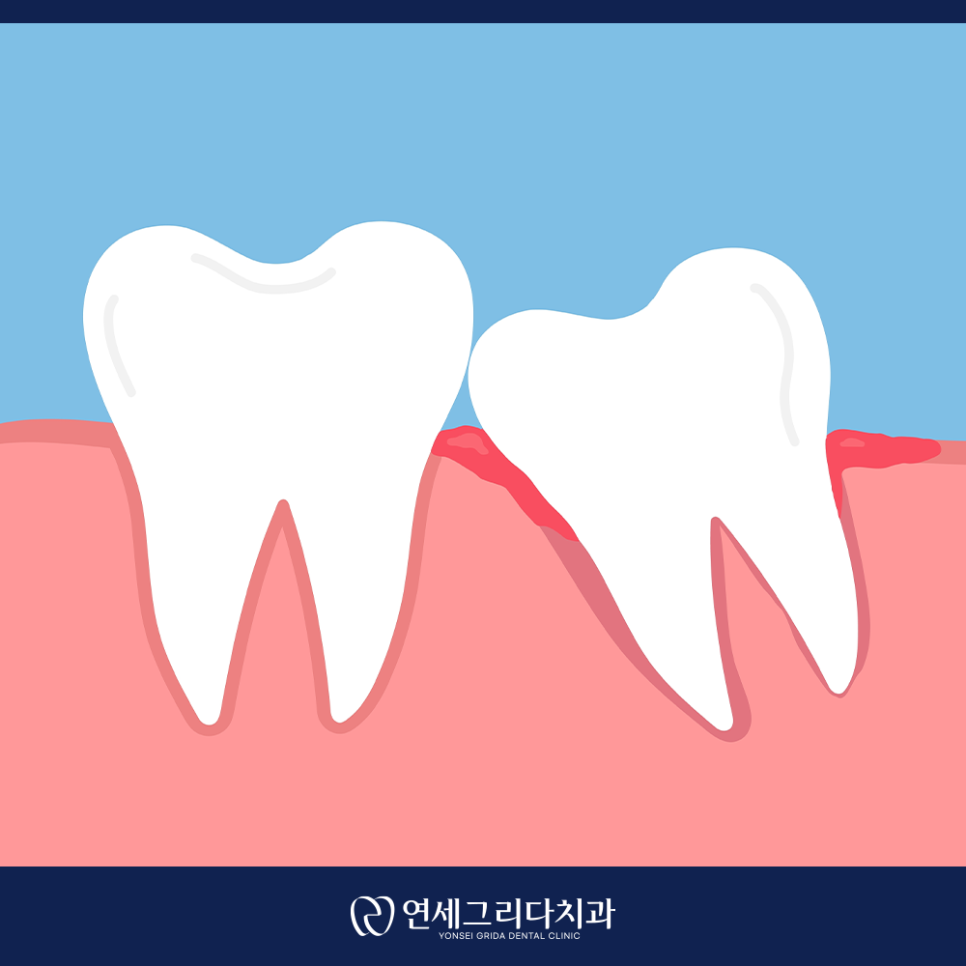
Common causes of wisdom tooth pain
Wisdom teeth are the last teeth to erupt,
so they often come in when there is not enough space.
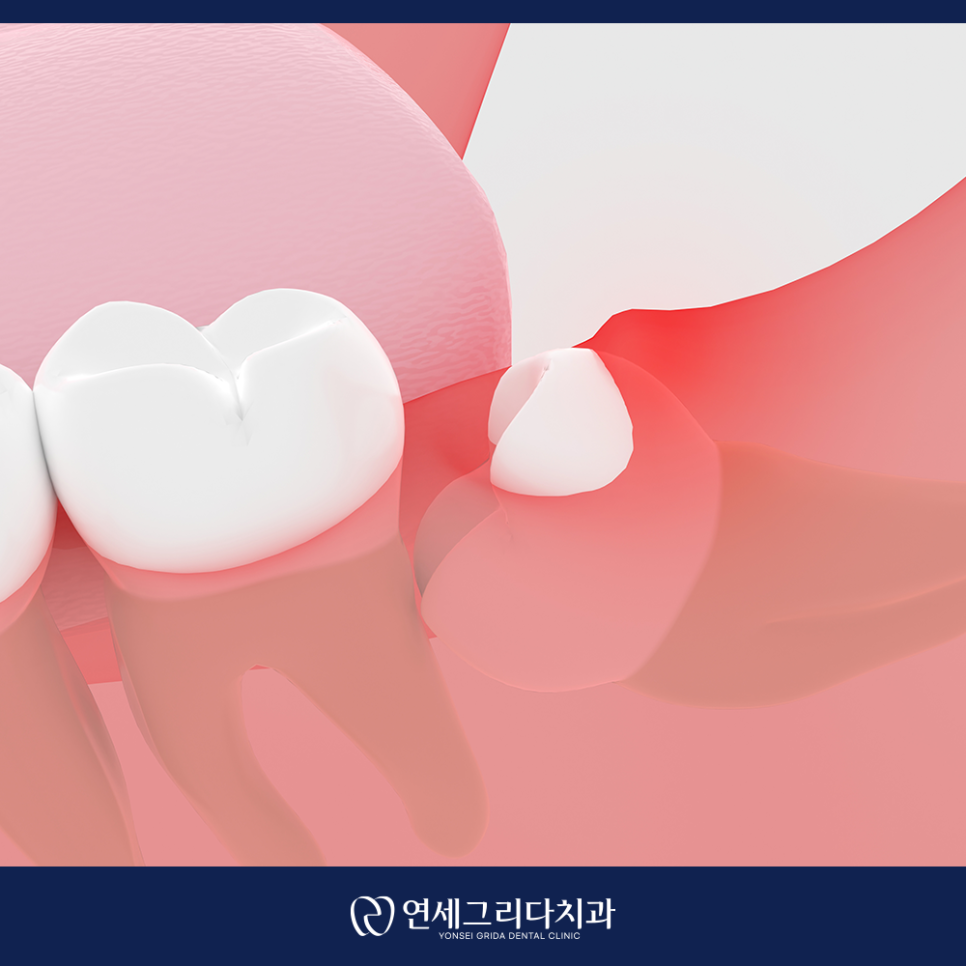
During this process, they may partially emerge
through the gums in a semi-impacted form,
or remain tilted inside the gum tissue.
In these situations, food can easily get trapped
and bacteria can remain,
increasing the likelihood of inflammation.
In particular, if gum swelling or worsening bad breath
appears along with these changes,
it may be a sign that the surrounding tissues are being irritated.
Even if the pain appears intermittently
and then disappears,
if it repeats, it is necessary to
check the cause.
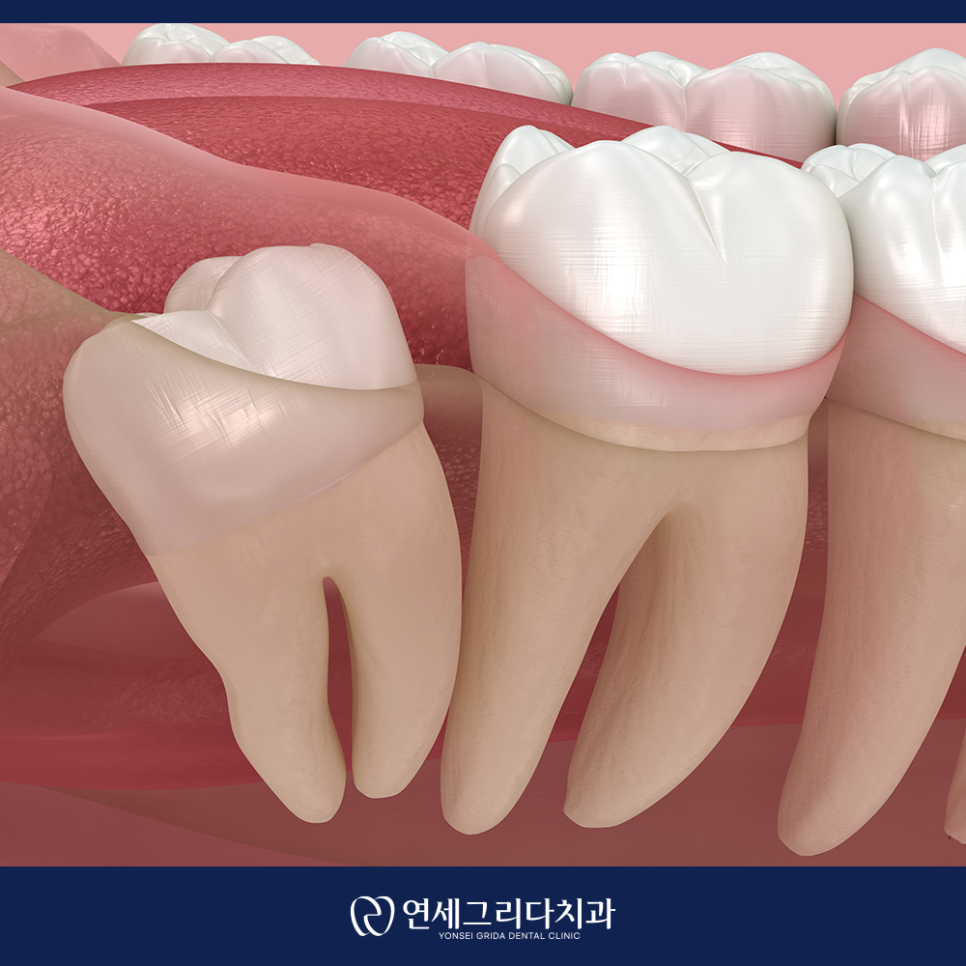
Changes that can occur if the pain is left untreated
Some people leave it alone because the discomfort is not severe,
but as time passes, it can affect the surrounding teeth and gums.
A representative example is the development of cavities
between adjacent teeth,
or inflammation continuing deep within the gums.
In some cases, discomfort may also occur
when moving the jaw.
These changes can be difficult to notice at first,
but they can gradually affect everyday meals
and oral hygiene care.
Therefore, rather than judging based only on whether there is pain,
an approach that looks at the overall oral condition
is needed.
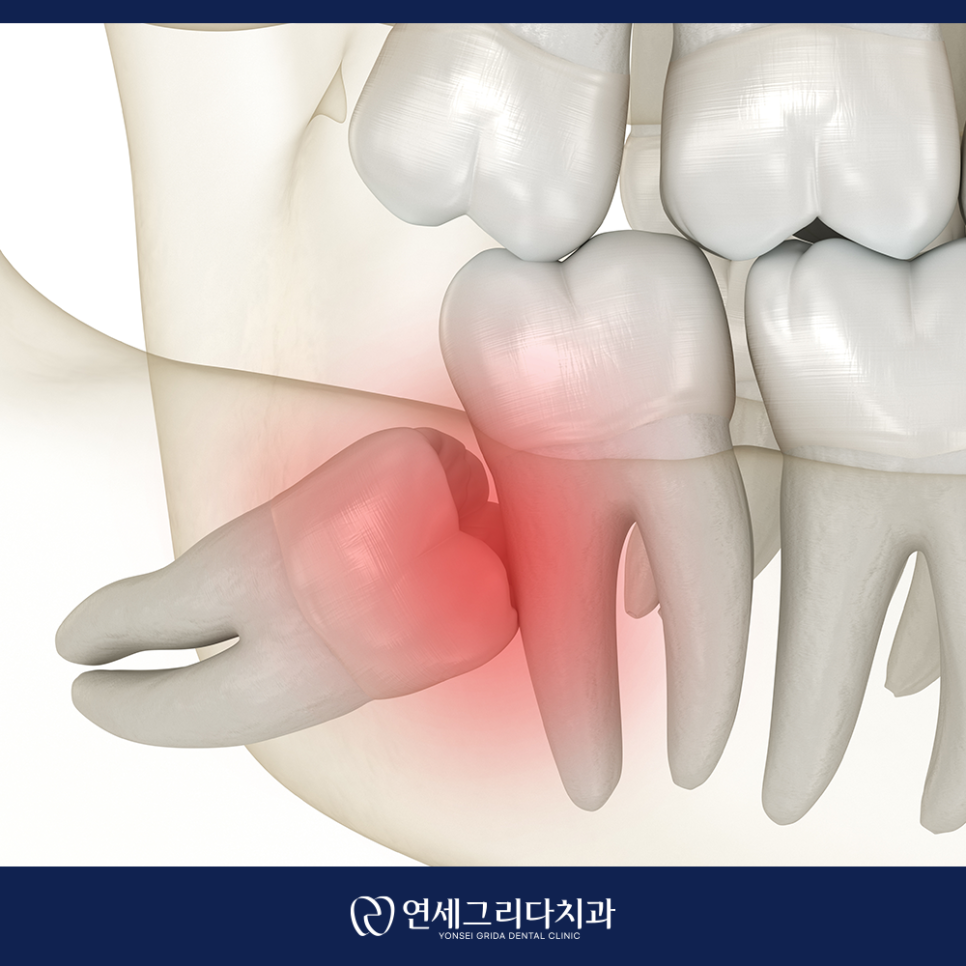
Why it is important to check whether it is impacted
The management method for wisdom teeth
depends on their position and direction.
Even if it looks as though only part of it has come in,
in reality it may be seated at an angle
deep within the gums.
Because this structure is difficult to see with the naked eye,
understanding the positional relationship through imaging tests
is helpful.
In particular, by looking at the distance from adjacent teeth
and the proximity to nerves,
the direction of future management can be determined
more carefully.
In this respect, the initial confirmation step
has more meaning than a simple examination.
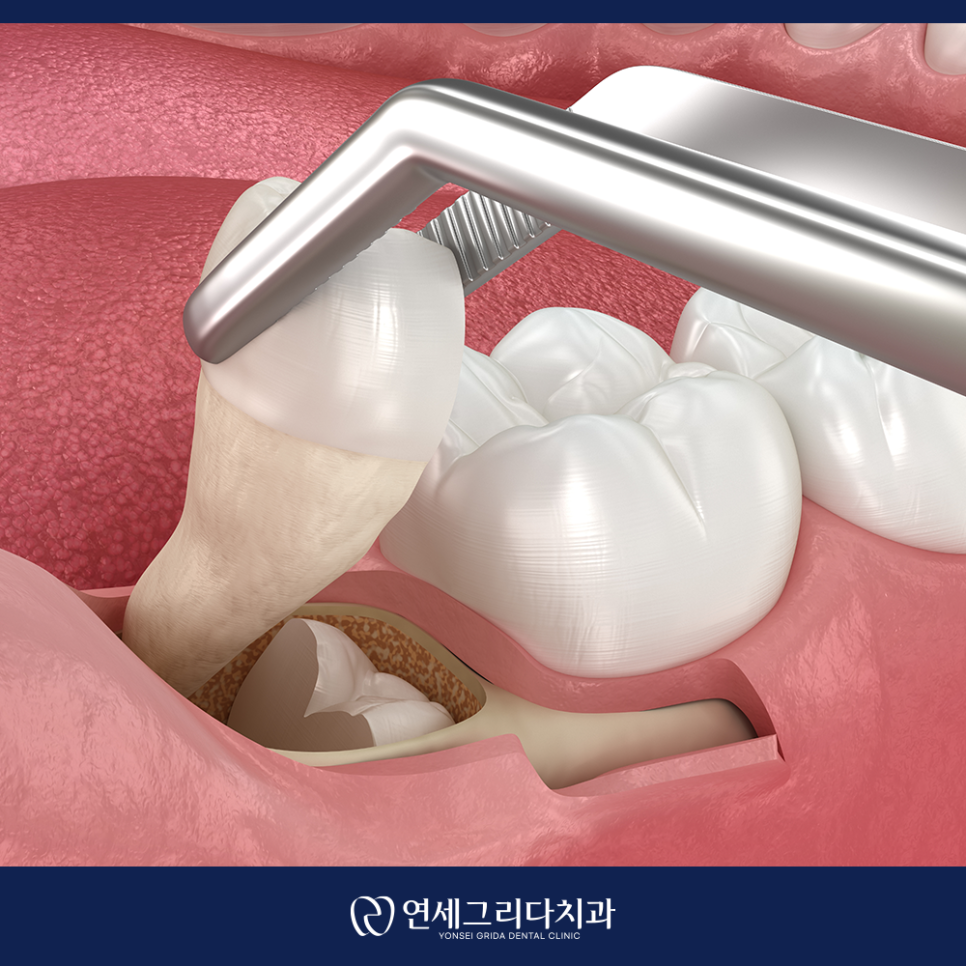
Criteria for judging when extraction should be considered
Removal is not necessary in every case,
but if repeated inflammation or the possibility of affecting nearby teeth
is confirmed, the timing is reviewed.
If pain appears frequently or gum swelling recurs,
it is helpful to establish a management plan.
In particular, if an impacted state is confirmed,
it is important to take an approach that also considers the health of adjacent teeth.
At Yeomchang-dong Dental Clinic Yonsei Grid Dental Clinic,
we look at the overall oral condition together
and, based on prosthodontic treatment experience in planning treatment,
guide each patient toward a direction suited to their individual situation.
Why early diagnosis helps
and the direction of care
Because the eruption pattern of wisdom teeth varies from person to person,
the pattern of pain also appears in many different forms.
Therefore, if the condition is checked at the early stage
when discomfort begins,
it becomes possible to respond more flexibly to later changes.
Especially in line with a treatment philosophy that values
preserving natural teeth as much as possible,
the process of understanding the current condition in detail
is necessary in order to reduce unnecessary procedures.
In this respect, regular checkups are
more than just confirmation;
they become preparation for long-term oral health.
Wisdom tooth pain may feel like a temporary phenomenon,
but if it repeats or becomes progressively stronger,
it is necessary to look at the changes taking place inside the mouth.
Checking both whether it is impacted and the condition of the surrounding tissues,
and judging the appropriate timing,
helps determine the direction of later management.
Among those who visit Yeomchang-dong Dental Clinic,
many begin an examination because of this kind of discomfort,
and simply understanding the current condition can become
a key standard for future choices.