
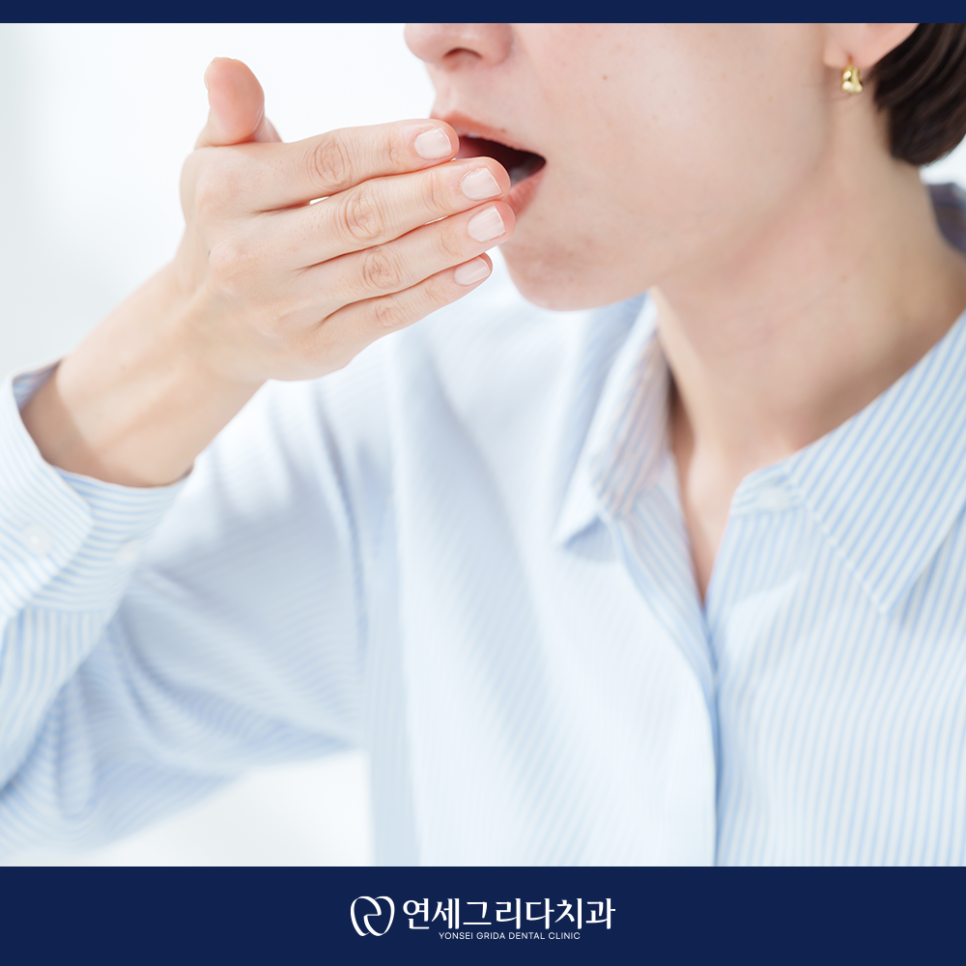
Even if you brush your teeth thoroughly,
if your breath still smells,
many people feel embarrassed.
In fact, among patients who visit the dental clinic,
there are many who ask,
"I brush three times a day, so why do I still have bad breath?"
Especially if bad breath keeps recurring after brushing,
it may not simply be a matter of oral hygiene,
but could be due to various causes such as
the tongue, gums, cavities, tonsils, or digestive health.
Today, I will explain in detail
why bad breath keeps coming back after brushing
and what you can do about it.

Lingering tongue coating
may be the problem
The most common cause of bad breath is
'tongue coating' left on the surface of the tongue.
Tongue coating is formed from food debris, bacteria,
and shed mucosal cells,
and it tends to build up especially deep in the back of the tongue.
Even if you brush diligently,
if you do not properly care for your tongue,
volatile sulfur compounds such as
hydrogen sulfide and methyl mercaptan are produced,
causing a strong odor.
In fact, when breath is measured at the dental clinic,
many patients who complain of bad breath after brushing
have a tongue-bacteria problem.
It is important to gently clean the tongue
with a tongue cleaner,
from the back of the tongue toward the front.
However, if you rub too hard,
small injuries may occur,
which can actually increase bacterial growth,
so once or twice a day is appropriate.
If you have gum disease,
odor can develop easily
Gum inflammation is also
one of the major causes of bad breath.
When gingivitis or periodontitis develops,
bacteria multiply deep inside the gums,
and inflamed tissue and pus are produced,
creating a distinctive unpleasant odor.
In these cases, even after brushing,
the smell quickly returns.
If the following symptoms are present as well,
you should consider the possibility of periodontal disease.
In such cases, rather than simply using mouthwash,
scaling and gum treatment may be necessary.
Many people believe,
"Scaling makes teeth weak," but that is a misconception.
If tartar is not removed,
bacteria continue to build up,
and bad breath after brushing is more likely to get worse.
Cavities and food trapping are also causes
When cavities become deep,
or when food frequently gets stuck between teeth,
bad breath can also become severe.
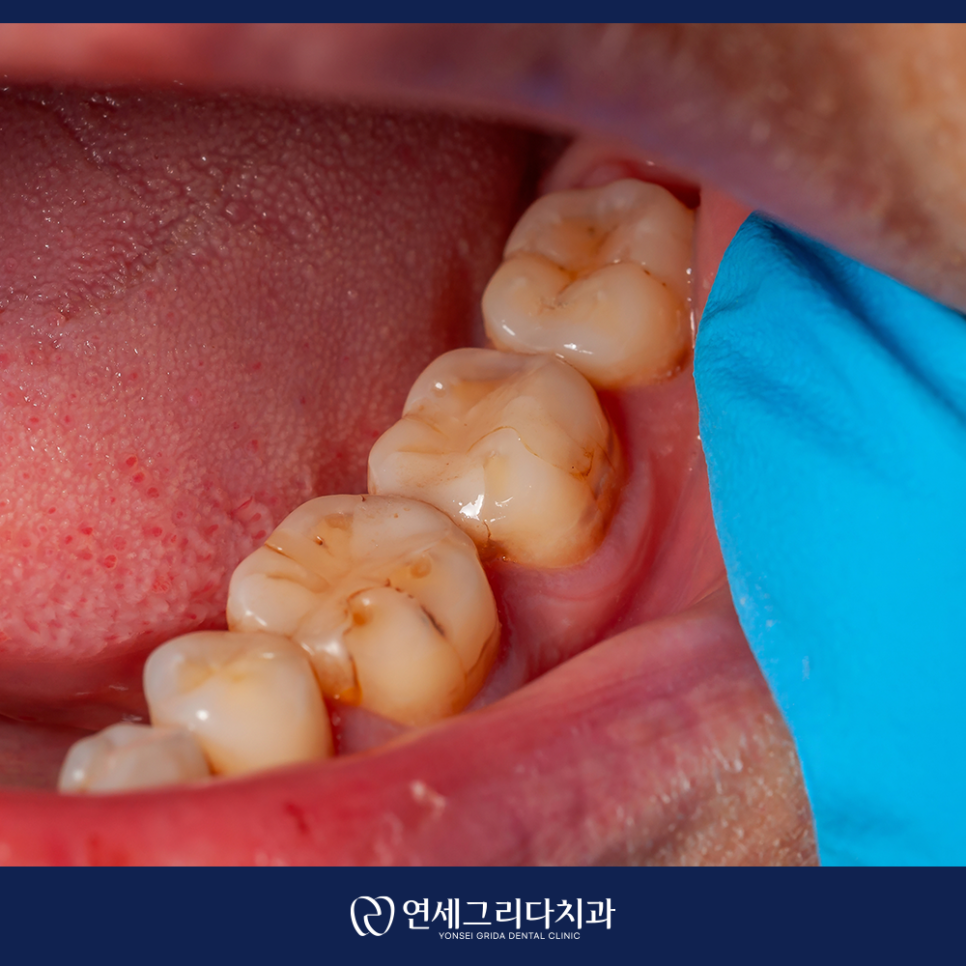
Cavities between molars, in particular,
are often not easy to see from the outside,
so they are often left untreated for a long time.
Bacteria can easily multiply in cavity areas,
and as food decays,
it can cause strong bad breath.
Also, if gaps develop around prosthetics or implants,
bacteria and food debris can accumulate easily.
In such cases,
brushing alone makes it difficult to control bad breath,
so using dental floss or interdental brushes is essential.
In particular, it is important to make a habit of using floss
after dinner.

If your mouth is dry,
bad breath can worsen
Saliva helps wash away bacteria in the mouth
and regulate acidity.
However, if stress, lack of sleep,
overconsumption of caffeine, smoking,
or mouth breathing continue,
saliva production decreases.
When the mouth becomes dry,
bacterial activity increases
and bad breath worsens.
Especially if you notice stronger breath odor
early in the morning after waking up, or after brushing,
reduced saliva production during sleep may be the cause.
For people with severe dry mouth,
the following care may help.
Also, if dry mouth persists for a long time,
the risk of cavities and gum disease increases,
so it is best to get treatment quickly.

Bad breath after brushing
should not be dismissed as a simple problem.
Many people think of bad breath
as just a cleanliness issue,
but in reality, there may be many underlying causes.
Especially if bad breath keeps recurring after brushing,
it is a good idea to check comprehensively for
tongue bacteria, gum disease, cavities, and dry mouth.
Rather than relying on toothpaste or mouthwash,
the proper approach is to identify the problem
and manage it systematically.
Because bad breath is difficult to notice on your own
and can lead to stress in social relationships,
please consider getting a diagnosis through a dental checkup.