Every time I look in the mirror,
if my teeth seem especially yellow,
making me hesitate to smile,
you may find yourself considering teeth whitening at least once.
Even the same smile can give off a healthier and neater impression
when the color is brighter and cleaner.
However, just because teeth look yellow
does not necessarily mean care has been neglected.
Tooth color can vary due to many factors,
including a person’s innate tooth structure,
lifestyle habits, food intake, aging,
and internal changes.
Today, I will explain in detail
the reasons yellow teeth develop and
what you must know when considering teeth whitening.
Why do yellow teeth occur?
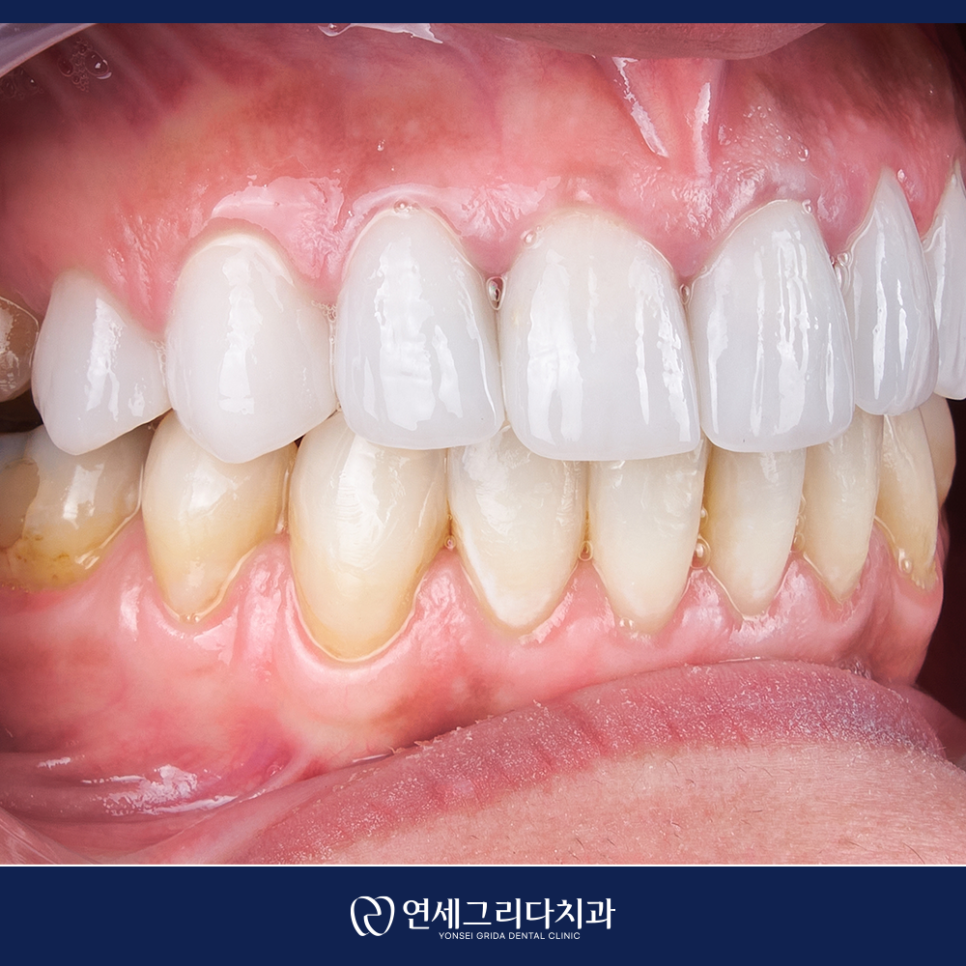
The causes of teeth looking yellow
can be broadly divided into external staining and internal discoloration.
External staining occurs when pigments
adhere to the surface of the teeth.
This commonly happens when you frequently consume
darkly colored foods or drinks such as
coffee, black tea, wine, curry, or chocolate.
Smoking is also a representative cause.
The nicotine and tar in cigarettes
can easily deposit on the surface,
creating yellowish or brownish staining.
On the other hand, internal discoloration
appears when the color of the dentin inside becomes darker
or the structure itself changes.
As we age, the outer enamel becomes thinner,
making the yellow dentin underneath more visible.
Past trauma, a history of root canal treatment,
certain medications, and innate color differences
can also cause discoloration.
Therefore, if yellow teeth are a concern,
it is important to first identify the cause of discoloration
rather than simply using whitening products.
How does it work?
Teeth whitening is not a procedure that
paints the surface white.
It works by breaking down pigments deposited
on the inside and surface of natural teeth,
thereby improving brightness.
In general, whitening agents used in dental clinics
contain ingredients such as hydrogen peroxide
or carbamide peroxide.
These ingredients penetrate the teeth
and break pigment molecules into smaller pieces,
making the teeth appear brighter.
However, not all teeth become equally bright.
Results vary depending on the original color,
enamel thickness, degree of staining,
lifestyle habits, and whether there are existing restorations.
In particular, artificial restorations such as resin,
crowns, and veneers do not become lighter
with whitening agents.
Therefore, if there are restorations on the front teeth,
a difference in color may appear after whitening,
so a dental examination is necessary.
The difference between in-clinic whitening and self-whitening
There are many whitening toothpastes, whitening patches,
and at-home whitening products sold on the market.
These products have the advantages of being accessible
and convenient.
However, because self-whitening products have limited
concentrations of whitening ingredients and a limited range of action,
they often focus more on surface stain management
rather than significantly improving color.
In contrast, teeth whitening performed at a dental clinic
is carried out after first checking the oral condition,
protecting the gums,
and then using dental whitening agents.
If whitening is attempted forcefully when there is tartar,
cavities, gum inflammation, or cracks,
sensitivity or gum irritation may become more severe.
Therefore, before whitening, a dental clinic may
check the condition of the teeth and gums through an examination,
and if necessary, recommend scaling or cavity treatment first.
If you want more stable color improvement,
it is better to choose an appropriate whitening method for yourself
through consultation with a dentist rather than self-assessment.
Can sensitivity occur?
After teeth whitening, a temporary feeling of sensitivity
may appear.
This happens because the whitening ingredients
penetrate inward and the nerves respond sensitively.
In most cases, sensitivity is temporary
and then subsides.
However, if the teeth are already heavily worn down,
if the gums have receded and the roots are exposed,
or if there are cavities or cracks,
the sensitivity may feel stronger.
For this reason, before whitening,
it is important to properly check sensitive areas,
whether there are cavities,
and the condition of the gums.
Also, immediately after whitening,
the surface may become more sensitive to pigments.
Therefore, for a certain period,
it is better to reduce dark-colored foods such as
coffee, black tea, wine, curry, and kimchi stew.
Smoking is also a major factor that reduces whitening effects,
so if possible, quitting smoking after whitening
or reducing the number of cigarettes can be helpful.
Lifestyle management is important for long-term maintenance
Teeth whitening is not a procedure
that lasts forever once done.
Because the inside of the mouth is exposed to food and drinks every day,
it can become stained again depending on lifestyle habits.
To maintain whitening effects for longer,
it helps to rinse your mouth with water after consuming
strongly colored foods.
If you drink coffee or tea often,
rather than brushing immediately after drinking,
it is better to rinse with water first
and then brush after some time has passed.
Brushing with too much force can wear down the enamel,
which may make teeth look more yellow instead.
It is important to use a soft toothbrush
and carefully clean the gumline.
Regular scaling is also necessary.
This is because tartar and staining can build up
and make the color look dull and dark.
In some cases, scaling alone can remove surface stains
and make the teeth look much cleaner.
However, if the original tooth color is dark
or there is internal discoloration,
scaling alone has limitations,
and consultation for dental whitening may be necessary.