Yeomchang-dong Prosthetic Treatment
My right tooth feels sensitive when chewing
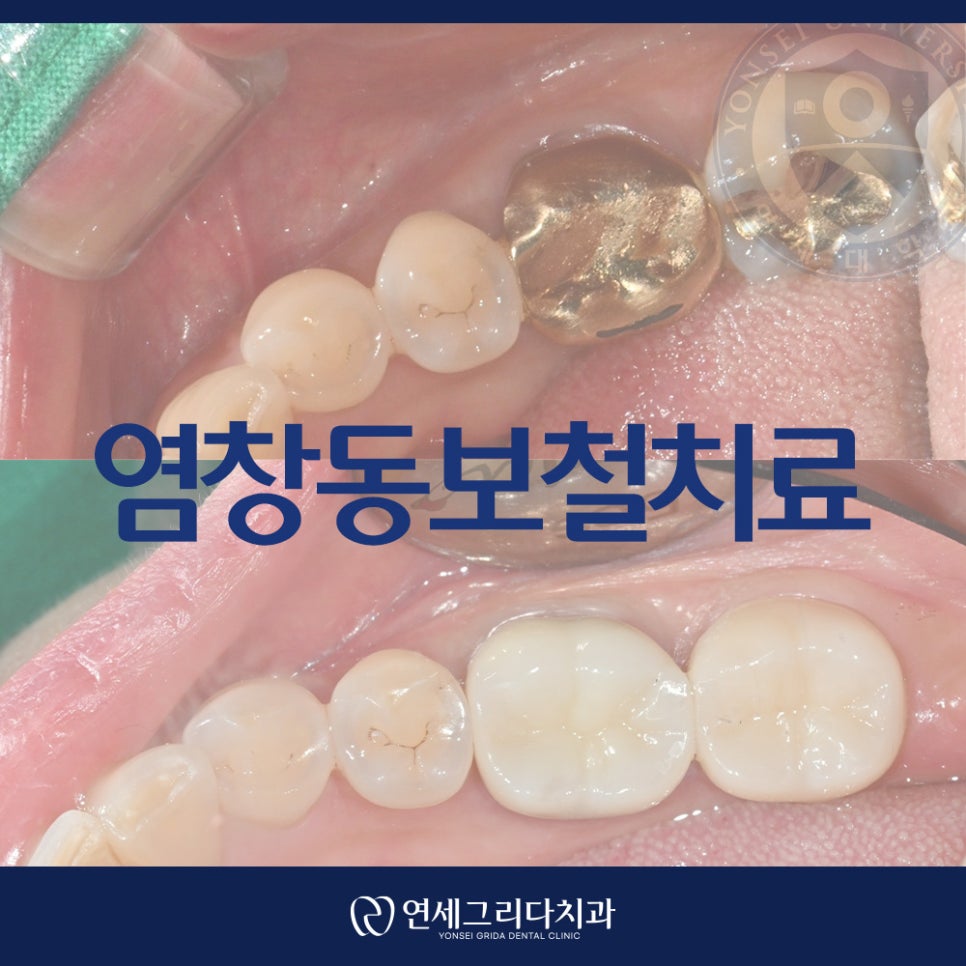
Teeth that have received gold inlay treatment
can often be used relatively stably for a long time,
but as time passes, tiny gaps may form
between the tooth and the restoration, or cracks
may develop as chewing forces are repeatedly applied.
Especially in areas such as molars,
where strong chewing forces are applied,
even a small crack can cause
sharp pain or sensitivity when chewing,
or discomfort when biting in
a particular direction if left untreated.
Tooth cracks often appear
not to be a major problem on the surface,
so they can easily be mistaken
for simple tooth decay or temporary pain.
However, if the crack becomes deeper,
it may severely irritate the nerve
or lead to a fracture.
Therefore, if symptoms recur,
it is important to check the condition
through a detailed examination.
Today, Yonsei Grida Dental Clinic
would like to introduce a case
of Yeomchang-dong prosthetic treatment
performed due to a tooth crack. :)
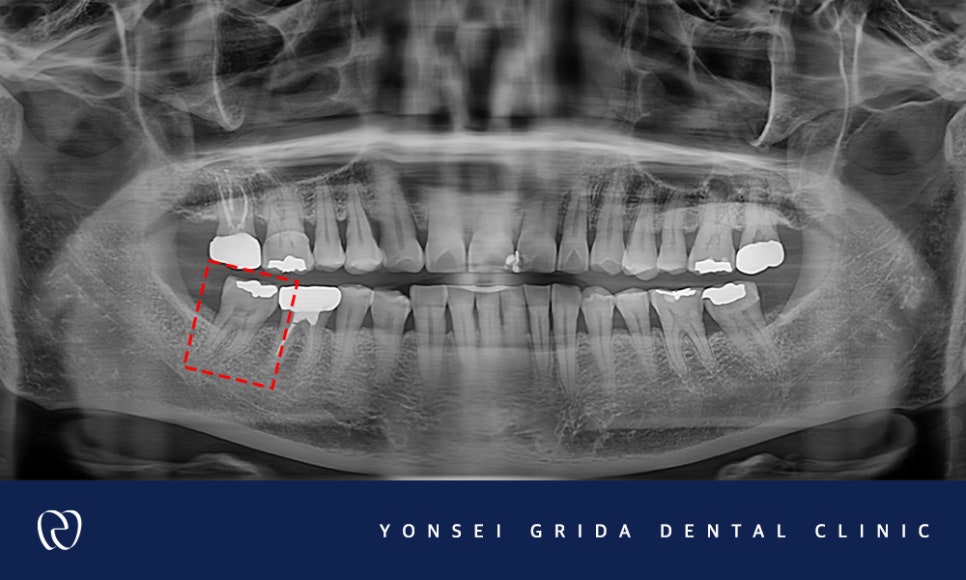
26.04.27
The patient above
visited our clinic because the upper and lower teeth
on the right side felt sensitive when chewing.
The patient said that if treatment was necessary,
they wanted to preserve the tooth
and have the procedure performed without pain,
which was why they sought out
a prosthodontics specialist.
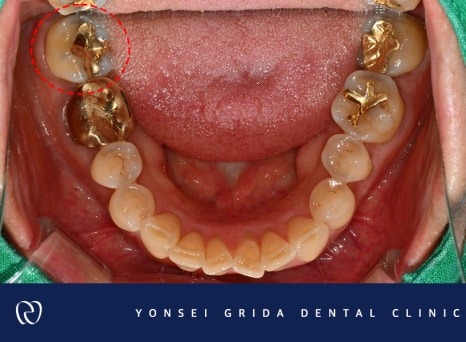
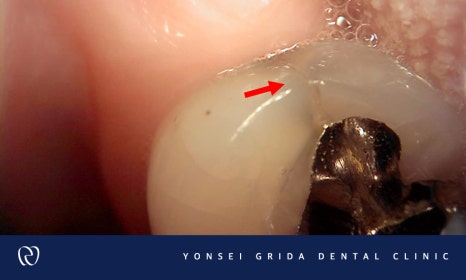
26.04.27
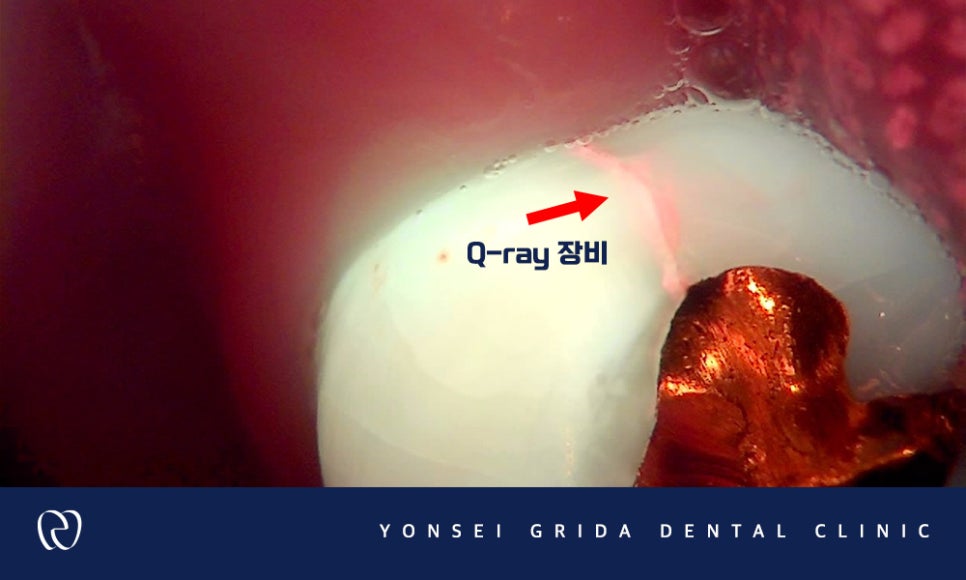
Upon examination,
a crack line that appeared to extend
behind the gold inlay was observed.
This crack appeared to be
the cause of the pain.
26.04.27
At our clinic, we carefully examined the condition
using Q-ray equipment,
which allows cracks like this to be viewed in detail.
Q-ray equipment can help show
subtle changes, cracks, and tooth decay
more clearly—changes that can be difficult
to distinguish under ordinary lighting
or with the naked eye.
After confirming the location and extent of the crack,
we evaluated the area that could be causing the current pain
and developed a plan to preserve the tooth.
In this case, based on the crack line found
behind the gold inlay and the pattern of pain,
we decided to first proceed with crown restoration
to cover and protect the entire tooth
before it became weaker.
However, teeth with cracks
may continue to show symptoms even after treatment,
depending on the depth of the crack
and the degree of nerve irritation.
Therefore, we explained in detail before starting treatment
that root canal treatment might be necessary
if pain continued after the crown,
and that extraction and an implant
might also be considered
if symptoms did not improve after root canal treatment
or if the tooth was considered difficult to preserve.
26.04.27
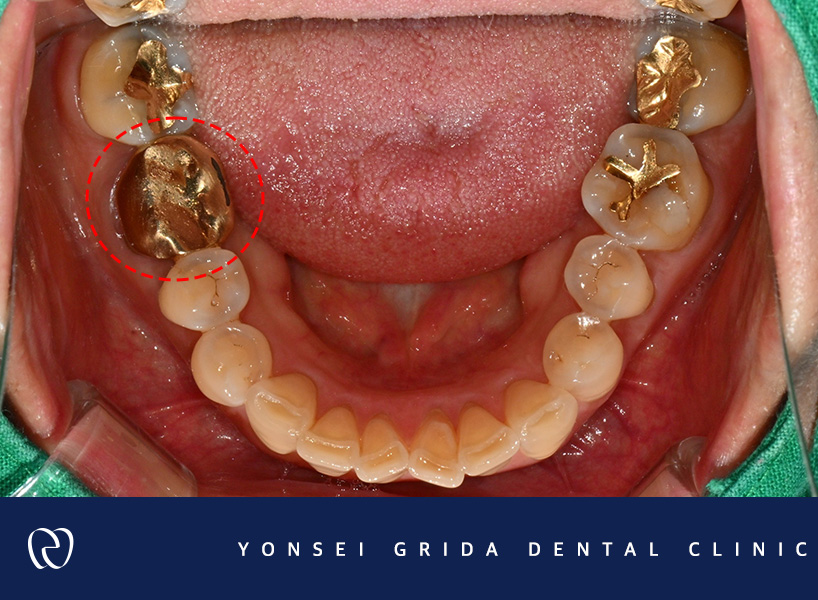
In addition, the old gold crown toward the front
had developed a hole over time.
If such a gap is left untreated,
bacteria may penetrate inside,
increasing the likelihood of secondary tooth decay.
Therefore, we explained that the existing crown
would be removed and newly remade,
and decided to proceed with this treatment as well.
26.04.27
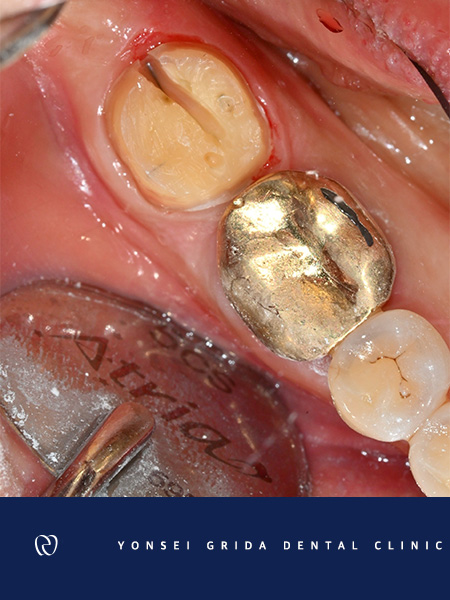
First, we removed the existing inlay,
then cleaned and reshaped the tooth
so that the crown could be placed.
We then took an impression
for fabrication of the final restoration,
and made and bonded a temporary tooth
to protect the tooth until the restoration was completed.
26.05.06
We also removed the restoration toward the front
and temporarily bonded the fabricated crown.
The patient was asked to use it temporarily
so that we could observe any changes in symptoms.
In the case of a tooth with a crack,
it may be necessary to monitor whether pain occurs
for a certain period before final bonding.
Therefore, we decided to check
whether any discomfort when chewing
or sensitivity remained.
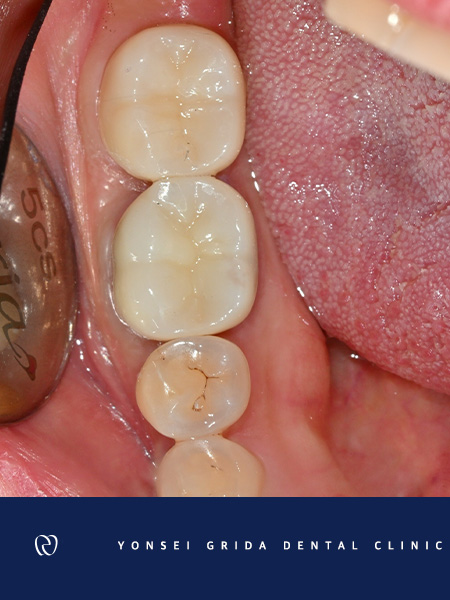
26.05.13
After using it for one week,
the patient said that everything felt fine
without any notable symptoms.
We therefore proceeded with permanent bonding.
Because the tooth had a crack,
we carefully checked and adjusted the bite
so that chewing forces would not be excessively concentrated
on one side even after bonding. (^^)
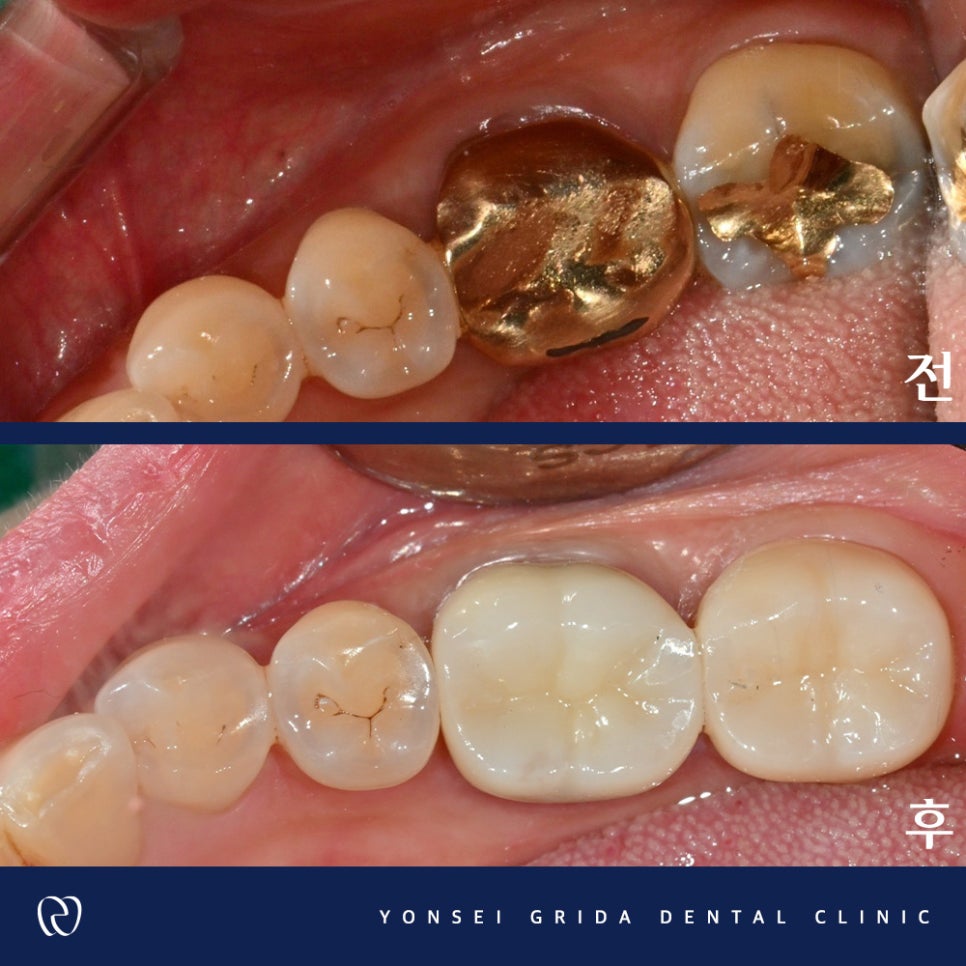
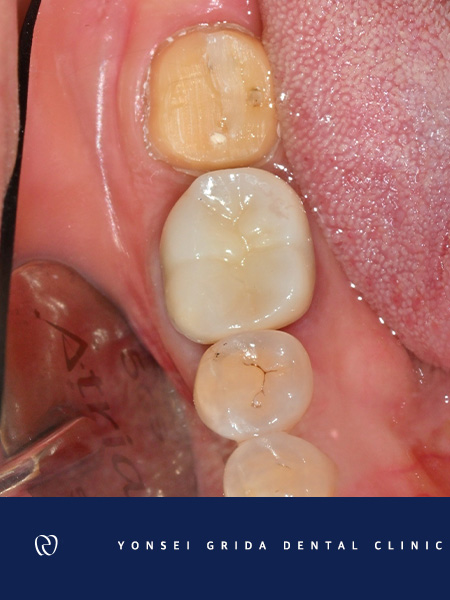
26.04.27 / 26.05.13
These are photos from before and after treatment.
After the treatment was completed,
the patient was satisfied that there was no pain
from temperature stimuli or when chewing,
and said they were relieved that the treatment
could be completed without root canal treatment.
As in this case, even when a tooth has a crack,
treatment does not necessarily lead directly
to root canal treatment or extraction.
Depending on the extent of the crack
and the pattern of symptoms,
conservative treatment aimed at protecting the tooth
can be considered first.
At Yonsei Grida Dental Clinic,
the director, a prosthodontics specialist,
carefully checks the patient’s condition and symptoms,
as well as problems with existing restorations,
through Yeomchang-dong prosthetic treatment,
and provides guidance on the treatment approach
needed for each individual.
In particular, when discomfort is caused
by a crack or an old restoration,
we first consider methods that may preserve the tooth
and help ensure stable Yeomchang-dong prosthetic treatment
based on a detailed diagnosis.
If you are experiencing discomfort
because of a crack in a tooth, as in the case above,
please do not leave it untreated;
we recommend getting an examination.
Thank you. :)
*All case photographs were posted with the consent of the individuals concerned, in accordance with Articles 23 and 56 of the Medical Service Act.
*All treatment photographs are of patients treated at our clinic.
*All treatment photographs are of the same individual and were taken under the same conditions.
*Depending on individual differences, side effects may occur after procedures or surgery. Please consult sufficiently with your medical professionals.
▼ Interested in other treatment cases involving tooth cracks? ▼