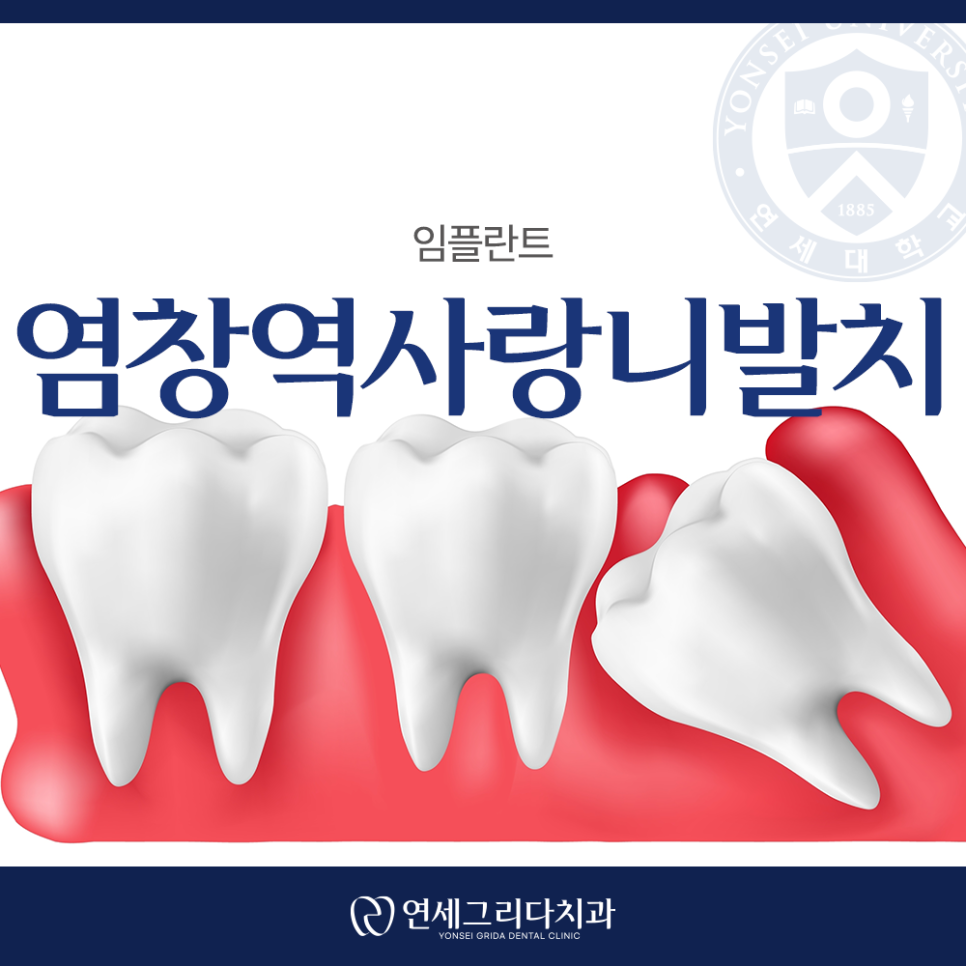
Many people think that
wisdom teeth are teeth that
must be removed without exception.
However, in actual dental practice,
not everyone is a candidate for extraction.
Conversely, even if they appear
to have no problems on the outside,
they may cause inflammation
under the gums or damage the teeth in front of them.
Therefore, if you are considering wisdom tooth extraction at Yeomchang Station,
you should not look only at whether there is pain.
The tooth’s position, angle, degree of impaction,
and its relationship with the surrounding teeth and the nerve canal
all need to be assessed comprehensively.
Why are wisdom teeth prone to causing problems?
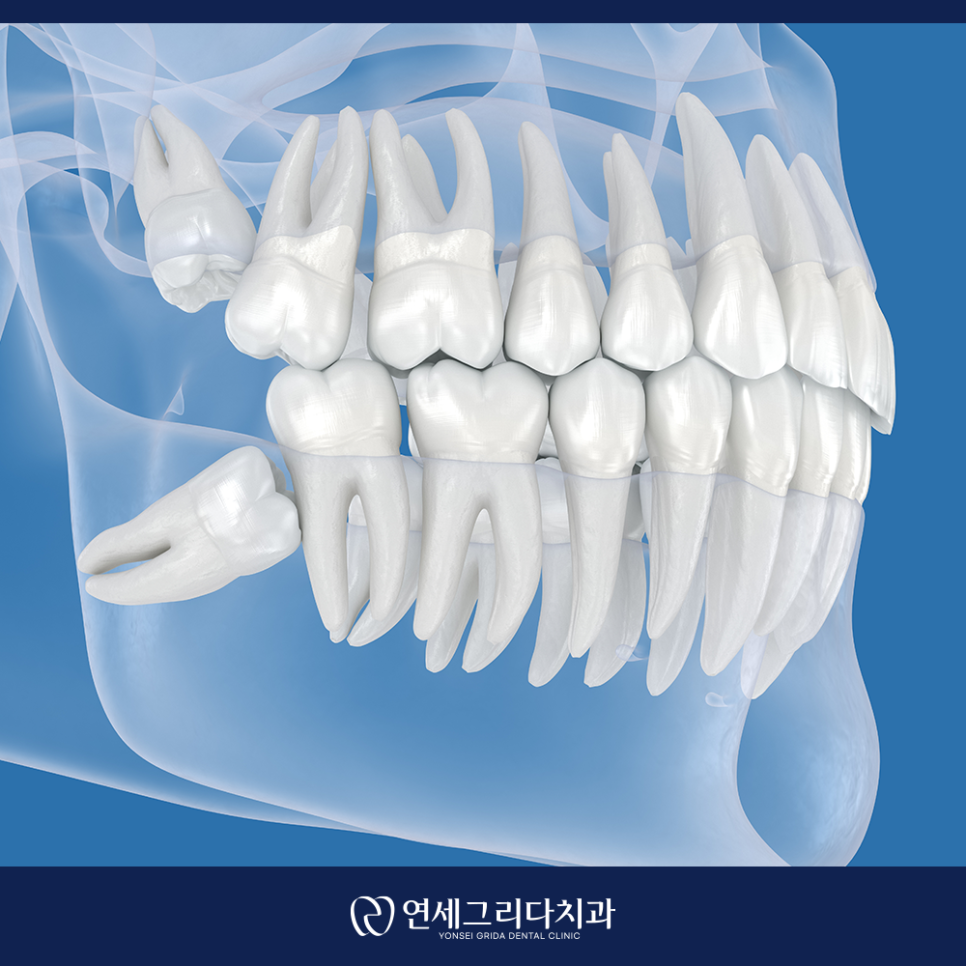
Wisdom teeth are usually
the third molars that erupt
at the very back of the mouth
in the late teens or early twenties.
The problem is that
the jawbones of modern people
are often smaller than they were in the past,
leaving insufficient space
for the teeth to emerge normally.
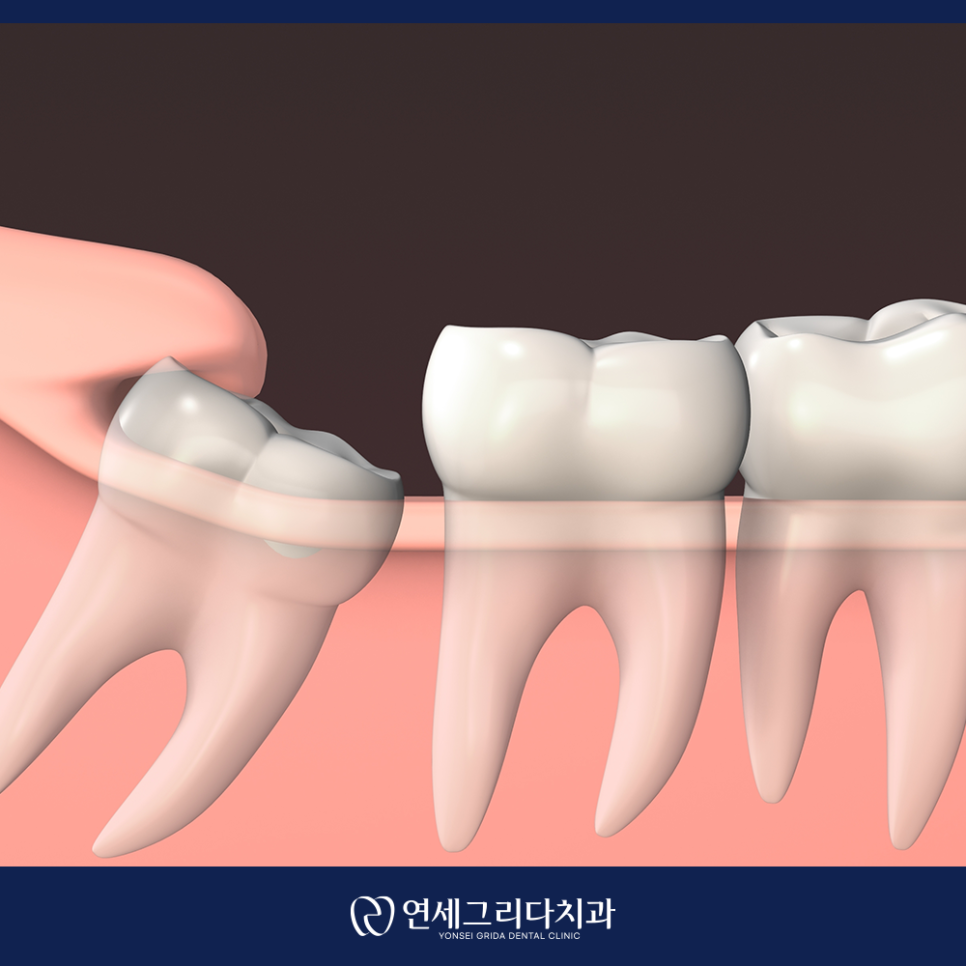
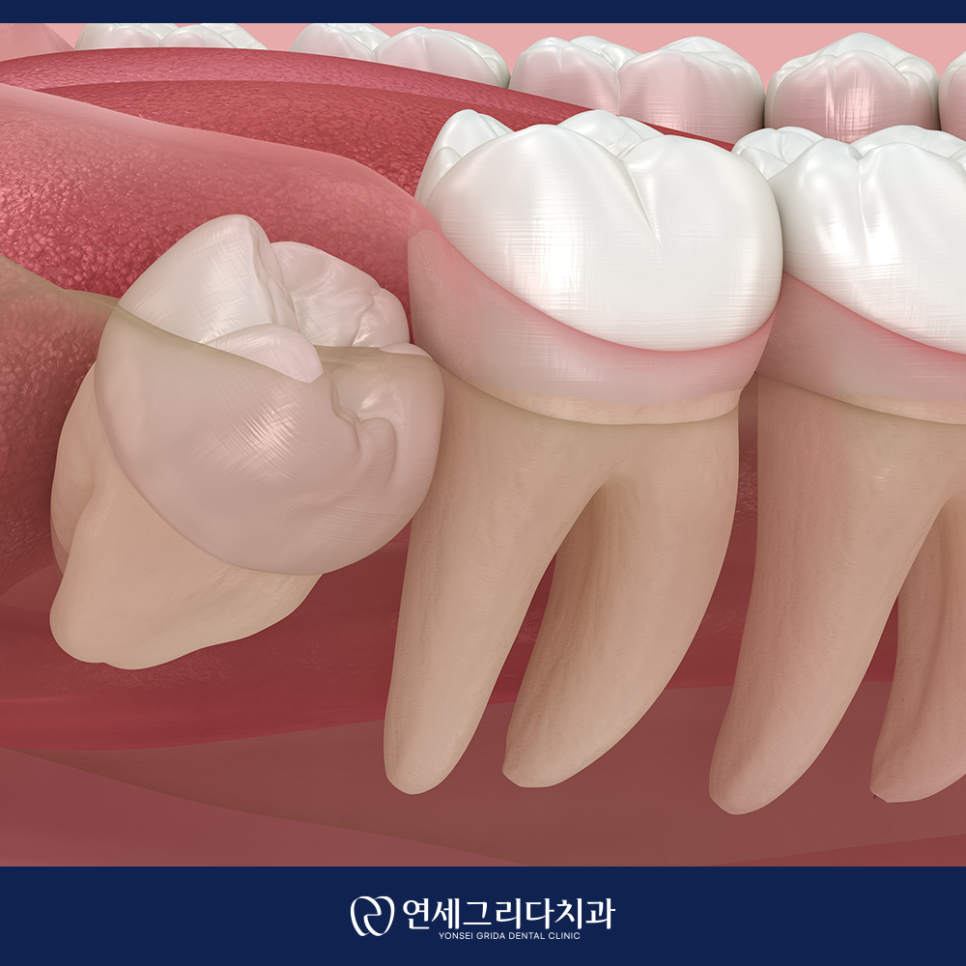
When there is not enough space, wisdom teeth
may emerge at an angle,
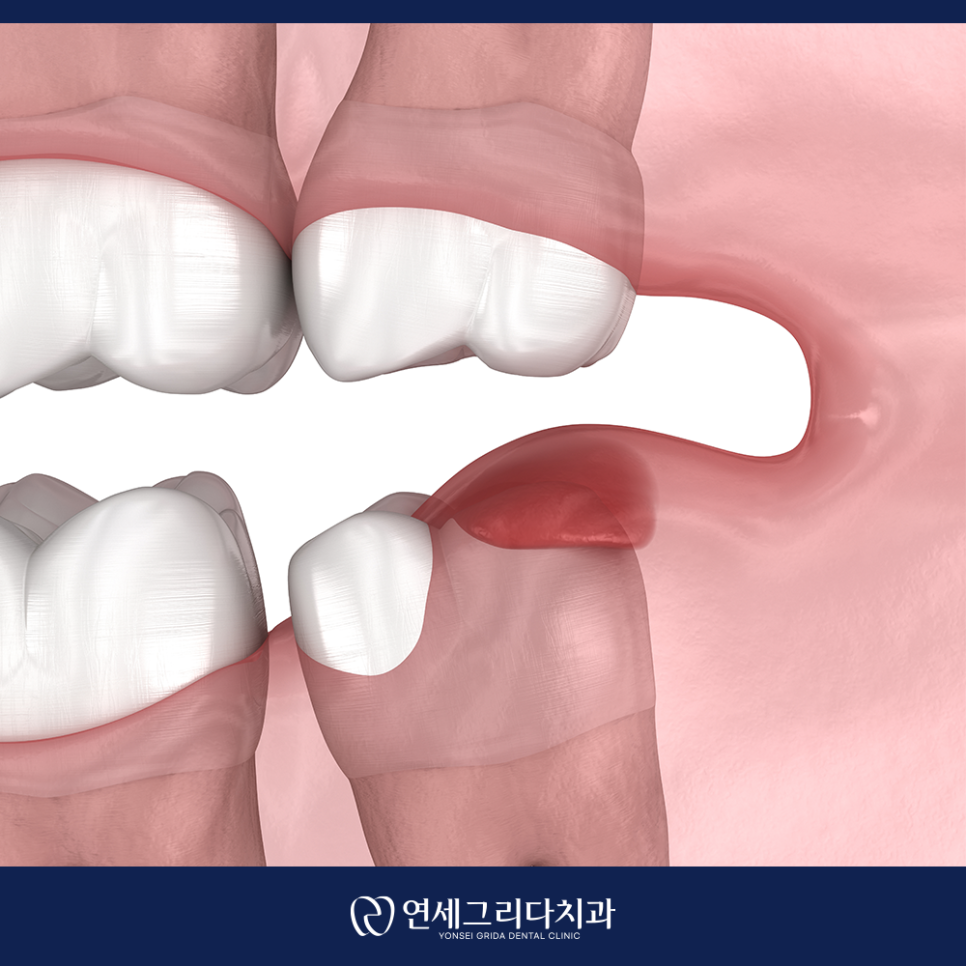
remain partially covered by the gums,
or stay completely impacted
inside the bone.
When this happens, toothbrushes cannot reach them easily,
making it easy for food to become trapped
and causing repeated gum inflammation.
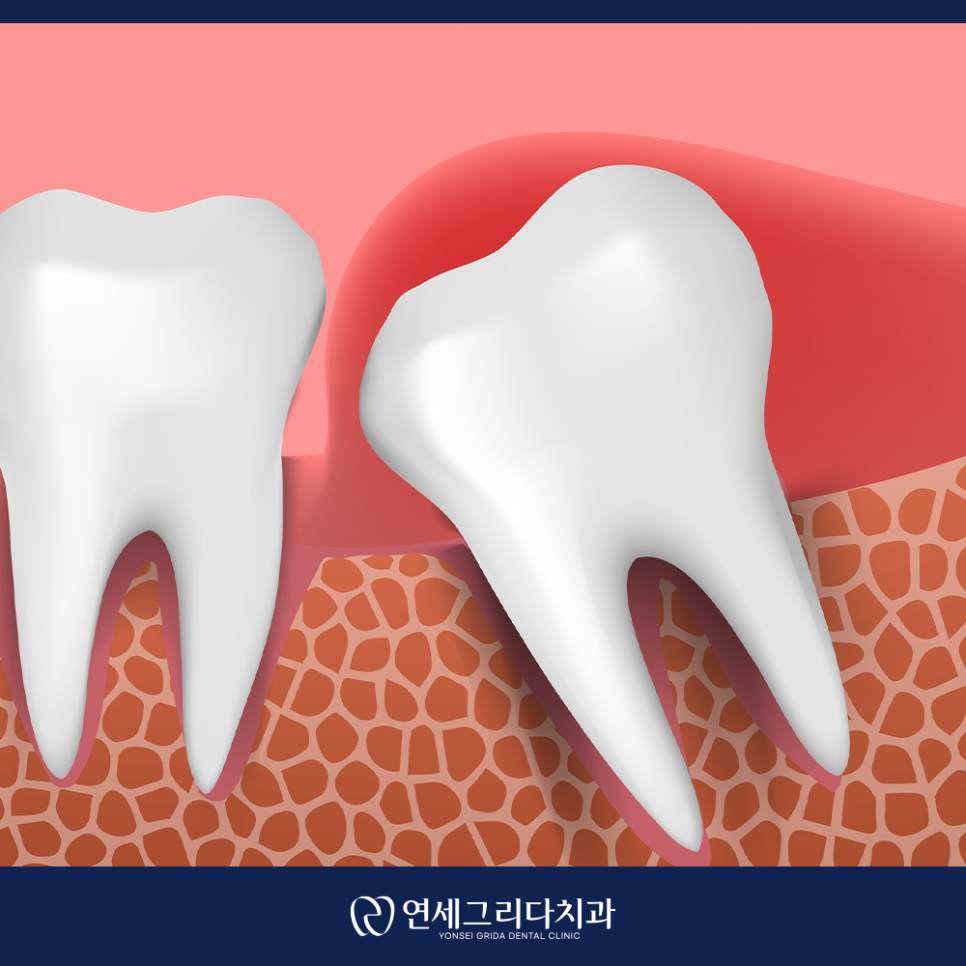
They may also continuously press against
the roots or sides of the second molars
in front of them,
which can lead to cavities,
absorption of the jawbone,
or root resorption.
That is why consultations for wisdom tooth extraction at Yeomchang Station
must assess not only the wisdom tooth itself
but also whether the teeth in front can be protected.
In some cases, extraction may not be necessary
Having a wisdom tooth does not mean
that it must always be removed.
If it has emerged straight in a normal direction,
fits properly with the opposing tooth,
can be brushed sufficiently,
and has no cavities or gum inflammation,
it may be monitored regularly
without being removed.
In particular, if the wisdom tooth has fully erupted,
provides some chewing function,
and the surrounding gums are stable,
preserving it may be considered.
However, it is important to understand that
“not hurting right now”
does not mean the same thing as
“having no problems.”
Even if it looks fine on the outside,
a panoramic X-ray or
three-dimensional CT scan
may show that it is touching the root of the tooth in front
or located close to the nerve canal.
Therefore, whether to undergo wisdom tooth extraction at Yeomchang Station
should preferably be decided through a dental examination
rather than self-diagnosis.
Typical cases in which extraction should be considered
If any of the following situations apply,
it is advisable to seriously consider
wisdom tooth extraction.
🦷 When the surrounding gums repeatedly swell and hurt
🦷 When a cavity has developed
🦷 When the tooth is lying down or growing in a direction that pushes against the tooth in front
🦷 When a cyst or lesion is suspected
When surgery is required,
the decision is not based solely on whether there is pain.
When looking into wisdom tooth extraction at Yeomchang Station,
an important part of the diagnostic process
is to assess not only the current symptoms
but also the possibility of future problems.
Why detailed diagnosis before wisdom tooth extraction is important
The most important thing in wisdom tooth extraction
is not removing the tooth hastily,
but properly determining the conditions
under which it can be removed safely.
In particular, lower-jaw teeth
are often located close to the inferior alveolar nerve canal.
Because this nerve is associated with sensation
in the lower lip, chin, and gums,
if the roots are close to the nerve canal,
a more careful evaluation is needed.
🦷 If the roots are curved
🦷 If they are divided into multiple branches,
🦷 If the tooth is deeply impacted,
🦷 or if it is difficult to open the mouth wide,
the procedure may be more challenging.
Assessing these factors in advance
makes it possible to predict, to some extent,
the procedure time, extent of the incision,
and the likelihood of postoperative swelling and pain.
Therefore, if you are planning wisdom tooth extraction at Yeomchang Station,
it is necessary to determine whether it is
a simple extraction, a difficult extraction,
or surgery for an impacted tooth.
Care after extraction is also part of the treatment
Wisdom tooth extraction
does not end at the moment
the tooth is removed.
Care is also needed throughout the process
of allowing a blood clot to form securely
and the gums and bone to recover.
On the day of surgery,
you should bite down on the gauze sufficiently
to control the bleeding,
and it is best to avoid
spitting frequently or using a straw.
Alcohol, smoking, saunas, and strenuous exercise
may interfere with recovery
and increase the risk of bleeding or inflammation.
Do not stop prescribed medication on your own.
If pain or swelling worsens,
if there is a pus-like odor or a sensation of heat,
or if it becomes increasingly difficult to open your mouth,
you should return to the dentist.
Ultimately, a good outcome
is possible when accurate diagnosis and surgery,
along with thorough aftercare,
are carried out together.
If you are wondering whether wisdom tooth extraction at Yeomchang Station is necessary,
rather than waiting until the pain becomes severe,
it is better to first check
the current condition of the tooth.
There are times when a wisdom tooth
needs to be removed,
and times when it can simply be monitored.
What matters is
receiving a proper diagnosis
to determine which situation applies to you.