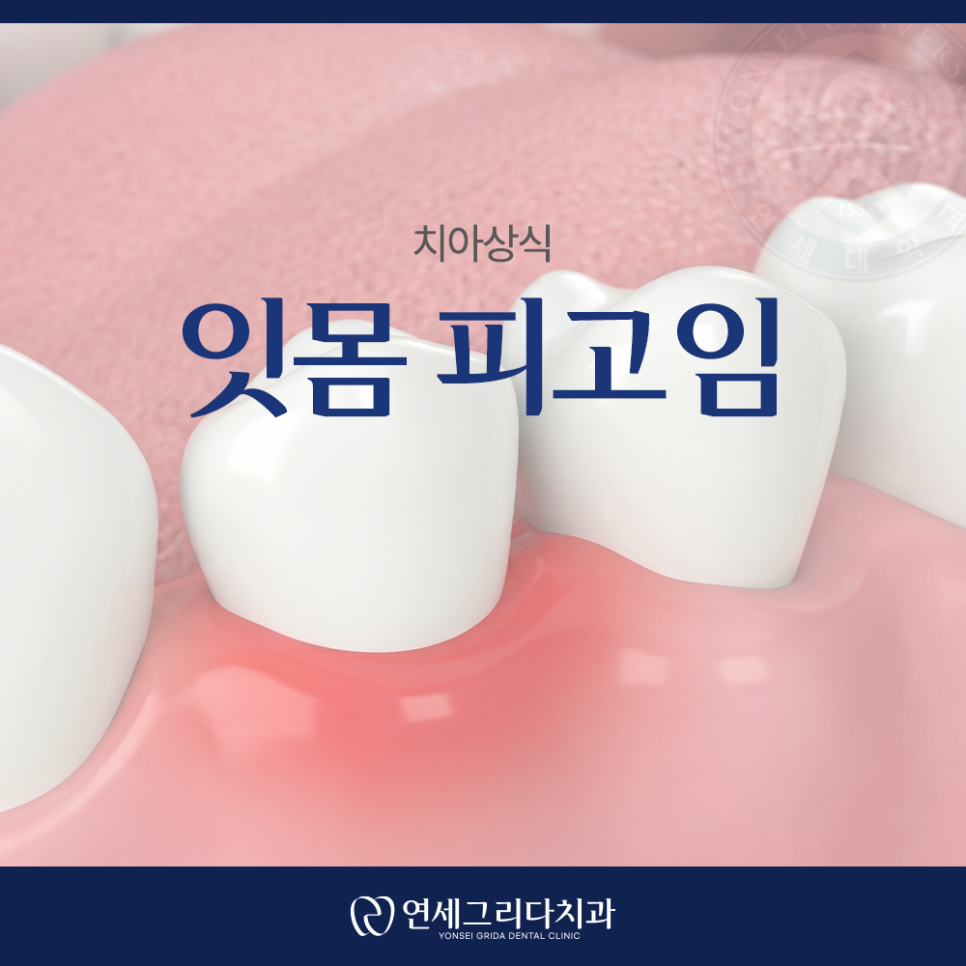
If blood appears when you brush your teeth
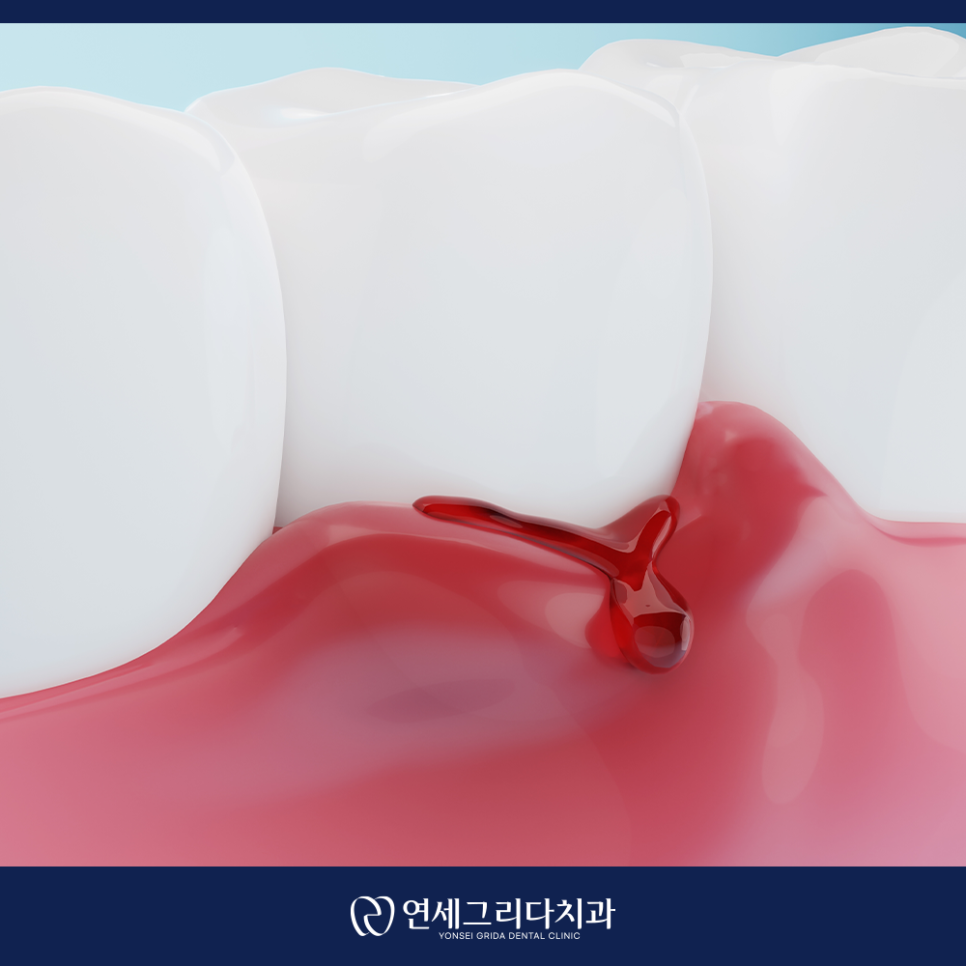
or one side of your gums looks red and swollen,
making it appear as though blood has pooled,
it is difficult to dismiss it as a simple injury.
Blood pooling in the gums
can occur due to irritation from brushing,
but it is often associated with gingivitis, periodontitis, tartar, food impaction,
or a pus-filled pocket and may recur.
Because the gums are tissue connected to the alveolar bone
that supports the teeth,
if bleeding continues,
it is important to identify the cause early.
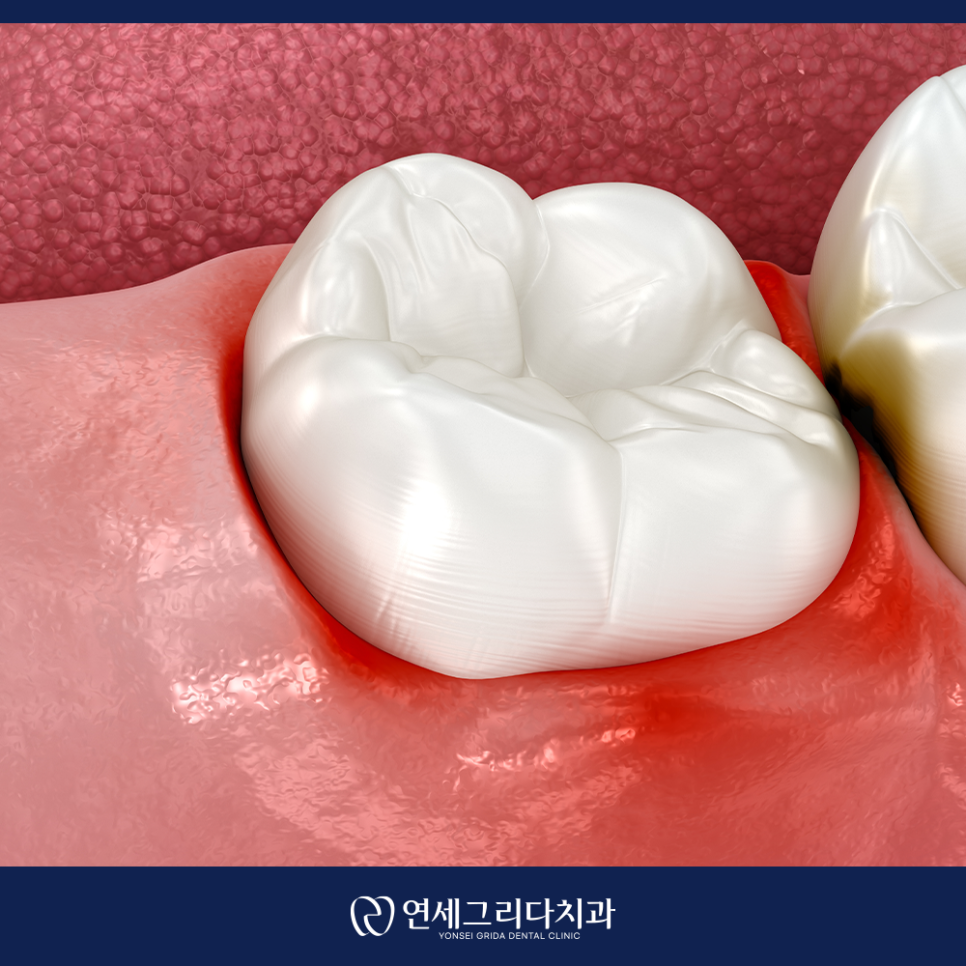
Inflammation is the most common cause
The most common cause of blood pooling in the gums
is inflammation caused by plaque and tartar.
There is a small gap between the teeth and gums.
When food debris and bacterial plaque build up there,
the gums can become swollen and weakened.
At first, there may only be a small amount of bleeding
when brushing,
but if the condition is not managed,
inflammation can deepen
and cause discomfort that feels as though
blood has pooled inside the gums.
If you avoid brushing the area because it bleeds,
more bacteria can accumulate,
causing the blood pooling in the gums to recur.
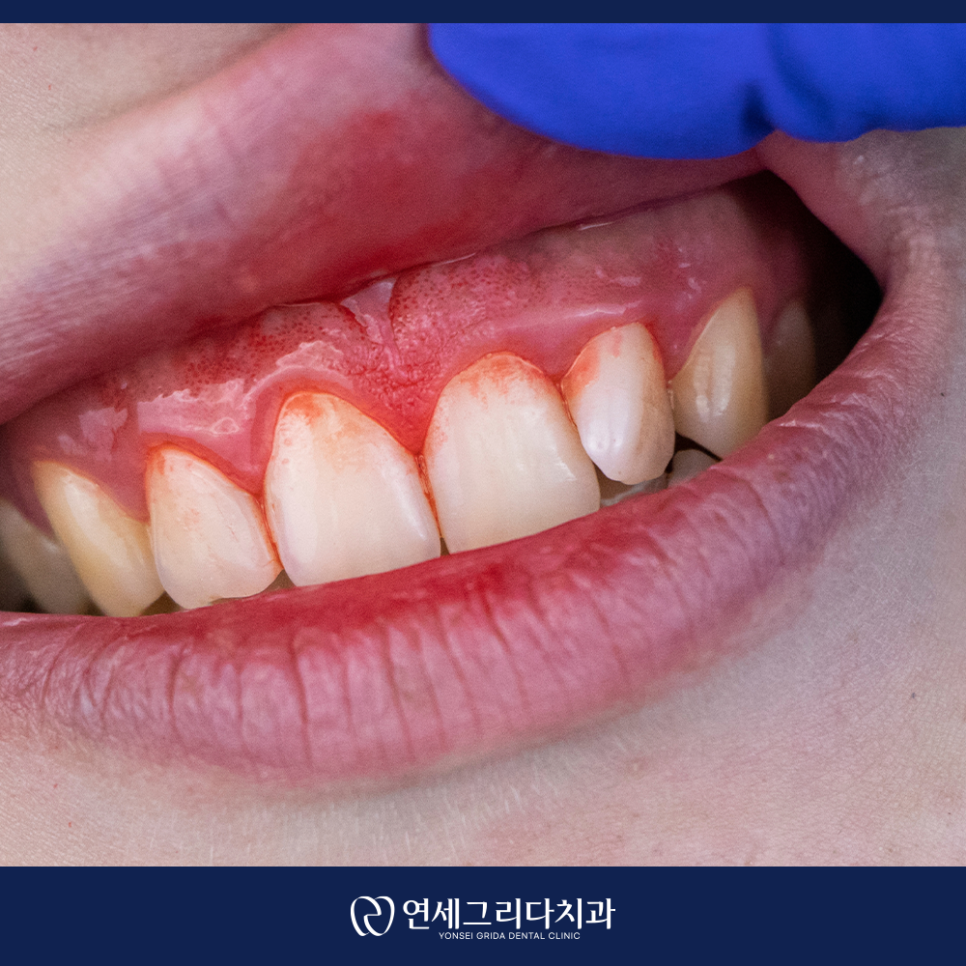
Gingivitis and periodontitis must be distinguished
Gingivitis is
early inflammation that develops on the surface of the gums.
The gums become red and swollen,
and bleeding occurs easily when brushing
or using dental floss.
At this stage, many cases improve
with scaling and proper oral care alone.
However, when inflammation progresses deeper,
it becomes periodontitis.
Periodontitis can affect the surrounding tissues and bone
that support the teeth,
and may be accompanied by bad breath, swelling, pain when eating,
or loose teeth.
If blood and pus come out when the gums are pressed,
there may be a periodontal abscess,
so dental care is necessary.
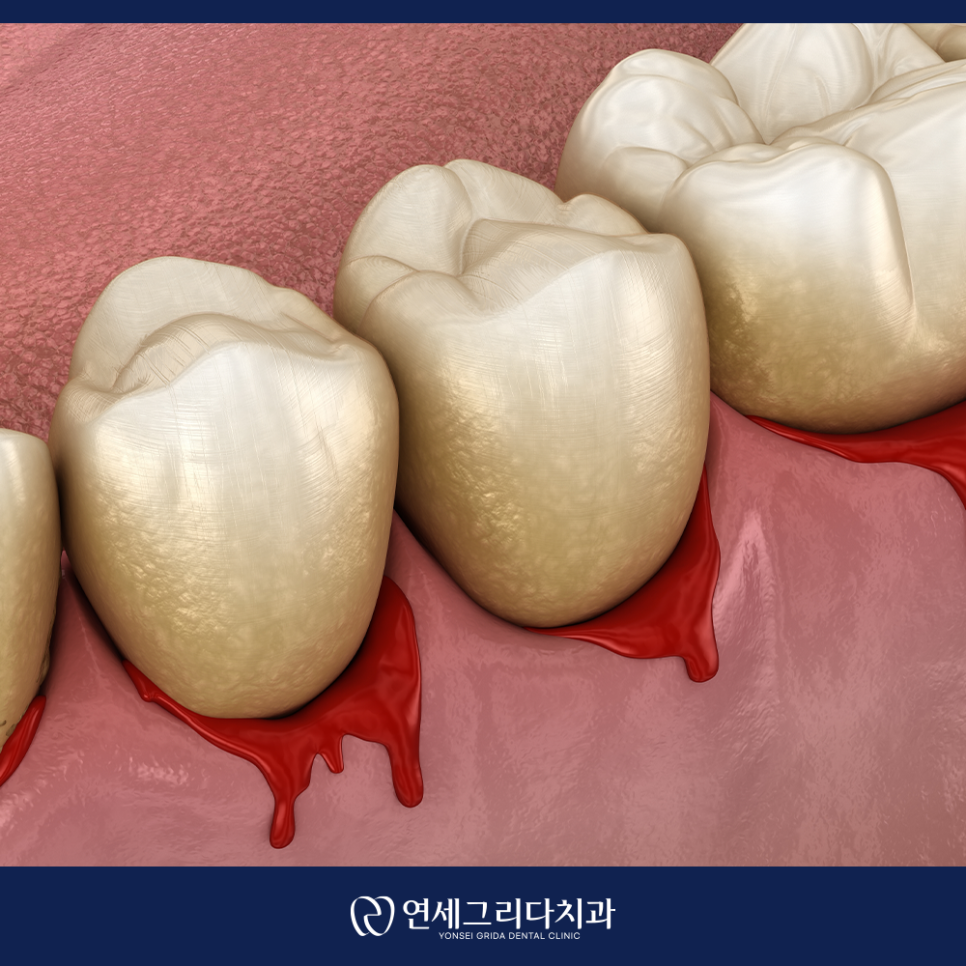
Food impaction and trauma can also be causes
If the gums are pricked while eating hard foods,
or if dental floss or an interdental brush is used too forcefully,
an injury can develop on the surface,
making it appear as though blood has pooled.
Also, when hard food particles such as
meat fibers, pieces of nuts, or fish bones become lodged between the teeth,
only the affected area may become swollen and painful.
The problem occurs when food repeatedly becomes trapped in the same area.
If a gap has developed due to tooth decay,
if the space between the teeth has widened,
or if a crown, bridge, or implant restoration
does not fit the gums properly,
blood pooling in the gums may continue to occur.
In particular, bleeding around an implant
may be a sign of peri-implantitis
even when there is little pain at first,
so regular checkups are necessary.
Overall health and medications can also have an effect
Bleeding gums
may be related not only to oral problems
but also to overall health.
If you have diabetes,
inflammation can worsen easily
and wounds may take longer to heal.
Also, if you are taking blood-thinning medications
such as anticoagulants or antiplatelet drugs,
bleeding may continue for a long time even after minor irritation.
Pregnancy, hormonal changes, smoking, stress,
and reduced immunity can also make the gums more sensitive
and worsen blood pooling in the gums.
However, medications you are currently taking
must not be stopped arbitrarily.
You should inform your dental care provider
of all medications you are currently taking
when you receive dental treatment.
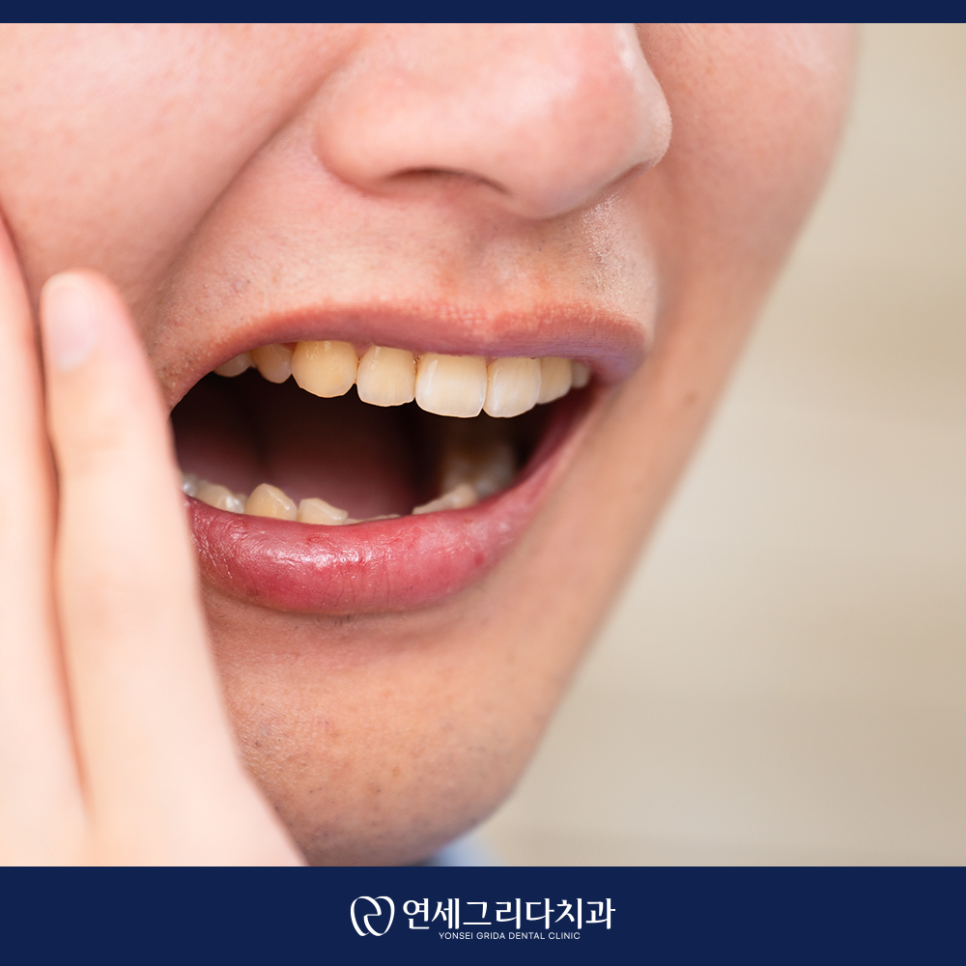
If it keeps recurring, a dental checkup is necessary
If the blood pooling in the gums
is due to a minor injury lasting only a day or two,
you may monitor its progress
while caring for the area with a soft toothbrush.
However, if your gums bleed every time you brush,
swell repeatedly,
or are accompanied by bad breath, pain, pus, or loose teeth,
a dental checkup is necessary.
At the dental clinic, the condition,
the depth of the periodontal pockets, the location of tartar,
and whether bone loss is present are examined,
and X-rays may be taken if necessary.
Gingivitis may be improved through scaling and oral care instruction,
while periodontitis may be helped through removal of tartar below the gums
and periodontal treatment.
If pus has collected,
drainage and infection control may be necessary,
and if a restoration or tooth decay is the cause,
it must be treated as well to help reduce recurrence.
Blood pooling in the gums
may appear to be a minor symptom,
but it can be a sign
that oral health is deteriorating.
If recurring bleeding is left untreated,
it can lead to damage to the alveolar bone
and loose teeth,
so we recommend identifying the correct cause early.