The outer surface of a tooth is made up of
the hardest tissue in the human body,
but repeated exposure to strong forces
or the aging process over time
can cause damage.
In particular, areas that previously underwent
root canal treatment and full-coverage
prosthetic treatment due to extensive decay
or tooth damage may experience
various changes over time.
The prosthesis itself may also
partially break or develop cracks
after accumulating microscopic impacts
over many years of eating.
In addition, as we age,
gum recession may naturally occur,
in which the gum tissue surrounding the teeth
gradually moves downward.
When the gums recede,
the boundary where the previously treated
prosthesis meets the gums becomes visible.
This may expose the underlying tooth
or reveal a dark margin,
creating an aesthetically undesirable appearance.
When a prosthesis on a front tooth is damaged
or the margin becomes exposed in this way,
it can cause considerable aesthetic stress.
Therefore, the oral condition should be
carefully examined and appropriate measures taken.
Front teeth play the functional role
of cutting food,
but because they are the first area
visible to others,
they also have a very important
aesthetic role.
Therefore, when a problem develops
in the front teeth and treatment must be performed again,
the harmony with the surrounding
natural teeth must be carefully considered.
Tooth color is not made up of
a single tone alone.
Transparency, value, and saturation
work together in combination,
so technology that can reproduce these features
accurately is needed.
In the past, prostheses made by using
porcelain material internally and
baking additional powder onto the outer surface
were often used to improve aesthetics.
However, their relatively lower strength
made them prone to breaking upon impact.
More recently, to address these shortcomings,
strong materials made by milling
a solid block are used,
along with precise coloring of the outer surface,
allowing both strength and aesthetics
to be achieved.
Because methods of restoring the aesthetics
of the front teeth vary considerably
depending on the material and fabrication method,
it is essential to visit a dental clinic,
receive an accurate diagnosis,
and establish a treatment plan
that is most appropriate for the individual’s
oral environment.
Through the case of a woman in her 40s
who recently visited Yeomchang-dong Dental Clinic,
we will explain in detail
the process of remaking a front-tooth prosthesis
and its importance.
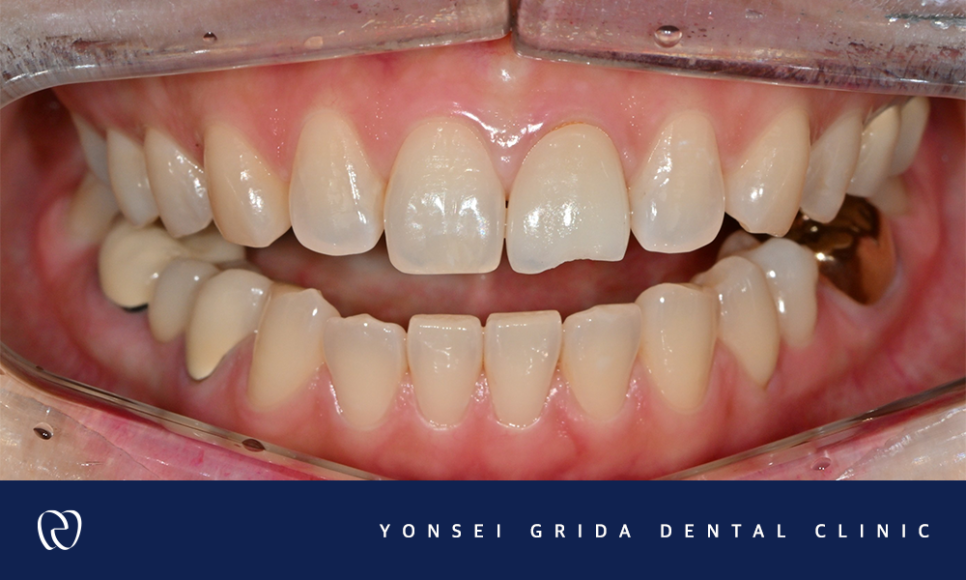
The patient visited Yeomchang-dong Dental Clinic
after part of an upper front-tooth prosthesis
that had previously been treated and placed
became chipped.
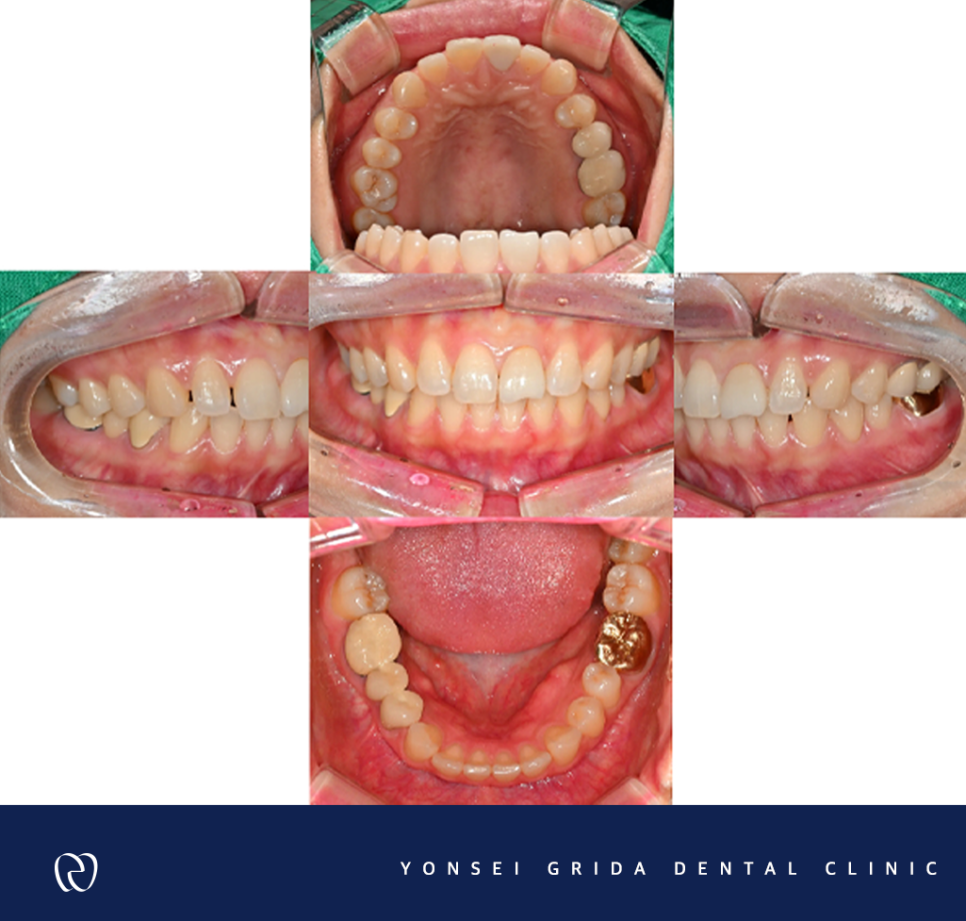
After carefully examining the patient’s oral condition
through visual and radiographic examinations,
we confirmed that the edge of the crown prosthesis
that had been placed after previous root canal treatment
had fractured.
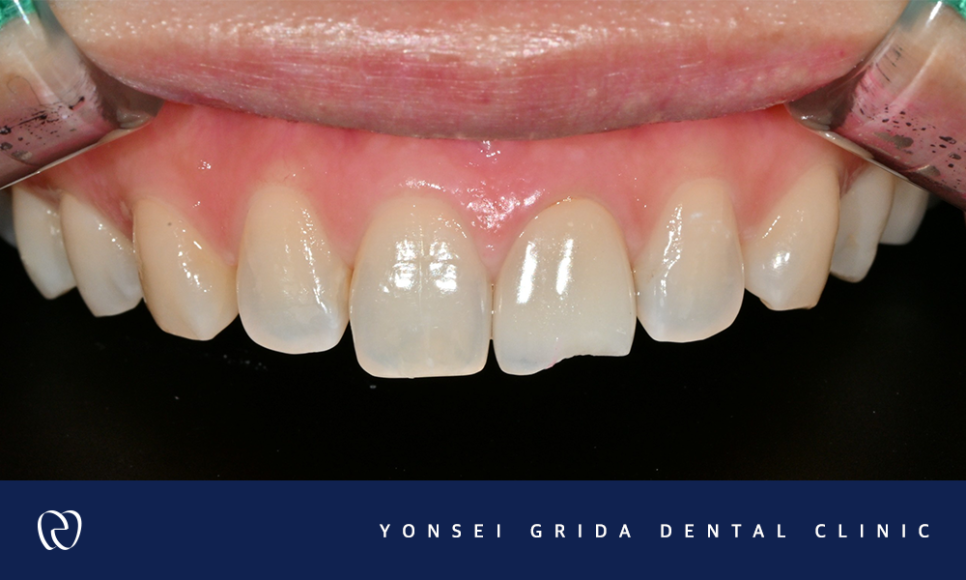
In addition, as time passed,
gum recession had progressed,
leaving the margin of the existing prosthesis
exposed.
Fortunately, the abutment tooth beneath the prosthesis
was healthy and well maintained,
without inflammation or additional decay.
Therefore, a treatment plan was established
to remove the existing damaged prosthesis
and fabricate and place a new one.
The patient’s previous prosthesis
was presumed to have been made by layering
porcelain powder over a reinforced ceramic core
to enhance its aesthetic effect.
Although this method can provide a natural appearance,
its relatively lower strength means
there is a risk of refracture.
Therefore, during retreatment,
Yeomchang-dong Dental Clinic selected zirconia,
a material with very high strength,
so that not only aesthetics but also resistance
to future refracture could be considered.
After precisely milling a solid zirconia block,
an additional staining process was performed
to apply subtle color to the outer surface,
with the goal of improving both aesthetics
and durability.
The prosthesis fabrication process
involved careful steps to achieve harmony
with the surrounding teeth.
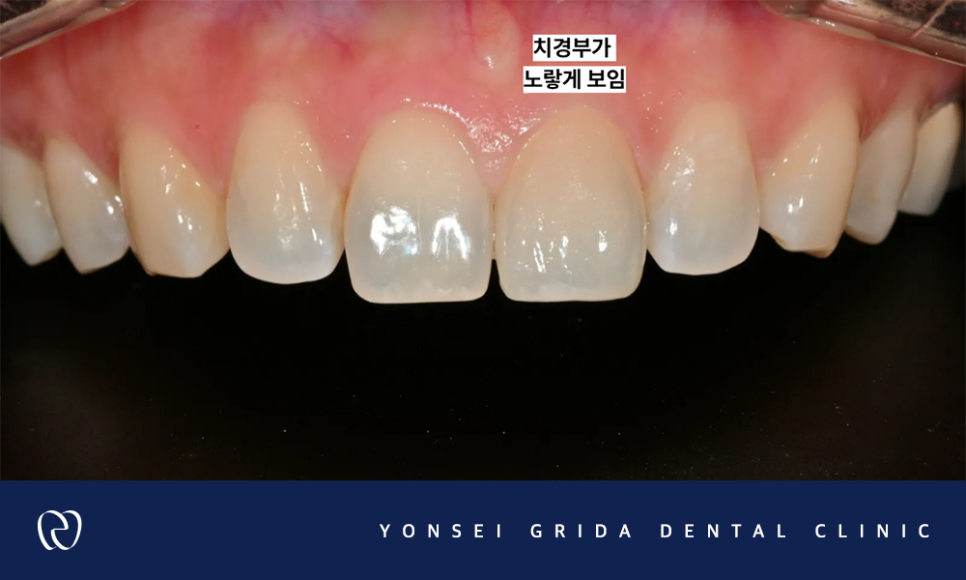
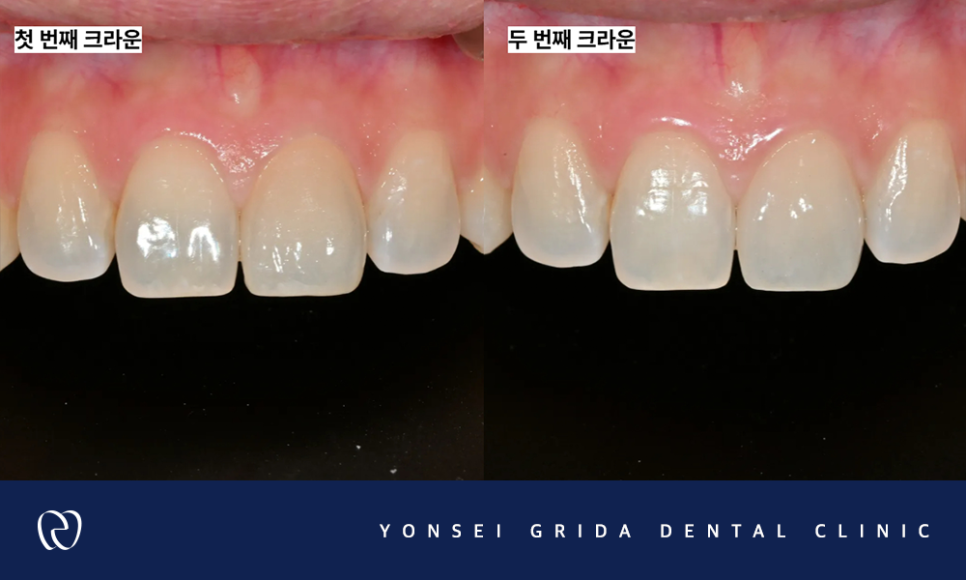
The first crown prosthesis fabricated
appeared somewhat yellower
when compared with the patient’s surrounding
natural teeth and existing oral environment.
Because even subtle differences in color
can change the overall impression of the front teeth,
our clinic decided to revise the first prosthesis
and proceed with remaking it
to improve the patient’s satisfaction
and the quality of the final result.
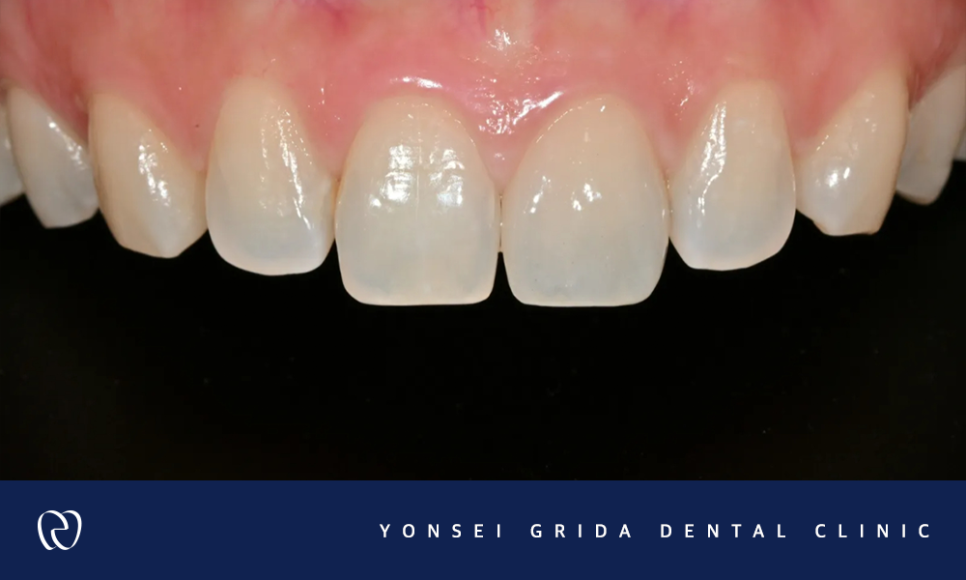
The second crown prosthesis completed
after the revision process reproduced
the tooth’s natural color, value, and saturation,
as well as its distinctive transparency,
very similarly to the surrounding natural teeth.
As a result, a natural-looking crown
was successfully fabricated.
Compared with the previous prosthesis,
its likelihood of fracturing was markedly lower,
providing a functionally sturdy result,
and the patient also expressed great satisfaction.
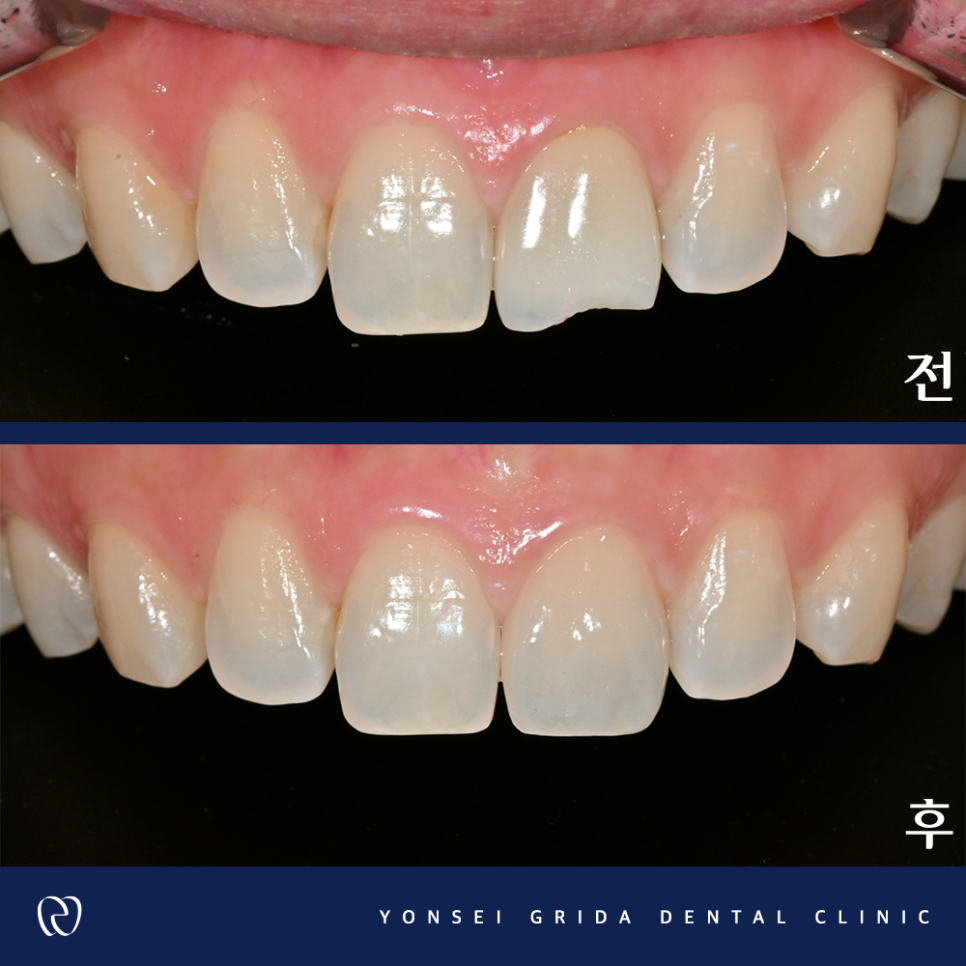
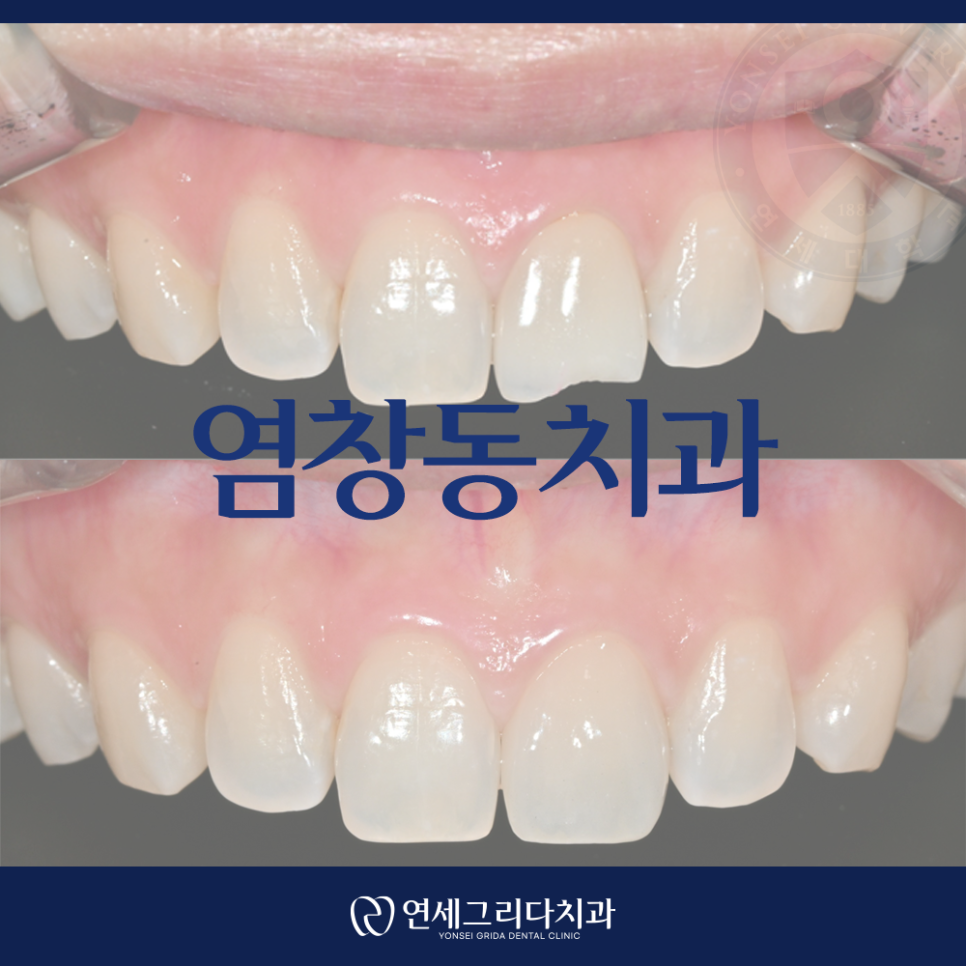
These are photographs taken before and after treatment.
연세그리다치과 remains focused at every moment
on ensuring that both aesthetic beauty
and functional strength are maintained
while treating the oral health concerns
faced by our patients.
In particular, for front-tooth treatment,
where the teeth are most visible to others,
we understand that the color and shape of even one tooth
can have a significant effect on the overall smile.
Accordingly, we carefully review even subtle differences
in the color of each prosthesis
as we provide treatment.
Considering each case once more
from the patient’s perspective,
and treating each one carefully
without overlooking even the smallest detail,
is the value that our clinic pursues in patient care.
Yeomchang-dong Dental Clinic
will honestly recommend only the treatment
most appropriate for each patient’s oral environment
based on an accurate diagnosis.
We promise to devote our utmost care
to every step of treatment
so that patients can maintain
a healthy smile for a long time
even after treatment is complete.
Thank you.
*All case photographs were posted with the consent of the individuals concerned, in accordance with Articles 23 and 56 of the Medical Service Act.
*All treatment photographs are of patients treated at our clinic.
*All treatment photographs are of the same individual and were taken under the same conditions.
*Depending on individual differences, side effects may occur after procedures or surgery. Please consult sufficiently with your medical professionals.