- Two Reasons People Regret Veneers
If you are looking into veneers, you may have hesitated at least once.
I heard veneers require filing down the teeth,
Is that really okay?
Once they’re filed down, you can’t go back
I don’t want them to look obviously like veneers

Fear of tooth reduction.
Worry that the veneers will look artificial.
Today, I’ll explain how to address those concerns.
In just 5 minutes, the 기준 for deciding on veneers will become much clearer.
Table of contents
-
Two reasons people regret veneers
-
The problem is the method of “filing down and attaching standard white”
-
People build it up, layer by layer
-
That’s why patients who got veneers elsewhere come back for retreatment
-
So how is this possible?
-
Veneers without regret? This is why it matters.
- The Problem Is the Method of “Filing Down and Attaching Standard White”
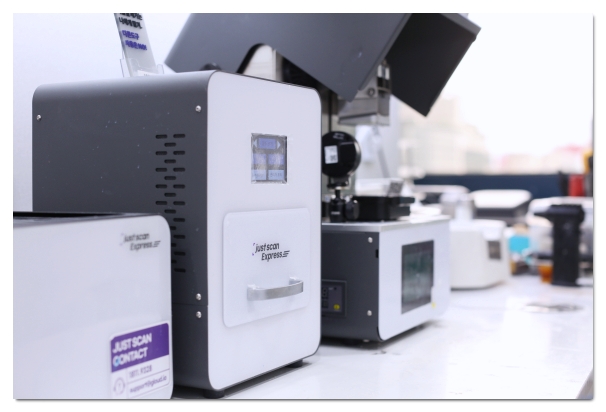
The veneers commonly referred to in the market are generally performed in one way.
- File down the surface of the natural tooth
- Attach a ceramic piece milled by a machine on top of it
It’s fast, easy to schedule, and less labor-intensive for the doctor.
But this method has two losses.
Once a tooth has been filed down, it does not grow back.
So tooth reduction should be minimized,
and you should have a veneer procedure that can be used for a long time.
Second,
those subtle tooth color differences unique to each person disappear,
and a standardized white color is placed on top.
Results that “look like veneers” almost always start here.
In other words, both concerns are the result of this one working method.
Then is there another method?
Yes.
- People Build It Up, Layer by Layer
A 0.01 mm-thin veneer
cannot be milled by a machine.
It will break while being milled.
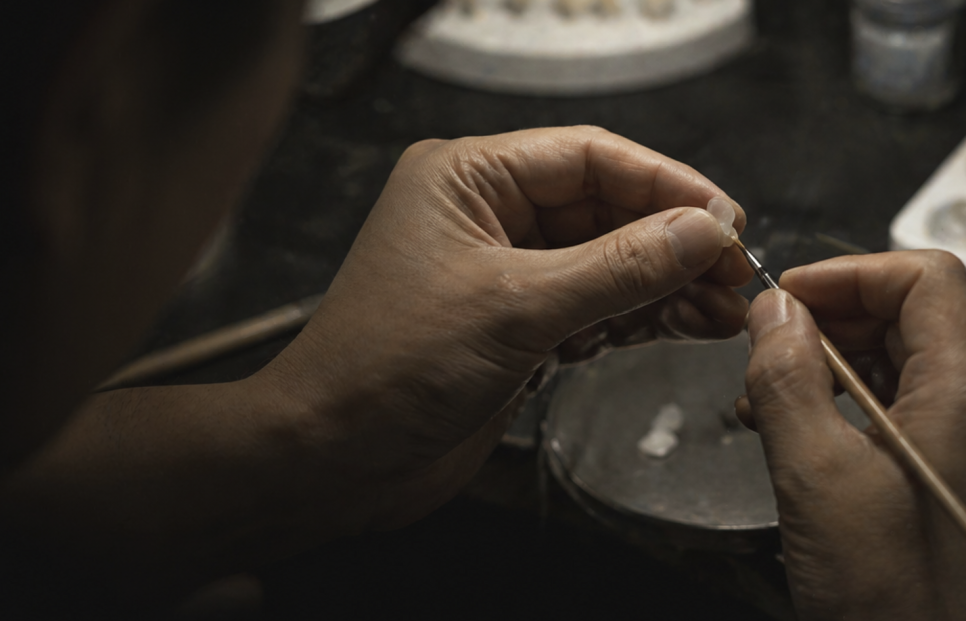
Not a simple veneer where machine-milled porcelain is attached, (machine method)
but if the machine mills it precisely and a person then carefully refines it to make it very thin, (machine + human)
or if, from the beginning, a person directly layers thin textures by hand,
that solves the problem. (build-up method)
[Comparison by veneer fabrication method]
| Category | Milling method (machine processing) | Digital handcraft method (machine + human) | Build-up method (handmade) |
|---|
| Core production method | A machine mills a block | Machine + human refinement | The technician directly builds thin layers |
| Tooth reduction | Standard reduction (relatively more) | Designed for no reduction or minimal reduction | No reduction or minimal reduction possible |
| Aesthetics | Uniform white | Closer to the patient’s natural tooth shape | Reproduces individual translucency and gradation |
| Tooth preservation | Once filed, it is difficult to reverse | Aims to preserve as much tooth structure as possible | Preserves the natural tooth most carefully |
With these two methods,
you can achieve the white shade that best suits each person’s skin tone.
And above all, there are fewer side effects, and the natural teeth are preserved.
If this is so good, why doesn’t every dental clinic use the method above?
To be honest.
Because it is too difficult for both the doctor and the lab.
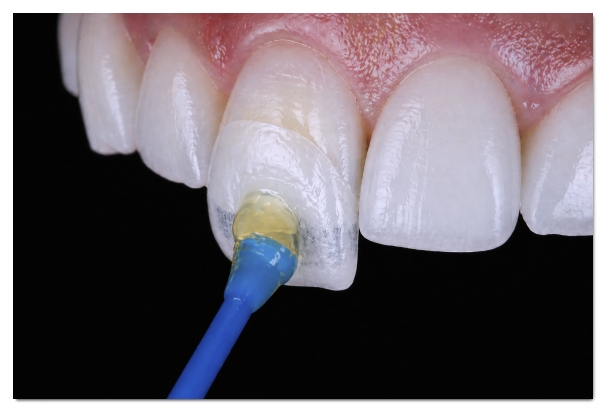
For the doctor as well, attaching thin veneers without gaps
requires a high-level bonding system and intense focus.
It also takes a lot of cost and time.
It is a difficult method for places that need to perform large numbers of procedures quickly.
That is why it is not common in the market.
But even this is not the end of it.
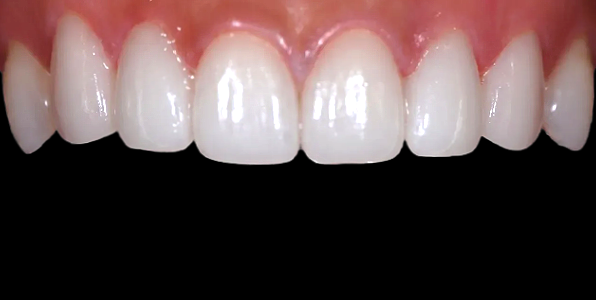
Just because the teeth are white does not mean the shape suits everyone.
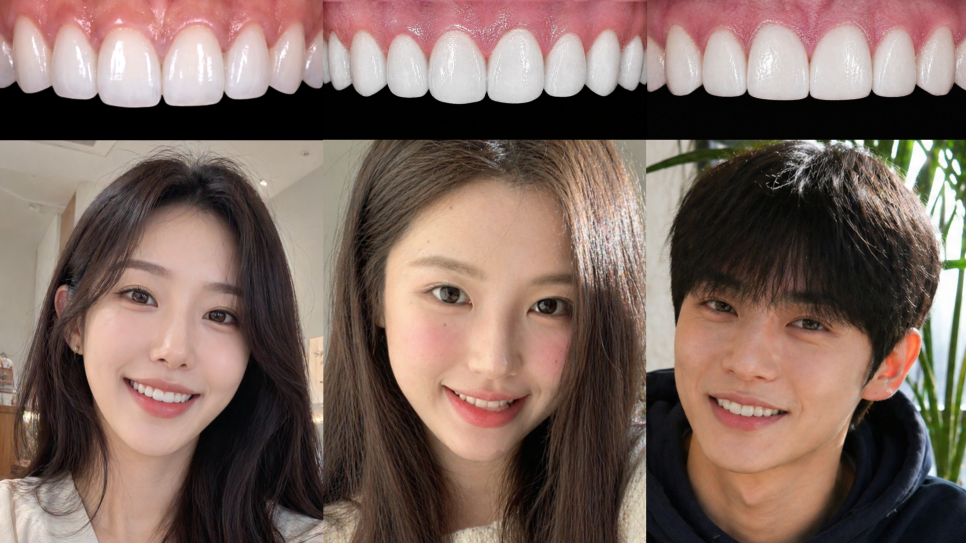
Look at the image above.
Face shape, lip thickness, gum line, skin tone, and the impression someone usually gives
Because all five are different, the tooth shape that suits each person should also be different.
For someone with a vertically long face, a short and round shape does not fit,
and the tooth length should differ between someone who shows a lot of gum when smiling and someone who does not.
A design made fresh for each individual
must be created every time.
- That’s Why Patients Who Got Veneers Elsewhere Come Back for Retreatments
If you insist on the method above,
there is a scene we repeatedly see in the clinic.
Patients who had veneers done elsewhere
come back for retreatment.
The reasons are almost always the same.
"The veneer broke."
"It looks way too much like veneers."
"It started lifting after just one year."
Thankfully, most of these patients
come through referrals from friends or family.
As a result of working this way,
among veneer patients at Wonjin Dental Clinic,
we have not had anyone within the range we could directly confirm who came back because the veneer broke.
(We can’t follow everyone all the way to the end, so we can’t say that definitively.)
I believe this is the result of having worked in this way.
- So How Is This Possible?
The key was two things.
- Build it layer by layer, or refine it in detail by hand
- Design it to fit each person’s unique face
But these two alone are not enough.
For a natural result that lasts, the following five-step system also needs to support it.
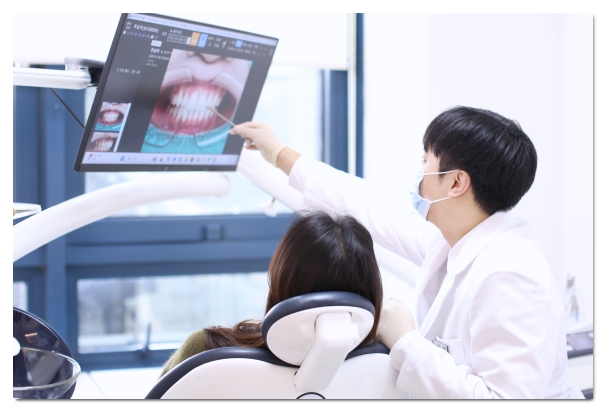
- Personal design analysis
At the consultation stage, the patient’s information is analyzed as data.
- Facial proportions and the area occupied by the teeth
- Smile curve and degree of gum exposure
- Lip thickness and color / skin tone
- Current tooth shape and color data
- The type of impression the patient usually wants (clear / soft / innocent / sophisticated, etc.)
"A slightly rounded texture may suit this person."
"This person would look more natural with the ends made a little shorter."
Such details are decided before the procedure.
- Carry the data through to the lab stage without distortion
Veneer design cannot be completed by the doctor alone.
The technician actually fabricates the veneers.
In a typical workflow, only a short note and impressions are often sent to the lab.
The detailed picture in the doctor’s mind can become blurred at this stage.
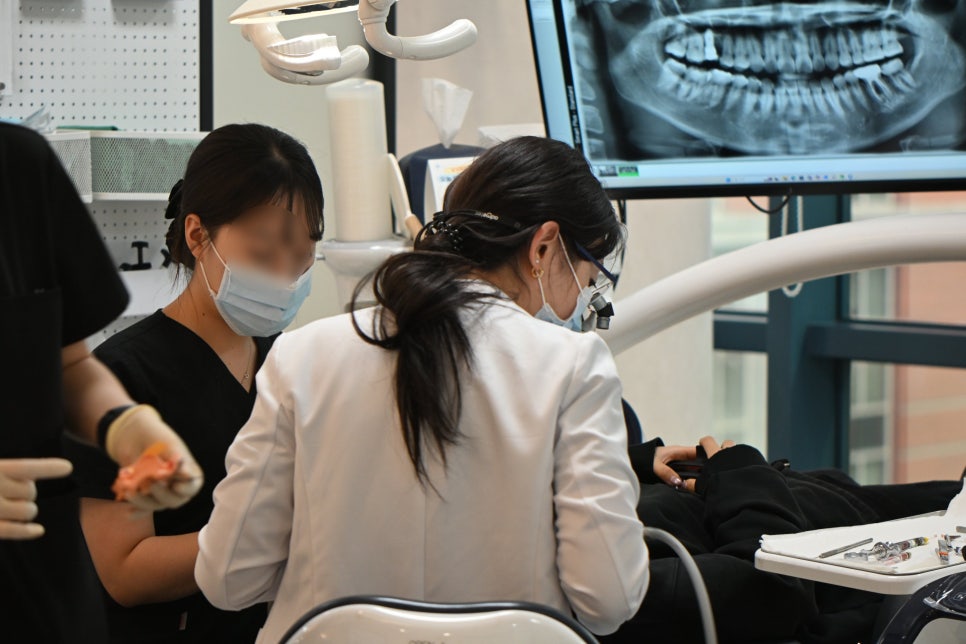
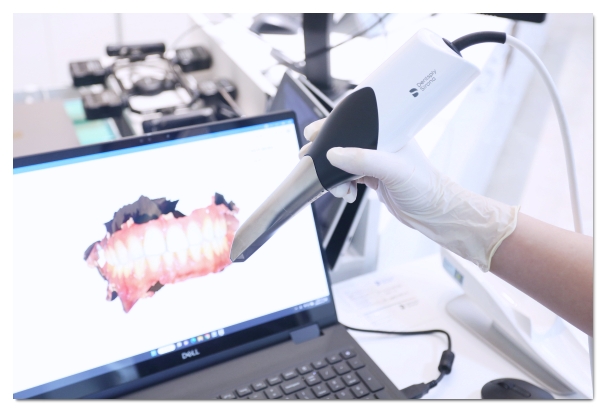
So, before the actual veneers are made, our doctors personally confirm the 3D design file.
If it doesn’t fit on the first try, we look again twice, three times, even five times.
We do not limit the number of revisions.
The veneers that go into the mouth
must be a design that is satisfying even to the doctor.
- In the end, it comes down to aesthetics
Let me be honest here.
Even with data analysis and simulation,
in the end, the judgment of whether something “fits” or “doesn’t fit” is still based on human aesthetics.
Even when looking at the same data,
doctors can end up with different design results.
These subtle differences in texture
determine patient satisfaction.
That is why Wonjin Dental Clinic places great importance on aesthetic judgment when selecting directors.
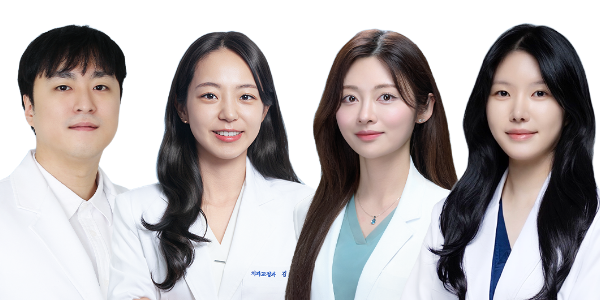 Wonjin Dental Clinic directors
When bringing in a director, the first thing we look at
is their previous treatment results.
How natural they are,
what kind of impression they are strong at creating,
we review these directly before deciding whether to work with them.
- Bonding determines the lifespan of veneers
Even if the design is excellent and expensive,
if it breaks or lifts after 1–2 years, it means nothing.
Problems such as chipping, secondary decay, discoloration, and gum recession,
which are side effects of veneers,
are often related to poor bonding.
Through the bonding gaps, food gets trapped, cavities form, the gums recede, and the restoration becomes easier to break.
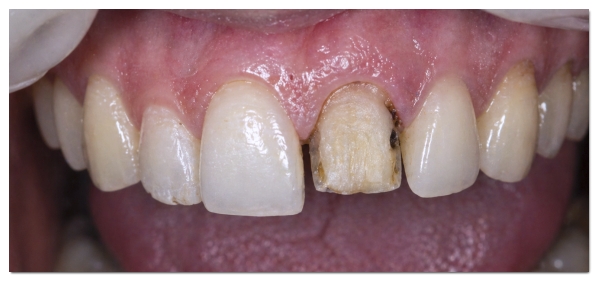
So for every bonding procedure,
I insist on using a high-end adhesive line.
This is so the adhesive does not turn yellow over time,
and so the strong bond prevents the veneer from coming off or lifting.
In addition, even when placing it for one patient,
we temporarily apply two or three shades of bonding material in advance,
let the patient compare them in the mirror,
and go through a shade-selection process to choose the most natural color.
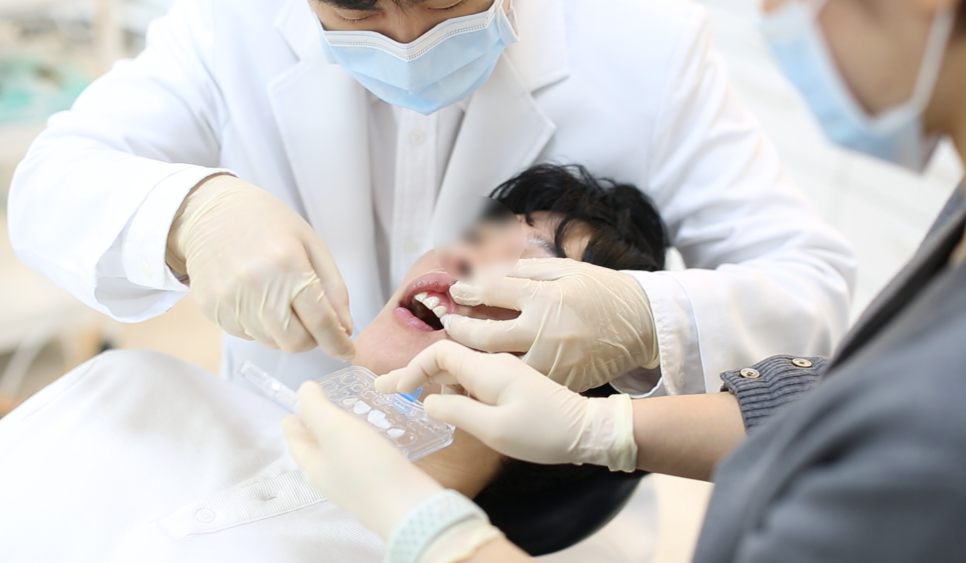
15 seconds of etching, 20 seconds of application, 90 seconds of etching for the prosthesis.
These are the optimal times for proper bonding.
We follow this as a strict rule for every procedure.
It is the key to improving bonding quality, minimizing side effects, and extending lifespan.
- Final step: occlusion
One of the biggest causes of veneer fracture is occlusion.
If force becomes concentrated at one point where the upper and lower teeth meet,
the prosthesis at that spot can break first.
That is why we devote a lot of effort to occlusal adjustment.
Even if it takes a little more time, only by going through this process carefully can the veneers remain intact and last a long time.
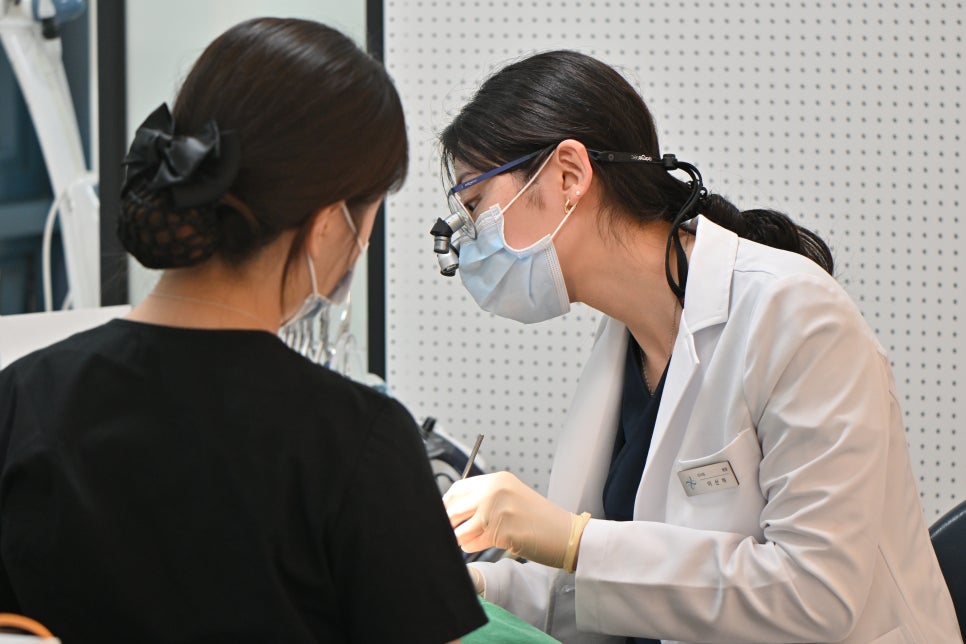 A Wonjin Dental Clinic director treating a patient
✔️ 1st precision occlusion setup (on the day of the procedure)
Static occlusion: when closing the mouth gently, check whether force is concentrated on only specific teeth among the 28 teeth
Dynamic occlusion: simulate whether there are any areas of friction or collision when chewing and moving the jaw
✔️ 2nd aftercare check (1 week later)
Even if everything seems perfect on the day, after eating normally for several days, you may feel that something is slightly high.
(That is completely normal)
So we refine it once more after one week.
Only by perfectly correcting the subtle discomfort felt in real life and the occlusion
can the veneers be used for a long time.
So in the end, if you want to avoid regretting veneers,
what should you do?
- Veneers Without Regret? This Is Why It Matters.
Let’s go back to the beginning.
The two biggest concerns for people wondering whether they will regret veneers are:
"Is it okay to file down the teeth?"
"What if they look obviously like veneers?"
All of these worries arise because of a workflow that removes too much tooth structure
and layers on an artificial white that doesn’t feel like your own.
But veneers can also be made in another way.
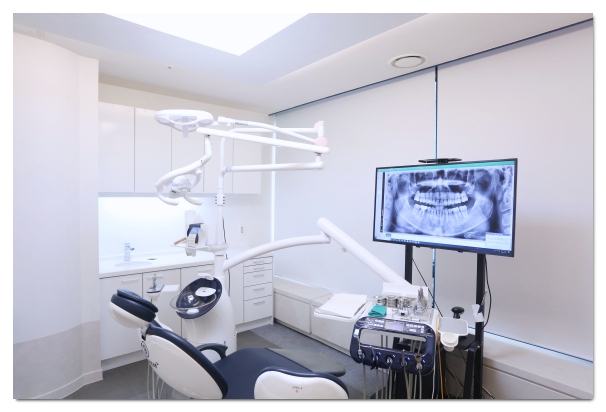
- Build them up layer by layer, refine them by hand, and preserve the natural teeth
- Analyze personal design and data tailored to each individual
- Carry the data through to the lab stage without distortion
- Have an aesthetically skilled doctor finish the work to the end
- Create the lifespan of the veneers through a precise occlusion adjustment and bonding system, which minimizes side effects
- Finish with a system that tracks use after the procedure
When all of these are in place, veneers become not a cosmetic procedure, but a restoration.
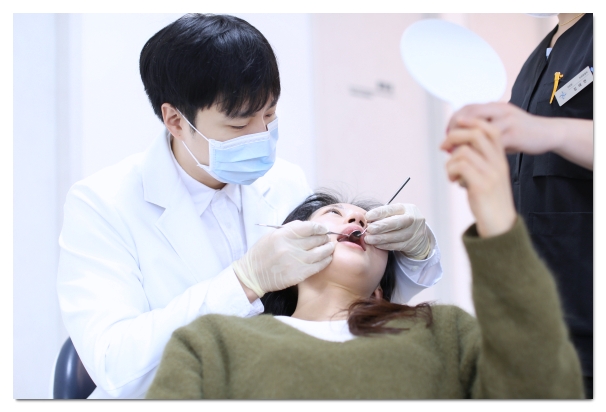 We thought a lot about this system so that no one would regret veneers
A smile that is brighter and more natural without looking artificial.
I think that is the direction veneers should move toward.
Your face already has its own unique texture.
Preserving that texture while refining it as naturally as possible—that is the essence of veneers.
I think many people come through referrals because we insist on this way of working.
Thank you for reading to the end.
- Dr. Park Jae-hyeong, Wonjin Dental Clinic