Hello, I’m dentist Park Jae-hyung.
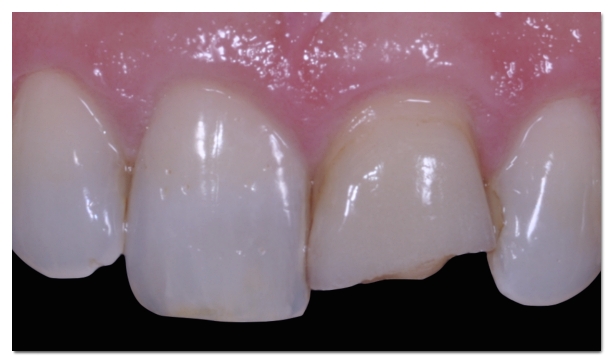
I bit down with my front teeth and my laminate veneer broke.
What should I do?
Among the patients I have treated, there has never been anyone who came in because a laminate veneer had broken,
but since the clinic is in Gangnam, there are some people who come in urgently like this.
The treatment approach for a broken laminate veneer changes completely depending on the degree of damage, from simple repair to remaking it.
The most important things are a quick response and an accurate diagnosis of the cause.
For those who are busy, here is a 3-line summary.
-
Never use superglue: risk of damage to teeth and gums
-
Store the broken piece in a zip bag, then visit the dentist as soon as possible
-
Depending on the degree of damage, treatment is decided in the order of resin repair, reattachment, and remaking
In this article, I will organize what to do immediately when a laminate veneer breaks,
how treatment is approached by stage of damage,
and the causes of laminate breakage and how to prevent recurrence.
Table of Contents
-
What to do first when a laminate veneer breaks
-
Self-check for the type of damage when a laminate veneer breaks
-
Treatment approach by stage of damage
-
Five major causes of laminate breakage
-
Care tips to prevent recurrence
What to do first when a laminate veneer breaks
- Safely store the detached piece
If the laminate veneer has come off as a whole, store it in a clean small container or a zip bag.
(It is good to keep it moist, like gauze dampened with water)
Wrapping it in tissue makes it easy to lose.
- What you should never do
- Protect the exposed tooth
When a laminate veneer falls off, the tooth surface is exposed and can become very sensitive.
- Visit the dentist as soon as possible
As time passes, secondary damage can occur to the unprotected tooth.
A visit on the same day or within 24 hours is recommended.
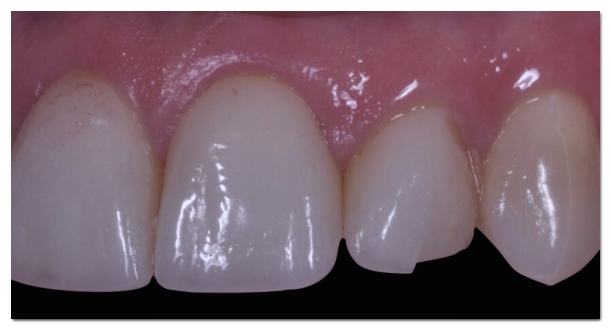
Self-check for the type of damage when a laminate veneer breaks
Laminate damage is usually classified as a microcrack, partial fracture, or complete detachment.
| Symptom | Type of damage |
|---|
| A fine crack that is hard to feel even with a fingernail | Microcrack |
| A small chip missing from the edge | Partial fracture |
| A piece has completely fallen off | Complete detachment |
| Severe sensitivity or strong pain | Tooth damage, possible nerve exposure |
In particular, cases where the nerve is exposed are emergencies.
If you have severe pain or intense sensitivity to cold stimuli, you should visit the dentist without delay.
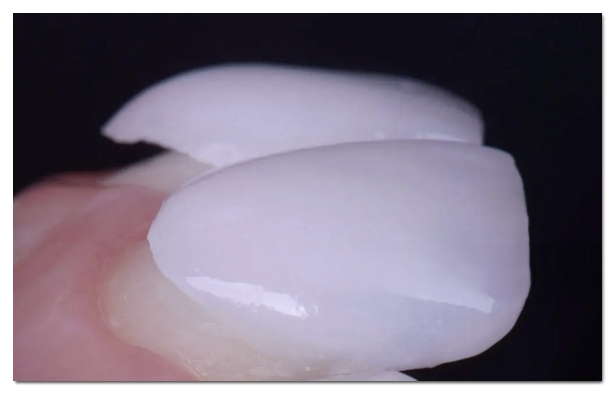
Treatment approach by stage of damage
| Degree of damage | Treatment approach |
|---|
| Microcrack, small chip | Attempt surface polishing or glossing |
| Fracture of the edge area | Resin repair |
| Complete detachment (laminate intact) | Attempt reattachment |
| Deformed laminate, severe fracture | Remake (replacement) |
| With nerve exposure | Root canal treatment, then laminate or crown |
| With secondary decay | Decide on re-treatment after decay treatment |
If the laminate piece is intact
and there is no problem inside the tooth,
reattachment can be attempted,
but in many cases this is very difficult.
This is because a laminate veneer is not simply attached with adhesive;
it is completed through a
chemical bonding process with the tooth surface.
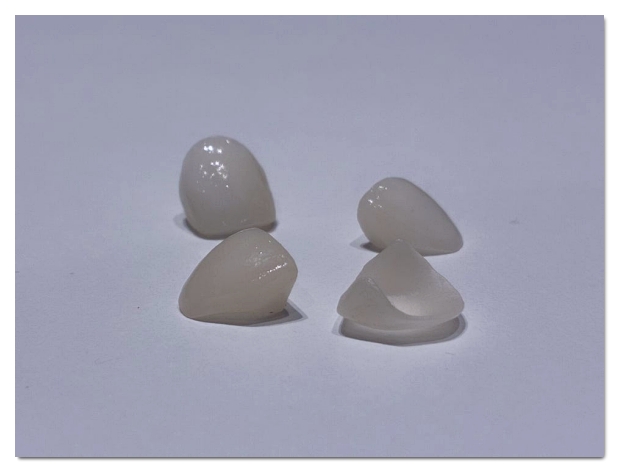
Once a prosthetic has detached,
it is difficult to secure the same strong fixation again as at the beginning
due to the limitations of the existing bonding surface,
so even if reattachment is done, the chance of it coming off again quickly is very high.
That is why an accurate assessment of the condition is important.
Five major causes of laminate breakage
You must know the exact reason it broke in order to prevent recurrence.
- Teeth grinding and clenching
Unconscious teeth grinding during sleep is the biggest enemy of laminate veneers.
Repeated pressure accumulates microcracks and eventually leads to fracture.
- Malocclusion and bite imbalance
If force is concentrated on a specific tooth, it breaks from the edge.
This is a common case when bite analysis before treatment was insufficient.
In the end, to prevent fracture, the bite and bonding must be done really well.
In addition, I have written below ways to minimize various side effects such as secondary decay, discoloration, and gum recession.
You will understand if you look at the post below.
- Poor bonding
If there was contamination from saliva or water during the procedure,
or if the adhesive was not distributed evenly,
microcracks start from the margins.
The adhesive must be sufficiently filled between the tooth and the laminate veneer without empty spaces,
and the pretreatment time must be followed precisely so that bonding is done properly.
- External force
Biting hard nuts with the front teeth,
opening packages,
or habits such as biting nails are direct causes of fracture.
- Inappropriate indication
These are cases in which a laminate veneer was not suitable from the start
(such as severe malocclusion, strong bite force, or patients who grind their teeth).
In such situations, the problem can be reduced by resolving the issues mentioned above
and then proceeding with the laminate veneer.
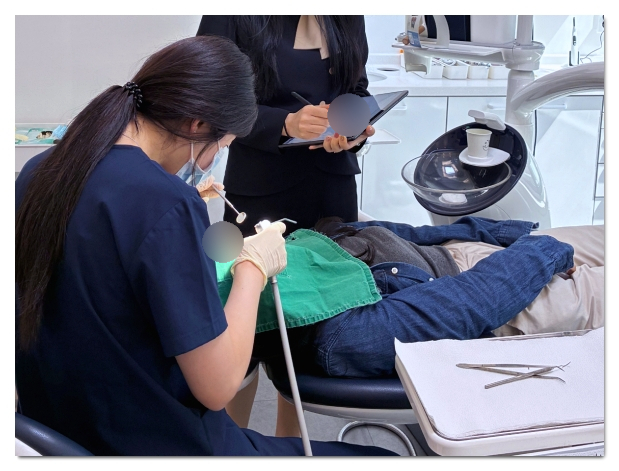
Care tips to prevent recurrence
-
Regular checkups every 6 months: microcracks must be caught early before they develop into major damage
-
If you grind your teeth, wear a night guard: it disperses pressure during sleep
-
Avoid hard foods with the front teeth: use the molars for nuts, ice, crab legs, etc.
-
Do not open packages with the front teeth: use your hands or scissors for vinyl or plastic packaging
-
Get a bite examination: if malocclusion is present, consider orthodontic treatment or prosthetic adjustment
Closing
A broken laminate veneer does not always mean it must be remade.
However, just as important as reattaching it is finding out "why it broke" and preventing recurrence.
If the same area keeps breaking repeatedly, rather than simple repair, the underlying causes such as the bite or teeth grinding should be checked first.
If it has just broken, I recommend that you visit a medical professional as soon as possible,
and one who can make an accurate diagnosis of the cause.
Thank you. This was Park Jae-hyung.