Hello, I’m Park Jae-hyung, the chief director of Wonjin Dental Clinic.
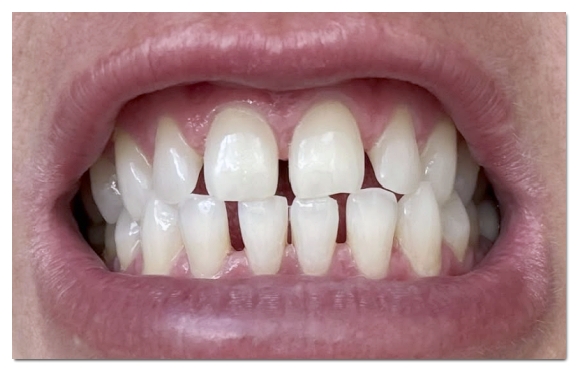
I want to close the gap between my lower front teeth.
Do I really need orthodontic treatment?
For gaps between the lower front teeth, there are three treatment options: orthodontics, resin, and veneers.
However, the suitable method differs depending on the case.
Today, under the topic of “Gaps Between the Lower Front Teeth: Which Should You Choose — Resin, Veneers, or Orthodontics?”
I’ll explain why lower front teeth become spaced apart, what happens if you leave it untreated, and the 기준 for choosing among the three treatments.
Gapped front teeth, spaced teeth
To briefly summarize today’s post about choosing treatment for gaps between the lower front teeth:
- For tiny gaps of 1–2 mm, choose resin
- If you want to improve the tooth shape and color as well, choose veneers
- If the overall alignment and structure of the teeth need correction, choose orthodontics

4 Causes of Gaps Between Lower Front Teeth
Gaps between the lower front teeth do not occur for just one reason.
To choose the right treatment, the cause must be identified accurately.
- Congenital mismatch between tooth size and jaw size
If the jaw is large compared with the size of the teeth, or if the teeth themselves are small,
there may originally be spaces as the teeth develop.
This is a case where the gap may not be very noticeable in childhood but becomes concerning in adulthood.
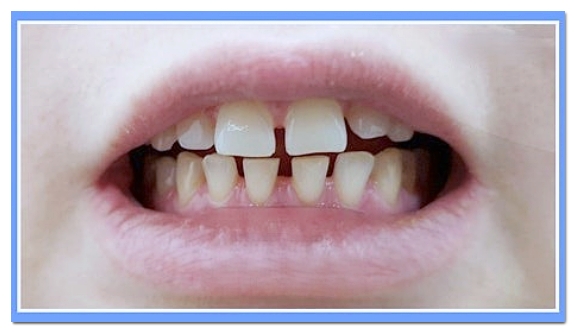
- Gum recession and periodontitis
When the gums recede, the support that holds the teeth in place becomes weaker,
and as the teeth move little by little, gaps begin to form.
If your lower front teeth suddenly started spacing apart after your 30s or 40s,
you should first suspect your gum health.
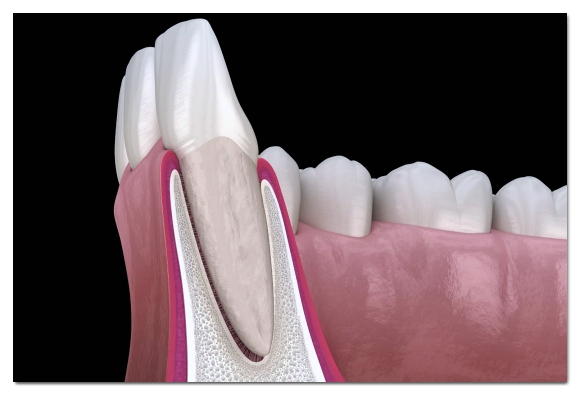
- Tongue-thrusting habit
If you unconsciously place your tongue against the front teeth
or push them with your tongue, the lower front teeth gradually spread apart.
Most people are not aware of this themselves.
Many people only realize it for the first time during an examination.
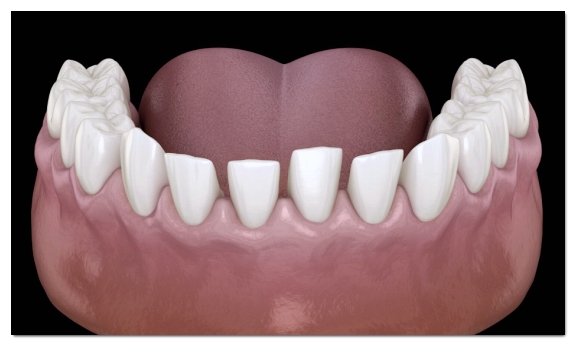
- Tooth movement caused by leaving a missing tooth untreated
If a back tooth, such as a molar, has been missing for a long time without treatment,
adjacent or opposing teeth will tilt or move toward the empty space.
That effect can extend to the lower front teeth, causing the alignment to shift and gaps to widen.
What Happens If You Leave Gaps Between the Lower Front Teeth Untreated?
The most practical effect is that food gets stuck there often.
Since brushing alone does not clean the area well,
a condition that makes cavities and periodontitis more likely is created.
If gum health worsens, the force that holds the teeth in place also weakens,
and the gaps may gradually become wider.
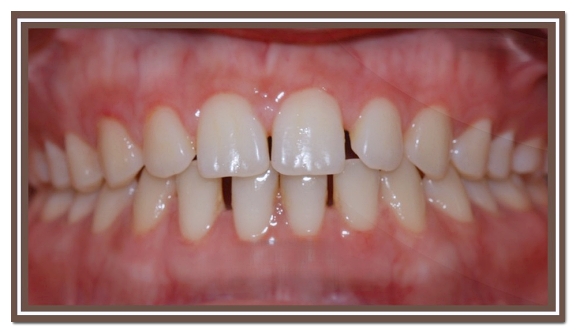
From a treatment perspective, when the gap is small,
it is often managed with a simple method like resin.
As time passes and the gap gets larger or affects neighboring teeth,
treatment such as veneers or orthodontics may become necessary.
So even if there is no major problem right now, it is important to get checked in advance.
Resin / Veneers / Orthodontics — How Are They Different?
The three treatments differ in their approach.
Let’s take a look at each one.
- Resin
This method directly fills the gap with resin that is similar in color to the tooth.
It requires almost no tooth reduction, and the procedure is completed in one day.
It is also the least expensive option.
It is suitable when the gap between the lower front teeth is small (within 1–2 mm),
or when you want a quick solution that preserves as much of the natural tooth as possible.
However, over time it may discolor or come off,
so retreatment may be needed after a certain period.
- Veneers
This method involves attaching a thin porcelain shell to the tooth surface.
It offers excellent aesthetics and tends to stay in good condition for a long time with little discoloration.
It is suitable when you want to improve not only the gap but also the color and shape of the teeth,
and when you want results that last long-term.
However, depending on the situation, some natural tooth structure may need to be removed,
and it can be difficult to apply if the gums are unhealthy or the tooth position is significantly misaligned.
If veneers are done improperly, they can break easily
or require excessive tooth reduction, which can lead to problems.
If you read the article below, you’ll get a better sense of how they should be done.
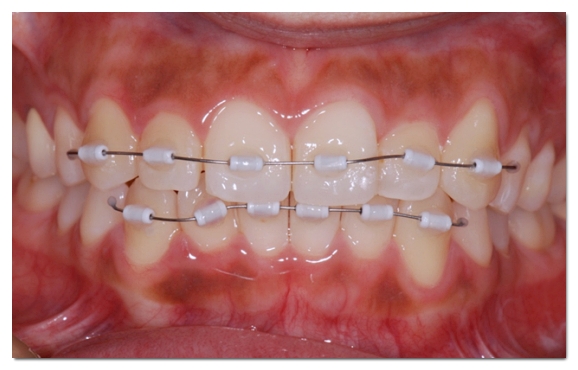
- Orthodontics
This is the fundamental solution that moves the teeth back to their original positions.
There are various methods, such as clear aligners, lingual braces, and partial orthodontics.
It is the most appropriate method when the gap is large,
when there are issues with the overall alignment of the teeth,
or when the cause is a structural problem such as a tongue habit or a missing tooth.
Another major advantage is that your natural teeth can be preserved as they are.
The downside is that the treatment period can be somewhat long, from 3 months to 2 years, and the cost is high.
Which Treatment Is Right for My Lower Front Teeth Gap?
The selection criteria can be summarized as follows.
- If the gums are in poor condition: gum treatment comes first
If veneers or orthodontics are performed while the gums are already compromised, the problem may eventually recur.
The correct order is to first treat the gums, allow them to stabilize, and then decide on aesthetic treatment.
- If there is a missing tooth or a habit of pushing with the tongue: orthodontics
This is necessary in cases where simply filling the gap with resin or veneers would allow the same force to keep acting, causing the gap to reopen,
or affecting neighboring teeth as well.

-
If there is only a simple small gap: resin
It is less burdensome in terms of cost and time, and if you don’t like the result, it is easier to switch to another treatment.
-
If you need high aesthetic completion and long-term durability: veneers
This has the advantage of improving not only the gap but also the shape and color of the teeth.
However, depending on the case, tooth reduction may be involved.
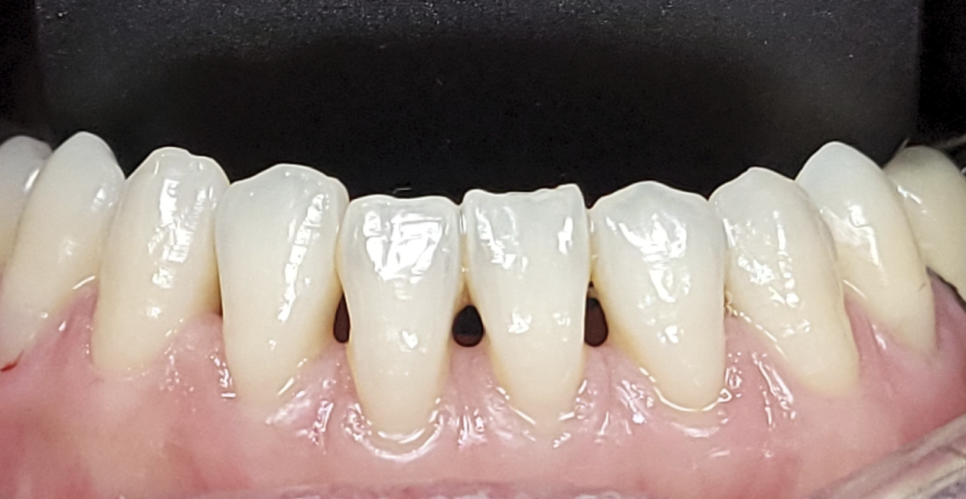
The key is “the cause of my gap.”
Even if it looks like the same lower front tooth spacing, the treatment must differ if the cause is different.
Closing Remarks
Gaps between the lower front teeth are not just a cosmetic issue,
but may be a signal that gum health, bite, or habits are hiding underneath.
So rather than asking, “Which treatment should I get?”
the first priority is to accurately identify why the gap occurred.
Thank you. This was Park Jae-hyung.