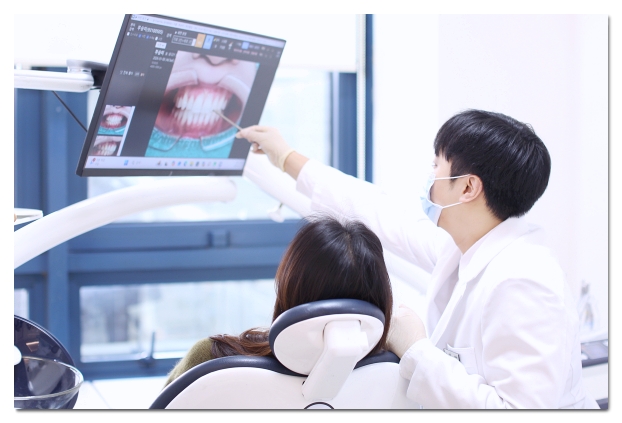
Hello. I’m Park Jae-hyung, the chief director of Wonjin Dental Clinic.

Between teeth whitening and laminate veneers,
I can’t decide which one to get.
When you want to improve yellow front teeth, these are the first procedures that come to mind, so I’m sure you may be 고민 많이 되실 텐데요.
To give the conclusion first, these two procedures have completely different purposes and principles,
and the right choice changes entirely depending on your tooth condition.
Today, under the topic “Teeth Whitening or Laminate Veneers: Which Is the Right Choice for Me?”
I’ll easily compare which procedure is appropriate for your teeth among teeth whitening and laminate veneers.
I’ll first summarize the key point of today’s article in two lines about how to choose between teeth whitening and laminate veneers.
-
External staining (coffee, wine, smoking): Teeth whitening
-
Congenital discoloration, insufficient results from whitening, dissatisfaction with shape: Laminate veneers
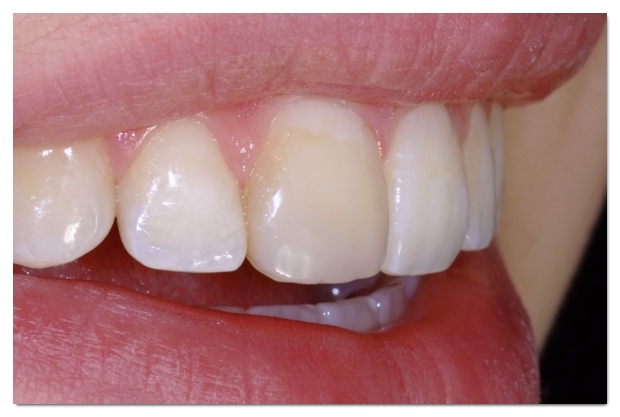
- How are teeth whitening and laminate veneers different?
The reason these two procedures are often confused is
because the expected result is the same: “making teeth white and beautiful.”
But the approach is fundamentally different.
Teeth whitening is a chemical procedure that restores the color of natural teeth, while
laminate veneers are a physical procedure that covers the teeth with a new color and shape.
- What is teeth whitening?
- The principle of teeth whitening
Teeth whitening uses hydrogen peroxide, the main ingredient in whitening agents,
to penetrate the tooth surface and break down staining substances.
It is easy to understand if you think of it as the process of using bleach to wash a white shirt that has become yellow from dirt and discoloration.
- In-office whitening vs. take-home whitening
In-office whitening, performed at a dental clinic using a high-concentration whitening agent and
special light, is called dental whitening (professional whitening).
You can see an immediate and noticeable toning-up effect after just 1 to 3 sessions.
On the other hand, take-home whitening involves having a custom tray made at the clinic,
then applying a low-concentration whitening agent at home and wearing it.
- Cases where teeth whitening is effective
It can be effective for external staining caused by food and drinks such as coffee, black tea, wine, and curry,
or when teeth have turned yellow due to smoking (nicotine).
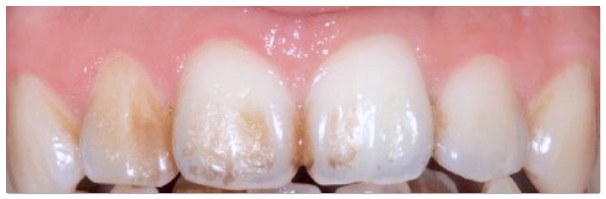
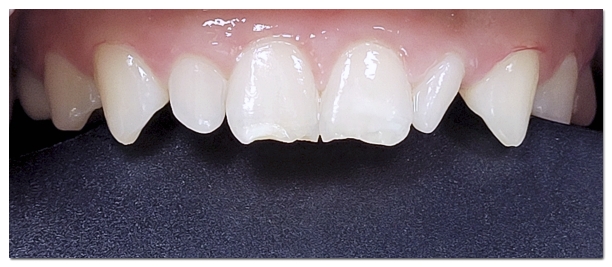
- Cases where teeth whitening is difficult to solve
If the dentin shows through due to enamel wear,
or if there is congenital discoloration caused by antibiotic use,
or if you want to improve the shape at the same time because the size and shape are uneven,
there are limits to how much improvement whitening can provide.
- What are laminate veneers?
- The principle of laminate veneers
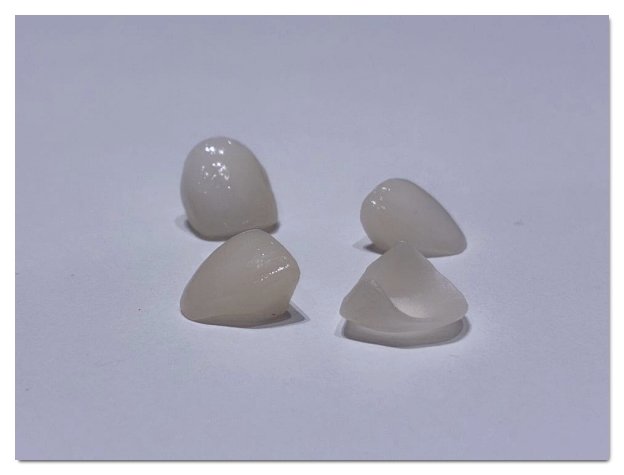
The front surface of the tooth is minimally reshaped,
and a thin porcelain (ceramic) layer similar in color to the tooth is bonded on.
These days, with advances in technology, many cases are done with no reduction,
or with minimal reduction of 0.1 mm, preserving the natural tooth as much as possible.
- Cases where laminate veneers are effective
They are a good option for severe discoloration that cannot be solved with teeth whitening,
or when you want to improve the color, shape, and size of the teeth at the same time.
- Precautions when choosing laminate veneers
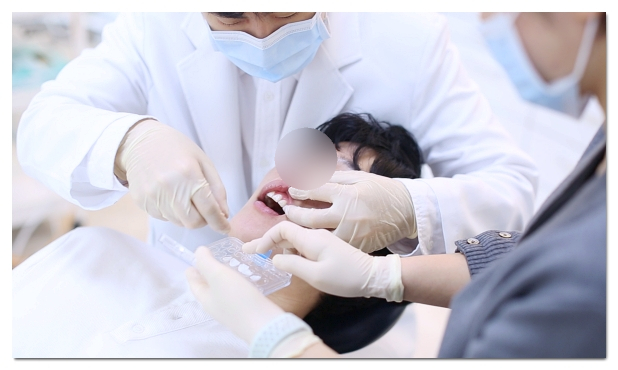
Once tooth structure has been removed, it cannot be returned to its original state,
so the decision must be made carefully.
In particular, if you usually grind your teeth heavily or have bite problems with the front teeth,
a suitability evaluation before treatment is essential because of the risk of fracture.
Also, depending on how the design is done,
it is possible to minimize side effects such as excessive removal of tooth structure, chipping, and debonding.
That is written in the article below.
Ceramic, which offers excellent aesthetics and durability,
or resin, which is cheaper but may discolor,
material selection is also important because each material has clear advantages and disadvantages.
- Comparison table at a glance
| Comparison Item | Teeth Whitening | Laminate Veneers |
|---|
| Purpose | Restore the natural tooth color | Improve color, shape, and size at the same time |
| Duration of effect | Around 6 months to 2 years (retreatment needed) | Around 10 years (replacement needed) |
| Treatment period | 1–3 visits (2–4 weeks) | 1–2 weeks |
| Reversibility | Preserves natural teeth | Irreversible (cannot be undone) |
| Cost | Relatively low | Relatively high |
- Which choice is right for me?
For those who are still unsure,
I’ve organized the recommended treatment by the situations patients most commonly experience.
| My condition | Recommended treatment |
|---|
| Teeth turned yellow from coffee, wine, or smoking | Teeth whitening |
| Whitening didn’t work | Laminate veneers |
| Only one tooth is dark after root canal treatment | Non-vital tooth whitening or a crown |
| Naturally deep gray or yellowish tone | Laminate veneers |
| I’m also concerned about the shape of the front teeth or gaps | Laminate veneers |
- What must be checked before treatment
- Things to check before teeth whitening
If you have cavities or gum inflammation, the whitening agent can come into contact with them
and cause severe pain, so prior treatment is essential.
Also, if you usually have a lot of tooth sensitivity, symptoms may temporarily worsen after treatment,
so the concentration needs to be adjusted.
- Things to check before laminate veneers
Grinding habits and the bite condition must be checked accurately.
These are the main causes of laminate veneer fracture,
so if you grind your teeth severely while sleeping, wearing a protective device (splint) should be considered.
Also, if there is gum inflammation, the prosthetic restoration may loosen,
so it is better to treat the gums first.
- Frequently Asked Questions (FAQ)
Q. Between teeth whitening and laminate veneers, which lasts longer?
Laminate veneers last much longer.
Whitening usually lasts about 6 months to 2 years on average depending on eating habits, and when the color returns, whitening again is needed, but
laminate veneers can maintain their shape and color for around 10 years, or even longer, if well cared for.
Q. Roughly how much does it cost?
Teeth whitening is usually priced per session and costs in the hundreds of thousands of won.
Laminate veneers are priced per tooth,
and depending on the clinic’s equipment, materials, and the medical team’s skill,
the cost can vary widely from about 500,000 to 2,000,000 won per tooth.
Closing
To make a regret-free decision between teeth whitening and laminate veneers,
it’s important to understand “which procedure is appropriate for my tooth condition.”
To avoid shaving down teeth excessively or wasting money and time on whitening that won’t be effective,
a precise diagnosis of your case is the starting point for satisfaction.
Thank you. This was Park Jae-hyung.