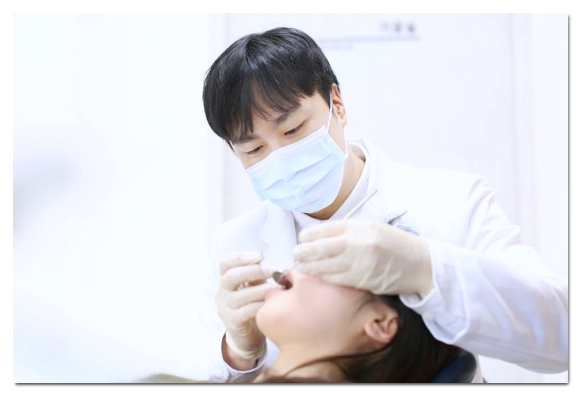
Hello, I’m Park Jae-hyung, the chief director of Wonjin Dental Clinic.
I want veneers,
but I’m worried because I heard all my teeth have to be shaved down.
For those who are hesitating about veneer treatment because of these concerns,
today I’ll summarize 3 ways to minimize tooth reduction for veneers,
along with the things you must know before treatment.
[Key Summary of Tooth Reduction for Veneers]
-
Difference between regular veneers and no-prep veneers: comparison of tooth reduction amounts, 0.30.7mm vs 00.2mm
-
3 practical ways to minimize tooth reduction: no-prep application, digital precision design, ultra-thin ceramic use
-
Alternatives for cases where no-prep is difficult: step-by-step approaches such as treatment after short-term orthodontics
Veneers do not always require
a lot of tooth reduction in every case.
In some cases, they can be done with almost no reduction,
and I’ll explain why a certain amount of reduction is needed in other cases.
Table of Contents
-
Is tooth reduction necessary for veneers?
-
Regular veneers vs no-prep veneers: comparison of tooth reduction amounts
-
3 ways to minimize tooth reduction for veneers
-
Frequently asked questions (FAQ)
-
Key summary of tooth reduction for veneers
Is tooth reduction necessary for veneers?
The biggest hesitation when considering veneer treatment is
that “healthy teeth have to be shaved down.”
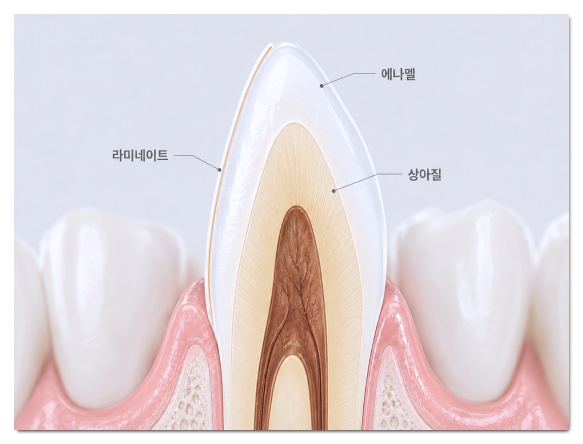
That’s because part of the natural tooth surface must be removed so that the thin ceramic shell
can be bonded naturally.
In general, about 0.3~0.7mm of enamel is removed.
The problem is that once a tooth is shaved, it does not grow back.
That’s why, recently, the trend has been to reduce tooth reduction as much as possible through minimal-prep
or even a no-prep method that does not shave the tooth at all.
Regular veneers vs no-prep veneers: comparison of tooth reduction amounts
| Category | Regular Veneers | No-Prep Veneers |
|---|
| Amount of tooth reduction | 0.3~0.7mm | 0~0.2mm |
| Application range | Various cases with discoloration, alignment issues, or shape concerns | Relatively good alignment, peg laterals |
| Post-treatment sensitivity | May occur temporarily | Almost none |
| Irreversibility | Permanent tooth reduction | Minimization of tooth reduction |
3 ways to minimize tooth reduction for veneers
- Check whether no-prep veneers are possible
The most direct way is to first receive a diagnosis to see
whether no-prep veneers are possible.
However, they are not suitable for every case, and the following conditions must be met.
-
Teeth are positioned inward or are small in size (peg laterals)
-
There is no severe discoloration and the color is relatively uniform
-
There are no major problems with alignment or bite
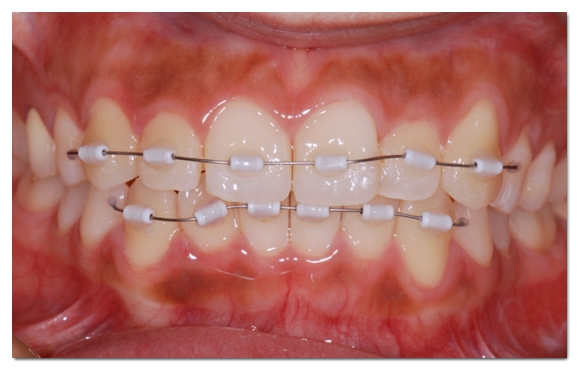
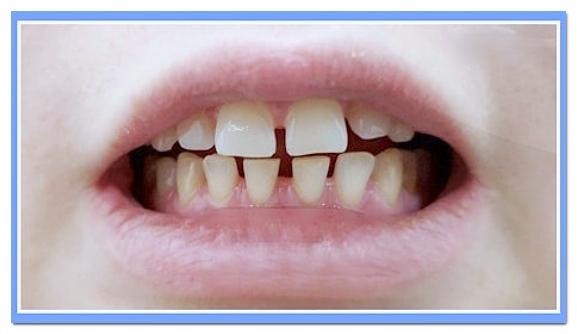 The teeth in the photo above are smaller than the gums, so you can see that a lot of space is left over.
If the teeth are protruding forward or the bite is misaligned,
making no-prep difficult,
you may consider treatment after short-term orthodontics.
If you first align the teeth for about 3~6 months with Invisalign or partial orthodontics,
and then proceed with veneers,
there are cases where veneers can be done with no-prep or minimal-prep.
- Choose ultra-thin ceramics and an experienced clinician
The thickness of veneers varies depending on the material and fabrication method.
If a regular veneer is around 0.5mm,
ultra-thin ceramics can be made as thin as 0.1~0.3mm,
which reduces the amount of tooth reduction accordingly.
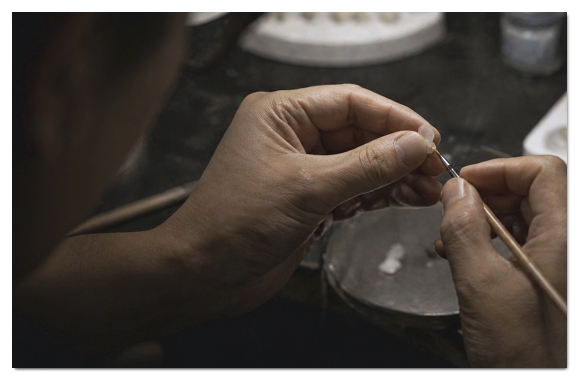
In particular, when a dental technician builds the porcelain up layer by layer with a fine brush in a hand-crafted method,
it is possible to make veneers that are much thinner and more natural-looking than block-milled machine-made ones.
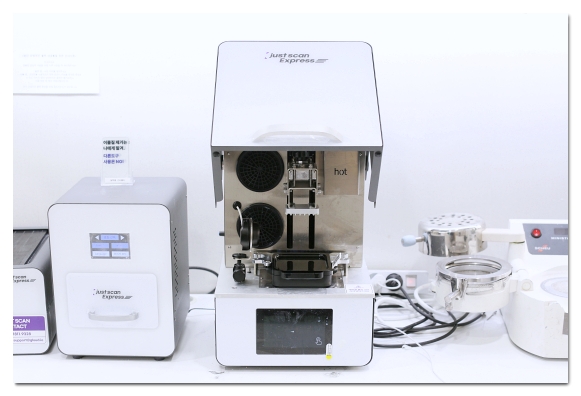
The machine-milling method like the equipment in the photo above has limits on thickness. If it is milled too thin, it can break.
The process is as follows.
-
The dental technician layers porcelain powder one coat at a time with a fine brush
-
Color, translucency, and texture are adjusted differently for each layer
-
Repeated firing at high temperatures ensures strength and natural appearance
Veneers made this way offer excellent light transmission and color expression,
showing aesthetics close to natural teeth even at a thin thickness.
However, ultra-thin veneers require very high precision during bonding,
so it is best to choose a place with a well-established adhesive system.
For strong bonding, good materials and thorough pretreatment time are essential.
Using a cheap adhesive can easily lead to discoloration or early detachment.
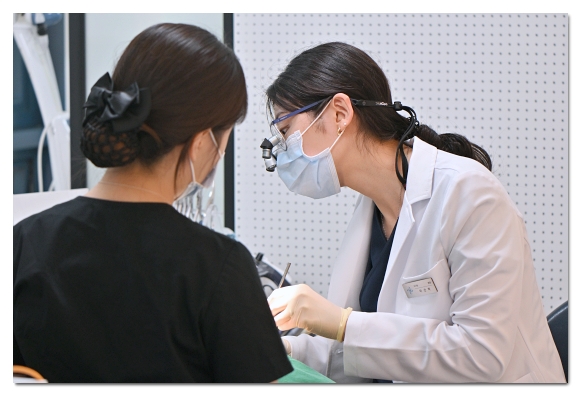
In particular, pretreatment time must be strictly observed down to the second.
If there isn’t enough time, bonding strength decreases,
and if there is even a slight delay, the tooth may be damaged,
so precise timing is more important than anything else.
I’ve written more about bonding and side effects in the post below.
- Use digital scans and simulations to precisely design the reduction amount
Traditional veneer treatment often relied on the clinician’s judgment
to decide how much to shave the teeth.
But recently, digital equipment has made it possible
to design the exact reduction range in advance.
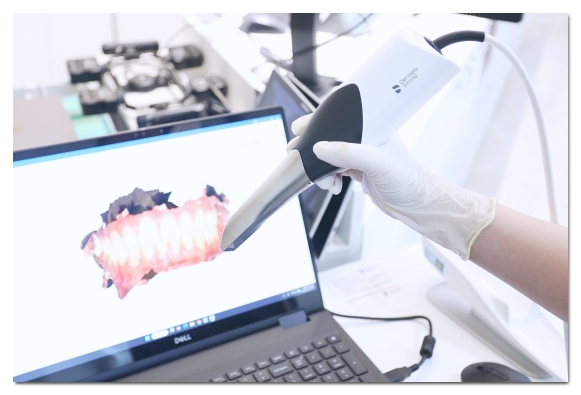
With this process, the teeth are not shaved based on a rough estimate,
but only the absolutely necessary areas can be minimally reshaped based on data.
As a result, unnecessary reduction is lowered, and satisfaction after treatment can also increase.
Frequently Asked Questions (FAQ)
Q. Can anyone get no-prep veneers?
A. No. Whether they are possible depends on alignment, tooth size, and the degree of discoloration.
If they are forced onto unsuitable cases,
the result may look thick and unnatural.
Q. Doesn’t getting veneers after orthodontics take too long?
A. In many cases, partial orthodontics can be done in about 3~6 months.
There are many cases where orthodontics can minimize tooth reduction,
so it is a worthwhile option.
Key Summary of Tooth Reduction for Veneers
Not every veneer treatment requires shaving down a lot of tooth structure.
Depending on the condition of the teeth, the treatment method, and the choice of materials,
tooth reduction can be greatly reduced,
and in some cases, natural-looking results can be achieved without shaving at all.
The key is to receive an accurate diagnosis before any reduction is done.
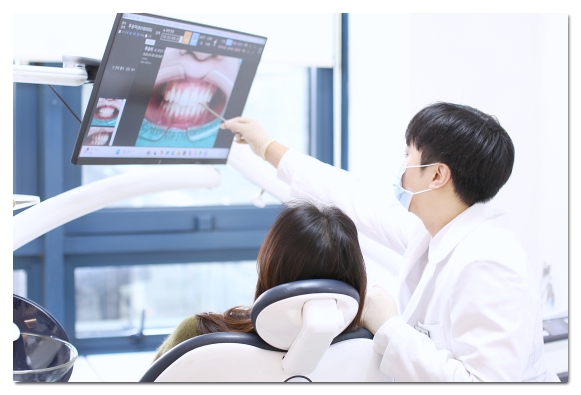
Because once a tooth is shaved, it cannot be restored,
careful choice before treatment determines satisfaction for a lifetime.
Please get a diagnosis from a place that has a treatment philosophy focused on preserving natural teeth as much as possible.
Thank you. This was Park Jae-hyung.