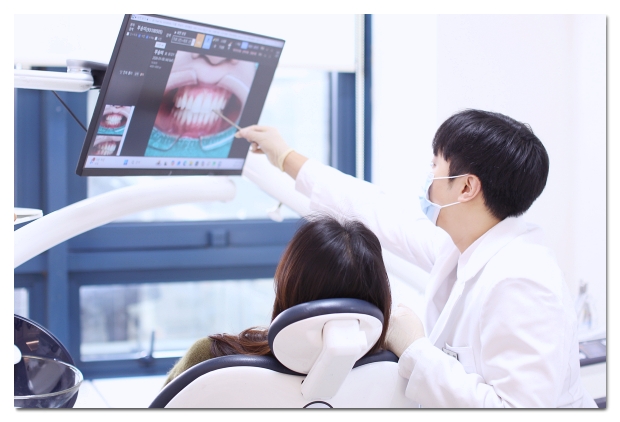
Hello, I’m Park Jae-hyung, the chief director of Wonjin Dental Clinic.
My front teeth are too small,
so I worry about them every time I smile.
How can this be treated?
Microdontia is one of the cases most suitable for
no-prep or minimal-prep laminate veneers.
The treatment method varies depending on the tooth shape,
the space between adjacent teeth,
and the bite condition.
In this post, under the topic of “A Case of Managing Microdontia with No-Prep Laminate Veneers, Without Orthodontic Treatment,”
I’ll cover the causes of microdontia, various treatment methods, and an actual clinical case.
First, here is a summary of the key points about laminate veneers for microdontia.
-
Causes of microdontia: genetics, developmental disorders, congenital absence
-
Treatment methods for microdontia: resin, laminate veneers, crowns, orthodontics
-
Actual clinical case: when bite problems are present, shape adjustment to reduce occlusal interference and minimizing tooth reduction are important
Table of contents
-
Causes of microdontia
-
Three treatment methods for microdontia
-
A case resolved with no-prep laminate veneers for microdontia (diagnostic findings)
-
The microdontia laminate veneer treatment process
Causes of microdontia
Microdontia refers to teeth that are smaller than normal,
and it is most commonly seen in the second front teeth (maxillary lateral incisors).
In some cases only one side is small, and in others both sides are small.
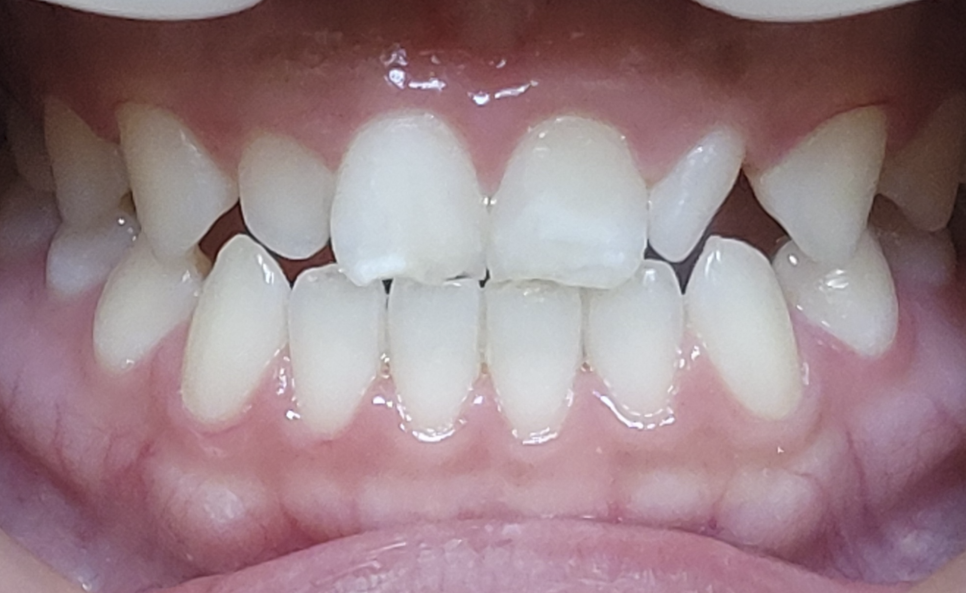
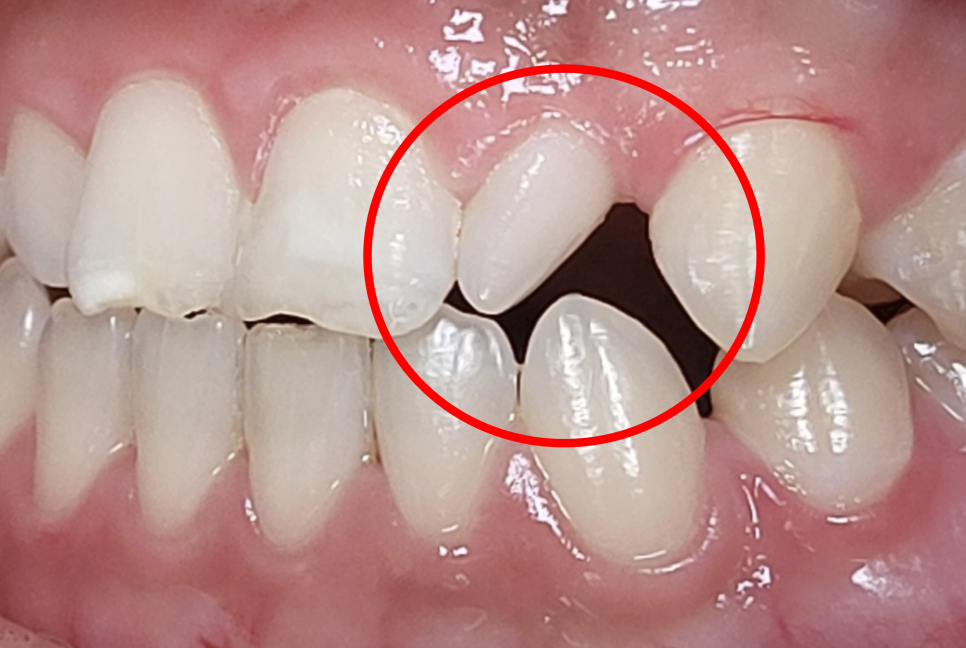 The second front teeth in the photo above can be seen as microdontia.
- Genetic factors
This is the most common cause.
If a parent or sibling has a small lateral incisor or a cone-shaped tooth with a pointed tip,
there is a high likelihood that genetics played a role.
- Environmental factors during tooth development
If a young child experiences a high fever, nutritional deficiency, trauma, or similar issues,
they can affect the tooth development process and cause some teeth to form smaller.
- Congenital absence and hypoplasia
In rare cases, some permanent teeth are missing,
which can also affect the size of adjacent teeth.
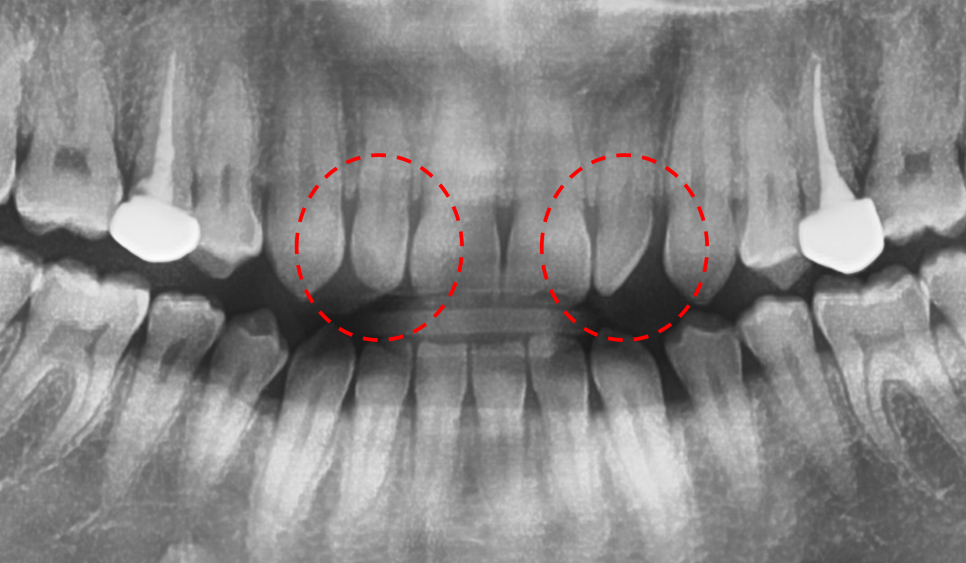
Because a tooth that has already grown cannot naturally be made larger,
a prosthetic and esthetic approach is commonly used to improve its shape.
At this point, the most important standard is:
“Can it be improved naturally while causing as little damage as possible to healthy teeth?”
Three treatment methods for microdontia
The appropriate treatment depends on the tooth condition,
the space between adjacent teeth,
and the bite condition.
- Resin treatment
This is a method of building up the shape by adding dental composite resin to the surface of the small tooth.
Its advantage is that it requires almost no tooth reduction.
It can be completed in one visit and is relatively affordable,
but over time discoloration or minor fracture can occur,
so its longevity is shorter than laminate veneers.
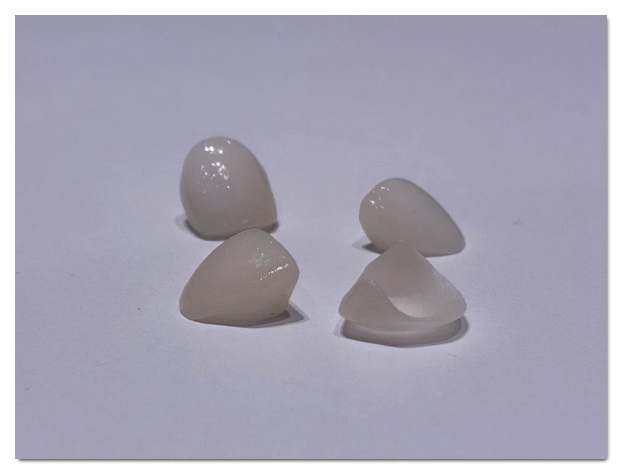
- Laminate veneers
This is a procedure in which the front surface of the tooth is trimmed very thinly, or in some cases
almost no reduction is performed, and a thin porcelain shell is bonded on.
It is less prone to discoloration and offers esthetics closest to natural teeth,
and above all, it can improve both shape and color while preserving healthy tooth structure as much as possible.
For microdontia cases where there is sufficient adjacent space and no major bite issues,
no-prep or minimal-prep laminate veneers are often possible.
- Crown
This is a prosthetic method that covers the entire tooth,
and it is considered when the tooth is severely altered or when root canal treatment is needed.
Because it requires the greatest amount of reduction,
it should be chosen carefully for healthy microdontia teeth with living nerves.
- Orthodontics
If there is not enough space between adjacent teeth, orthodontic treatment may be combined,
but if there is sufficient space, natural changes can often be achieved with the treatments above alone,
without orthodontics.
A case resolved with no-prep laminate veneers for microdontia (diagnostic findings)
This case involved a woman in her 20s whose upper lateral incisors were both small,
and the empty space that showed when she smiled was her biggest concern.
During the diagnostic process, there was an important additional finding beyond simple microdontia.
Special finding during diagnosis: edge-to-edge bite and wear
The front teeth were in an edge-to-edge bite condition,
where the tips of the upper and lower front teeth contacted each other as they bit together, causing the tips of the upper teeth to wear down in a flattened manner,
and the lower teeth were also being worn down at the same time.
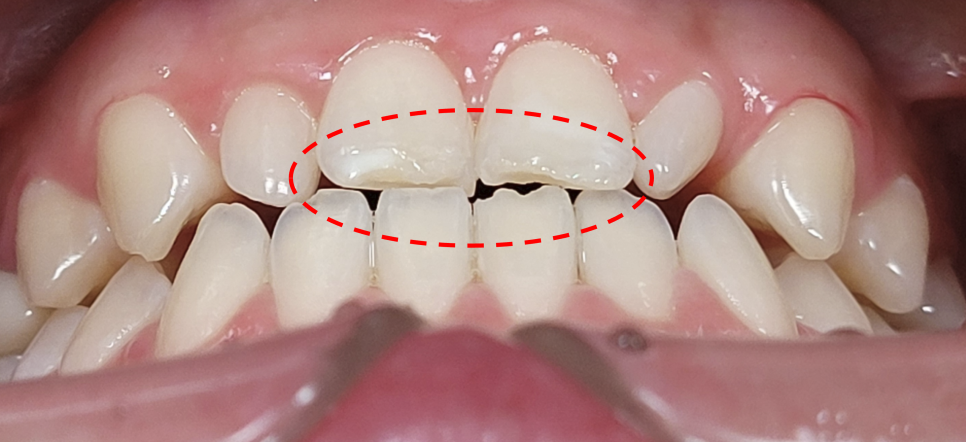 You can see grooves on the cross-section of the upper teeth in the photo above. If this is left as is, more serious damage could occur.
(2026. 04. 20)
If left untreated, the teeth would become shorter and shorter over time,
and both esthetics and function could worsen.
In principle, correcting the bite through orthodontics would be the most ideal approach,
but since the patient did not want orthodontic treatment,
the treatment plan was to improve both the shape and the bite environment with laminate veneers.
The key to the treatment plan: minimizing tooth reduction and minimizing occlusal interference
In a case like this, two goals must be achieved at the same time.
- Minimizing tooth reduction
Laminate veneers are most stable when bonded to enamel,
and if the tooth is reduced deeply enough that dentin is widely exposed,
the bond strength decreases and the veneer may come off over time.
(Fortunately, this microdontia case allowed for no-prep or minimal-prep treatment)
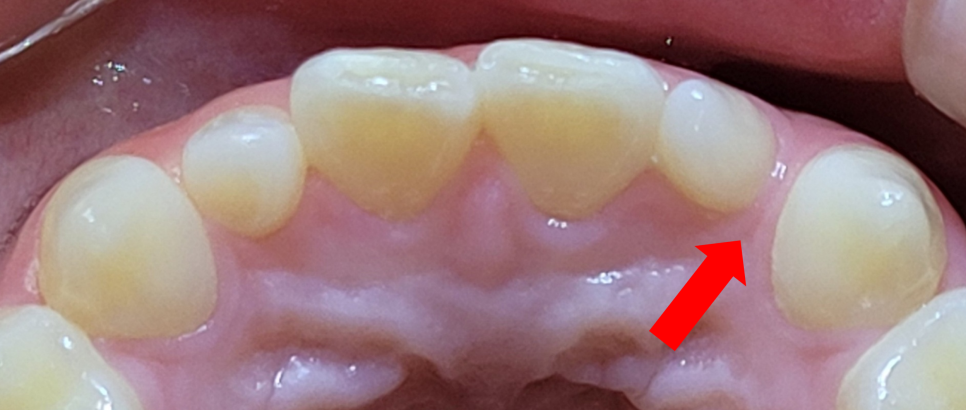 If there is space as shown by the arrow in the photo above, treatment can still be performed while minimizing tooth reduction.
- Minimizing occlusal interference
Because the teeth were already undergoing wear, if the bite were not precisely controlled,
chipping or fracture could easily occur during use of the veneers.
So for this case, every step—from diagnosis to design to the procedure itself—
had to be carried out in even greater detail.
The microdontia laminate veneer treatment process
- Digital precision scan and design simulation
The tooth shape and bite relationship were analyzed in 3D,
and the post-treatment appearance was previewed through a simulation.
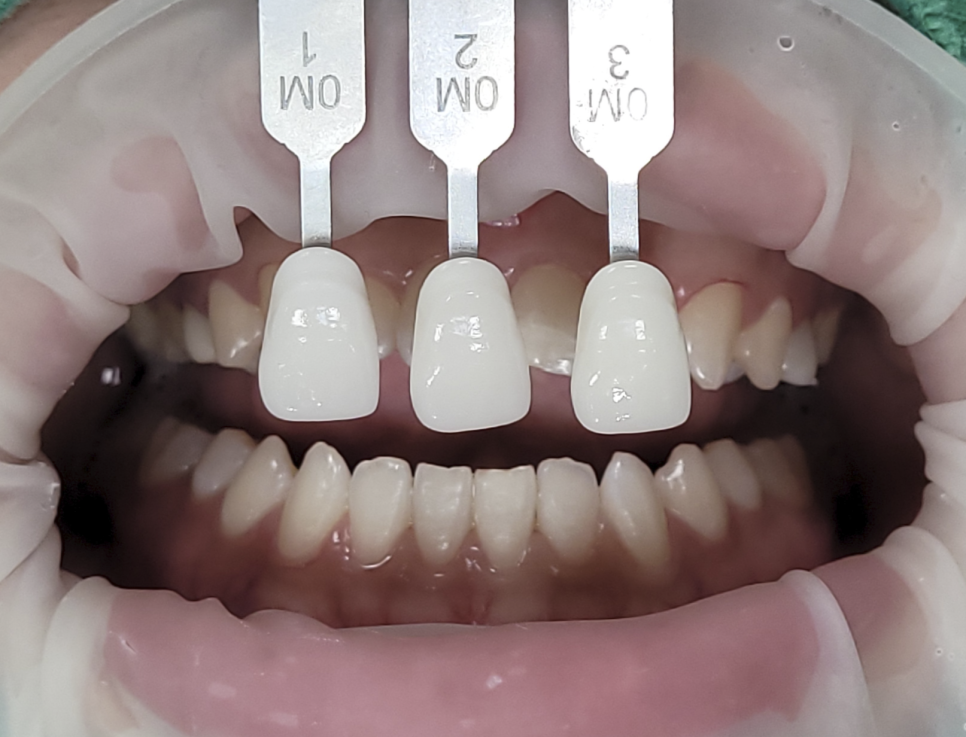
The patient wanted a bright and clean look,
and although the teeth were already fairly bright by my standards, I adjusted the tone naturally to match the patient’s preference.
- Tooth surface preparation: minimizing reduction
The surface was very lightly trimmed, preserving the enamel as much as possible,
creating an environment where the laminate veneers could be securely bonded.
- Veneer bonding
To ensure that the laminate veneers could bond stably and well,
I carefully followed the step-by-step pretreatment timing.
If this time is too long, tooth damage can occur,
and if it is too short, bond strength drops, so following the timing precisely is important.
- Shape adjustment to minimize occlusal interference
Considering the wear problem caused by the edge-to-edge bite,
I precisely adjusted the shape and length so that the veneer edges would not strike the lower teeth too strongly.
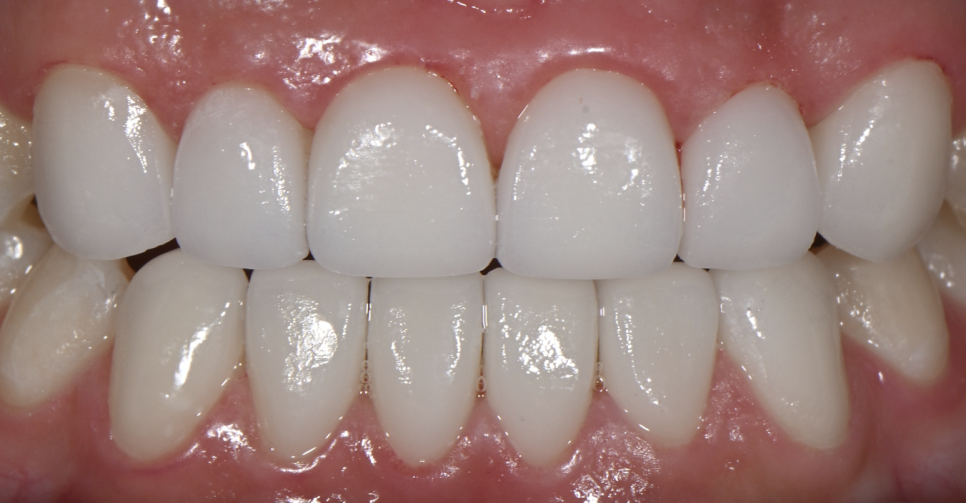
- Treatment result
The area that had looked like empty space due to microdontia was neatly corrected.
The bright and clean look the patient wanted was also achieved without overdoing it,
and the result placed less burden on long-term tooth health.
-
- 28
I explained in more detail below about the tooth-reduction minimization I kept emphasizing today,
and how to prevent side effects such as chipping and fracture of laminate veneers.
If you are considering laminate veneer treatment, please be sure to read it.
Conclusion
Microdontia may seem like a simple issue of teeth looking small,
but in reality, it is a precise treatment area that must also take bite condition and adjacent tooth spacing into account.
In particular, in laminate veneer treatment, how well tooth reduction is minimized
while achieving both a natural shape and a stable bite determines the long-term outcome.
If you are concerned about microdontia,
I recommend getting an accurate diagnosis to find the most conservative and suitable option for you.
Thank you. This was Park Jae-hyung.