Hello, I’m Park Jae-hyung, the lead director of Wonjin Dental Clinic.

How long do laminates last?
Can they break or come off?
For people who are considering dental laminates,
or those who have already had the procedure, the biggest question is their lifespan.
Not long ago, there was also a patient who had used their laminates well for 15 years before coming in because one had come off.
In conclusion, the lifespan of laminates is around 10 years.
However, because they are prosthetics attached to the teeth,
it is crucial to manage them so that gaps do not open between the tooth and the laminate,
and so that cavities do not develop.
Today, under the topic of when laminate replacement is needed,
I will summarize laminate lifespan, signs that replacement is needed, and ways to extend lifespan.
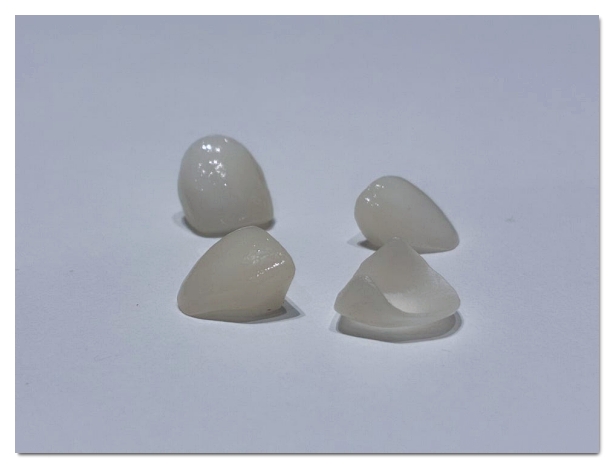
Table of Contents
-
How many years is the average lifespan of laminates?
-
Five factors that determine lifespan
-
Five signs that replacement is needed
-
Care methods to extend laminate lifespan
-
Frequently Asked Questions (FAQ)
How many years is the average lifespan of laminates?
The average lifespan of laminates varies greatly depending on
which material is used.
Porcelain laminates, which hardly discolor and have excellent strength, have
an average lifespan of about 10 years,
while resin laminates, which are relatively inexpensive, are more vulnerable to discoloration and wear and usually last about 5 to 7 years.
Since most laminate procedures performed at dental clinics in Korea currently use the porcelain type,
when talking about laminate lifespan, it is generally reasonable to think in terms of about 10 to 15 years.
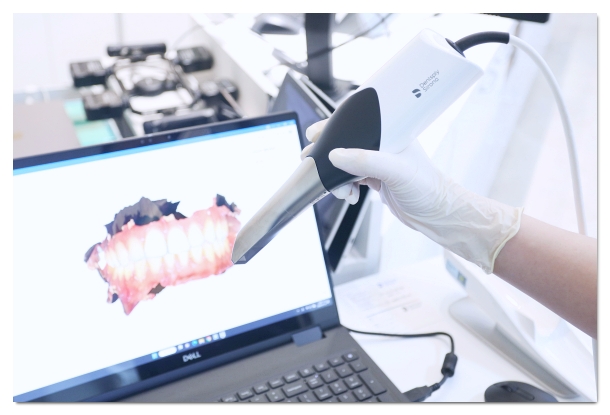
Five factors that determine lifespan
The key factors that create differences in laminate lifespan are as follows.
- Teeth grinding and clenching
If you have a habit of grinding your teeth at night, the impact placed on the laminates is several times greater than for the average person.
This is the biggest cause of breakage and lifting.
- Eating habits
Biting ice, hard nuts, crab shells, blue crab shells,
or using the front teeth to eat dried squid and similar foods
causes cumulative damage to laminates.

- Oral hygiene
If brushing is poor, cavities can develop at the boundary between the laminate and the gum.
It is surprisingly common for the laminate itself to be fine, but the tooth underneath to decay, requiring replacement.
- Regular checkups
There is a large difference in lifespan between people who receive a checkup every six months and those who do not.
When small problems are caught early, there are many cases where the laminate itself can be preserved.
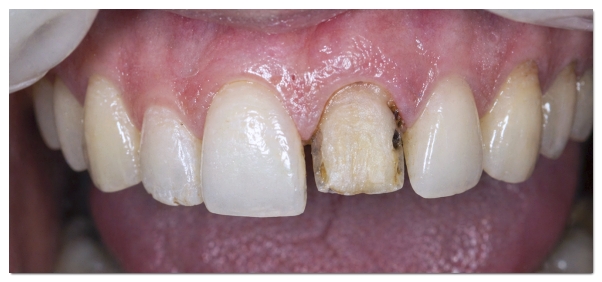
Five signs that replacement is needed
If the following signs appear, you should consider laminate replacement or an examination.
- Marginal discoloration
A black or yellow line begins to appear at the boundary where the laminate meets the natural tooth.
- Small chips or cracks
If it feels rough when touched with the tongue, or if fine cracks are visible under light, it means damage is progressing.
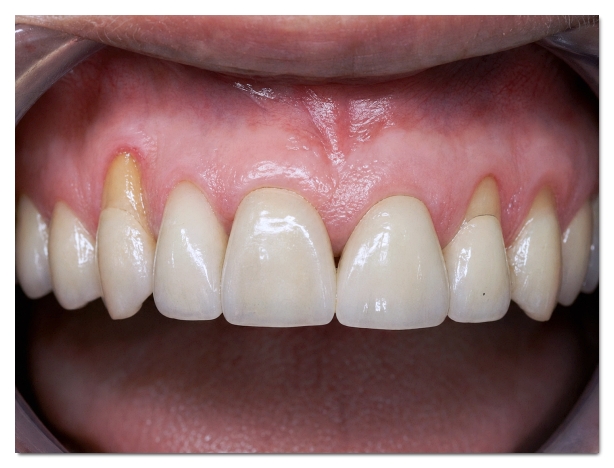
- Exposed margins due to gum recession
As the gums recede, the natural tooth color becomes visible at the part where the laminate ends.
This is the biggest cosmetic complaint.
- Sensitivity or pain
If you feel sensitivity when drinking cold water, or pain in a specific area when chewing,
there may be a cavity at the margin.
- Slight lifting
If it feels like it moves slightly when pushed with the tongue, the bond has weakened.
If left as is, it will come off.
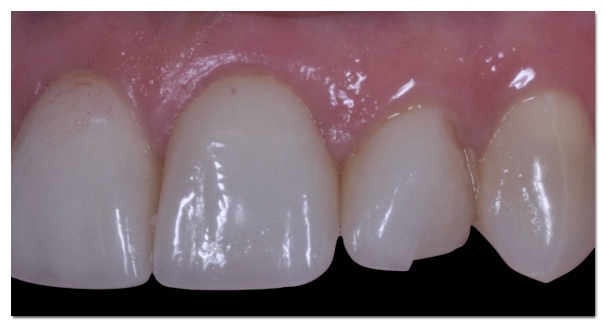
If you have used them well for a long time, it may simply be natural wear of the lifespan,
but if problems arise within a short period of 1 to 3 years,
it would likely have been very upsetting.
That is why retreatment should be carried out in a way that fundamentally blocks side effects such as
breakage, detachment, secondary cavities, and gum recession.
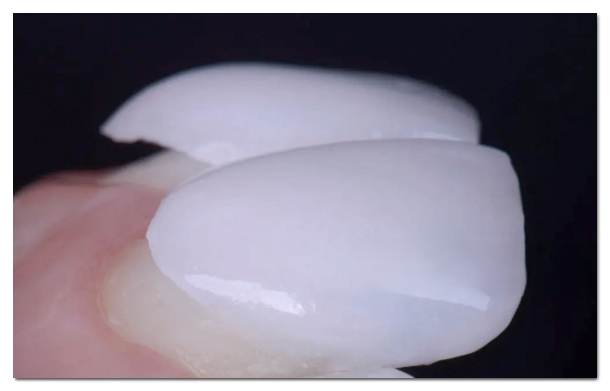
One important factor that determines this is the quality of the adhesive.
There are many different types of bonding agents and cements made for laminates, and quality and price vary widely.
We believe that the details of adhesion determine how long the restoration lasts,
so even if it costs 20 to 30 percent more than standard products, we continue to use the highest-quality adhesive.

The bonding process also matters: if there is not enough time, adhesion weakens, and if the time is too long, the tooth and prosthetic can be damaged.
Therefore, we strictly follow the time required at each stage during placement.
The detailed differences that patients may not usually know are explained in more detail in the post below.
How to care for laminates to extend their lifespan
Finally, here are practical care methods to help you use laminates for as long as possible.
- Wear a night guard: essential if you grind your teeth.
- Be careful with hard foods: do not bite directly with the front teeth; make it a habit to move food to the molars and chew.
- Use floss every day: proper care of the teeth and gums is important to prevent cavities.
- Have regular checkups every 6 months: get the condition of your laminates checked along with scaling.
- Quit smoking: you can protect both marginal discoloration and gum health at the same time.

Frequently Asked Questions (FAQ)
Q. When replacing laminates, do you remove more of the tooth?
In most cases, only the existing laminate is removed and a new one is attached, so there is almost no additional tooth reduction.
However, if cavities have developed at the margin or the existing bonding surface is damaged, a small amount of additional reduction may be needed only in that area.
Q. They say I should get a crown instead of replacing the laminate. Is that okay?
This is recommended when the tooth damage is judged to be too severe for a laminate to handle,
so rather than being an unreasonable recommendation, it is often a reasonable alternative.
However, before deciding, get one more diagnosis from another dental clinic and compare.
Closing
Laminates are not a permanent procedure,
but with proper care, they can be used satisfactorily for more than 10 years.
The key is post-procedure care and responding quickly when problems arise.
If you suspect a problem with your laminates, the most accurate approach is to receive a regular dental checkup rather than self-diagnosis.
That is because internal cavities often cannot be seen with the naked eye.
Thank you. This was Park Jae-hyung.