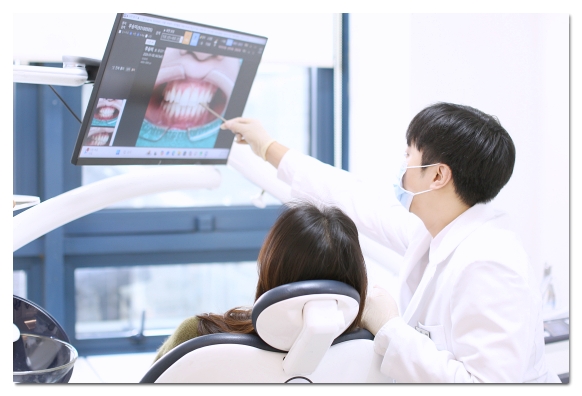
Hello, I’m Park Jae-hyung, director of Wonjin Dental Clinic.
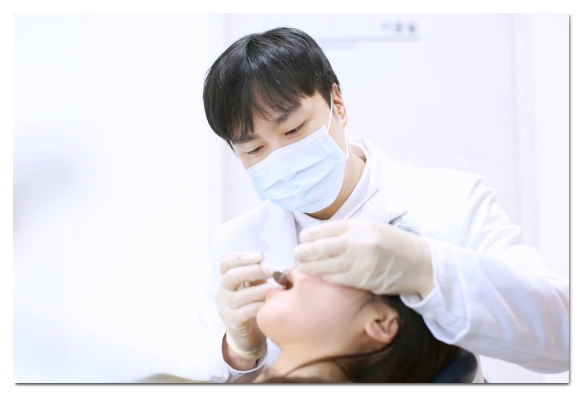
I heard that you can get laminates
by shaving only a really small amount of the teeth.
Can I get them too?
The biggest reason many people hesitate even while considering laminates is probably fear of tooth reduction.
That is why minimal-prep laminates are drawing attention.
But unfortunately, this is not a procedure everyone can receive.
Today, under the topic “Minimal-Prep Laminates? There are specific cases where they are suitable,”
I will talk about what minimal-prep laminates are, their price, why they are expensive, suitable cases, and precautions.
[Key Summary of Minimal-Prep Laminates]
-
What minimal-prep laminates are: A procedure that trims and attaches after preparing only about 0.1–0.2 mm of enamel
-
Price range: About 500,000 to 2,000,000 KRW per tooth
-
Suitable cases: When the alignment is relatively even and the protrusion is not severe
-
Conclusion: If done forcefully, side effects may occur, so the decision should be made after an accurate diagnosis
Table of contents
-
What are minimal-prep laminates? (Differences from conventional and no-prep types)
-
Cost of minimal-prep laminates and why they are expensive
-
Cases suitable for minimal-prep laminates
-
Disadvantages and precautions
-
Frequently Asked Questions (FAQ)
- What are minimal-prep laminates? (Differences from conventional and no-prep types)
The outermost layer of the tooth is a protective layer called enamel.
It protects the tooth from external stimuli,
and also plays an important role in securely bonding laminates.
The problem begins when this enamel is removed more than necessary.
If the protective layer becomes thinner,
- the inner sensitive layer, dentin, becomes exposed
- sensitivity to cold and hot food and drinks can occur
- the bonding strength of the laminate weakens, so it may come off easily
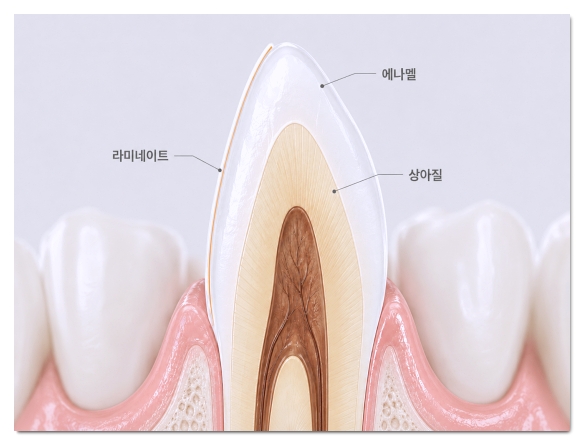
So these days, rather than removing too much,
the focus is on minimal-prep laminates, which trim only as much as needed.
Because they are finely trimmed by only about 0.1–0.2 mm of enamel,
they can help prevent sensitivity by not affecting the inner nerve, preserve the tooth’s original strength,
and still provide natural-looking esthetics.
[Comparison of conventional, minimal-prep, and no-prep laminates]
| Category | Conventional laminates | Minimal-prep laminates | No-prep laminates |
|---|
| Amount of tooth reduction | 0.5–0.7 mm | 0.1–0.2 mm | None |
| Thickness of restoration | Thick | Thin | Thin |
| Scope of application | Broad (can address protrusion and alignment issues) | Moderate | Narrow (peg laterals, gaps between teeth, etc.) |
| Cost (per tooth) | 300,000–700,000 KRW | 500,000–2,000,000 KRW | 500,000–2,000,000 KRW |
- Cost of minimal-prep laminates and why they are expensive
Minimal-prep laminates are priced at about 500,000 to 2,000,000 KRW per tooth.
They are more expensive than conventional laminates, and the reasons are as follows.
- The technical difficulty of making the restoration thin
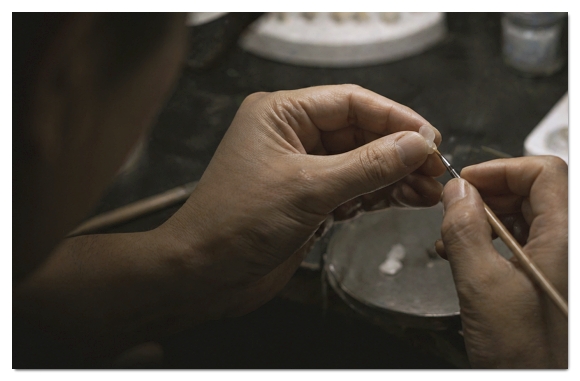
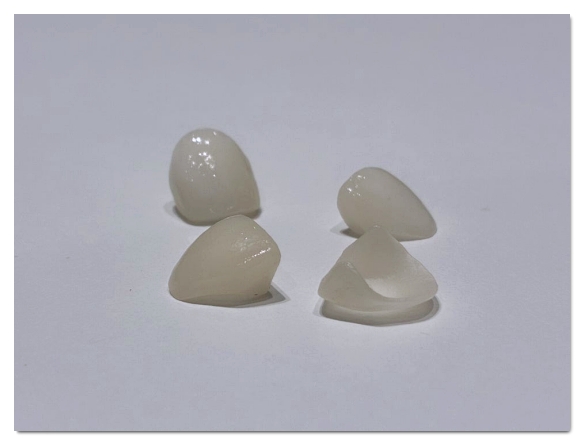
Because only 0.1–0.2 mm of the tooth is reduced, the ceramic restoration to be bonded on top must also be made very thin.
This is difficult to mass-produce by machine, so a dental technician must craft it by hand, stitch by stitch.
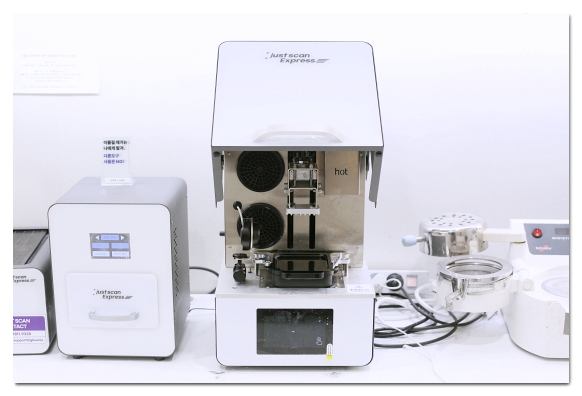
- Precision in the bonding process
The thin laminate tip (the thin ceramic restoration) is also easy to damage during bonding.
The dentist has to work even more carefully, so it requires more time and concentration.
In short, because it is a procedure that demands advanced skill from both the dentist and the technician,
its cost is inevitably higher than that of conventional laminates.
Patients often may not know how the restoration should be made to minimize tooth reduction,
or how laminates should be attached to reduce side effects such as chipping, detachment, cavities, and bad breath.
If you read the article below, you will gain an eye for identifying a good clinic.
- Cases suitable for minimal-prep laminates
So in what cases can minimal-prep laminates be performed?
Suitable cases
-
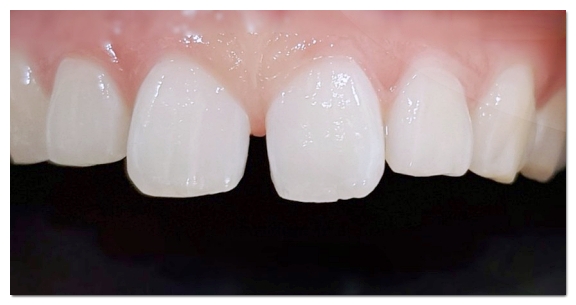
When the tooth alignment is relatively even
-
When the front teeth are not severely protruded
-
When filling gaps between spaced teeth
-
When you want only a slight improvement in tooth shape
If your case falls into the above, satisfactory results can be achieved with only minimal reduction within the enamel layer.
Unsuitable cases
-
When tooth protrusion is severe
-
When there is severe crowding or crooked alignment
-
When the teeth themselves are thick
If such cases are forced, the volume of the restoration may make the front teeth look more protruded or give a strong artificial impression.
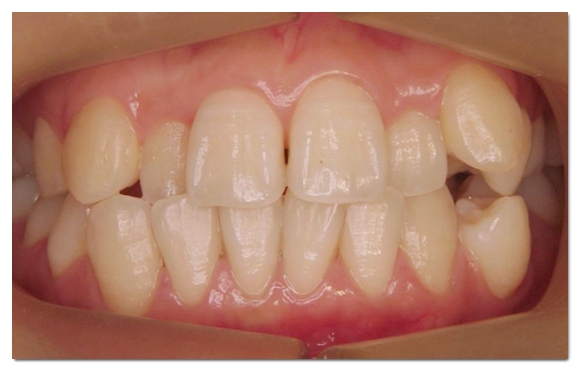 If the tooth alignment is uneven like in the photo above, we do not recommend proceeding with laminates right away. The amount of tooth reduction would increase.
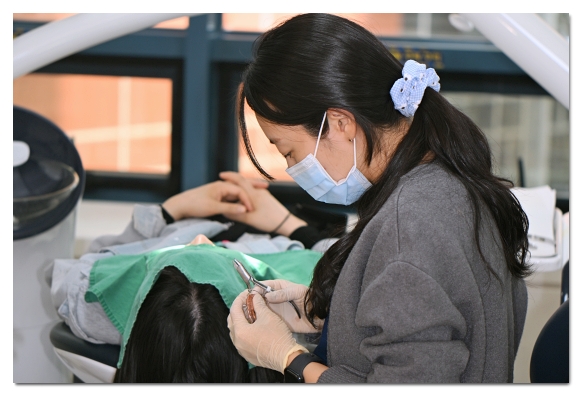
An alternative is partial orthodontic treatment.
After aligning the front teeth with partial orthodontics for about 3 to 6 months,
depending on the result, getting laminates is
a way to achieve a natural result while minimizing reduction of the natural teeth.
- Disadvantages and precautions
I will also be honest about the disadvantages of minimal-prep laminates.
-
The applicable cases are limited
As mentioned earlier, they are difficult to apply when protrusion is severe or the alignment is significantly off.
-
Even minimal-prep still means shaving natural teeth
This is the most important point.
Some people may think lightly, “I’ll just have it attached first, and if I don’t like it, I can remove it and do it again.”
Ceramic tips are bonded after special treatment of the tooth surface using high-strength dental resin cement.
Because the enamel and ceramic are bonded so firmly that they almost become one, the tooth can be damaged during removal.
A tiny amount of reduction is also unavoidable during the process of re-preparing the surface.
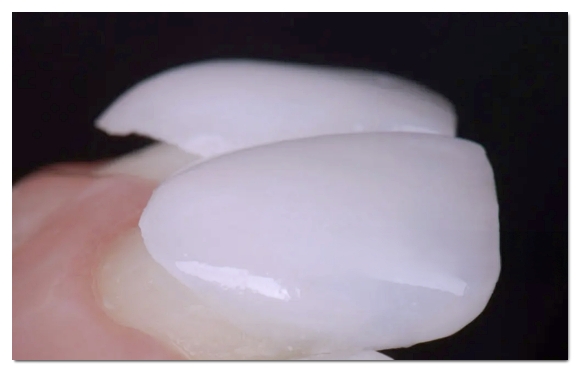
We also perform many re-treatments, so we often use water laser methods that minimize damage when removing them.
Even so, for the first procedure, we generally recommend keeping reduction to a minimum and minimizing damage to the natural teeth as much as possible.
So laminates should not be received with the casual thought of, “If I don’t like it, I can just redo it.”
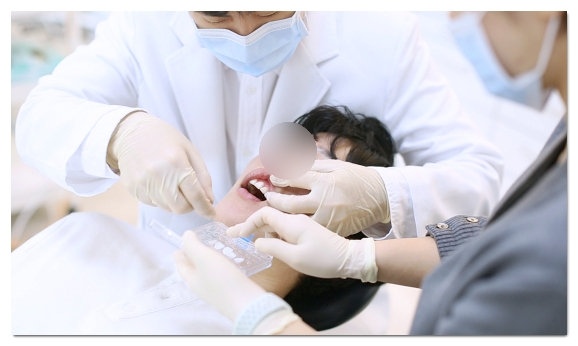
You should consult carefully with the medical team at a clinic that provides the most conservative treatment possible.
- Frequently Asked Questions (FAQ)
Q. Do minimal-prep laminates hurt?
Because only the enamel layer is trimmed,
they can often be done without anesthesia or
with only light anesthesia, and there is usually almost no pain during the procedure.
However, for a few days after bonding, you may feel some mild sensitivity.
Q. How long do minimal-prep laminates last?
The average is known to be about 10 years.
However, depending on maintenance, eating habits, and whether you grind your teeth at night, the lifespan may be longer or shorter.
Q. How should I care for them after the procedure?
Just like with natural teeth, be thorough with brushing and flossing,
and it is important not to bite directly into hard foods with your front teeth.
If you grind your teeth at night, we also recommend wearing a mouth guard.
In closing
Today, we took a detailed look at minimal-prep laminates.
If performed within suitable cases,
they are certainly a good treatment that can improve esthetics while preserving natural teeth as much as possible.
However, since this is not a procedure suitable for everyone, please make a careful decision after 충분한 상담과 진단
Thank you. This was Park Jae-hyung.