Hello, I’m Park Jaehyung, the chief director of Wonjin Dental Clinic.
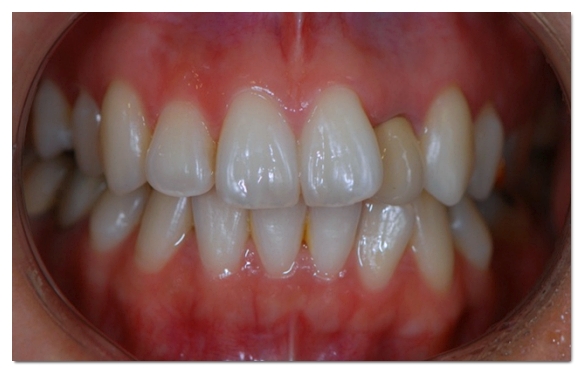
Rabbit teeth make you wonder whether orthodontic treatment is even necessary...
Couldn’t I just get veneers on the two front teeth?
There are two main dental treatments for improving rabbit teeth.
Many people think it will be simple to just treat the two problematic front teeth.
From my perspective as a doctor, that would certainly make treatment easier,
but in fact, the causes of rabbit teeth are often the result of multiple factors working together, such as the bite, alignment, and gums.
Therefore, the cause must be identified accurately first, and treatment should then be carried out accordingly.
Today, under the topic “What should you choose when correcting rabbit teeth: laminate veneers or orthodontics?”
I’ll explain in detail, from the causes of rabbit teeth to how to choose the right treatment for each situation.
[Key summary for choosing between rabbit tooth veneers/orthodontics]
- Veneers recommended: when the problem is tooth size or shape (proportions), or when there is a small gap
- Partial orthodontics recommended: when the teeth are generally protruded forward, or when the upper and lower bite (alignment) does not match
- Combined gum contouring: when tooth length is normal but the gums excessively cover the teeth, creating asymmetry
Table of contents
- What causes rabbit teeth?
- When rabbit tooth veneers are needed
- When rabbit tooth orthodontics are needed
- Frequently asked questions (FAQ)
- What causes rabbit teeth?
The causes of rabbit teeth are more varied than you might think.
Sometimes the front teeth are simply long,
- the teeth themselves protrude forward
- the gum line is asymmetrical
- the side teeth are small, making the front teeth look larger
- the tooth alignment itself is misaligned
In this way, several causes may be working together.
Because the treatment method differs from case to case, you need an accurate diagnosis first.
For example, if the front teeth themselves are sticking out and you try to solve it with veneers alone,
you would have no choice but to remove too much tooth structure in order to match the protruding area.
As a result,
- tooth sensitivity may occur, or
- the tooth structure may become weaker, and
- the restoration may come off easily.
In such cases, partial or full orthodontic treatment may be needed first to correct the alignment.
Also, if the gums are positioned too high, a procedure to cover the gums may be used to reduce the apparent tooth length.
So when treating rabbit teeth, rather than first asking whether veneers are possible,
it is important to diagnose exactly why the teeth look that way.
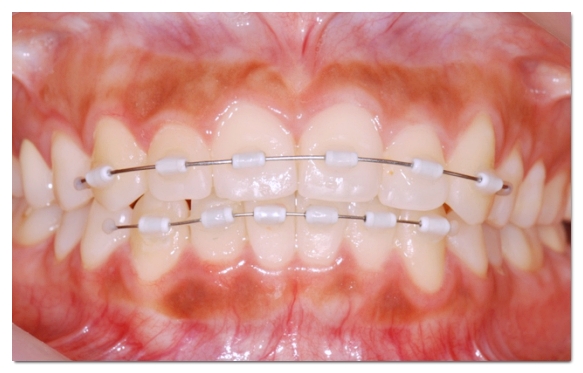
- When rabbit tooth veneers are needed
So, in what cases are veneers a good fit?
Typical examples include the following:
- when the front teeth are slightly long or large
- when the tooth tips look angular
- when the proportions relative to the adjacent teeth look awkward
- when a small gap needs improvement, or the shape needs refinement
In these cases, after simply adjusting the proportions and shape,
veneers can be bonded to complete a natural-looking smile.
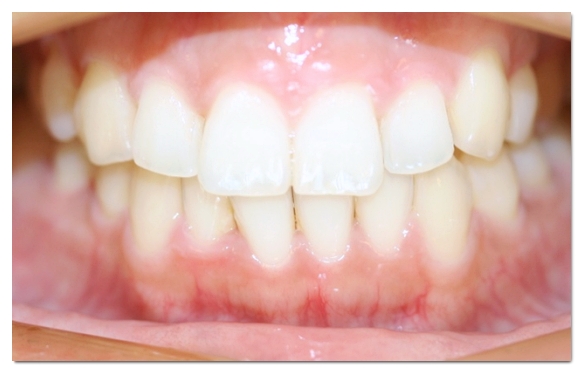
However, what matters here is not “how many teeth to do,” but
“what method is most suitable for my tooth condition.”
Many people ask, “Can’t I just do the two front teeth?”
In some cases, that is certainly possible.
The problem is when trying to force the correction to only two teeth leads to excessive tooth reduction.
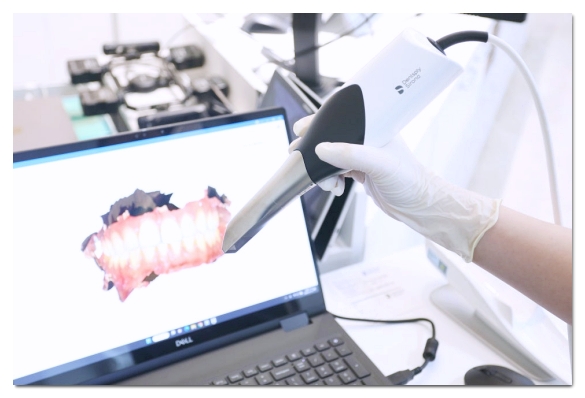
If too much is shaved off in an attempt to force the proportions to match the adjacent teeth,
it may come so close to the nerve that root canal treatment becomes necessary,
or in the end, veneers may no longer be enough,
and crowns may be needed instead.
A treatment that was supposed to be simple can end up becoming a much larger procedure.
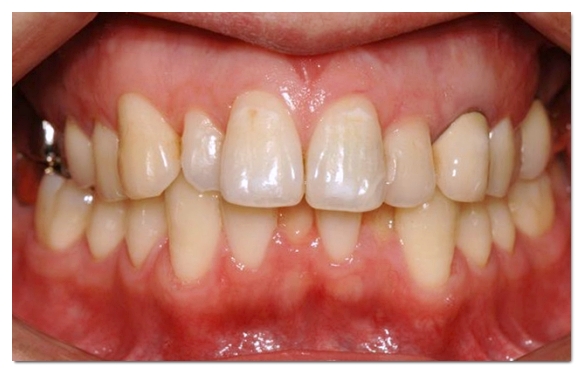
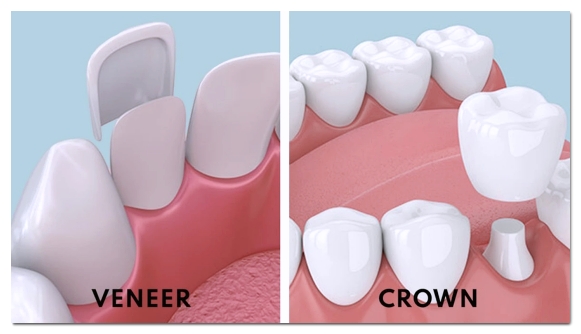 If you look at the teeth in the photo above, you can see that the amount of tooth reduction for veneers and crowns differs significantly.
So at the initial diagnosis stage,
it is important to have enough consultation about
“what method can produce a natural result while preserving as much of my natural tooth as possible.”
Choosing to do too many teeth is not always right, and doing only exactly two teeth is not always right either.
The key is to find the most realistic option in a direction that allows you to use your natural teeth healthily for life.
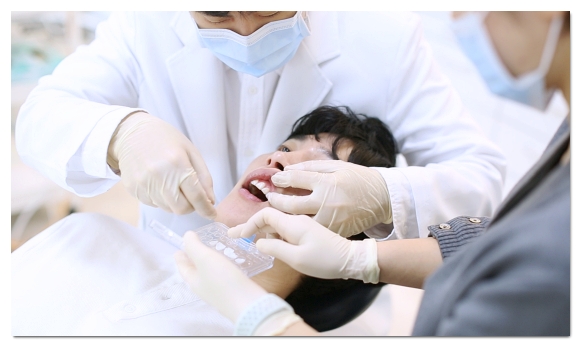
As I’ve been saying, to reduce veneer-related side effects,
minimizing tooth reduction is important.
If you read the article below, you’ll learn how to receive veneers in a way that
preserves as much of your natural teeth as possible
and avoids repeated retreatment.
- When rabbit tooth orthodontics is needed
In the following cases, partial orthodontic treatment is more appropriate than veneers.
- when the front teeth are generally protruded forward
- when the upper and lower bite do not match
Because the root cause is a “tooth position issue,” correcting the alignment first is the priority.
Even after this is corrected, if the rabbit teeth still bother you,
it is not too late to proceed with veneers then.
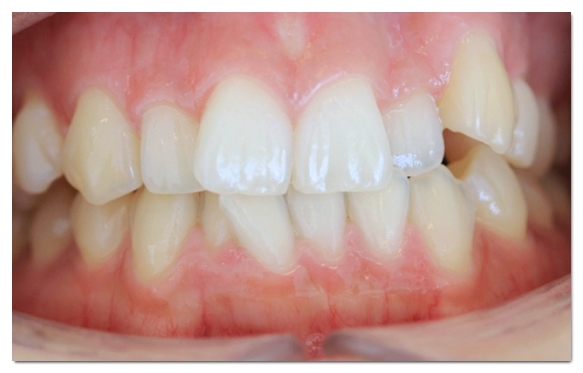
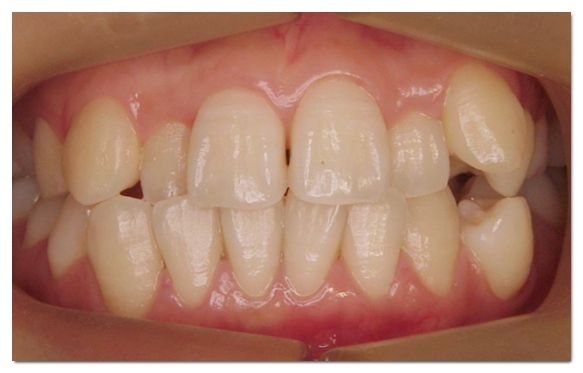 As in the teeth shown in the photo above, there are many cases where the alignment must be corrected first to minimize tooth reduction.
Orthodontic treatment takes time, and you cannot expect an immediate visible change,
but in that it can improve the alignment without grinding down natural teeth,
it can be a much better option.
What matters is that treatment should be carried out in a way that allows the teeth to be used as long as possible and in good health.
Once veneers are started, they cannot be returned to their original state, so please keep this in mind.
- Frequently asked questions (FAQ)
Q. Which is cheaper, veneers or partial orthodontic treatment?
In terms of simple cost alone, veneers are often cheaper.
However, depending on the case, if 4 to 6 teeth need to be treated together,
the cost difference may become smaller.
Above all, rather than focusing only on cost, you should first consider whether the treatment is appropriate for your tooth condition to avoid regret.
Q. In what cases is gum contouring needed?
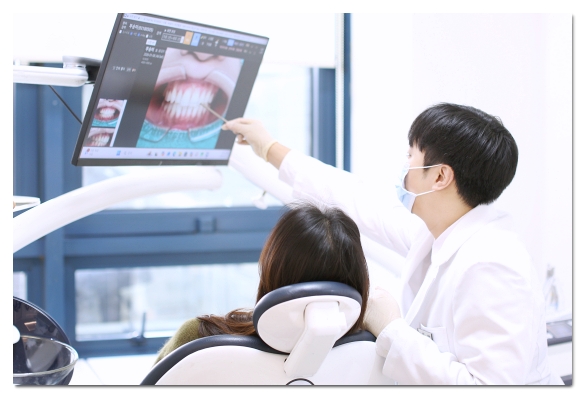
It is considered when the tooth length is normal, but the gums cover the teeth excessively, making the front teeth look especially short and prominent.
In such cases, a natural result is more likely when the gum line is adjusted together,
rather than doing veneers alone.
Closing remarks
Today, I wrote this article for those 고민ing about veneers for rabbit teeth.
The range of cases is wider than expected, and there are also many limitations,
so I think some of you may feel disappointed.
I said this because I do not want anyone to regret a wrong treatment for the rest of their life,
so I hope you will also make your decision more carefully.
I sincerely hope that unnecessary treatment is avoided, and I’ll end the post here. Thank you.