Hello, I am Dr. Park Jae-hyeong, the chief director of Wonjin Dental Clinic.

If you get no-prep laminate veneers,
does that really mean your natural teeth do not need to be shaved at all?
How much does no-prep laminate veneer treatment cost?
These days, as a wide range of dental information is shared online,
patients also understand very well how important it is to preserve natural teeth.
As a dentist, I view this change in awareness and interest positively.
However, I am also concerned that many people simply compare the cost of no-prep laminate veneers,
because sometimes no-prep is not the best solution,
and even if you start with no-prep, it may eventually lead to tooth reduction.
Today, under the topic of How Much Does a No-Prep Laminate Veneer Cost? Why It Is Expensive,
- What is the cost range of no-prep laminate veneers?
- Why are no-prep laminate veneers expensive?
- Which cases are suitable for no-prep laminate veneers?
I will speak honestly about these three points.
Please read through to the end, as this may help you protect both your valuable teeth and your money.
- What is the cost range of no-prep laminate veneers?
The cost of no-prep laminate veneers ranges widely, from about 300,000 KRW to 2,000,000 KRW per tooth.
You may wonder why there is such a large price difference for the same procedure.
The main factors that determine the cost are as follows.
- Quality of the materials used: differences in the base cost depending on the type and manufacturer of the ceramic block
- Dental laboratory method: whether it is a general domestic lab or a specialized lab capable of precision work (or a famous overseas lab), which affects both the result and the cost
- Experience and technique of the clinician: results can vary greatly depending on the operator’s skill
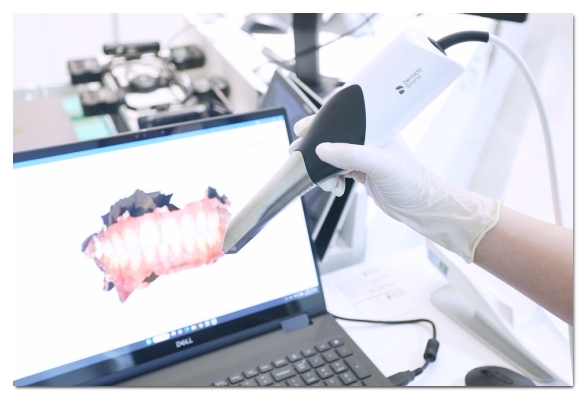
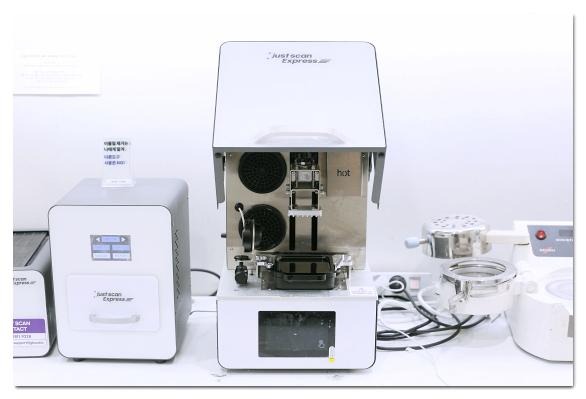
- Clinic equipment and system: whether the clinic has precision equipment such as digital scanners and CAD/CAM systems
One thing I want to emphasize here is that neither the cheapest place nor the most expensive place is automatically the right answer.
Excessively low prices can reflect limitations in materials or technique,
and on the other hand, a high price does not guarantee satisfying results.
Rather than the price itself, it is important to consider together whether it is the right procedure for your teeth,
and whether the clinician has enough experience.
- Why are no-prep laminate veneers expensive?
If you have looked into related information, you probably already know that no-prep laminate veneers
are more expensive than regular laminate veneers.
And you may also be thinking,
"If the teeth are not shaved, isn’t it actually simpler? Why is it more expensive?"
Not reducing the tooth means that the prosthesis bonded onto the natural tooth must be made much thinner.
- Regular laminate veneer: 0.5–0.7 mm
- No-prep laminate veneer: 0.1–0.3 mm
The difference can be as much as nearly 0.6 mm.
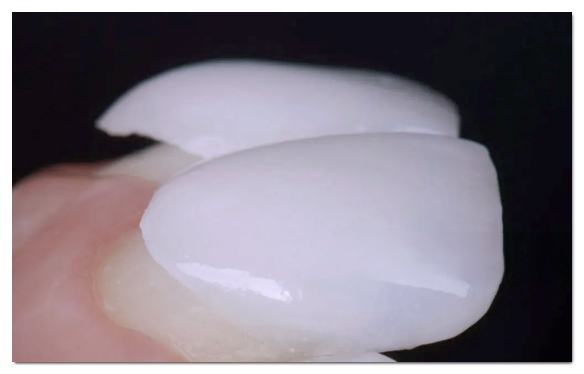
The thinner the final thickness, the more difficult it becomes to reflect the following elements.
- Color expression
- Translucency
- The boundary with the tooth
- Left-right symmetry
Even a little pressure can cause it to break easily,
and if the expression is not precise, the color of the natural tooth may show through.
It may be easier to imagine this as painting watercolor on very thin paper.
Not only during fabrication, but also during the bonding process, much more careful attention is required.
If the prosthesis that was painstakingly made breaks during bonding, it becomes useless.
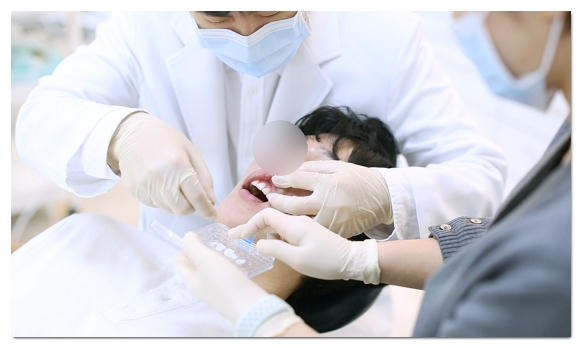
In other words, the reason no-prep laminate veneers are expensive is that
this procedure requires advanced skills and extensive experience.
Let me add one more point: the method of making laminate veneers is divided into two types,
a machine-milled method and a hand-crafted method made by a dental technician.

Machine milling has limitations in thickness.
If it is milled too thin, it breaks, so it can only be reduced to a certain level.
Laminate veneers are placed on top of the tooth,
so if the thickness is too great, more tooth reduction will be needed.
That is why laminate veneers that are built up layer by layer with a brush are said to be thinner and to require less tooth reduction, which is better.
I wrote about this in more detail in the post below, so please read it before treatment.
- Which cases are suitable for no-prep laminate veneers?
No-prep laminate veneers can help preserve natural teeth while creating a beautiful smile.
At first glance, they may seem like a perfect procedure that suits everyone.
But like any treatment, no-prep laminate veneers are also suitable only for certain cases.
Cases where no-prep works well
- When there are peg laterals or undersized teeth
- When there is a slight gap between teeth
- When the alignment is not severely crooked
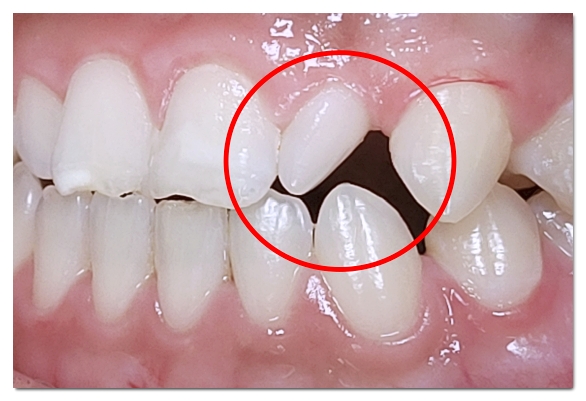 The tooth in the photo above is called an undersized tooth. It is a typical case in which no-prep laminate veneers work well because the tooth is smaller than the others and there is leftover space around it.
In such cases, there is enough space to add ceramic,
so tooth reduction is not necessary.
On the other hand,
cases where reduction is unavoidable
When the front teeth protrude
When the teeth are naturally large
When there is severe crowding or crooked alignment
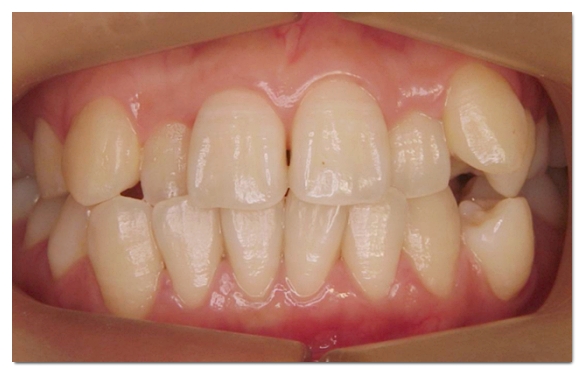 In cases like the photo above, where there are crowded teeth or the alignment itself is uneven, forcing the procedure may require more reduction. In such cases, partial orthodontic treatment or full orthodontic treatment may be needed first.
If no-prep is forced in cases like these,
the thickness of the prosthesis can make the mouth look protruded,
or the result may appear unnatural.
So rather than simply comparing costs,
it is important to first check
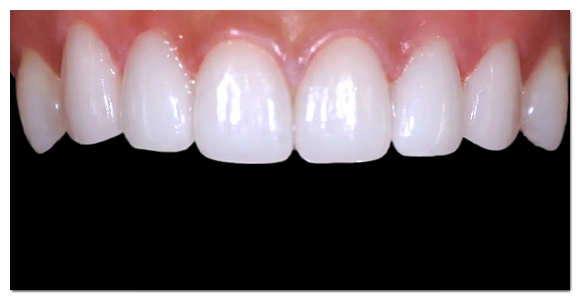
what treatment method can provide the most natural result.
In closing
Finally, I would like to make one more request.
Laminate veneers may need to be redone within 2 to 3 years due to inadequate aftercare or unexpected accidents.
In such cases, scratches can occur on the tooth surface during removal of the prosthesis,
and reduction may be unavoidable while cleaning and smoothing the damaged surface.
If this process is repeated only a couple of times,
the amount of tooth reduction can become significant.
So please make your treatment decision carefully.
Today, I wrote about the topic, "How Much Does a No-Prep Laminate Veneer Cost? Why It Is Expensive."
It is clear that, in suitable cases, this can be a good procedure that greatly improves aesthetics.
As with any treatment, what matters first is a correct understanding of the procedure rather than the cost.
I hope this was helpful for those who were curious about related treatment,
and I will end here.
Thank you.