Hello, I’m Park Jae-hyung, CEO dentist at Wonjin Dental Clinic.
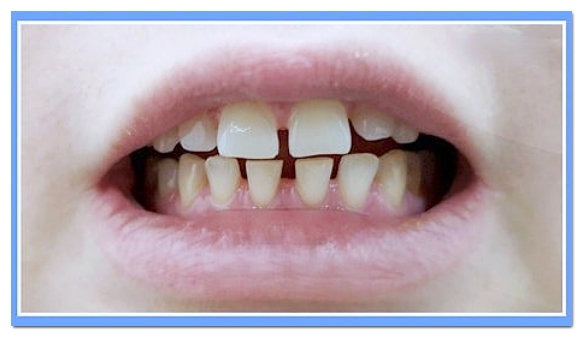
I’m stressed because of the gap in my front teeth.
Would laminate be better, or resin?
If your front tooth is chipped or has a gap, you may find yourself covering your mouth without thinking whenever you smile.
Many people also come in after deciding to get treatment because they can no longer smile brightly in photos.
Today, under the topic of Front Tooth Laminate? Resin? Choosing a Treatment for Gapped Teeth,
I’ll explain the differences between front tooth laminate and resin as treatment options for gapped teeth,
as well as how to choose between them in different situations and the difference in cost.
Gapped Teeth,
Key Summary of Choosing Between Front Tooth Laminate and Resin
-
Laminate: Suitable when you want to improve the shape, color, and alignment of the teeth at the same time
-
Resin: Suitable when you want to preserve the natural tooth and only need minor correction
-
The appropriate method varies depending on the width of the gap, whether there is discoloration, alignment, and the state of the bite
Table of Contents
Comparison of the Differences Between Front Tooth Laminate and Resin
When Front Tooth Laminate Is More Advantageous
When Front Tooth Resin Is More Advantageous
Frequently Asked Questions (FAQ)
- Front Tooth Laminate vs. Resin: Comparing the Differences
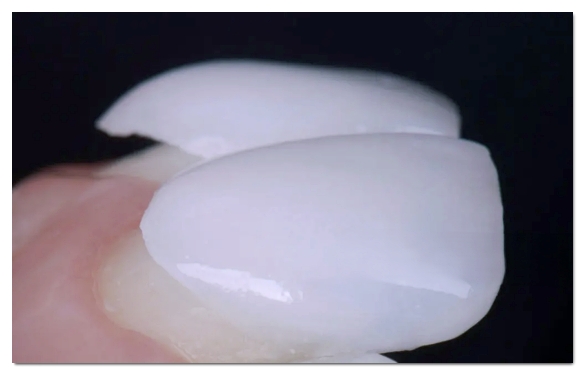
What is laminate?
Laminate is a method in which the outer surface of the tooth is lightly reshaped,
and then a ceramic prosthesis is attached on top.
It is not just a matter of filling a gap;
it can also improve the tooth’s size, shape, alignment, and color.
Because of the characteristics of ceramic, its translucency and color expression are
natural, allowing it to blend harmoniously with the surrounding teeth,
and it is resistant to staining, so it can maintain its aesthetics for a long time.
However, some tooth reduction may be necessary,
and it takes more time and costs more than resin.
As I always say,
the more you reduce the amount of tooth structure removed,
and the more securely it is bonded,
the more you can minimize side effects such as
chipping, detachment, cavities, bad breath, and gum recession.
At the very least, please read the post below so you can understand exactly what side effects there are,
and how to receive treatment in a way that helps prevent them before making your decision.
What is resin?
Resin is a method in which a tooth-colored material is added to the problem area and hardened.
It is commonly described as “restoring with resin.”
It is a simple treatment option for filling a gap, restoring a small chip,
or making light corrections,
and one of its advantages is that it preserves the natural tooth because there is almost no tooth reduction.
However, due to the nature of the material, it is relatively vulnerable to staining and wear,
and it may chip under strong impact.
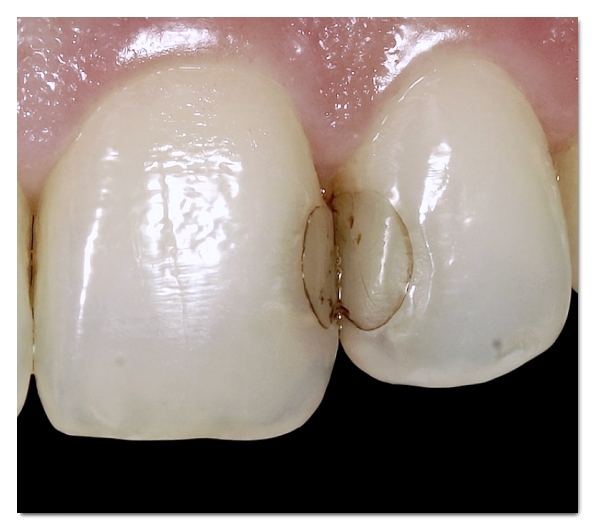 As shown in the photo above, staining may develop over time in resin-restored areas.
Comparison Table of Front Tooth Laminate and Resin Characteristics
| Category | Laminate | Resin |
|---|
| Treatment method | Tooth reduction + ceramic prosthesis attachment | Adding and hardening a tooth-colored material |
| Tooth reduction | None to some reduction | None to almost none |
| Treatment period | About 1–2 weeks | Possible on the same day |
| Possibility of staining | Almost none | Yes |
| Average lifespan | About 10 years | About 3–5 years |
| Suitable cases | Overall improvement in shape and color | Natural tooth preservation, partial correction |
- When Front Tooth Laminate Is More Advantageous
In the following cases, laminate may be the more appropriate choice.
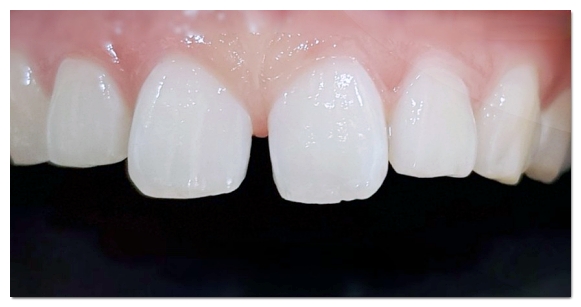
- When the gap is relatively wide
Because resin is a method of adding material,
if the gap is too wide, the tooth may
look unnaturally large or may come off easily.
It may look fine from the front, but appear awkward in shape when viewed from the side.
- When you want to improve several issues at the same time
-
When the teeth are different sizes
-
When the front teeth are not evenly aligned
-
When discoloration or wear is severe
In such cases, laminate can address multiple issues
at once, making it advantageous for improving aesthetic satisfaction.
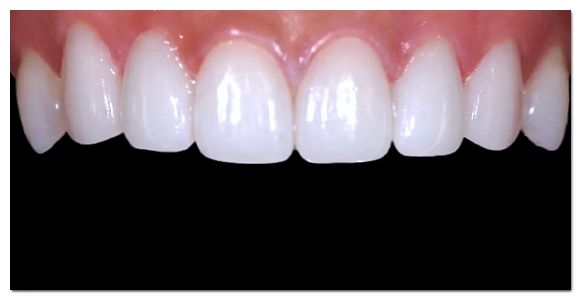
- When you want long-lasting results
Ceramic is resistant to staining and wear.
If properly maintained, it can preserve natural-looking aesthetics for an average of 10 years or more.
- When Resin Is More Advantageous
Conversely, in the following cases, resin is the more reasonable choice.
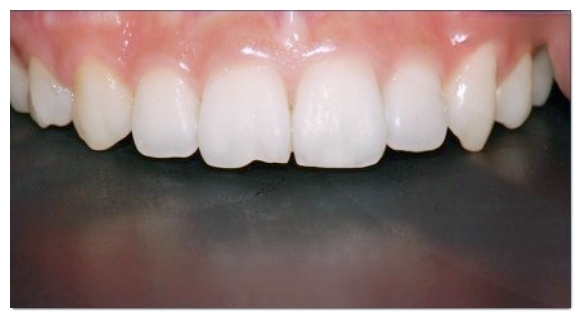
- When the gap is narrow and there are no other issues
If there are no major problems with the tooth’s shape or color,
and you only need to close a small gap,
there is no need to grind down the tooth just to choose laminate.
- When you want to preserve the natural tooth as much as possible
Resin requires almost no tooth reduction.
Therefore, it is the best fit for people who want to “leave my own teeth as they are as much as possible.”
It is also less burdensome if you are not satisfied with the result or need adjustments later as time passes.
- When you want to reduce the cost burden
Resin treatment is less expensive than laminate.
However, you should also consider that the average lifespan may be shorter.
- How Much Difference Is There in the Cost of Front Tooth Laminate and Resin?
The cost of treating gapped front teeth with laminate and resin is generally as follows.
-
Front tooth resin: about 300,000 KRW per tooth
-
Front tooth laminate (standard): about 300,000–2,000,000 KRW per tooth
-
Front tooth laminate (minimal reduction): about 500,000–2,000,000 KRW per tooth
If you compare only the price, resin may seem much cheaper.
But you should also consider the average lifespan.
-
Resin: about 3–5 years
-
Laminate: about 10 years
Rather than the price itself, it is most important to judge based on
“which method is the most reasonable for my tooth condition.”
- Frequently Asked Questions (FAQ)
Q. If I get resin and it falls off, can I switch to laminate?
Yes. However, because laminate is a procedure that involves tooth reduction,
when switching, it is important to receive the treatment with the minimum possible amount of reduction.
Q. How should I care for it after the procedure?
Brush and floss thoroughly as you normally would,
and it is important to avoid biting directly into hard foods with your front teeth.
If you grind your teeth at night, we recommend using a mouthpiece.
 In closing
Today, I organized in detail how to choose between front tooth laminate and resin,
and the 기준 for deciding between them.
What I explained above is only a general guideline,
and an accurate diagnosis is only possible after directly examining your oral condition.
Please receive an accurate treatment at a place that approaches natural teeth as conservatively as possible.
Thank you. This was Park Jae-hyung.