Hello, I’m Park Jae-hyeong, the director of Woorin Dental Clinic.
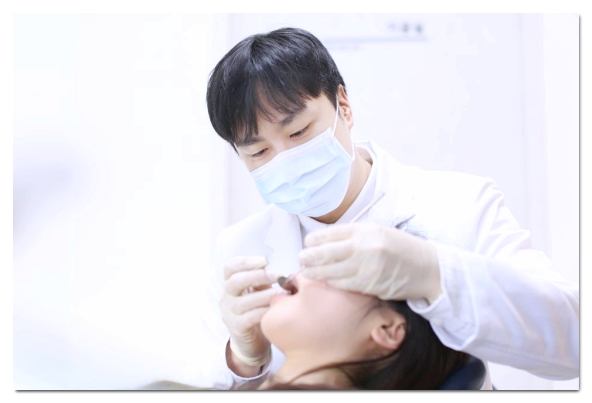
I just got veneers not long ago,
and my bad breath has gotten worse.
There’s a foul smell from a specific area every time I floss.
Some patients visit the clinic because of bad breath after veneer treatment.
In conclusion, veneers themselves do not create odor.
The real causes are tiny gaps between the veneer and the tooth, residual cement,
secondary cavities, and gum inflammation.
If regular brushing and mouthwash do not help,
it is a sign that there is a structural cause, so an accurate diagnosis is needed first.
Today, I’ll summarize the 5 causes of bad breath after veneers, the characteristics of bad breath by stage,
self-care methods, signs that mean you should visit a dental clinic, and how to prevent it before treatment.
Veneer Bad Breath Causes and Solutions: Key Summary
-
Real causes: gaps at the margin (edge), residual cement, secondary cavities, gum inflammation, rough veneer surface
-
Normal vs. abnormal: a chemical smell for 1–3 days after treatment is normal / if it lasts more than 2 weeks, it should be checked
-
Self-care: floss + interdental brush/Waterpik + tongue cleaner + regular checkups every 6 months
-
Signs to visit the dentist: lasts more than 3 months, black line, gum bleeding, new sensitivity
-
Conclusion: bad breath that is not controlled by brushing or mouthwash has a structural cause, and precise diagnosis is key
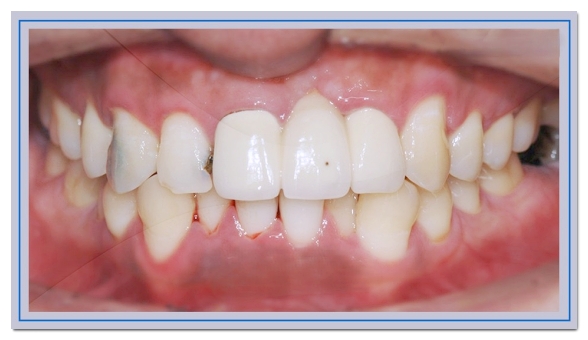
Table of Contents
-
The 5 key causes of bad breath after veneers
-
Characteristics of veneer-related bad breath by stage
-
Self-diagnosis checklist for bad breath after veneers
-
6 self-care methods for veneer-related bad breath
-
When you must visit the dentist
-
Preventing bad breath after veneers before treatment is 90% of the solution
-
Frequently Asked Questions (FAQ)
The 5 Key Causes of Bad Breath After Veneers
- Tiny gaps at the prosthetic margin (edge)
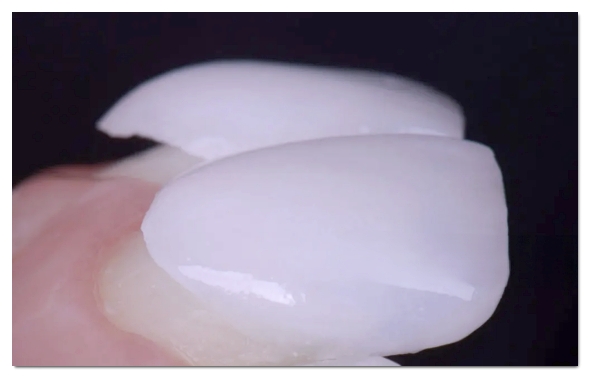
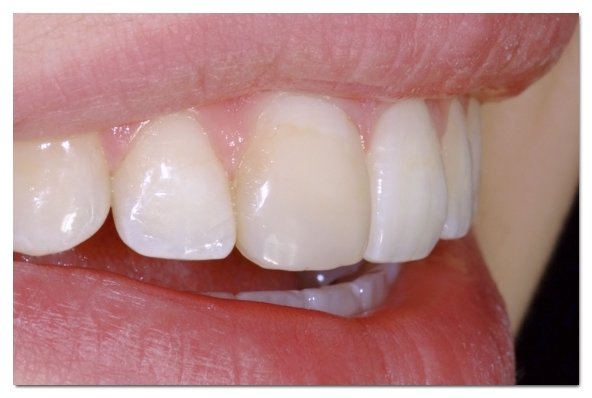
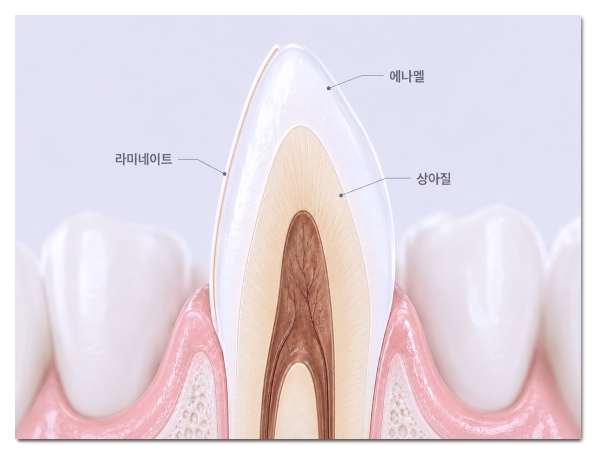
Veneers are a treatment in which a thin shell is bonded to the tooth surface.
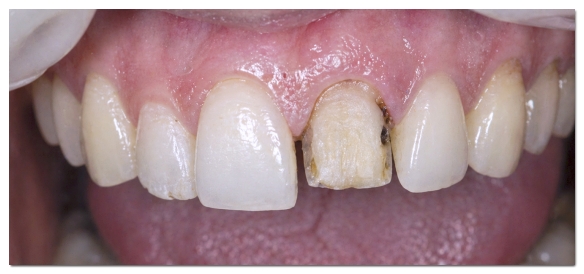
At this time, if the border where the veneer meets the natural tooth
is not fitted precisely, tiny gaps that are invisible to the eye can form.
Food debris and bacteria get trapped in these gaps, decay occurs, and a foul odor develops.
That’s why I always say
that bonding must be done well from the very first treatment.
Use high-quality materials instead of low-cost adhesives,
and the bonding step must be carried out with strict, second-by-second timing.
If it is a retreatment, this part becomes even more important.
For more details, please refer to the post below.
- Residual adhesive (cement)
If the resin adhesive used during the procedure
is not neatly cleaned up at the gum margin,
plaque quickly accumulates on that surface.
A mild chemical smell for 1–3 days right after treatment is natural,
but an odor that lasts more than 2 weeks may be due to residual cement.
- Secondary cavities between the veneer and the natural tooth
This is the cause that requires the most caution.
If decay progresses underneath the veneer, the outside may look fine,
but the internal tissue decays and produces a rotten smell.
It cannot be solved by regular brushing or mouthwash,
and an X-ray examination at a dental clinic is necessary.
- Gum inflammation and periodontal disease
If the veneer margin irritates the gums or
food gets trapped easily,
chronic gum inflammation can develop.
Microscopic bleeding or pus from the gums becomes a direct cause of bad breath.
- Veneer surface roughness and material characteristics
Porcelain has a smooth surface, so bacteria adhere less easily,
but composite resin veneers become rougher over time
and are more vulnerable to bacterial growth.
Characteristics of Veneer-Related Bad Breath by Stage
Right after treatment (1–3 days)
Chemical odor from adhesive components → a natural phenomenon, and it soon goes away
1–4 weeks after treatment
Odor from tiny bleeding during gum healing, hygiene issues around temporary prosthetics
Several months to years after treatment
Chronic bad breath due to bacteria in margin gaps, secondary cavities, and gum recession
Bad breath at this stage is a sign that a dental checkup is absolutely necessary.
Self-Diagnosis Checklist for Bad Breath After Veneers
If two or more of the items below apply, a visit to the dentist is recommended.
- Bad breath returns quickly even right after brushing
- The gums around the veneer margin often swell or bleed
- Foul odor comes from a specific area when flossing
- New sensitivity to cold water or sweets has appeared
- The edges of the veneer appear darkly stained
6 Self-Care Methods for Veneer-Related Bad Breath
-
Flossing is essential
For veneer patients, floss is not optional; it is essential.
Please clean the veneer margin area that toothbrush bristles cannot reach with floss at least once a day.
-
Use interdental brushes and a Waterpik together
Manage the space between the gum margin and the teeth in two ways.
A Waterpik is effective at removing food debris from the margin area.
-
Use a tongue cleaner
A significant portion of bad breath comes from tongue coating.
Gently clean your tongue every morning.
-
Use an antibacterial mouthwash
An alcohol-free mouthwash containing chlorhexidine or CPC can help suppress bacteria.
However, consult a dentist before long-term use.
-
Regular scaling every 6 months to 1 year
Veneer patients need regular checkups more often than the general population.
When having scaling done, let the clinic know in advance that you have had veneer treatment so the veneers are not damaged.
- Control staining and strong-smelling foods
Coffee, wine, curry, and smoking not only discolor veneers,
but also increase surface roughness and bacterial adhesion.
When You Must Visit the Dentist
If you have the following symptoms, professional diagnosis should come before self-care.
- Bad breath that lasts more than 3 months
- The veneer margin has lifted, or a black line is visible
- New sensitivity has appeared or gotten worse
- The gums often swell at the veneer margin
- The veneer feels slightly loose or unstable
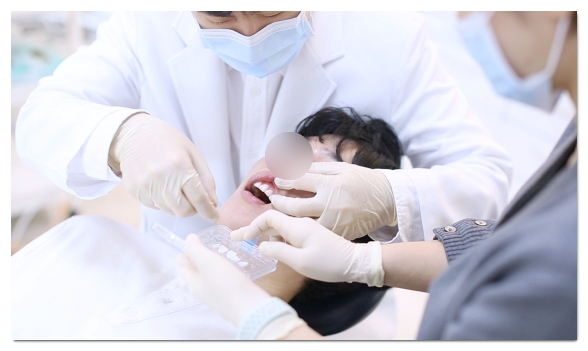
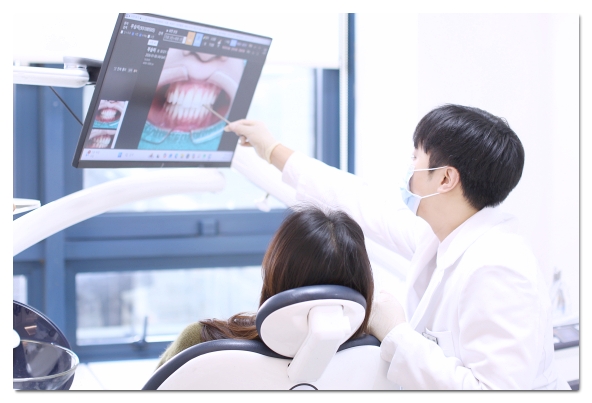
At the clinic, a precise diagnosis is carried out in the following order: visual examination → margin fit assessment
→ X-ray imaging → tongue coating and periodontal examination.
Preventing Bad Breath After Veneers Before Treatment Is 90% of the Solution
The most reliable way to reduce bad breath is preparation before the procedure.
Pre-treat cavities and periodontal disease:
If veneers are placed while gum inflammation is present, both reduced bonding strength and bacterial growth can occur.
Precise margin design:
Choose a clinic that designs the border between the gums and the veneer with precision.
Material selection:
If long-term maintenance is difficult, porcelain veneers are more advantageous than composite veneers.
Consider no-prep or minimal-prep options:
The less tooth structure that is removed, the lower the risk of dentin exposure and secondary cavities.
 Frequently Asked Questions (FAQ)
Q. Do I need retreatment because of bad breath after veneers?
A. Retreatment is not always the answer.
First, identify the cause through a precise examination,
and in many cases it can be resolved by removing residual cement, making partial adjustments, or improving habits.
Q. How long do veneers last?
A. On average, about 7–10 years, though this can be longer or shorter depending on care.
Persistent bad breath can also be a sign that their lifespan may be shortening.
Closing
Bad breath after veneers is not so much a problem caused by the procedure itself
as it is the result of a combination of tiny margin gaps, blind spots in maintenance, and the condition of the mouth before treatment.
For everyday care, use floss, interdental brushes, and regular checkups as your basics,
and if bad breath continues for more than 3 months, the fastest solution is to get a precise examination
for margin fit and secondary cavities.
Thank you. This has been Park Jae-hyeong.