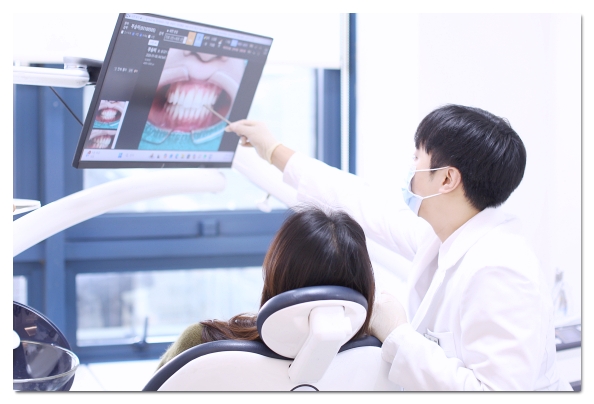
Hello, this is Dr. Park Jae-hyung, the representative director of Wonjin Dental Clinic.
There are many dental clinics in Gangnam that say they do no-prep laminate veneers,
but is it possible for my teeth too?
When you go in for a consultation, they say they will do minimal reduction,
but how much enamel are they actually removing?
Before trying to decide which clinic is better in the Gangnam market, there is something you should do first.
That is to determine whether your own teeth are even a case that can be treated with no-prep laminate veneers.
If you compare clinics without knowing this, you will hear different answers in each consultation room and end up more confused.
Today, I will clearly organize the criteria from a clinical perspective.
Key summary of Gangnam no-prep laminate veneers
-
The real meaning of no-prep: not a complete 0 mm reduction, but micro-adjustment of 0.01 to 0.1 mm
-
What determines eligibility: your tooth condition, not the clinic
-
Three self-checks: degree of protrusion of the mouth/lips / upper and lower bite relationship / alignment of the front teeth
-
Case classification: A no-prep possible / B minimal reduction needed / C no-prep not possible
-
Price range: 300,000 to 2,000,000 KRW per tooth, depending on materials, diagnosis, and lab work
-
Cases where it is not recommended: uneven gum line, need for pre-orthodontic treatment, protruding front teeth
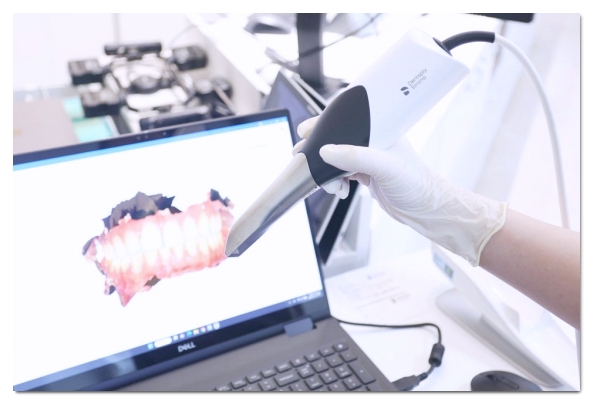
Table of contents
-
The misconception that “no-prep = 0 mm reduction”
-
Three self-check steps you can do in front of a mirror
-
Which category do my teeth belong to? (Three case types)
-
Four things to check when choosing a clinic in Gangnam
-
Why prices vary so much, and when it is not recommended
The misconception that “no-prep = 0 mm reduction”
First, let’s clear up one common misconception.
The equation “no-prep = 0 mm reduction”
is far from the reality in the clinic.
Most procedures called no-prep laminate veneers in clinical practice include a slight amount of surface refinement, or “micro-adjustment.”
Usually, the tooth surface (outer layer) is evenly smoothed within a range of 0.1 to 0.01 mm
so that the restoration does not sit raised or uneven.
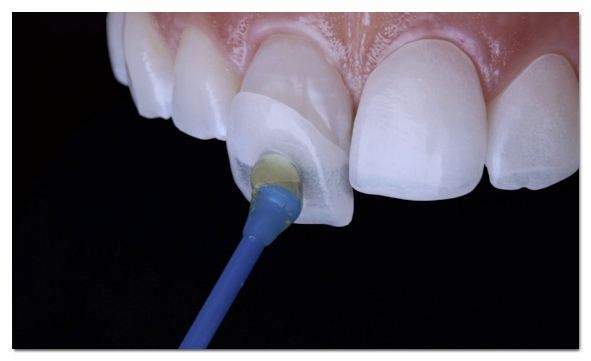
Cases performed with a complete 0 mm reduction are limited to a very small number of situations where tooth alignment, thickness, and size happen to fit perfectly.
Whether no-prep is possible is not decided by the clinic,
but by the patient’s tooth conditions.
Knowing the nature of your own case to some degree before going in is the fastest way to improve the quality of the consultation.
Three self-check steps you can do in front of a mirror
Even without a complicated examination, you can look in the mirror at home
and roughly sort out the category.
A precise diagnosis must be done in the clinic,
but even doing these three steps will let you figure out with more than 50% accuracy which side you fall on.
Step 1: Check whether your mouth or lips are slightly protruded
Look at your mouth line in the mirror or in a side-profile selfie.
If you feel that your mouth or lips normally sit slightly forward,
you should think carefully about no-prep laminate veneers.
If you cover already protruded teeth with no-prep veneers,
the added thickness makes the teeth look even more forward,
and as a result, the entire mouth may appear more protruded than it is now.
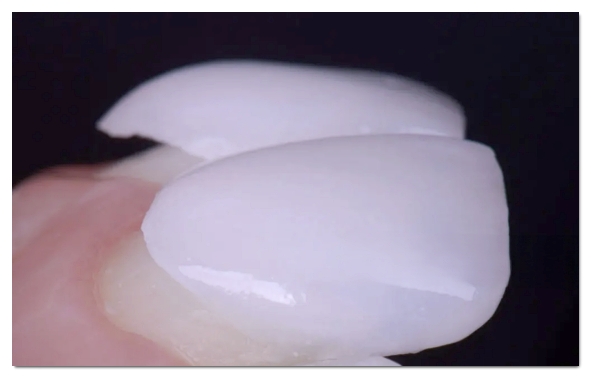
Step 2: How do the upper and lower teeth fit together?
Check whether, when you bite down naturally, the upper front teeth slightly cover the lower front teeth in a normal bite,
whether the upper teeth are positioned far in front of the lower teeth in a protrusive bite,
or whether the lower teeth protrude forward in a reverse bite.
The closer the bite is to normal, the higher the likelihood that no-prep is possible; the greater the misalignment, the more micro-adjustment will be needed.
Step 3: The degree of gaps and irregularity among the front teeth
If the six front teeth are seen in a row and there are slight spaces
or one or two teeth are positioned inward, that falls within the no-prep range.
On the other hand, if there is a large difference in tooth size or noticeable crookedness, it becomes difficult to achieve balance with no-prep alone.
Which category do my teeth belong to? (Three case types)
After completing the self-check, see which of the following you are closest to.
If you want to choose a no-prep laminate veneer clinic in Gangnam, this step comes first.
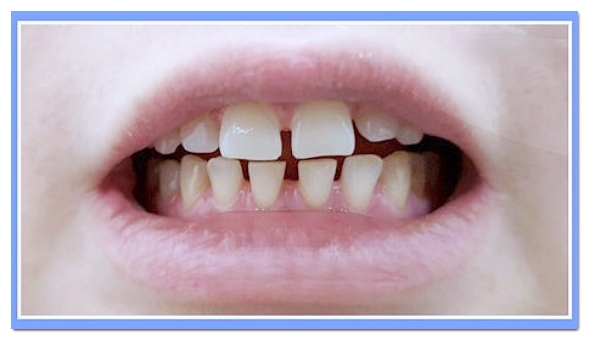
Case A. No-prep possible
Features: front teeth are inside the lip line, normal bite, slight gaps or mild irregularity.
Solution: surface refinement at the 0 to 0.2 mm level is sufficient, and a natural thickness is maintained after treatment.
Example: A woman in her 20s who came in worried about the spaces between her front teeth had teeth positioned inside the lip line, a normal bite, and slight spacing.
We filled the spaces while performing light surface refinement.
Case B. Minimal reduction needed
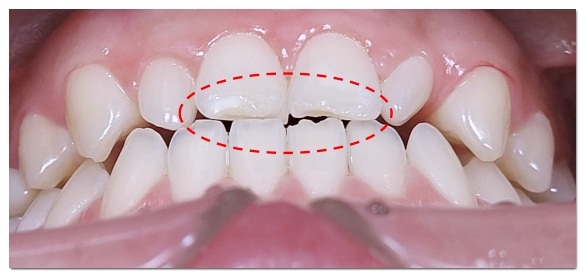
Features: an incisal edge-to-edge bite between the upper and lower front teeth, and at the same time, one or two front teeth are peg-shaped.
Solution: a minimal reduction of about 0.3 to 0.5 mm should be performed together to achieve a safe and natural result.
In an edge-to-edge bite, simply adding thickness with no-prep
means that every time the upper and lower front teeth come into contact,
direct stress is applied to the edge of the veneer, increasing the risk of fracture.
Of course, peg-shaped teeth have enough space and can be treated without reduction.
Example: A woman in her 20s whose two front teeth were peg-shaped and whose upper and lower front teeth were in contact when biting.
After explaining that proceeding as-is would create a high risk of veneer fracture and make it difficult to match the proportions of the small front teeth,
we combined minimal reduction and no-prep to complete a natural-looking line.
Case C. No-prep not possible
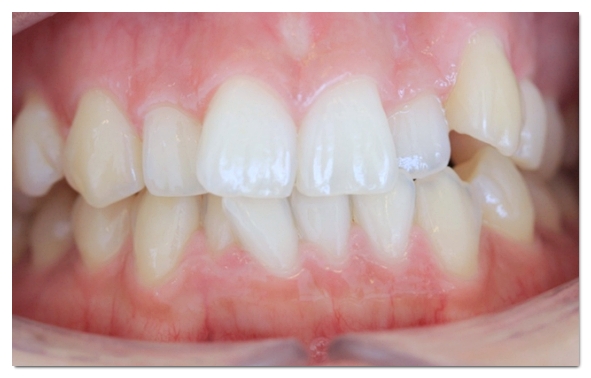
Features: marked protrusion, major bite discrepancy, severe crookedness.
Solution: orthodontic treatment should come first before veneers, or another type of treatment may be needed.
A conservative clinic would never recommend no-prep for this group.
Four things to check when choosing a clinic in Gangnam
Once you have identified your own case, be sure to check the following four things during the consultation.
Does the clinic clearly explain the case classification?
A clinic that goes beyond simply saying “it’s possible” and instead explains the basis, such as
“for the following reasons, minimal reduction would be the most natural option for you,”
is more trustworthy.
Does the clinic show the final shape in advance? (Digital simulation)
The standard approach is to let the patient review the result first through a simulation before taking impressions.
Does the clinic clearly explain the bonding system?
The biggest reason veneers chip or fall off early is not the ceramic material itself, but the bonding process.
If a clinic explains in language the patient can understand how the result is maintained long term and what steps are taken to prevent it from coming off,
you can feel more comfortable trusting them.
Is there a follow-up bite check scheduled one week later?
Even if everything looks perfect on the day of treatment, slight interference can appear after a few days of daily use.
A clinic that includes time for re-adjustment as part of the standard process tends to preserve results longer.
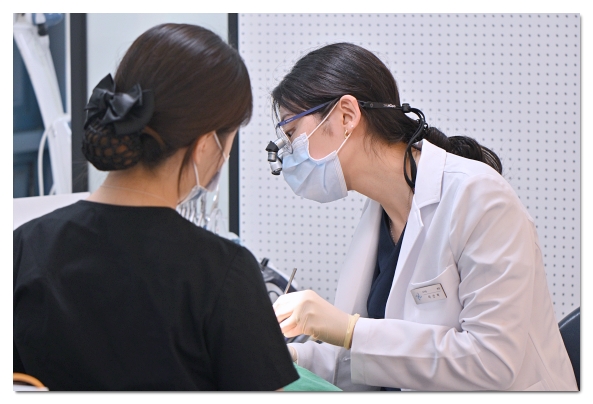
Why prices vary so much, and when it is not recommended
Gangnam no-prep laminate veneer prices vary widely, from the 300,000 KRW range to the 2,000,000 KRW range per tooth.
This difference mainly comes from
-
the grade of the restoration material (ceramic / reinforced ceramic, etc.)
-
whether there is close collaboration with a dedicated ceramist
-
the time invested in pre-treatment diagnosis and digital design
But regardless of cost, no-prep treatment is not recommended in the following four cases.
-
For patients with an uneven gum line or unstable gum condition
-
For patients whose overall bite is unstable and who need pre-orthodontic treatment
-
For patients with clearly protruding front teeth, where no-prep would make the lips look even more forward
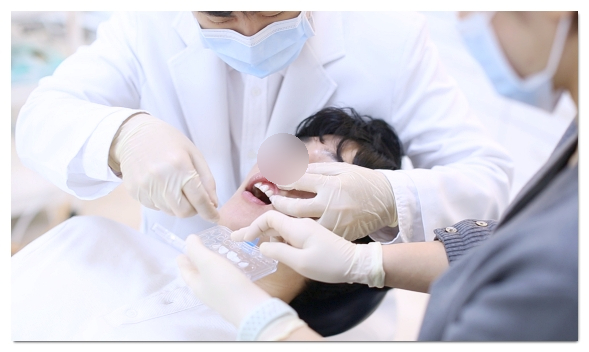
If done too aggressively, the restoration may crack or come off as a side effect.
No-prep is not simply a “less risky choice” in every case;
it is a treatment that shines when applied to teeth that match the right conditions.
Please receive treatment at a clinic that analyzes your teeth in detail and treats natural teeth as conservatively as possible.
Thank you. This was Park Jae-hyung.