Hello, I’m Park Jae-hyung, director of Wonjin Dental Clinic.
Why is there a fivefold difference in
front teeth laminate veneer prices?
Is the price difference simply due to the materials?
If you have searched for front teeth laminate veneer prices, you have probably been surprised at least once.
Some clinics charge around KRW 200,000 per tooth, while others charge KRW 800,000 or even more than KRW 1,000,000.
They are all called “laminate veneers,” so why is the difference so large?
Are the cheaper options really acceptable, and are the more expensive ones worth the cost?
It is natural to feel confused when you are about to make a decision.
Today, I would like to organize the question that patients ask most often in the consultation room.
Why front teeth laminate veneer prices differ so much,
and how to choose the right laminate veneers for your case so you do not regret your decision.
If you read to the end, you will have a better idea of what to look at when reviewing a quotation.
Three Factors That Determine Front Teeth Laminate Veneer Prices
Prices are mainly determined by three factors.
The first is the manufacturing method.
Machine-milled veneers have a lower unit cost, but
it is difficult to make them thinner than a certain thickness, so a certain amount of the natural tooth must be removed.
Veneers made by a dental technician by hand can be produced much more thinly.
The thinner the laminate veneer, the less of the original tooth needs to be removed,
which is why minimally reduced or no-prep laminate veneers are possible.
You can consider this the biggest reason for the price difference.
The second is the prosthetic material used.
Depending on which ceramic block and material grade are used,
material costs can differ by two or three times.
It is the same principle as how the quality of pottery differs depending on the clay used, even when the pottery is made from the same general material.
The third is the experience of the dental professionals and the aftercare policy.
Laminate veneers are a procedure whose results can vary completely depending on how much tooth reduction is minimized
and how precisely the gum line is matched.
The warranty period and remake policy are also reflected in the price.
Warranty periods can range from 1 to 10 years,
so it is a good idea to check how many complimentary remakes are available during the warranty period.
Of these three factors, the difference patients feel most directly is undoubtedly the first one: the manufacturing method.
Machine-Made Laminate Veneers: How Are Prices Around KRW 200,000 Possible?
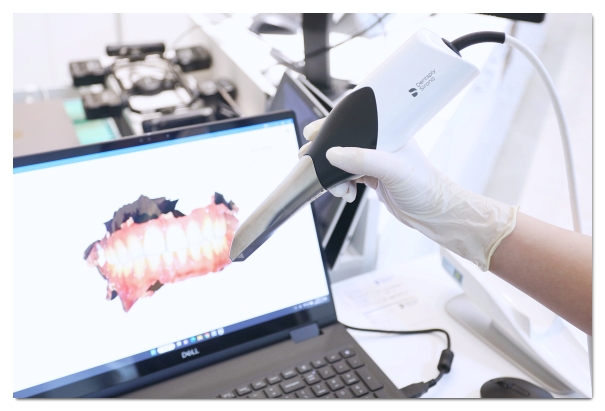
These days, many dental clinics make laminate veneers using CAD/CAM equipment.
The teeth are scanned digitally, and a machine mills a ceramic block into a predetermined shape.
In some cases, they can be made on the same day.
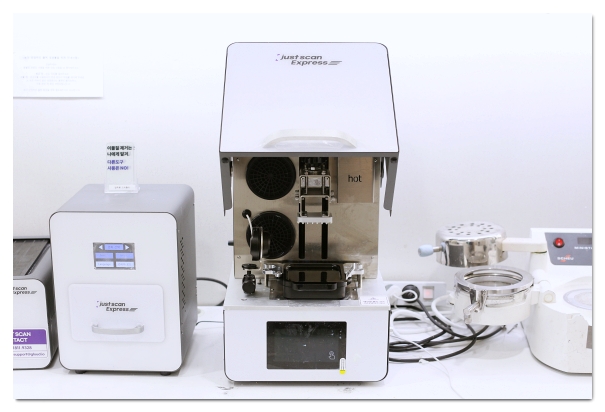
The advantages are clear. They are fast and uniform,
and the price can be lowered because less is spent on dental technician labor.
Cases in which front teeth laminate veneer prices are set at around KRW 200,000–300,000 per tooth
are generally made using this method.
For those who want a quick procedure or have a limited budget,
this can be a meaningful option.
However, I should also be honest about the limitations.
Machines have difficulty reproducing the fine curves and light-transmission characteristics unique to natural teeth.
The edges of front teeth have a natural translucency that allows a small amount of light to pass through depending on the sunlight or lighting,
but machine-made veneers do not reproduce these details as well,
so they may feel slightly unnatural when viewed up close.
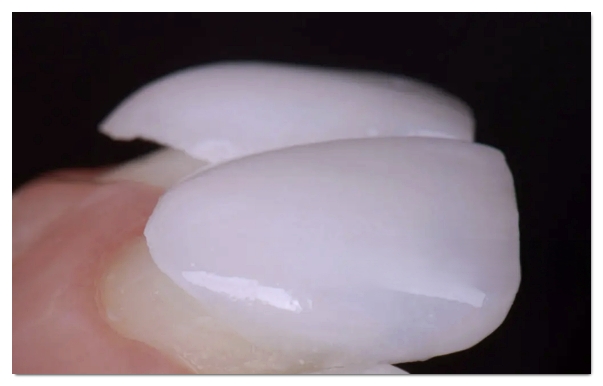
This is why some reviews say, “They look pretty, but it is obvious that something was done.”
The difference is especially noticeable outdoors in strong sunlight or with a selfie flash.
There is something I always tell patients to help prevent teeth from looking unnatural like this.
Laminate veneers should be done only as follows.
Handcrafted Laminate Veneers: Why the Price Is Higher
Handcrafted laminate veneers are made by a skilled dental technician,
who builds them by hand one layer at a time, as if shaping porcelain.
The technician makes fine adjustments while considering the patient’s facial shape, gum line, the color and luster of the adjacent teeth, and even the shape of the corners of the mouth.
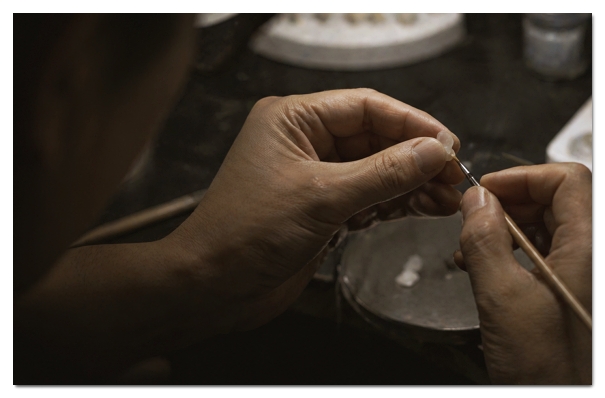
The key points are the way light is expressed and the natural appearance.
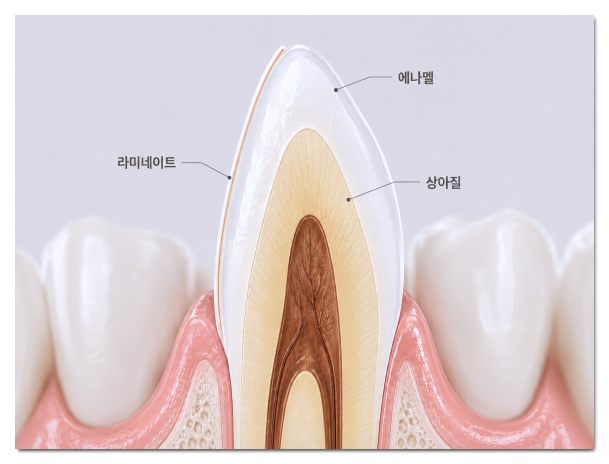
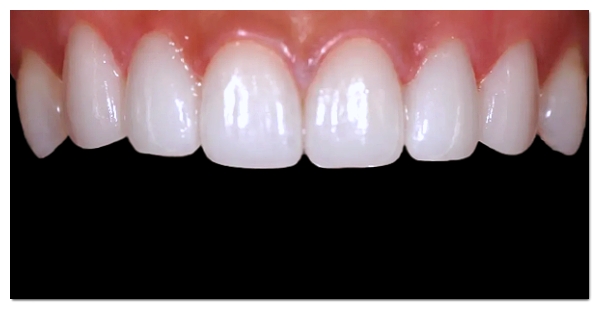
Natural teeth have a subtle gradient: they are translucent toward the edges, while the white color becomes stronger toward the inside.
With handcrafted work, these layers are built up by hand one at a time,
allowing the veneers to blend almost seamlessly with natural teeth.
This is why patients may say that they “do not look like they have had anything done,” even when viewed up close or in photographs.
Another advantage is that the amount of tooth reduction can be minimized further.
Because the thickness can be finely adjusted for each case, handcrafted veneers can be made while preserving more of the original tooth.
Since tooth reduction cannot be reversed once it has been done, this is very important in the long term.
The trade-off is that it takes several days to make one case, and the dental technician’s skill has a significant effect on the result.
That is why laminate veneer prices rise to around KRW 500,000–1,000,000 per tooth.
Rather than simply becoming more expensive, you can think of this as a price that reflects the technical skill involved.
So Which Option Should I Choose?
At our dental clinic, we also offer three lines tailored to each patient’s circumstances and budget.
Because the manufacturing methods and material grades differ,
the most suitable option also varies from case to case.
However, to be honest,
I recommend the handcrafted method for patients having four to six front teeth treated together.
The front teeth are the first area people see when you smile,
so a natural appearance determines satisfaction with the result.
Some patients initially choose machine-made veneers to save money,
then contact us about having them remade within one or two years because they look unnatural.
In the end, they have to pay twice.
On the other hand, for a partial procedure involving one or two teeth, a simple case involving only a slight color adjustment,
or work on teeth closer to the molars,
the machine-made line can be a sufficiently reasonable option.
The most expensive option is not always the right answer; there is an option that is more advantageous for your particular case.
Four Things to Check When Getting a Quotation
Comparing only front teeth laminate veneer prices can easily lead to regret.
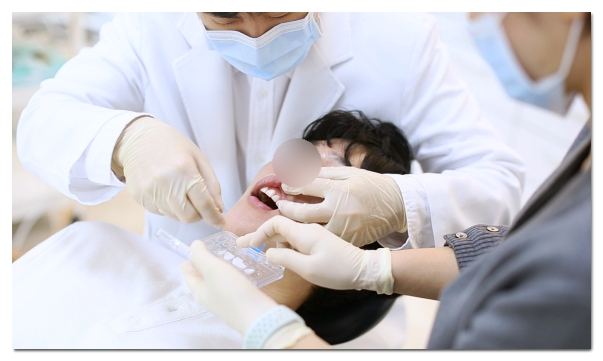
If you have received a quotation from another dental clinic, be sure to ask about these four things.
First, whether the veneers are machine-made or handcrafted.
This is the most important question. If the answer is simply, “They are good-quality veneers,”
you should ask for more details.
Second, the brand and grade of the materials used.
Even ceramics and adhesives can differ greatly in esthetics and durability.
That is why we continue to use adhesive from our premium line even for laminate veneers in our value-oriented line.
Ask specifically what materials are used and what the differences are.
Third, the remake policy and aftercare warranty period.
Laminate veneers can come off or break due to external impact, so the warranty policy is important.
Fourth, whether consultation fees, temporary tooth costs, and follow-up examination fees are included or charged separately.
Although the initial price may look low, there are surprisingly many cases where the total ends up being similar.
Laminate veneer pricing is not simply a number;
the difference lies in what kind of manufacturing process and responsibility,
as well as what kind of aftercare system, are included.
Many people regret their decision one or two years later if they decide based only on the price list,
but choosing an unnecessarily expensive clinic is also meaningless if it does not suit your case.
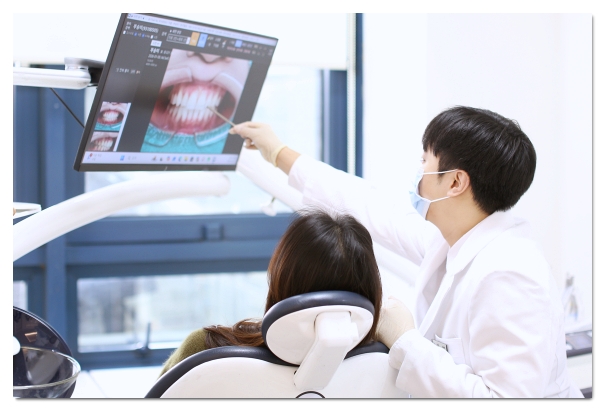
The best way to avoid regret is to consider your case, lifestyle, and standards for satisfaction
all together before making a decision.
Thank you. This has been Park Jae-hyung.