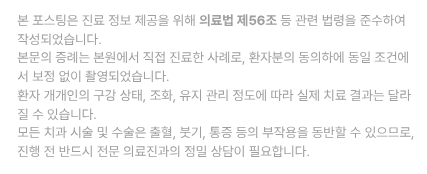
Hello. I am Jae-hyung Park, Director of Wonjin Dental Clinic.
I had laminate veneers placed, but my teeth feel sensitive and hurt.
Is this normal?
I want to get laminate veneers,
but I am afraid it will hurt a lot.
People searching for “laminate veneer pain” are likely experiencing one of these two situations.
They are worried about pain because they have not undergone the procedure yet,
or they are anxious because sensitivity or pain developed after receiving laminate veneers and they are wondering whether “this is normal.”
To give you the conclusion first, laminate veneer treatment is performed under anesthesia, so severe pain during the procedure is uncommon.
However, if sensitivity or pain continues after the procedure, I recommend visiting a dental clinic promptly for an examination.
Today, I will explain why laminate veneer pain occurs, what falls within the normal range, and which warning signs require a visit to the clinic.
Will Removing Tooth Structure for Laminate Veneers Hurt a Lot?
Because anesthesia is used during the procedure, pain is uncommon.
You may feel a buzzing vibration or slight pressure while the tooth is being reshaped.
However, this is clearly different from a sharp, stabbing pain.
The dentist checks that the anesthesia is working properly before starting, so it is also uncommon to suddenly feel pain during the procedure.
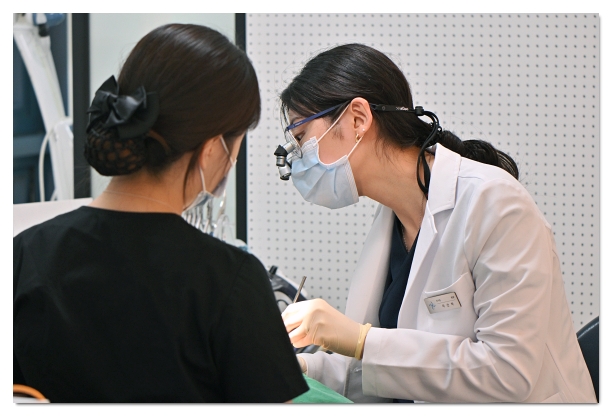
In addition, the less tooth structure that is removed, the less irritation there is.
The less invasive the procedure is, with no-prep or minimal-prep techniques, the lighter the burden during treatment tends to be.
Perhaps for this reason, many people focus only on how much tooth structure will be removed.
However, side effects such as sensitivity, pain caused by cavities, and gum inflammation
also vary depending on how well the veneers are bonded.
I have explained how to prevent these side effects in the article below.
If you are considering laminate veneers, I encourage you to read it.
It may help you receive laminate veneers without regrets.
Why Do Teeth Feel Sensitive After Laminate Veneer Treatment?
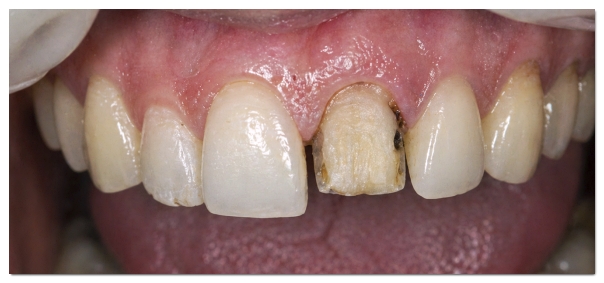
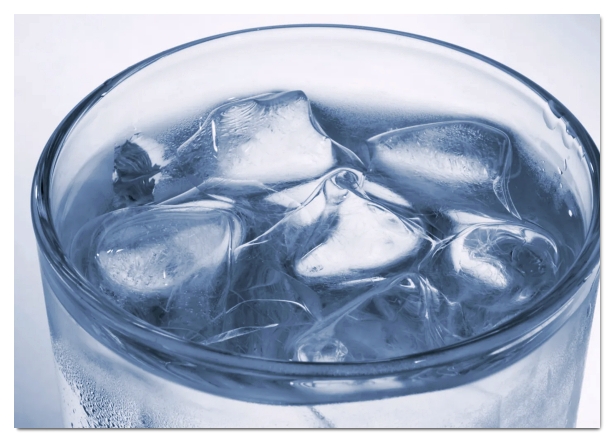
The most common symptom is sensitivity to cold water or cold air for one to two weeks after the procedure.
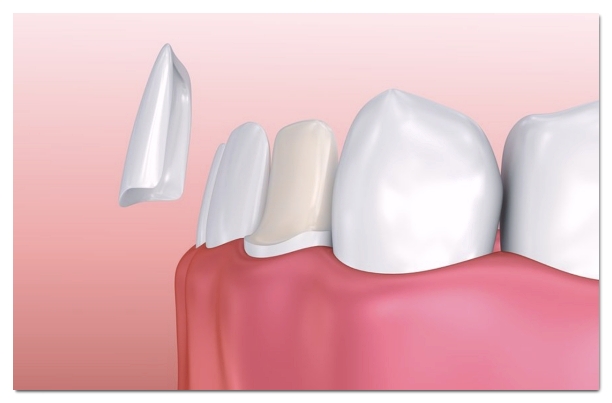
When the tooth surface is shaped very thinly to attach the laminate veneer, the dentin underneath can become temporarily sensitive.
In other words, an area that was normally covered by enamel becomes slightly exposed, causing you to feel external stimuli more directly.
This type of sensitivity usually decreases gradually as the tooth adapts and is a natural part of the process.
However, if the tooth originally had a cavity or was close to the nerve, it may react more sensitively and the pain may last longer.
That is why the level of discomfort varies from person to person and from tooth to tooth, even with the same procedure.
When Does Laminate Veneer Pain Usually Subside?
If the sensitivity is within the normal range, it usually subsides gradually over several days to as long as 4–8 weeks.
The most important point is whether “the pain is gradually decreasing over time.”
If it is slowly improving compared with the beginning, it can generally be considered part of the adaptation process.
On the other hand, if it is getting worse over time, it is better to have it checked rather than simply waiting.
You should consider not only the intensity of the sensitivity but also “how long it lasts.”
A brief sharp sensation when something cold touches the tooth that disappears quickly is a common reaction.
However, if the sensitivity or pain continues for a long time even after the stimulus is gone, it is best to visit a dental clinic for an examination.
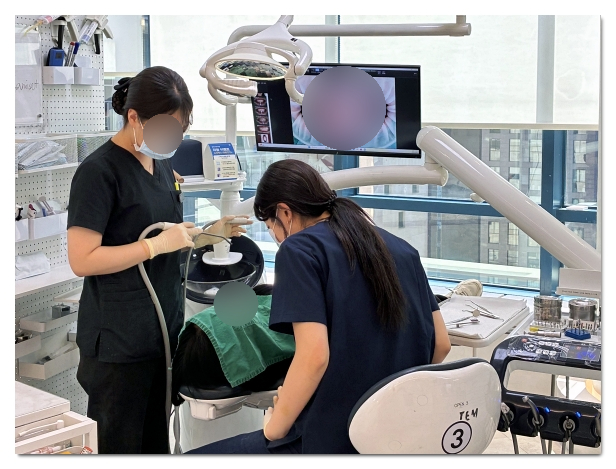
These Types of Pain Require a Visit to the Clinic
The following symptoms may not be part of a simple adaptation process.
For your safety, do not endure them; visit a dental clinic and receive an accurate diagnosis.
-
Pain that steadily worsens: The sensitivity does not improve over time, and the pain becomes increasingly severe.
-
Pulsating spontaneous pain (possible irreversible pulpitis): You feel a throbbing pain, similar to a heartbeat, even while resting.
-
Pain in a specific tooth when chewing (traumatic occlusion): Only one particular tooth hurts significantly when you chew food.
-
Extreme reaction to temperature: Throbbing pain occurs when eating hot food, or sensitivity to cold stimuli lasts excessively long.
-
Gum swelling and pus (periodontal inflammation): Signs of inflammation around the tooth root appear, such as redness and swelling of the gums around the restoration, pain when pressed, or visible pus.
Daily Care to Reduce Laminate Veneer Pain and Sensitivity
The following care measures can be very helpful during the adaptation period when sensitivity is present.
-
Be careful with temperature and chewing: Avoid foods that are extremely cold or hot, as well as hard or chewy foods, immediately after bonding.
-
Use toothpaste for sensitive teeth: Use toothpaste containing ingredients that help relieve tooth sensitivity, and brush gently.
-
Avoid breathing through your mouth: If inhaling cold air through your mouth causes sensitivity, breathing slowly through your nose can reduce the irritation.
-
Consider wearing a mouthguard: Bruxism and clenching place abnormal force on the restoration and can cause pain, so consider using a mouthguard while sleeping.
Frequently Asked Questions
Q. Will it hurt a lot when the anesthesia wears off?
If only a small amount of tooth structure was removed, many people feel only slight sensitivity and no significant pain even after the anesthesia wears off. Of course, this varies from person to person.
Q. My teeth feel sensitive when I brush. Is that okay?
This is common in the early stages. Using a soft toothbrush together with toothpaste for sensitive teeth can make it considerably better.
Q. Can I chew food with the treated teeth?
Immediately after bonding, avoid hard or chewy foods for a while. Avoid using the front teeth and distribute the chewing evenly on both sides.
If You Are Worried About Pain Before the Procedure
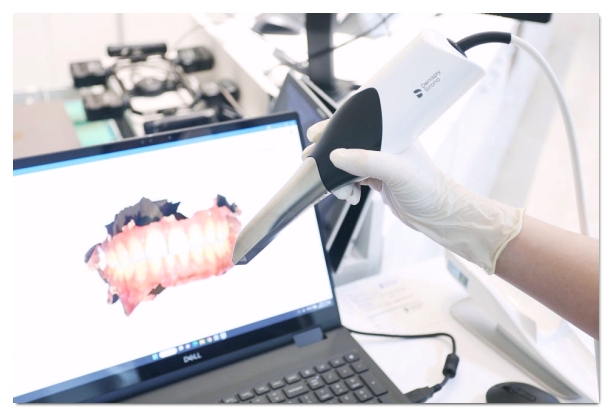
The most important factors in reducing laminate veneer pain are ultimately “an accurate diagnosis” and “removing only as much tooth structure as necessary.”
Carefully check how much tooth reduction your teeth require and whether a no-prep or minimal-prep procedure is possible.
Choosing a clinic that carefully adjusts your bite after bonding can also reduce the burden of pain after treatment.
In Closing
Some degree of sensitivity is a common part of the adaptation process after laminate veneer treatment, and it usually subsides over time.
You do not need to be overly concerned, but that does not mean you need to endure every type of pain without question.
If the pain is getting worse or you notice any of the warning signs mentioned above, I recommend that you do not ignore them and seek dental care.
In particular, bite-related pain when chewing can cause the laminate veneer to crack or come off if left untreated, so it is best to address it early.
Rather than repeatedly searching without a clear answer, it is important to accurately determine whether your current pain is within the normal range.
Thank you. This was Jae-hyung Park.
[For both first-time and replacement laminate veneer treatment, use the following criteria]